

The Plateau We All Know
Every serious lifter has been there: the bench press stalls. You’re training consistently, eating right, and putting in the work, but the numbers on the bar refuse to budge. The frustration of hitting a plateau can lead you to think that the only solution is to work harder or build more muscle. But what if the key to a bigger bench isn't in your chest or triceps, but in your upper back? The surprising answer might be that unlocking your next personal record lies in improving your movement and mobility, not just increasing your raw strength.
You Can Add 25lbs to Your Bench Without Gaining Any Muscle.
Strength coach Stuart Locke makes a powerful claim: improving your thoracic spine (T-spine) mobility can directly translate to a significantly heavier bench press, without adding a single pound of muscle mass to your frame. It’s a concept that challenges the conventional "bigger is stronger" mentality.
"You know what you could do? You could uh work on your T-spine mobility and you probably add 25 lbs to your bench, you don't even have to add any muscle you just have to add mobility it's like come on man."
This is possible because mobility isn’t just about flexibility; it's about creating a more stable and mechanically advantageous platform to press from. By improving your upper back's ability to extend and rotate, you can set your shoulder blades in a more secure position. This optimal positioning allows you to express the strength you already possess far more efficiently.
Instability, Not Weakness, Is the Real Enemy
In the session, lifter Naomi described how, under fatigue, her right arm would flare out uncontrollably, making the press feel uneven and significantly weaker on that side. This is a common issue many lifters experience, often misdiagnosing it as a weakness in that arm.
Locke’s hypothesis was different: the issue wasn't a lack of strength but an unstable shoulder blade. When the scapula isn't "pinned down" and stable against the rib cage, the body is forced to control two separate joints—the shoulder blade on the ribcage and the arm in the shoulder socket—instead of just one. This creates a significant power leak as the body struggles to generate force from a wobbly foundation.
The principle is simple but profound: "unstable is weak." To push maximum weight, you need a rock-solid base, and that starts with a stable shoulder blade.

That "Shaky" Arm Is a Specific Warning Sign
That familiar shaking in your arms during a heavy press isn't just a sign of general fatigue. It’s a specific diagnostic signal that points to a breakdown in your kinetic chain.
According to Locke, this shaking is a "leading indicator"—a crucial warning sign that appears before a potential injury or a failed lift under heavier loads. It reveals that your primary stabilizing muscles—specifically the lower trapezius and rhomboids—are not firing correctly. When these crucial muscles fail to hold the shoulder blade in place, the biceps and triceps are forced to do double duty, attempting to both press the weight and stabilize the shoulder joint. This conflict of roles is what causes the visible shaking. This insight is crucial because it transforms a vague symptom ("my arm feels shaky") into an actionable cue pointing directly to an underlying stability problem in your upper back.
A 4-Step Sequence to Unlock Your Upper Back
Fixing the root cause of this instability requires a systematic approach, not just a random collection of stretches. The following four-drill sequence addresses the problem by first releasing tight, overactive muscles and then activating weak, underactive ones.
-
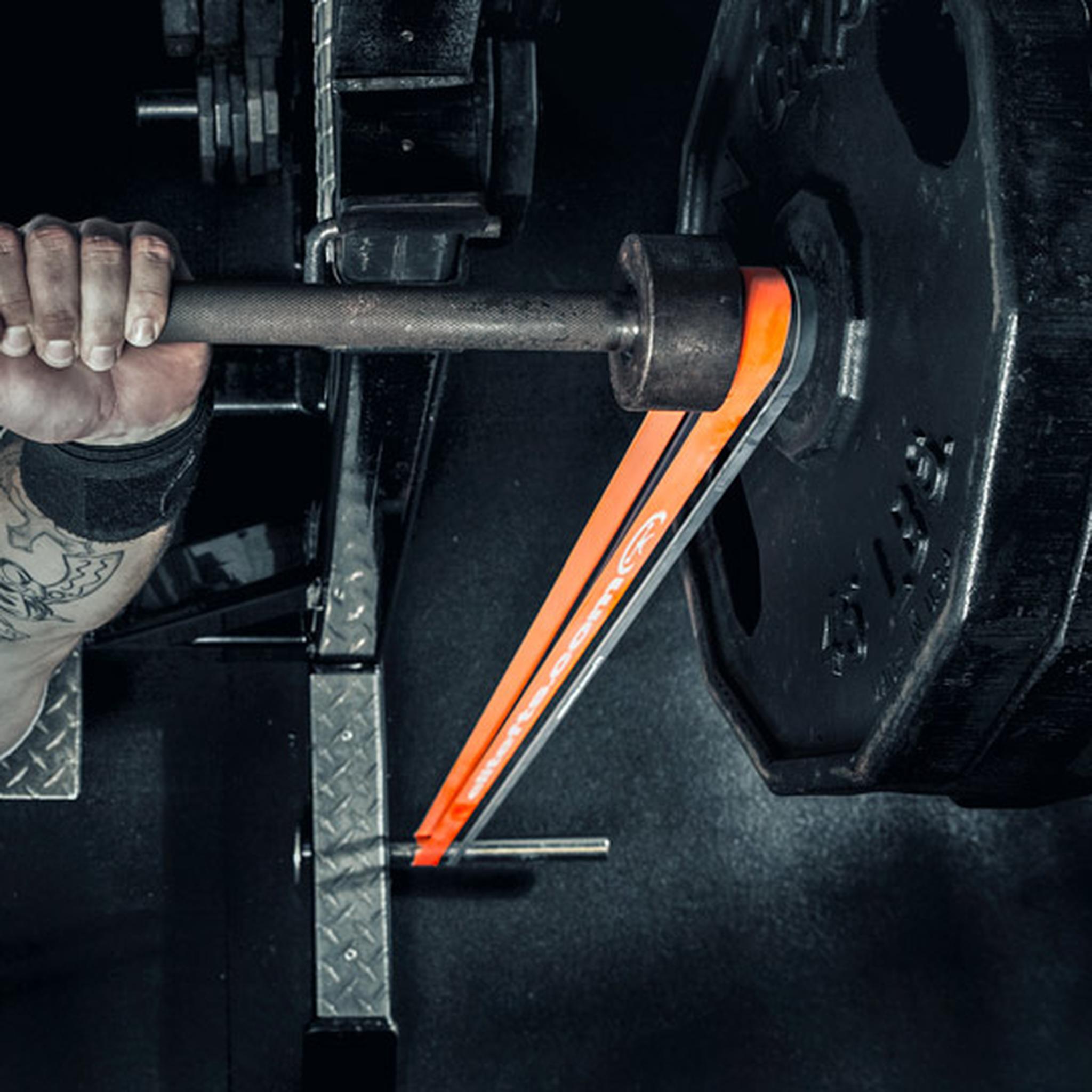
Barbell Trap Smash: The first step is to release the overactive upper traps that are pulling the shoulder upward into a poor position. By pinning the muscle under a loaded barbell and moving the arm overhead, this drill forces the tight muscle to release. The key is to find a painful spot, hold the position, and use your breath to deepen the release: inhale deeply, and then, as you exhale, push further into the barbell.
-
"Open the Book": With the upper trap released, the next step is to improve thoracic rotation. This drill helps restore the upper back's ability to twist. Crucially, it directly targeted the diagnosed asymmetry in Naomi's movement. Her rotation to the right was worse than her rotation to the left, which correlated perfectly with the instability in her right arm. This drill was not generic; it was a specific corrective for her diagnosed imbalance.
-
T-Spine Extension Over a Bench: This movement targets thoracic extension, teaching the lifter how to create an arch through the upper back. This is critical for achieving a powerful bench setup without compensating by dangerously overextending the lower back (lumbar spine). The lifter positions their upper back on the edge of the bench, places their hands behind their head, and drives their elbows back while arching over the pad.
- Incline Y Raise: The final step is activation. This exercise is designed to "turn on" and strengthen the weak lower traps. The goal is not just to lift the arms, but to drive the head through at the top of the movement to "get another 10 or 15 degrees of thoracic extension." To prevent cheating with passive mobility, the lifter must actively "squeeze them as tight as you can with your hands [and] bear down." When done correctly, you should feel a "really gnarly cramp in her midback low trap," which is the exact sensation you want to replicate for a stable bench press.
The logic of this "release, rotate, extend, and activate" sequence is non-negotiable. As Locke noted, the mobility gains are cumulative: "if we had done this at the beginning [the T-Spine Extension], she would not have been able to get this far back." You must first unlock the tissue before you can effectively re-pattern the movement.

Even World-Class Lifters Need the Basics
The lifter receiving this coaching, Naomi Sherppard, is an "all-time world record holder." This fact serves as a potent reminder that fundamental movement quality is non-negotiable, even at the highest levels of the sport. If an elite athlete at the pinnacle of powerlifting is refining these basic mobility drills to improve her performance, then no lifter is ever "too advanced" to ignore them.
"so if an all-time world record holder is still doing a mobility there is no reason you shouldn't."
Strength is a Skill
The biggest takeaway is that true strength is not just a measure of muscle size, but a skill built on a foundation of stability, position, and efficient movement. By treating your bench press as a technical skill that can be improved through mobility work, you can unlock strength you didn't even know you had.
Now that you know what to look for in your bench press, what hidden mobility restrictions might be holding back your squat or deadlift?