

Powerlifting History
Ed Coan: The Definitive Story of the Greatest Powerlifter Who Ever Lived
From a 98-pound high school wrestler to a 2,463-pound total, a torn patellar tendon, and 20-plus years of giving it all back. This is the whole story, from the magazines that covered it, the meet records, and Ed's own words.
TL;DR
- Ed went from a 98-pound high school wrestler to a 2,463-pound total at 242, and he held the number one ranking in his class from 1984 to 2004, minus the years he didn't compete.
- The meet people still talk about is the 1991 USPF Senior Nationals: a 959 squat, a 545 bench with no shirt, and a 901 deadlift for 2,406 at 220.
- He won his first IPF world title at 181 in 1984, at age 21. By 1988 the magazines were already calling him the greatest.
- In June 2002 he tore his patellar tendon in Chester, West Virginia. He came back in 2003, then walked away after the 2007 USPF Nationals in Las Vegas.
- The numbers are only half of it. For 20-plus years he has given the sport back as a coach, a seminar speaker, and one of the best ambassadors powerlifting has.
It's July 1991, the USPF Senior Nationals. Ed Coan is a 220-pounder in an old-style squat suit. No bench shirt. No deadlift suit. A regular bar for the whole meet, and the meet is drug tested.
He squats 959 and says it was really easy. He benches 545. Then he goes to the deadlift needing a big pull to get over 2,400 pounds in the 220s, something nobody that light had ever done.
Here's how Ed told it to me on Table Talk:
"On my second attempt, I called for 898 to make sure I totaled 2,400 first. And it just so happens that it weighed out to 901. Thank God."Ed Coan, Table Talk #131
That's Ed. A 901-pound deadlift at 220 that still gets talked about today, and he tells it like he got lucky on the scale.
I've known Ed since I was a kid at a meet in West Virginia, and I've had him on the podcast and on stage more times than I can count. The numbers are only half of why people call him the greatest powerlifter who ever lived. The other half is how he carries himself, and that's the part most people never hear about. This article covers both.
I went back through our old Powerlifting USA issues, his full meet history on OpenPowerlifting, the reporting from when he got hurt, and my two-plus hours with him on Table Talk #131. Where the sources disagree, I'll tell you.
What "Greatest of All Time" Actually Means
People throw "GOAT" around for anyone who hits one big lift on Instagram. So before we did the podcast, I went through his OpenPowerlifting record to see what the label actually stands on.
His first world title came in 1984 at 181 in Dallas, and he won by about 50 pounds. He moved up to the 220s around 1986, and that's where he was in his prime. When I looked at the number one ranking for his weight class each year, regardless of federation, Ed held it from 1984 to 2004. That's 20 years, minus the years he didn't compete. In some of those years he was 300 or 400 pounds ahead of whoever was ranked second.
It gets crazier. As a 220, his total was often higher than the 242s and the 275s at the same meet, and higher than most of the supers. Ed confirmed that when we talked.
He also pointed out something people forget about that era. You couldn't cherry-pick:
"I could go anywhere in the world and be known... We didn't get to pick and choose meets."Ed Coan, Table Talk #131
You had nationals and you had worlds, every year. You showed up and you beat whoever was there.
The magazines saw it early. In September 1988, Powerlifting USA ran a piece by Doug Daniels called "The Greatest Powerlifter of All Time." Daniels ran the numbers through the Reshel and Schwartz formulas, and Ed came out number one. He was 25 years old.

Ed is credited with 71 world records, and he was inducted into the International Sports Hall of Fame in 2015. You'll see different counts depending on where you look, and I couldn't find a primary list for the 71, so take it as the commonly cited number.
Evergreen Park to Quads: How He Got In
Ed was born July 24, 1963, and grew up in Evergreen Park, just outside Chicago. He did not start out looking like a future world champion:
"My first year in high school I wrestled at 98. I was actually scared to go out for football because I was so small."Ed Coan, Table Talk #131
He was four foot eleven. A 1987 Powerlifting USA profile says the same thing: "Ed started out as a 4' 11", 98 lb. high school freshman."
He tried bodybuilding first. Around 1980 he entered a teenage bodybuilding show. Ed remembers taking ninth or so in his class, with Sergio Oliva in the audience. The 1987 PLUSA profile says he "didn't even place in his initial competition." Either way, he wasn't built for posing.
Then he saw Bill Kazmaier compete on TV:
"Like a light bulb. I could be that big, be that strong. I don't have to diet all the time and I don't have to pose on stage."Ed Coan, Table Talk #131
So he started lifting like a powerlifter, which back then meant you just went and did it:
"I maxed out twice a week with just a belt on till I hit 500 pounds in the squat."Ed Coan, Table Talk #131
He said he still had skinny little legs, bending over in the squat, but "I just fell in love with it. It was like a duck to water."
He started in his basement, then moved to a Chicago Health Club, which later became Bally's. When he got more serious, he trained in Francis Rudiger's garage in Joliet, where a bunch of lifters trained. On Saturdays he'd go down to Ernie Frantz's and do his deadlifts and assistance work alongside guys like Dennis Reed, who were world record holders.
Then there's Quads Gym in Chicago. Ed's name and Quads go together for a reason. He trained there for decades, and in the late 1980s Powerlifting USA covers you'll see him wearing a Quads singlet. As of 2025, Block Club Chicago reported he was still coaching there every week.

The Rise: 1981 to 1984
Here's where the sources don't line up, so I'll give you both. Ed told me 1980 was his first meet and that he weighed a little over 150 pounds. The 1987 PLUSA profile says he won a novice meet and took home "the first of many Best Lifter awards." The earliest result OpenPowerlifting has is the Freedom Festival Open in June 1981, in the 165 class (75 kg), where he totaled 1,372 and placed third. So call it 1980 or 1981, depending on whose records you trust.
What happened next is not in question. It went fast:
- August 1982: 2nd at the Teenage Nationals with a 1,642 total at 165
- January 1983: won the YMCA Nationals with 1,742 at 165
- July 1983: 2nd at the USPF Senior Nationals at 181 with 1,857. Ed told me this was his first open nationals and he was 19 years old.
- July 1984: won the USPF Senior Nationals at 181 with a 2,026 total, including a 791 deadlift
- November 1984: won the IPF World Championships in Dallas at 181 with 1,929 (875 kg)
Ed said he didn't even know how to pick his numbers at the Teenage Nationals. Four years after starting, he was a world champion. In his words: "By 1984 I was a full 181 and I won the IPF Worlds."
The 1987 profile in PLUSA also mentions something I never heard him talk about on the podcast: "He tore his pec when he was 181, but came back from that." So the knee in 2002 wasn't his first comeback.
By January 1986, PLUSA was running his deadlift program as their Workout of the Month. It's a 12-week sumo cycle, and the cues on the page are simple: drive with the legs, pull the weight into your body, pull the head up and back. We broke that issue down in our January 1986 Powerlifting USA retro.

Up the Weight Classes: 1985 to 1987
In 1985 Ed moved to 198 and immediately started doing things nobody had done. At the Hawaii Invitational in March he totaled 1,000 kilos (2,205) weighing about 195. At the USPF Senior Nationals in Chicago that July, he went 860 squat, 485 bench, 860 deadlift for another 2,205 at 198. In September 1988, PLUSA was still calling that "the all time best total at 198."
He also told T-Nation he was the first man to bench 500 at 198, and that was before bench shirts.
The 1985 IPF Worlds is where the record gets complicated. I'll cover that in its own section below.
By 1986 he was a 220, and he never really looked back. He totaled 2,309 at the APF Senior Nationals, then went to the APF Worlds in Maui and totaled 2,330 with a 920 squat, a 555 bench, and an 855 deadlift. He won Best Lifter and beat second place by about 300 pounds.

1987 is a good reminder that even Ed had bad days. He bombed at the APF Senior Nationals in June. In November he came back at the APF Worlds in Dayton, weighing 215, and the PLUSA report says he opened with 903 "strongly, fought out a tough 942, and then hit 964." He benched 551, then pulled 804 and 854. On the 854 he tore the skin off about a third of his palm. Then he went for 887, which would have given him a 2,403 total, and came up just short.
He finished with 2,370, and the January 1988 cover said it all: "SUPER COAN!! 964 551 854 2370 at the APF Worlds!!"


People ask why he bounced between the APF and the USPF/IPF in those years. I asked him if anybody pressured him to pick a side. His answer: "No one ever asked me to do anything." He said he just went with some buddies.
The 220 Decade: 1988 to 1995
In July 1988 Ed came back to the USPF Senior Nationals in Las Vegas, an IPF-sanctioned meet, and PLUSA's September cover read "ED COAN busts 5 World Records at the USPF Seniors." The meet report says the 881 squat opener "was not even noted to be an IPF world record, which it was," that 903 was "another IPF world record," and that "every one of Ed's deadlifts created a new IPF world record total. 5 IPF world records in one day."
That fall he went to the IPF Worlds in Perth, Australia. This is where my favorite Ed story about not changing what works comes in. He told me on the podcast:
"Someone convinced me to spray a little stickum on the inside of my squat suit. My first attempt, the thing exploded and I went boom, straight over."Ed Coan, Table Talk #131
He had to get another squat suit just to get an attempt in, all because he listened to someone and tried something he'd never done before. The PLUSA report from Perth backs it up: "at the bottom of his first squat attempt, Ed's lifting suit ripped out big, from the outside of one thigh to the other, and he reactively dumped the weight forward." He still won the 220 class with 972.5 kilos (2,144).

The 1989 USPF Seniors in Las Vegas was another record day. PLUSA's report says his 931 squat was "a new IPF world record." In the deadlift, "799 was a smooth opener, and he went on to break Jim Cash's IPF world record with a 832 loaded up to 833, which gave him a 2276 world record total." He broke the total record on his first deadlift. He also had an 859 that was "almost good," which would have put him over 2,300.
The same report has a line that sums up how people saw him even then: "You can take away the squats, you can take away the wraps, suits, belts and all sorts of devices that might help a lifter, and Ed Coan will still have an advantage..."

From there he kept stacking totals at 220: 2,315 at the 1990 Seniors, then the 2,406 in 1991 that I opened with, then 2,348 at the 1993 Seniors. He won IPF world titles in 1993 in Sweden, 1994 in South Africa, and 1995 in Finland. The 1994 one in Johannesburg, 1,035.5 kilos (2,283), is his best total at a drug-tested international meet and was a world record at the time.
How he trained in those years
People always want the secret routine. There isn't one. What he had was a plan and the patience to follow it.
He described his heavy cycles like this. Once the weights got too heavy for sets of eight, he'd do about three weeks of fives without knee wraps, then put the wraps on and do three or four more weeks of fives. After that, the triples and doubles weren't a shock. Nothing was random:
"I never did anything without a purpose, not one exercise without a purpose... When I made up a routine for a meet, I had every single weight, rep, set and exercise figured out."Ed Coan, Table Talk #131
He also dropped the light squat day once his weights got heavy enough that he couldn't recover from it. That one's worth thinking about if you're running somebody else's template and wondering why you feel beat up.
His assistance work was the foundation of everything:
"For me, it was all about building. Building, building, building... Base, base, base... I had an impenetrable suit of armor on me that couldn't be broken. And that's why I lasted that long."Ed Coan, Table Talk #131
And this is the best advice he gave on the whole podcast:
"As long as it's working and you're not doing anything stupid, don't listen to anybody. Don't even listen to me."Ed Coan, Table Talk #131
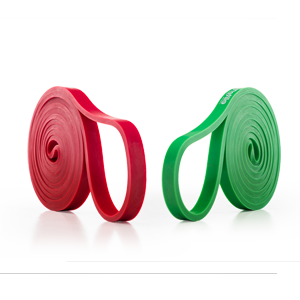
If you want to run his five-week progression the way he did, you need knee wraps for the second block and a belt you trust. If you want to see how he coaches the pull, watch this one we filmed with him:
The Perfect Meet: 1991 and the 901
I asked Ed if he ever had the perfect meet. He didn't have to think about it. It was the 1991 USPF Senior Nationals in Dallas:
"When I was at 220 and I totaled 2,400, and it was one of the old squat suits, walked out at the USPF Nationals, no bench shirt, no deadlift suit, with a regular old regular bench bar for the whole meet because it was IPF run, and drug testing that I passed."Ed Coan, Table Talk #131
The numbers: 959 squat ("which weighed out, because they had to weigh everything afterwards, 962"), 545 bench, and the 901 deadlift. OpenPowerlifting has it as 2,406 (1,091.19 kg). Depending on whose reweighs and rounding you use, you'll see 2,402 to 2,408 printed for this meet. I'm going with OpenPowerlifting.
He was the lightest man ever to total over 2,400. The 901 deadlift and the 2,406 total are still listed as the single-ply 100 kg records on PowerliftingRecords.com. You can find the video of the 901 on YouTube.
He went for 920 after that. "I was just mentally gassed. I pulled it up like over my knees and then put it down." When I asked why everything came together that day, he said:
"I think I was at the peak of my 220 pound weight class."Ed Coan, Table Talk #131
He said he knew "when I started getting a little too lean at a certain weight class that I should go up." He made the move to save his body instead of grinding out more meets at 220.
Here he is telling the story himself:
Ed Coan's 220 best, July 1991
Meet: USPF Senior Nationals, Dallas (drug tested, IPF rules)
Squat: 959 (reweighed at 962, per Ed)
Bench: 545, no bench shirt
Deadlift: 901, no deadlift suit (called for 898)
Total: 2,406 (1,091.19 kg, OpenPowerlifting)
The lightest lifter at the time to total over 2,400.
Moving Up: 242 and the All-Time Total
Ed didn't chase numbers for the sake of numbers, with one exception:
"I never thought about the numbers. I mean, I did go up to 242 to make sure I could squat a thousand."Ed Coan, Table Talk #131
He totaled 2,304 at 242 at the 1996 Seniors. Then on December 20, 1998, at the USPF World Championships in Las Vegas, he did it: a 1,003 squat, a 573 bench, and an 887 deadlift for a 2,463 total (1,117.5 kg) at 242. At the time it was the highest total in history regardless of bodyweight. A 242-pounder outtotaled every superheavyweight who had ever lived.
He wasn't done. At the 1999 USPF Seniors he squatted 1,020 and totaled 2,442. In 2000 he totaled 2,403 at the Seniors. At the 2001 WPO Semi-Finals, entered at 275 but weighing about 237, he squatted 1,038, the heaviest squat in his OpenPowerlifting record.
You'll sometimes see "2,463 at 220" or a total built from his best lifts at different meets. That's not right. The 2,463 was at 242 in 1998. His best at 220 is the 2,406 from 1991.
The Records That Matter
Here are the meets I'd point anyone to. Pounds are converted from OpenPowerlifting's kilos and rounded, except where Powerlifting USA printed a different figure.
| Date | Meet | Class | Lifts / Total | Why it matters |
|---|---|---|---|---|
| Jul 1984 | USPF Senior Nationals | 181 | 783 / 452 / 791 = 2,026 | 791 deadlift as a 20-year-old |
| Nov 1984 | IPF Worlds, Dallas | 181 | 1,929 (875 kg) | First world title |
| Mar 1985 | Hawaii Invitational | 198 | 2,205 (1,000 kg) | 1,000 kilos at 198 |
| Jul 1985 | USPF Senior Nationals, Chicago | 198 | 860 / 485 / 860 = 2,205 | PLUSA in 1988: "the all time best total at 198" |
| Nov 1986 | APF Worlds, Maui | 220 | 920 / 555 / 855 = 2,330 | Best Lifter, about 300 lb ahead of 2nd |
| Nov 1987 | APF Worlds, Dayton | 220 | 964 / 551 / 854 = 2,370 | 964 squat still listed as the 100 kg single-ply record |
| Jul 1988 | USPF Senior Nationals, Las Vegas | 220 | 2,205 | "5 IPF world records in one day" (PLUSA) |
| Jul 1989 | USPF Senior Nationals, Las Vegas | 220 | 931 SQ, 832 DL (weighed 833), 2,276 | IPF world records in the squat, deadlift, and total |
| Jul 1991 | USPF Senior Nationals, Dallas | 220 | 959 / 545 / 901 = 2,406 | Lightest 2,400 total; 901 deadlift |
| Nov 1994 | IPF Worlds, Johannesburg | 220 | 933 / 518 / 832 = 2,283 | Best drug-tested international total; world record at the time |
| Dec 1998 | USPF Worlds, Las Vegas | 242 | 1,003 / 573 / 887 = 2,463 | Highest total in history at the time, regardless of bodyweight |
| Jul 1999 | USPF Senior Nationals | 242 | 1,020 SQ, 2,442 total | Biggest squat at 242 |
| Aug 2001 | WPO Semi-Finals | 275 (weighed about 237) | 1,038 SQ | Heaviest squat in his OpenPowerlifting record |
| Jun 2002 | Mountaineer Cup, Chester, WV | SHW | 931 opener; 970 second attempt | Right patellar tendon ruptured |
| Aug 2007 | USPF Nationals, Las Vegas | 242 | 931 / 518 / 810 = 2,260 | His last full meet |
Sources: OpenPowerlifting (kilos converted to pounds), Powerlifting USA (Jan. 1988, Sept. 1988, Sept. 1989), PowerliftingRecords.com, and IronMind (June 26, 2002).
The Drug Testing Record
A definitive article has to include this, so here it is, straight. Ed failed IPF drug tests three times. He was suspended after the 1985 IPF Worlds, where the record shows a disqualification, and again after the 1989 IPF Worlds. In 1996 he tested positive at the IPF Worlds in Salzburg, his results there were removed, and he was given a lifetime ban from the IPF. In 2016 the IPF told its members that attending his seminars was against the rules. On Table Talk, the gap years came up as "mandatory vacation," and we moved on. That's the record. You can decide what it means to you.
The Injury: Chester, West Virginia, 2002
June 2002, the Mountaineer Cup in Chester, West Virginia. Ed opened his squat with 931. His second attempt was 970. He was planning big things that day:
"I was going to do at least a thousand that day and was going to be my first 600 pound bench."Ed Coan, Table Talk #131
He never got there. On the way down with 970, his right patellar tendon snapped:
"I snapped my patellar tendon in half... I set up too fast. My fault. When I set up too fast my right leg was farther out than my left leg, so when I went down my right leg came in and just snapped."Ed Coan, Table Talk #131
What he said next tells you about the old days of training. "If I didn't work out with the old school guys that I knew from Francis, I wouldn't have known how to dump the bar. I could have been dead." The bar was coming down with him.
He said that when the tendon snaps all the way, everything goes dead, so at first there was no pain. They took him to a hospital in Ohio, where a nurse let his leg drop too fast and it started cramping. That was the only time it hurt, and a shot of Demerol fixed that.
His cousin, orthopedic surgeon Dr. David Butler, operated on him that Tuesday after he flew home. Ed said Butler described it as "like putting two ends of a mop together." His therapist ended up doing his doctoral thesis on Ed's knee.
A few days after surgery, Ed told IronMind, "At least it gives me a chance to work on my bench press." He planned to train the next day: bench, triceps, and his good leg. He also said, "I'll be back before anybody knows it," and "I guarantee it."
One more thing from that time that says a lot about our sport:
"Louie was the first one that called me and sent me a sled and all kinds of stuff for free and said if you need anything else just message me. Not even my sponsors at the time sent me anything."Ed Coan, Table Talk #131
That was Louie Simmons. Ed said Louie didn't want anything out of it. "That was the real Louie."
The Comeback, and Knowing When to Walk Away
He took his time:
"I didn't put a bar on my back for six months, and when I did it I went back over 800... completely raw knee, without a problem. No pain. I've never had pain since."Ed Coan, Table Talk #131
He was back on the platform in November 2003 at the Texas Cup. Then came 2,329 at the 2004 Mountaineer Cup and Senior Nationals, 2,281 in 2005, and 2,194 in 2006, all a few years after a ruptured patellar tendon and all in his 40s.
His last meet was the August 2007 USPF Nationals in Las Vegas. He squatted 931 and totaled 2,260. He said he went up to an easy 931 "to make sure I could still do it. That was my last meet." His cousin, the surgeon who fixed his knee, came up to the warm-up room afterward, said "my job's done," and went back to gamble.
Why stop there? He told me he'd started having pain in his hip and knew what was coming:
"I'm not going to go out like a boxer that's too old... I want to go out being good and not a travesty."Ed Coan, Table Talk #131
And the part I think every lifter who's been at it a long time needs to hear:
"If I can't be the same as who I was, I'm just going to be miserable. So I just accepted it."Ed Coan, Table Talk #131
He talks more about that decision here:
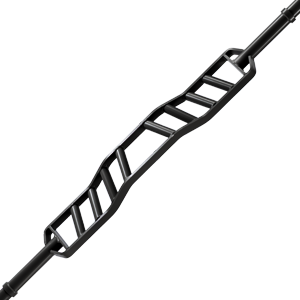
Retiring from meets didn't mean he stopped training. When we recorded in 2022 he was 59. He told me he does short cycles of about six weeks, switches exercises, and uses dumbbells when his right shoulder doesn't like the bar. One of his go-tos is what he called "that giant cambered bar thing you have," which he holds low so it swings, making it harder without much weight. If you want to try it, that's our Rackable Cambered Squat Bar. He also mentioned rotating in a safety squat bar, like our SS Yoke Bar.
"I'm frickin' 59 years old... I don't need to prove myself anymore." When I asked if he could see himself not training at all, he said that would be "prison."
The Ambassador: What He Gives Back
This is the part people miss.
Ed is always around the sport. At the Arnold, he doesn't go to watch the lifting. He goes to see the people he's met over the years. He told me that's the best time.
He's done seminars all over the world. Marty Gallagher wrote in 2026 that "Ed has conducted hundreds of seminars," and that he has taught everywhere from Russia and Eastern Europe to China, Australia, South America, Japan, and Scandinavia. We've filmed a bunch of them with him at Omaha Barbell. If you want the backstory on the 2016 seminar ban fight, I wrote about it in Ed Coan Seminars: That Federation.
He has presented at almost every SWIS. Here's what he said about it:
"It's the people and the experience of those people outweighs anybody else in the whole industry."Ed Coan, Table Talk #131
Then there's the Ed Coan Classic at Omaha Barbell. Ed said he wouldn't do a meet with his name on it until Bret Carter finally broke him down, and Bret was the only one he trusted with it. Ed is usually the head judge. Bonica Brown works the score table. He said one year they had "no misloads whatsoever," and he described it as "an old-school lifting contest without all the BS. There's no egos there." It's now the Ed Coan Classic Supermeet, with powerlifting and strongman.
As for why he does all this, it isn't complicated:
"Just don't be a dick and people like you. It's really easy... What I lift on the platform is gone after the platform. Now I'm just a regular idiot like everyone else."Ed Coan, Table Talk #131
"I love it and I really, really like helping people. I really enjoy it when I can fix something."Ed Coan, Table Talk #131
He's been saying the same thing for decades. In the September 1988 PLUSA interview with Kirk Karwoski, they asked Kirk who his heroes in powerlifting were. He said: "Of all the lifters I have ever known, Ed Coan is one of the nicest, as well as being a super lifter."

Here's one more thing people should know. When Ed came on Table Talk, his flight was delayed, which is why the podcast started late. He flew to Columbus on his own dime to do it. When I thanked him, he said a plane ticket costs less than what some people spend on pre-workout and supplements, and then:
"For me, it's cheap. I can make a difference. I feel good when I make a difference. So it's nothing. I didn't even have to think twice."Ed Coan, Table Talk #131
My Ed Coan Stories
I'll keep these to the ones I told on the podcast with Ed sitting right there.
The claw. I first met Ed when I was a kid, probably in my first year of college. It was a big meet in West Virginia, one of the meets before the Mountaineer Cup became what it was. The older guys I trained with told me to stop going to the teenage meets and go to that one, because all the best Ohio lifters would be there.
The crew I trained with had this thing we called the claw. It was a welding glove with a pig's foot in it, kept in a cigar box. We'd piss on it, chalk it, and put ammonia on it, and it came to every training session like some kind of voodoo that was going to make us stronger. Ed signed the box. I still can't believe he did that.
Five minutes. That same day, I screwed up my deadlift. Ed took five minutes and helped me fix my sumo. He was the greatest lifter in the world, and he didn't have to do that. That's when I realized he was no different than anybody else. He just wanted to see me pull a better deadlift. Ed and Louie and the people who helped me when I was coming up are the reason I feel such a strong obligation to give back. What they gave me, I didn't pay for.
When I told this story, Ed said that when he's not lifting, he's just a guy. Right. A guy who took five minutes.
SWIS and the binder clips. One of the first times Jim Wendler and I went to SWIS, back when it was in Toronto, we brought a bag of stuff to sell at a little expo area. Everybody else had real booths with backdrops. We had a folding table with no cloth, Copenhagen spit cups, and a bunch of books. At the break, everybody came to our table. Jim decided that if we could sell everything we could go out that night, so he sold the whole table to the first guy for something like 500 bucks.
That night we ended up at the same club as Ed. He came up to me and gave me two lessons. First, he told me to use binder clips to train finger strength, because the fingers are the most important thing for your grip. That made the whole trip worthwhile. Second, he told me I was an idiot for throwing around American 20s in Canada without thinking about the exchange rate.
The plane. I used to tell Jim he'd always be the strongest guy on any plane he got on, so there was no reason to be nervous about flying. Then one day Jim gets on a flight, and who walks onto the same plane? Ed Coan. So much for that.
What Lifters Should Take From Ed
None of this comes from me. It's what Ed said:
- Build the base. Assistance work was his armor. "Base, base, base."
- Plan every set. He had every weight, rep, set, and exercise mapped out before the cycle started, and he never did anything without a purpose.
- Don't go heavy so often. "You don't have to prove anything in the gym."
- Take your time on your setup. That's what he tells people who come to him with problems, and a rushed setup cost him his knee.
- Move up before you break. He went to 242 when he got too lean at 220, to save his body.
- Leave it on the platform. "What I lift on the platform is gone after the platform."
At the end of the podcast he told me, "What I got out of the sport with the people I've met is way worth more than any damn trophy I'll ever get." That's coming from a guy with as many trophies as anyone who ever lived.
Here's the full conversation. It's long, and it's worth every minute.
If you want more Ed, read The Top 3 Lessons I Learned From Ed Coan, the Strength Inc. 15-minute Q&A with Ed Coan, and Congratulations, You Just Ate Your Way Up to Ed Coan.
Follow Ed Coan on Instagram
Keep up with Ed's training, seminars, and lifting history on his Instagram, @eddycoan.
Train the Way Ed Built His Base
Ed ran blocks of fives without wraps, then with them, and leaned on a cambered bar and safety squat bar once his heavy days were behind him. If you want to set up your own training the same way, start here: