
Long Muscle Length Training for the Big Three: What the 2026 Research Actually Means for Your Squat, Bench, and Deadlift
By Dave Tate / elitefts
Every few years a piece of research drops and the internet treats it like the new commandment. Lengthened partials, stretch-mediated hypertrophy, and long muscle length training. The terms get thrown around like everyone agrees on what they mean. They don't. And the people quoting the studies the loudest usually haven't read the limitations sections.
I've been around long enough to watch this cycle play out a dozen times. HIT. High volume. Cluster sets. Velocity-based training. Now this. Some of it sticks. Most of it gets quietly dropped when the next thing comes along. The lifters who keep getting stronger are the ones who can hold two ideas in their heads at once. The research is interesting. The research is also limited. Both of those statements are true.
The 2026 systematic review on long muscle length training pulled together what we know. It's worth understanding what it actually says before you start ripping your hamstrings doing Bulgarian split squats with a 10-second pause at the bottom because some kid on Instagram told you to.
What the 2026 Systematic Review Actually Found
The review by Wolf and colleagues, published in Sports Medicine and Health Science, looked at whether resistance training performed at longer muscle lengths produces more longitudinal hypertrophy than training at shorter muscle lengths. Longitudinal hypertrophy means the muscle physically lengthens, reflected in increased fascicle length. The proposed mechanism is the addition of sarcomeres in series, the smallest contractile units, making the muscle longer end to end.
Eight studies met the criteria. Total sample size of 120 participants across all of them. The conclusion: long muscle length training may be superior to short muscle length training for hypertrophy, including longitudinal growth. The word "may" is doing a lot of work in that sentence.
What Most Summaries Leave Out
The evidence is mixed. Not all studies showed the effect.
No study to date has directly measured serial changes in sarcomere number in humans. The "mechanism" people throw around in social media posts hasn't actually been confirmed.
Almost every study used linear extrapolation to estimate fascicle length, which the authors themselves describe as having questionable validity.
There's a total work confound. Training through a longer range of motion at long muscle lengths usually means the lifter does more total work per rep. That extra work might be doing the heavy lifting on the hypertrophy result, not the muscle length itself.
Most of the included studies were rated as poor or fair on the methodological quality scale used.
That's not me dunking on the research. I'm saying the research is honest about what it knows and what it doesn't. The internet conversation is not.
The Single-Joint Research Problem
Here's where the real disconnect happens. Almost all of this research is done on single-joint exercises. Knee extensions. Calf raises. Triceps extensions. Preacher curls. Single muscle, single joint, controlled environment, easy to measure.
The squat, bench, and deadlift are not single-joint exercises. They involve multiple muscle groups firing at multiple joint angles simultaneously, with a technique that has to be specific to a competition standard. Trying to apply the lengthened partials principle directly to a competition squat or a contest bench is where you get hurt.
The squat at full depth puts the quads in a long muscle length position. It also puts your hips, knees, and lumbar spine in a position where any technical breakdown costs you. Going below parallel for the sake of "more stretch on the quad" when your hip mobility, ankle mobility, or core stability isn't there does not make you bigger. It makes you injured.
The bench press is even more complicated. Arch height, scapular position, and elbow flare all change where the pec is at peak tension. A heavy arch with tucked elbows shortens the pec and loads the triceps and front delt. A flatter back with flared elbows lengthens the pec but trashes the shoulders if you don't know what you're doing. The "more stretch" answer isn't always the more precise answer, and it's never the safer one.
The deadlift is where this conversation gets interesting. Sumo and conventional load the hamstrings, glutes, and low back at very different muscle lengths. Conventional with a tall hip position keeps the hamstrings under tension at a longer length. Sumo with a wide stance shortens the moment arm at the hip and changes the angle at which the hamstrings are loaded. Neither is wrong. Neither is universally better for hypertrophy. The lifter who pulls sumo because their leverage is better doesn't need to switch to conventional to get long muscle-length stimulus. They need to add it through accessory work.
Specific lift, specific stimulus, specific accessory.
Where Long Muscle Length Training Earns Its Place
Accessory work is where I see this research actually applying to powerlifting. The competition lifts have to be trained the way they're contested. You don't add weird ranges of motion to your max effort squat. But your accessories? That's where the hypertrophy tools live.
A few examples that hold up.
Romanian Deadlifts with Controlled Tempo
The RDL is already a long muscle length movement for the hamstrings. Adding a 2 to 3 second eccentric and pausing at the lowest point you can hold a neutral spine puts time under tension at the muscle's longest position. You don't have to chase an extreme range of motion. The point where your lower back starts rounding is the point where you stop. Past that, you're not training the hamstring anymore. You're loading the disc.
Bulgarian Split Squats with the Rear Foot Elevated
Done correctly, the front leg goes deep, the hip flexor of the rear leg stretches, and the quad and glute load at a long length. One of the higher payoff applications of the principle. Also one of the easier ones to mess up. If you're falling forward, dumping the knee inward, or losing your trunk position, you're not training what you think you're training.
Glute Ham Raises
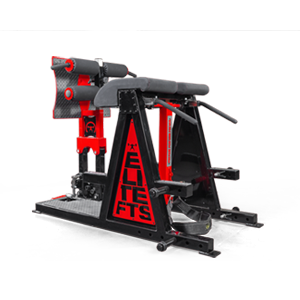
This is the underused one. The GHR loads the hamstring at both ends of its function, hip extension and knee flexion, and it's mechanically built to deliver tension at the long position. If you've never spent a training cycle hammering GHRs, you have no idea how much your posterior chain is leaving on the table. The elitefts GHR was designed around this exact principle. Pad angle and footplate position matter because they determine whether you're actually loading the hamstring at length or just doing a sit-up off a bench. We have a full breakdown of why most people do GHRs wrong on the site.
Dips for the Chest
With a slight forward lean and full range, dips load the pec at a long muscle length better than most flye variations. Cable flyes work, machine flyes work, but dips give you load potential that flyes can't match. Trade off: shoulder cost is real. If your shoulder hates dips, do flyes. The principle matters more than the specific movement.
Leg Curls with a Hip-Flexed Position
Standard prone leg curls work the hamstring at a relatively short length. Seated leg curls flex the hip first, putting the hamstring in a longer position before knee flexion happens. The seated version produces greater hamstring growth in studies that have examined it. Easy swap if you have access to both.
How to Program It Without Breaking Yourself
Here's the framework I use when I'm thinking about this for myself or for the lifters I work with.
Programming Rules
Don't change the competition lift. Your squat is a squat. Your bench is a bench. Your deadlift is a deadlift. The competition standard is the standard. You add long muscle length stimulus through accessory selection, not by inventing new ways to do the main lifts.
Pick one or two accessories per training day that hit the long position. Not all of them. Not every accessory. One or two. The rest can be your normal volume work, prehab, tempo work, or whatever else fits the program.
Tempo over range when in doubt. If you're not sure you can hold position at the deepest point of a movement, slow the eccentric instead of pushing the range. A 3-second negative on an RDL with you stopping at parallel does more for hamstring growth than a fast rep down to your shoelaces with a rounded back.
Watch for the second effect. Long muscle length training tends to produce more soreness and more recovery cost. If you're already pushing volume on the main lifts, slamming a bunch of lengthened-position accessories on top will catch up to you. Start with one or two movements per body part per week.
Don't run lengthened partials past failure on a loaded spine. The calf-raise studies that started this whole conversation showed about a 40% advantage from lengthened partials past failure. Calves. Single joint. Standing position. That doesn't mean you do lengthened partials past failure on a Romanian deadlift. The risk-reward changes completely when the spine is loaded.
The Wolf review itself notes that the existing research can't separate the muscle length effect from the total work effect. If the long muscle length group is just doing more work per rep, the result might be a volume effect rather than a stretch effect. That changes how you'd program it. More volume on a movement that already trains the muscle through full range, rather than chasing extreme positions, might give you most of the benefit with less risk.
The Stronger by Science Counterpoint
Stronger by Science has been one of the more honest voices on this topic. Their position is straightforward. The effect of long muscle length training is real, but smaller than the loudest internet voices make it sound. And the term "stretch-mediated hypertrophy" is a misnomer. Genuine stretch-mediated hypertrophy in the research literature requires more than an hour per day of stretching at high discomfort levels. The two extra minutes per week your knee extensions spend at long muscle length are not producing hypertrophy through the same mechanism as those animal studies where chickens had weights strapped to their wings 24 hours a day.
What that means for you. The effect sizes in the lengthened-partials literature are typically small to moderate. Long muscle-length training typically produces more fascicle-length growth than short-length training. That effect is real. But the difference in visible muscle size between two well-programmed routines, one emphasizing long muscle length and one not, isn't the night-and-day difference the conversation around this topic suggests.
Effect sizes matter for programming decisions. If you have one accessory slot to fill and lengthened partials gives you 5 percent more growth than full ROM training on that movement, that's worth taking. If you're rearranging your entire program, swapping out movements you've made progress on for movements you've never done, doing lengthened partials past failure on every set on every exercise, you're chasing a small effect with a big risk profile. The math doesn't work.
What I Tell Lifters
The basics still matter more than the details. Train the lifts hard. Do enough volume. Eat. Sleep. Recover. That moves the needle 80 percent of the way for most lifters. The 2026 research on long muscle length training is real and worth applying. It's also a fine-tuning tool. Not a substitute for everything else.
If you want to apply it intelligently, pick two or three accessories where the long muscle length principle fits the movement and the movement doesn't fight your competition technique. RDLs. GHRs. Dips. Bulgarian split squats. Done well, with controlled tempo and honest range of motion, those movements deliver the stimulus the research is talking about. Done with the standard powerlifter "more is better" approach, they'll put you on a table at the chiropractor.
Treat new research like a tool, not a religion. Add tools to your box. Don't throw out the box.
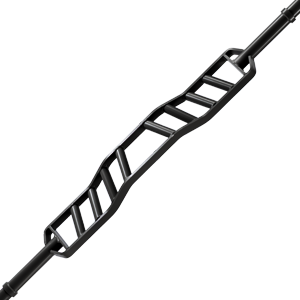
If you've got specialty bars in your gym, they also earn their keep here. The SS Yoke Bar for upright squats and good mornings, a cambered bar for hip-dominant work, a Swiss bar for pressing variations. Each one changes the muscle length profile of the lift slightly, which gives you a different stimulus without abandoning the pattern. We've written more on how each specialty bar pulls you out of position and why that's a good thing.
The research will keep evolving. Better imaging will eventually resolve the question of fascicle length. Bigger studies on multi-joint movements will eventually tell us how much of this transfers to the big three. Until then, train smart, apply what's solid, ignore what's noise, and don't let a study with 120 total participants override 50 years of effective programming.
Live, Learn, Pass On.
Dave Tate / elitefts