
Since 2005, I have not squatted with a straight bar. Not once. Not in training, not in a warmup, not to "test it out." The shoulder issues I accumulated over two decades of competing at the highest levels made that decision for me, and honestly, it's one of the best things that ever happened to my training.
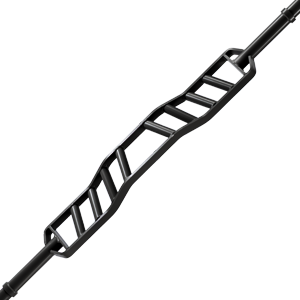
The bar that made that possible? The EliteFTS SS Yoke Bar.
But I'm getting ahead of myself. Let me take you back to where it started.
The Day the SSB Humbled Me
I had seen the safety squat bar before and thought it was a total joke. My mindset back then was simple: if you want to squat more, you squat. If you want to pull more, you deadlift. Everything else was just fluff, stuff you did to get bigger, not stronger.
Then came the day my training partners loaded it up on a max effort day. We were doing SSB squats off a low hassock. After a few sets of 135 pounds, we started working up. Nothing crazy. Just adding 45s and 25s like normal.
315 pounds nearly knocked me off my feet. Not because I was weak — I had recently squatted 760 pounds, but because this bar had found every crack in my upper back and lower back that the straight bar had been hiding. My training partners handled the weight with no problem. I was seeing stars.
We jumped to 365. I unracked it and thought I might not make it. Grinded out the first rep. Second rep, my eyes started watering. Third rep? I don't remember it.
Then someone slapped another 45 on the bar.
405 pounds. And for the first time in my life, I didn't want to squat.
I stood back up anyway. The room started to fade. I held on to the bar to make sure I didn't pass out, walked to the glute-ham raise, and draped myself over it for the next half hour, watching everyone else work up to 600. Both eyes are bloodshot. Broken capillaries across my face. I hated that bar.
But I understood, for the first time, exactly how valuable it was.
Why I Never Went Back to the Straight Bar
Years passed. My squat climbed from 760 to 935. A lot of that had to do with the brutal upper and lower back work the SSB forced on me every session. Then the shoulders started going. Then more surgeries. Then the reality of what a career at Westside does to your body caught up with me all at once.
I needed to keep squatting. I had to. Training isn't just sport for me, it's how I function. How I deal with everything that comes with building a company, raising a family, and carrying whatever the hell else gets thrown at me.
The problem was, the straight bar was no longer an option. The shoulder positioning required to rack it was destroying what little I had left.
So we got serious about the SS Yoke Bar, not just as a specialty bar to rotate in, but as my primary squatting tool.
And then we spent years making it better.

Why We Redesigned It Entirely
If you're going to use a bar every single week, not as a variation, not as a nine-week bloc, but week in and week out, year after year, you will eventually find its flaws.
Every safety squat bar I'd used before had the same problems. The pads broke down fast. The shorter pad length places compression on the spine rather than distributing load across the upper back. The handle length affected how lifters came out of the bottom. Change one thing, and it creates three other problems.
It took us over 10 months, multiple bar prototypes, and more squat sessions than I can count to get it right.
Here's what we landed on:
-
A full-length pad — not a short safety squat pad. The longer the pad, the more weight displacement across the upper back. No compression points, no daylight between bar and back.
-
Denser foam that doesn't break down — with thicker shoulder pads that still accommodate wider necks and narrower shoulders.
-
Shorter, thicker handles — this was the game changer. Long handles allowed lifters to use their arms to pull themselves out of the hole, defeating the whole purpose and putting people in bad positions. Short handles let you support the bar without aiding the lift.
- A longer camber — which increased bar strength to well over 800 pounds of load-bearing capacity and centered the weight closer to your midline.
The result is the best yoke bar ever built. I'm not saying that because I sell it. I'm saying it because I've used it almost every week since 2005, and when something's that close to you for that long, you know exactly what it is.
The Benefits Nobody Argues With
Here's what the SS Yoke Bar does that a straight bar cannot:
1. Builds your upper back like nothing else
The bar sits high on the traps and constantly tries to dump you forward. That fight, that constant battle to stay upright, builds the upper- and lower-back strength that saves your squat and deadlift when things get heavy. Most missed squats aren't a lower back problem. They're the chest caving in. This bar fixes that.
2. Takes the shoulders completely out of the equation
The arm position with the SS Yoke Bar is the easiest of any bar on the market for the shoulders. I've seen people squat in slings with this bar. I've trained through pec tears, shoulder surgeries, and post-op periods without missing a session, because this bar was there. If you have limited shoulder mobility, rotator cuff issues, or anything that keeps you from getting under a straight bar, this is your answer.
3. It will build your deadlift
This surprises people, but it shouldn't. The bar's design raises the load and moves it farther from your center of gravity, forcing you to work harder throughout the entire pull. Add in dynamic effort work with the SS Yoke Bar, short rest periods, straight weight or chains, and you'll watch your pull move in ways you didn't expect.
4. It teaches you to stay upright
There's nowhere to hide with this bar. If you fall forward, you know it immediately. Over time, that feedback creates better squat mechanics that carry over to straight bar, competition, and any loaded movement.
The Movements Nobody Thinks About
Most people know you squat with it. Smart people know you do good mornings and lunges with it. But here's where it gets interesting. These are my top uses that almost nobody thinks about:
Chain Suspended Good Mornings
Set the bar in chains at navel height in the power rack. Perform the good morning from a dead stop. No eccentric loading — just a concentric pull from the floor up. This is one of the best exercises you can do for your deadlift, and most people will never try it.
Backwards Bar Box Squats
Flip the bar around on your shoulders. The reversed camber changes the entire movement pattern. Different stimulus, different muscles getting hammered, same bar. Try it once, and you'll understand immediately.
Partial Arches on a Box
Sit on a box with the bar on your back. Arch hard, then round forward. Hold each position. This builds back strength and teaches you what full extension feels like at the bottom of your squat. Simple. Nobody does it.
Dynamic Training with Chains — the "Don't Lose" Cycle
This is one of my favorites for off-season work. Load it to 35–40% of your max, then run short rest sets back-to-back with a training partner. The goal is to run each other into the ground. We've seen guys go beyond 38 sets. The lactic acid tolerance you build carries over to every big lift you do. BE AGGRESSIVE AND DON'T LOSE.
Tricep Extensions - JM Presses
Rack the bar with the yoke pointing toward your feet. Unrack it with hands shoulder-width apart, lower to where your forearms are parallel to the floor, and extend up. The bar is thicker than a standard bar; your elbows will thank you. The pad acts as a guide. Most people walk right past this one.
Walking Carries
Place it on your back and walk. This builds trap strength, mental toughness, and overall conditioning that you can't replicate with anything else in the gym. Do this with a training partner and make it a competition. Just be careful, when you're tired, dumping this bar is harder than it sounds.
45-Degree Back Raises with Load
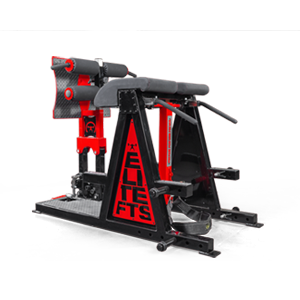
Strap in and perform back raises with the SS Yoke Bar across your back instead of holding a plate to your chest. The load distribution hits your lower back, glutes, and upper back simultaneously. If you want a posterior chain that doesn't quit at the bottom of a heavy squat, start here.
Zercher Squats
Use the thickness of the bar to your advantage in the crook of your elbows. Forces ab tightness, chest up, proper position, and builds your deadlift by teaching you to maintain positioning under load.

Who This Bar Is For
I'll make this simple.
If you're a competitive powerlifter, this bar will build your squat and your deadlift in ways your straight bar can't. Rotate it into your dynamic effort work. Use it for max effort variations. Let it expose your weak points so you can fix them before they cost you a meet.
If you're a strength athlete, coach, or general gym owner, every facility should have one of these. I don't care if you're a high school program, a D1 weight room, or a garage gym. Athletes get shoulder injuries. Athletes get hand injuries. Athletes need to keep training. This bar makes that possible.
If you're a beat-up lifter who's been told they can't squat anymore, I was told the same thing. Get this bar, drop the ego on the numbers, and start building again.
And if you're a beginner? This bar will teach you what a proper squat actually feels like faster than anything else on the market. The feedback is immediate and unforgiving, and that's exactly what you need.
Final Thoughts
I designed this bar because I needed it. Not to sell it, to survive in the gym. When you use something every week for over 20 years, and you're still looking for every possible way to make it better, that's not a product. That's a tool you built your training life around.
The EliteFTS SS Yoke Bar is the most versatile, most joint-friendly, most strength-building specialty bar on the market. It holds over 800 pounds. It's made in the USA. And every feature on it exists because we needed it, not because it looked good on a spec sheet.
Live, Learn, Pass On.
— Dave Tate
Ready to get under it? Grab the EliteFTS SS Yoke Bar and find out what you've been missing.