
The Shoulder Saver Pad:
Why I Built It
Six weeks out from a meet, your shoulder starts talking. You have two options: stop pressing, or find a way to keep pressing without making it worse. I built this because nothing on the market gave me that second option.
There is a moment every serious lifter eventually hits. You are six weeks out from a meet, right in the middle of a training block that is finally clicking — and your shoulder starts talking. Not just the usual noise. Real pain. The kind that lives at the very bottom of the bench press, where the bar touches your chest, and the shoulder joint is working hardest.
You have two options. You stop pressing. Or you find a way to keep pressing without making it worse. I built the Shoulder Saver Pad because I needed that second option, and nothing on the market offered it.
Why the Bottom of the Bench Press Is Where Shoulders Go to Die
The pain does not hit at the top. It does not hit in the middle of the range. It hits at the very bottom — when the bar is an inch off your chest and the shoulder joint is at its most vulnerable position. That is not coincidence. That is anatomy.
At the bottom of the bench press, you are asking the shoulder to work through its greatest degree of rotation. The joint is loaded, stretched, and under maximum demand all at the same time. For a healthy shoulder, it is manageable. For a shoulder that is irritated, inflamed, or dealing with a structural problem, it is where the whole thing breaks down.
The fix most powerlifters reach for is the board press. You throw a two-by-six on your chest, have a training partner hold it, and press to the board. You cut that bottom range of motion out and keep loading the bar. It works — I have done thousands of them. The problem is it requires a training partner who is paying attention, boards that do not slide around, and a situation where someone is always available to hold the board.
Not everyone has that. And even when you do, it is not always practical.
What the Shoulder Saver Pad Actually Does
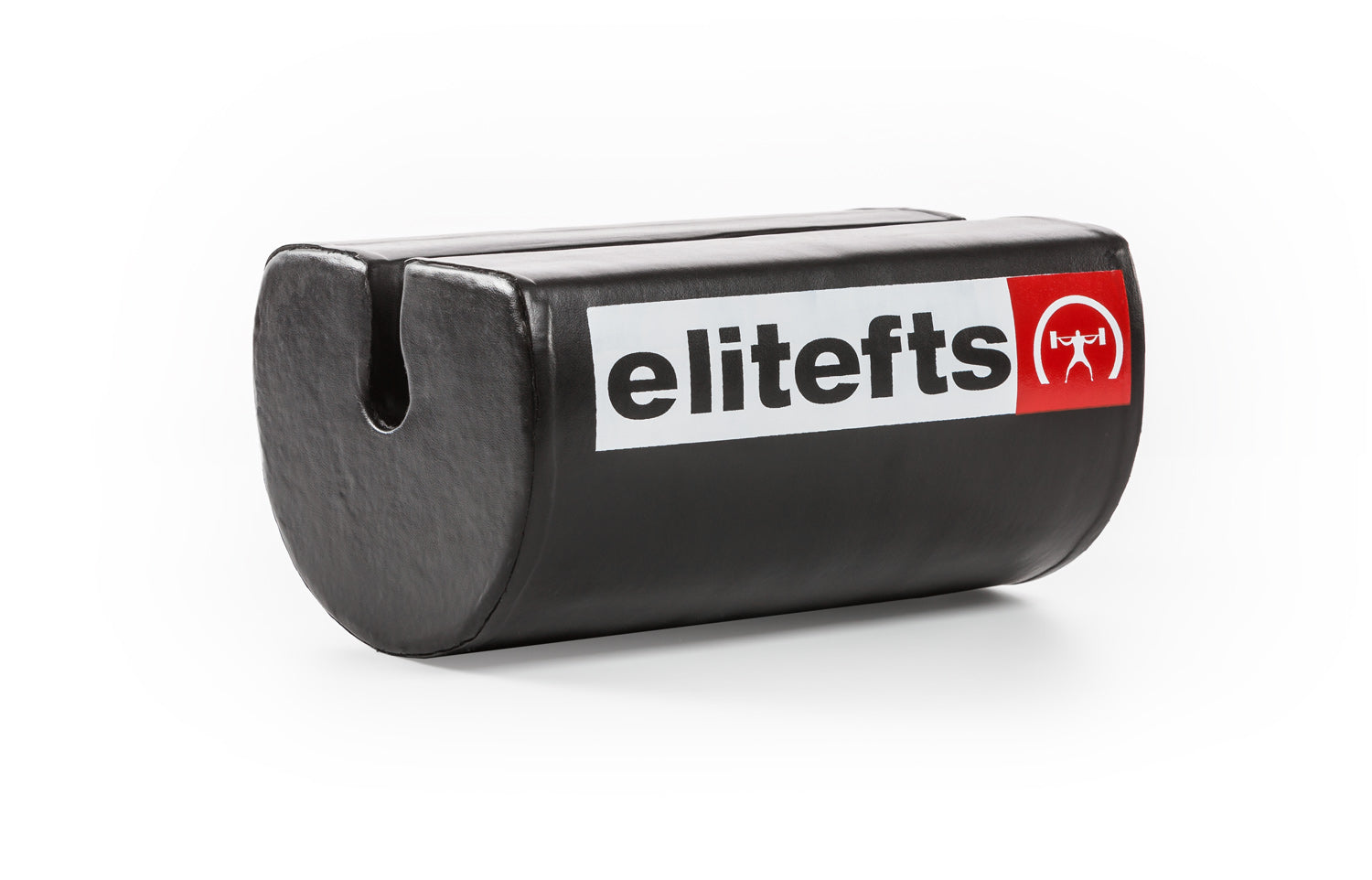
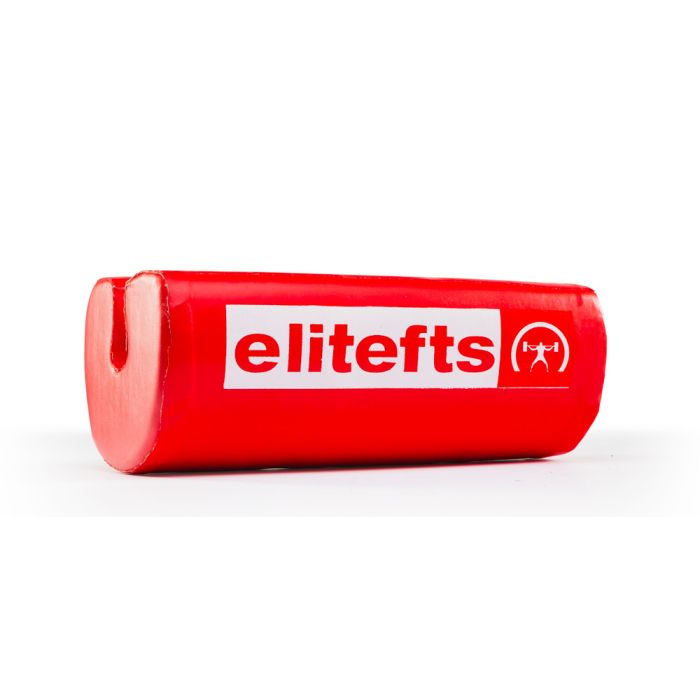
The elitefts Shoulder Saver Pad is a high-density, half-cylinder pad that clamps directly onto your barbell. When you press, the pad contacts your chest before the bar does — reducing the range of motion and eliminating the dangerous bottom position where the shoulder is most at risk. Same effect as a two-board press. No board. No training partner. No rigging something to your chest with a band.
The design took a long time to get right. Two problems had to be solved.
- Rotation: If a pad spins on the bar mid-set, you are in trouble. You get to rep three or four, and suddenly the pad has rotated, and the bar is in a completely different position than where you set up. That is not a training tool — that is a hazard. The current pad grips the bar tightly enough that it does not move during a working set.
- Collapse under load: A lot of pads and foam products look fine until you put real weight on them. Then they compress and deform, and you lose the range-of-motion benefit you were counting on. We over-engineered the density specifically because collapse under load is a design failure. The pad will outlast the lifter using it.
 elitefts Shoulder Saver Pad — Board press without the board
The Half-Cylinder Design and Why It Matters
The pad is a half-cylinder — not a full cylinder, not a flat block. That choice was intentional on multiple levels.
- Honest pressing: The rounded shape makes the heaving technique harder to execute. When you try to sink the bar and set up a bounce, the pad begins to roll, disrupting the movement and forcing you to press honestly. That is a feature, not a flaw.
- Flip-and-share: The half-cylinder can be flipped flat-side up. Training partners who do not want the pad rotate it out of the way and press off a standard bar. You flip it back. One bar, two lifters, no argument.
- Clean liftoff: The pad is short enough that you can still get a clean liftoff from a standard bench setup. Works for close-grip work too — does not affect grip width or setup.
Who This Is For
The obvious use case is a lifter with a shoulder problem who needs to keep pressing. When you stop pressing because of shoulder pain, you lose strength in the ranges you can still work. The Shoulder Saver Pad lets you keep training the mid-range and lockout while protecting the bottom. You stay in the movement pattern. You maintain the tricep and chest strength you built. You come back to the full range of motion in a better position than if you had stopped entirely.
But the pad is not only for injured lifters.
- Healthy lifters / home gym training: Board pressing is a legitimate method for overloading ranges you cannot otherwise overload and developing lockout strength. The Shoulder Saver Pad gives you that stimulus without a board setup — critical if you are training alone.
- Drop sets: Load a weight you cannot press to the chest at that volume. Press the pad. When you hit failure, remove the pad and extend the set by pressing to chest at a lower effective weight. That is a training tool, not just an injury workaround.
 Shoulder Saver Pad — In use on the bench press
How to Use It Properly
Slide the pad onto the bar before you rack the weight. Position it centered on the bar where it will contact your chest during the press. The pad grips the knurling and stays in place once positioned. Press normally — the pad contacts your chest first and stops the descent before you hit full depth. Drive back to lockout the same way you would in any other press.
- Check your grip width. Depending on where you set up on the bar and where the pad sits, you may need to adjust slightly so the pad lands in the right position on your chest at the bottom.
- The feel is different than a board press. With a wooden board, the contact point is wide and flat. With the Shoulder Saver Pad, the contact is rounded and smaller. Give yourself a session or two to get comfortable before you judge the movement.
- If you are rehabbing: Start conservatively. Use it at a range of motion that is genuinely pain-free and build from there. The point is to accumulate quality reps, not to test how much you can load at the edge of pain.
The Bigger Point
We all get beaten up. Anyone who has been training seriously for more than five years knows what it is like to have a body part that gives them trouble while they try to stay in the game. The answer is not always to stop. Sometimes it is to find the position that lets you keep working.
Your shoulder does not have to be the reason you miss training. If you can find the position that lets you press without pain, you can keep progressing.
The Shoulder Saver Pad exists because that second option should be accessible and reliable. Not a duct-taped solution. Not something you are hoping holds together through a heavy set. A piece of training equipment that was tested, refined, and built to do exactly what it says.
Train around the problem. Keep getting stronger.
elitefts Shoulder Saver Pad
Pays for itself the first time it keeps you in the gym.