


The March 1980 issue of Powerlifting USA captures a sport at a boiling point. On one hand, women's powerlifting is exploding in popularity and technical proficiency, as evidenced by the high participation and record-breaking performances at the recent Nationals. On the other hand, the political landscape is a minefield. The IPF and USPF are locked in a high stakes standoff over World Cup sanctions, leading to the temporary cancellation of the World Championships for the American team and a flurry of suspensions for high profile figures like Tony Fitton, Clay Patterson, and Penny Stillwell. Despite the administrative chaos, the lifting remains legendary, with names like Lamar Gant and Mike Bridges continuing to redefine human potential.
Legend Feature: Ken Leistner and the Pre-Meet Grind
This issue is dedicated to Ken Leistner, who recently survived a shocking stroke and a minor heart attack. Known for his gritty approach to squatting and deadlifting, Leistner shared his specific pre-contest training phase originally intended for the Memphis Open. His philosophy was simple: build a rock solid foundation in the off season, then sharpen the blade with precise, heavy work as the meet approaches.
Leistner viewed powerlifters as complete athletes. He argued that proper training should allow one to be strong enough for the platform while maintaining speed, coordination, and cardiovascular endurance. For Ken, muscular strength and cardiorespiratory health were equals.
The Leistner Training Split:
-
Monday: Squats (warmup of 12 reps, then 3 or 4 heavy doubles), Bench Press (singles used to monitor his progress following a torn pec) , and Stiff Legged Deadlifts (one set of 12 and one all-out set of 6).
- Friday: Squats (heavy singles with wraps), Overhead Press (3 sets of 5 reps), and Deadlifts in the Rack (pulling from the bottom of the patella for 3 to 4 sets).
The Leaderboard: World Record Standards
To put the era into perspective, these global standards represent the pinnacle of the sport in early 1980. Records were falling like rain as athletes pushed into new frontiers of strength.
| Weight Class | Lifter | Lift | Performance |
|---|---|---|---|
| 114 lbs | Lamar Gant | Deadlift | 567 lbs |
| 123 lbs | Lamar Gant | Total | 1344 lbs |
| 132 lbs | Mike Bridges | Squat | 600 lbs |
| 148 lbs | Mike Bridges | Total | 1598 lbs |
| 165 lbs | Rick Gaugler | Squat | 588 lbs |
| 181 lbs | Scott Saluzzi | Total | 1720 lbs |
| 198 lbs | Walter Thomas | Total | 1923.5 lbs |
| 242 lbs | Barney Clayton | Squat | 815 lbs |
| 242 lbs | Mary Phillips | Squat | 827 lbs |
| 275 lbs | Tom Henderson | Squat | 770 lbs |
| SHW | Don Reinhoudt | Squat (Training) | 900 lbs |
10 Tactical Training Takeaways
-
The Deadlift Head Position: Larry Kidney and John Kuc suggest that starting a deadlift with the head and neck arched backward is incorrect. Keep the head in a normal position, looking straight or slightly down, and save the arch for the very end of the lift to assist the lockout.
-
Box Squatting for Hip Power: Use "50% Squats" by lowering yourself to a box set roughly 2 inches above parallel. Sit completely to a stop while maintaining a lower back arch, then rock back and explosively thrust the hips forward to stand.
-
The Maximum Fatigue Theory: To overcome sticking points, push or pull a bar against a second set of pins in a power rack, then contract isometrically for 8 to 10 seconds. This method is claimed to stimulate 50% more muscle fibers.
-
Deadlift Off Coke Crates: Increasing range of motion is a classic strength strategy. Inmates at Kansas State Prison used coke crates to pull deadlifts when they ran out of plates on their 360 lbs bar.
-
Injury Prevention Stretching: Heavy trainer John Kuc utilizes a dedicated stretching routine before and after every workout. It includes 30 reps each of knee-to-chest rotations, toe touches to stretch the hamstrings, and leg raises.
-
The 1.13 Ratio for Meet Attempts: To more accurately predict your maximum single capacity, Nate Foster recommends taking your best pre-meet triple and multiplying it by 1.13.
-
Build Pressing Power Through Injury: When dealing with a torn pectoral, Ken Leistner focused on heavy overhead work, such as press lockouts in a rack, to maintain pressing strength without directly aggravating the chest.
-
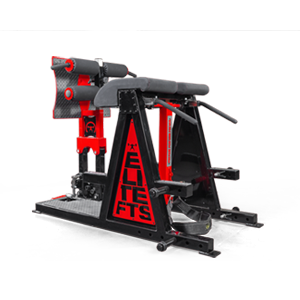
The Reverse Hyperextension: Often unnoticed but highly effective, this exercise involves lying the upper body over a leg extension machine or high board and raising the legs behind you to contract the lower back and glutes.
-
The Funeral Squat Mindset: Some lifters advocate for a somber, intensely focused mental state before a lift. Treat the approach to the bar with extreme seriousness, then explosively "go nuts" once the lift begins.
- Training Stiff-Legged for a Stronger Lockout: Larry Kidney trains his deadlifts in a stiff-legged style for most of the year. He believes this specifically prepares a lifter for the critical final position of a heavy competition deadlift.
Marketplace Time Capsule
Gear in 1980 was built for utility, and the prices reflect a different economic era for the iron game. From "miracle" suits to custom leather, the marketplace was just starting to specialize in powerlifting.
- The Spanjian Supersuit II: A competition suit made of stronger material and available in various colors for $32.00.
- Bob's Custom Lifting Belts: Deluxe suede-covered belts with double stitching and custom buckle sizes were priced at $75.00.
- Hurricane Knee Wraps: Marketed as the strongest and most durable wraps available for $10.00 a pair.
-
Coach's Formula: A protein powder derived from milk and liver, specifically developed for the nutritional needs of athletes.
- Scientific Lifting Inc. "The Belt": A 13 mm thick, 10 cm wide belt guaranteed to improve squats and deadlifts for $65.00.

