


There is a tendency in strength and conditioning to argue over exercises as if the exercise itself is the program.
Olympic lifts are either treated like the answer to athletic development or dismissed as too technical, too risky, or too time-consuming for football players. Evan Barr takes a different position: the value isn't just in how much weight an athlete can clean. It is what the athlete must learn to perform the movement.
In this episode of Dave Tate's Table Talk, Barr breaks down the years of experience behind that approach—from growing up doing physical work to walking on at Tennessee to building strength programs with limited equipment to eventually directing football strength and conditioning at the Division I level.
Watch the full episode above or open it directly on YouTube .
“I do like the Olympic lifts for football because it's hard. It's complex. Football is hard. It's complex.”
— Evan Barr
Inside the Conversation
Five Ideas Worth Paying Attention To
Athletic Development
The Weight Room Shouldn't Be Where Movement Begins
One of the strongest themes in the conversation has nothing to do with cleans, squats, percentages, or velocity trackers. It starts much earlier.
Young athletes need a broad base of physical ability. They need to run, jump, land, crawl, change direction, control their own body weight, and learn to organize themselves in space. The weight room can eventually strengthen all of those qualities, but it cannot replace the foundation.
That changes the question a coach should ask.
Instead of asking, “How early can this athlete start lifting?” ask, “What physical skills does this athlete need to own first?”
The Olympic Lifting Debate
Hard and Complex Doesn't Automatically Mean Wrong
A common argument against using Olympic lifts with football players is that the movements take too long to teach.
Barr sees some of that complexity as part of the point.
Football is not a simple sport performed in a controlled environment. An athlete has to coordinate the feet, hips, trunk, upper body, vision, timing, and intent while reacting to another person trying to disrupt all of it.
A clean asks an athlete to rapidly produce force and then reorganize the body to receive it. There is timing involved. There is coordination. There is acceleration. There is a transition from producing force to absorbing force.
That does not mean every football player needs to become a competitive weightlifter. The lift is a tool. The standard should be good enough technique to create the adaptation you want without turning the training session into a two-hour technical clinic.
Coaching Point
The goal isn't to create Olympic weightlifters. The goal is to use the lift to build better football players.
Learning to Catch Is Learning to Deal With Force
The catch is one of the parts of Olympic lifting that coaches sometimes eliminate to simplify the movement. There are situations where pulls, jumps, or other derivatives make sense, but Barr's argument for the catch is practical.
Football players not only produce force. They constantly absorb it.
They land. They decelerate. They collide. They redirect momentum. They have to become rigid at the correct time without becoming permanently stiff.
Teaching an athlete to receive a clean pass provides the coach with another environment in which those qualities can be trained, observed, and corrected.
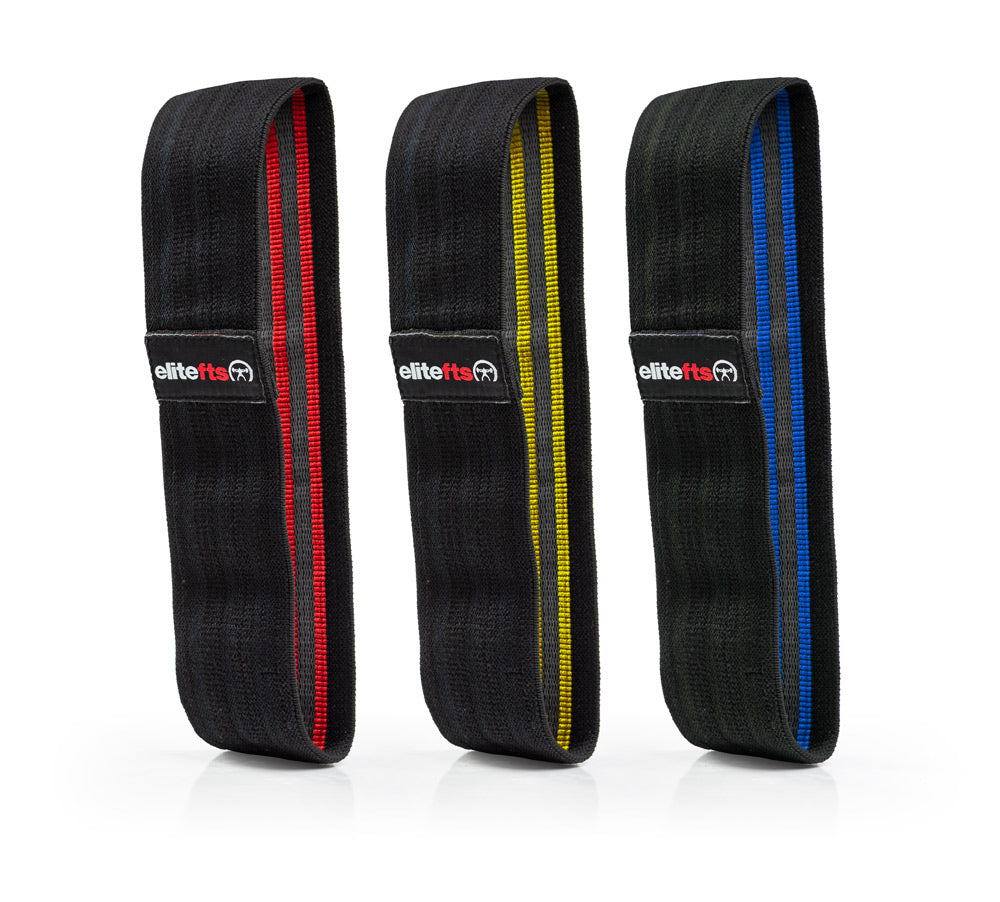
Related Elitefts Equipment
Build the Training Environment
If you're working with athletes on Olympic-lift variations, jumps, dynamic work, and general strength training, these are practical places to start.
Programming
The Deload Doesn't Have to Mean Turning Training Off
The deeper a football season gets, the easier it becomes to fall into one of two extremes.
Some coaches keep hammering athletes as though practice, games, travel, school, and accumulated contact do not exist. Others have backed the weight room down so far that there is barely a training stimulus left.
Barr's approach is more nuanced. Fatigue has to be managed, but that does not mean removing every meaningful exposure to intensity.
Volume can drop. Exercise selection can change. Frequency can move. Total work can be adjusted. The coach can wave stress without allowing the athlete to completely lose contact with strength and force production.
Culture
You Don't Build Competitors By Punishing Them
Coaches talk about building toughness, but the methods used to supposedly create it can quickly become lazy.
Running athletes until they collapse can make for a hard workout. It does not automatically create a competitive culture.
Competition has to exist every day.
Small races. Position-group challenges. Rep competitions. Team standards. Opportunities to win and lose where the result matters just enough to create emotional investment.
Over time, athletes stop seeing competition as a special event. Competing becomes normal.
Leadership
Eventually, Doing Everything Yourself Becomes the Problem
Young coaches often earn opportunities by saying yes to everything.
Clean the weight room. Write the program. Handle equipment. Coach every group. Solve every issue. Be the first person there and the last person out.
That mindset can build a career.
It can also eventually limit one.
When a program grows, the head coach's job changes. Developing staff, delegating responsibility, creating systems, and allowing other coaches to take ownership become part of the job. If every decision still has to pass through one person, the program can only grow as large as that person's available time.
The Long Road
Experience Before Theory
Barr's perspective wasn't built entirely in classrooms or certification courses. It was built through years of being an athlete, doing physical work, interning, coaching with limited resources, and gradually taking on larger programs.
That's an important part of the conversation because coaching decisions rarely happen in laboratory conditions. Equipment is limited. Time is limited. Staff is limited. Athletes arrive with different training ages, skill levels, injuries, personalities, and motivations. The program has to work anyway.
The Bigger Lesson Isn't Really About Olympic Lifting
Olympic lifting may be the headline, but the larger message is about coaching.
No exercise earns a permanent place in a program because somebody said it was “athletic.” No method should be discarded just because another coach on social media deemed it outdated.
You use what solves the problem in front of you.
Know what you're trying to build. Understand why the tool is there. Coach it well. Then judge it by what transfers to the athlete.
Meet the Guest
Evan Barr
Evan Barr is the Director of Football Strength & Conditioning at the University of Toledo. He joined Toledo in December 2025 after five seasons at Mercer. Before that, he spent eight years directing strength and conditioning at Western Carolina. Barr earned his exercise science degree from Tennessee after playing two seasons as a walk-on with the Volunteers and holds both MSCC and CSCS credentials.
Support Table Talk
Want More?
Get deeper access to Table Talk, elitefts content, the private community, ad-free podcast access, webinars, retreats, and more.
Shop elitefts
Pro Resistance Training Bands • Specialty Barbells • Wraps, Straps & Sleeves
Episode Sponsors & Partners
Links and offers are listed with the original episode.
Live. Learn. Pass On.
More training, coaching, strength education, and hard-earned experience from elitefts.
READ MORE ELITEFTS ARTICLES