

Why Your Quads Steal All Your Squat Progress
A Five-Minute Finisher For Better Squat Position
TL;DR
- If your squat turns into all quads and knees under fatigue, your posterior chain is not doing its share.
- The video shows a five-minute elevated-heel squat finisher that forces you to find your glutes and erectors in a squat position.
- Hold a quarter squat, then every 30 seconds perform 10 squat reps before returning to the hold.
- Use it at the end of a lower-body session, not as the main lift, and keep your hands off your knees and hips.
A lot of lifters do not have a squat problem. They have a position problem that only shows up once the set gets hard.
At the start of the day, everything looks fine. The warm-ups move. The first work sets feel stable. Then fatigue starts to pile up, the knees take over, the quads light up, and the lifter loses the ability to feel anything behind them. The bar may still move, but the squat stops being a full-body lift and turns into a quad-dominant survival pattern.
That is the problem Anthony Olivea is attacking in this elitefts video. The fix is not another cue yelled from across the room. It is a simple five-minute finisher that puts the lifter in the position they keep losing, keeps them there long enough to get uncomfortable, and forces them to figure out how to use the glutes and low back erectors while they are still in a squat.
The Setup
The drill is intentionally basic. You need a small platform, roughly two inches high, to elevate the heels. Anthony notes they will sometimes use a deadlift platform if they do not want to drag extra equipment around. The height does not need to be fancy. It just needs to let the lifter bias the knees forward and stay in the position.
From there, squat down into about a quarter squat. Let the knees travel forward. Do not shove them out so hard that you escape the drill. Do not stand tall between reps. Start a five-minute timer. Every 30 seconds, perform 10 squat reps, then drop right back into the static hold.
The most important rule may be the one most lifters will want to break first: no hands on your knees and no hands on your hips. If you use your arms to prop yourself up, you take away the lesson.
The protocol:
Five minutes total. Heels elevated. Quarter-squat hold. Ten squat reps every 30 seconds. Return to the hold each time.
Why It Works
At first, all most lifters will feel is quads and knees. That is the point. The position is not comfortable, and it is not supposed to be. As the quads fatigue, the lifter has to solve the problem without leaving the squat position.
Anthony explains that over time the lifter starts trying to figure out how to stop living only in the quads. The low back isometrically works the whole time. The glutes have to start contributing. The erectors have to help hold the torso. The lifter begins to feel what it is like to own a squat position instead of just passing through it on the way down and hoping the next rep looks better.
This is why the finisher belongs at the end of the session. If you put it first, fresh legs can fake it. Put it after squatting or lower-body work, and the weak link becomes honest. That is when the drill starts teaching.
What To Feel
| If You Feel | What It Means | Fix |
|---|---|---|
| Only quads | You are still riding the front side. | Stay in the hold and find the glutes without changing the drill. |
| Low back working | Your erectors are holding position isometrically. | Keep the torso controlled instead of dumping forward. |
| Need to stand up | The fatigue is doing its job. | Breathe, stay braced, and return to the hold after each 10-rep burst. |
Where It Fits
This is not a max-effort movement. It is not a replacement for squats, good mornings, belt squats, reverse hypers, back raises, or the rest of the work that actually builds the base. It is a finisher. Use it to teach the position, expose the pattern, and give the lifter a direct feeling they can take back into heavier work.
For a raw lifter, it can help clean up the habit of turning every hard rep into knees and quads. For an equipped lifter, it can be useful because better posterior-chain awareness makes it easier to stay connected to the gear and the bar. For a coach, it is a fast way to see whether the lifter can hold a squat position once fatigue starts talking.
If you want to build this into a lower-body day, keep it simple. Squat first. Run your supplemental movement. Get your main accessories done. Then use this finisher as the final teaching piece. If the lifter is new, start with fewer total minutes or fewer reps per 30-second window. If the lifter is advanced, the full five minutes will usually be enough to make the point.
Do not turn the drill into a conditioning test just to win the internet. The goal is not to see how ugly you can make five minutes look. The goal is to keep the same squat position while fatigue pushes you toward the same mistakes you make under a bar. If your heels come off the platform, your hands go to your knees, your torso caves, or every rep becomes a bounce, you are no longer training the lesson.
Film the last minute if you are using this with a team or training partner. The last minute tells the truth. You will see who can stay braced, who can keep the knees moving without collapsing, and who has to escape the position because the back side never got involved. That makes it a useful coaching tool, not just a miserable finisher.
The Same Lesson Shows Up Everywhere
The rest of the video keeps coming back to the same theme: equipment and exercise selection only matter if they teach the lifter to hold better positions.
Anthony also shows a seated triceps extension using a lat pulldown setup so a strong bencher can push hard without getting pulled off the floor. That is the same idea: remove the limitation that is stealing the work from the target muscle. A stable lat pulldown gives the lifter a way to train the movement without turning it into a balance problem.
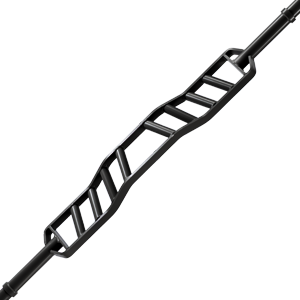
He also breaks down the Rackable Cambered Squat Bar, especially how to keep the hands higher, lock in the lats, and stop the bar from swaying you out of position. Again, the lesson is not complicated. Better tools do not fix bad position by themselves. They punish it until you learn to own it.
The Point
If your quads take over every hard squat, do not just add more quad work and call it training. Find out why the posterior chain disappears when things get hard.
This five-minute elevated-heel finisher is simple, nasty, and honest. It gives you a place to learn what your glutes, erectors, and trunk should be doing while you are still in the squat. Use it after your next lower-body session and pay attention to what shows up. The part you cannot feel is probably the part you need to train.
Watch The Full Video
See Anthony Olivea and Roman Mustachio demonstrate the squat finisher, triceps extension setup, and cambered bar coaching points in the full elitefts video.
Live, Learn, Pass On.
elitefts