

To find old issues of PLUSA, go HERE
The dawn of the 1980s finds powerlifting at a fever pitch of growth and political tension. This issue marks the arrival of the "New" Powerlifting USA, featuring a larger format and increased news coverage. While the magazine evolves, the sport's governing bodies are in a state of flux. Joe Zarella and the National Committee are navigating a high-stakes standoff with the IPF over international meet sanctions. Threat of disciplinary action, including indefinite suspension, looms for any lifter bypassing national protocols by participating in international events without committee permission. Meanwhile, a historic milestone is on the horizon: the announcement that the first World Championships for Women will be held in May 1980 at Lowell University.
Legend Feature: Mark Dimiduk—The Rising Star
Mark Dimiduk, a vice squad officer from Maryland, is the man currently terrifying the 242 lb class. Known for training like a "cannibal," Dimiduk has transformed from a 188 lb novice to a 230 lb rock-solid powerhouse in just six years. Under the guidance of legend Hugh Cassidy, Dimiduk has pushed his squat from 385 lbs to a massive 785 lbs.
The Dimiduk/Cassidy Training Philosophy
Dimiduk utilizes a unique three-cycle system based on the number of workouts remaining before a meet:
-
Cycle 1 (Base): This period is composed of high volume with sets of 8 and 10 reps to build a foundation.
-
Cycle 2 (Transition): In this stage, the lifter works in sets of 5 to 8 reps.
- Cycle 3 (Peak): The final cycle focuses on triples and doubles, driving himself to add 15 to 20 lbs per week to training poundages.
Mindset is everything for Mark; he is a firm believer in self-hypnosis and mental concentration. He famously treats heavy weights as "just another number," believing that if you can visualize the lift, you can do it.
Bench Press Special: How Mike MacDonald Trains
Mike MacDonald, the greatest bench presser in the world, monitors his training with an intensity and concentration unmatched in the sport. He has evolved his routine to focus on sensitivity to overtraining while pursuing the legendary triple-bodyweight bench press.
Training Specifics and Frequency
-
Frequency: Mike benches every third day, having developed the ability to "feel" his recovery through special stretching techniques.
-
Warm-Up: He begins with 2 sets of 135 for 8 reps, followed by 2 sets of 225 for 3 reps using a straight Olympic bar.
-
Competition Practice: His heavy sets are done with a formal competition pause on the chest.
-
Pausing Routine: He performs a single with 315, then 405, then 475, finishing with a paused single around 545 lbs.
-
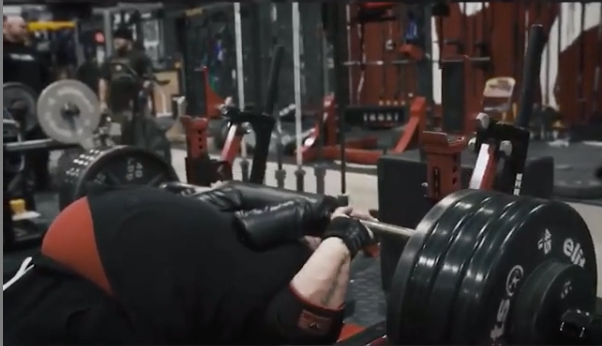
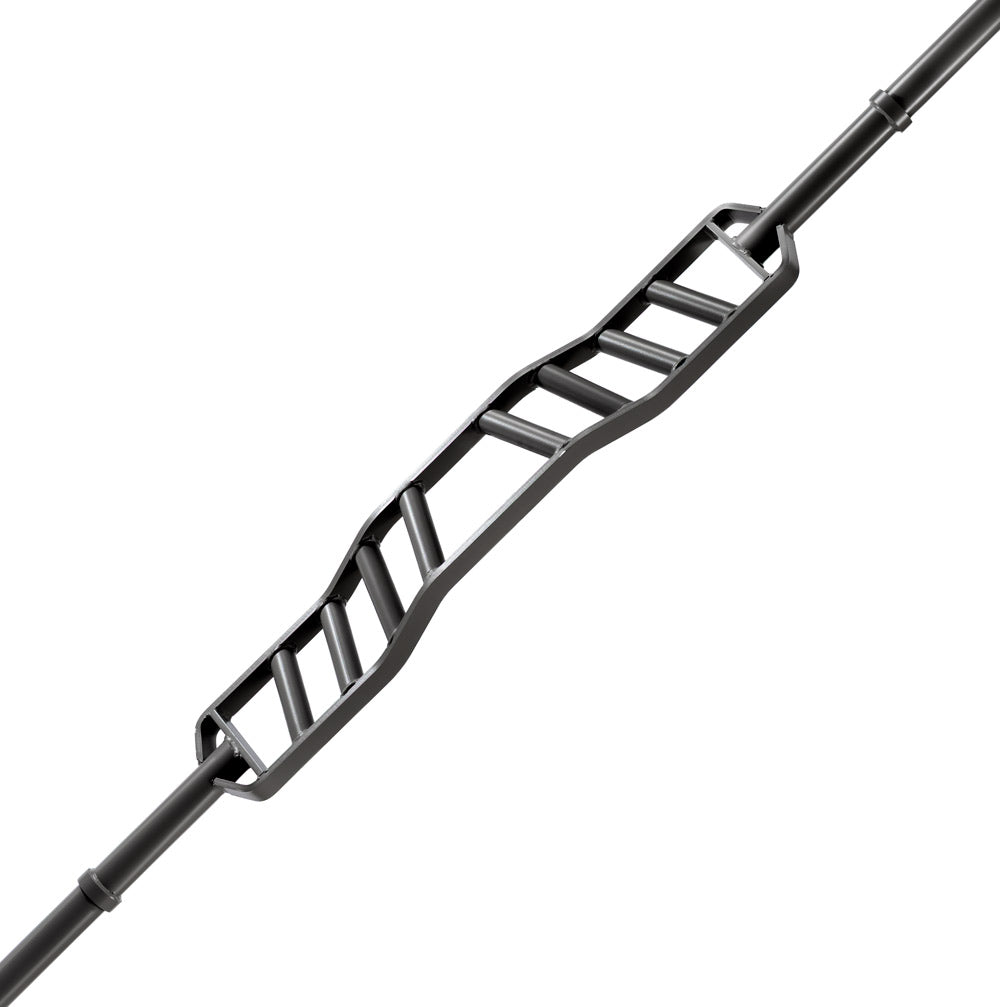
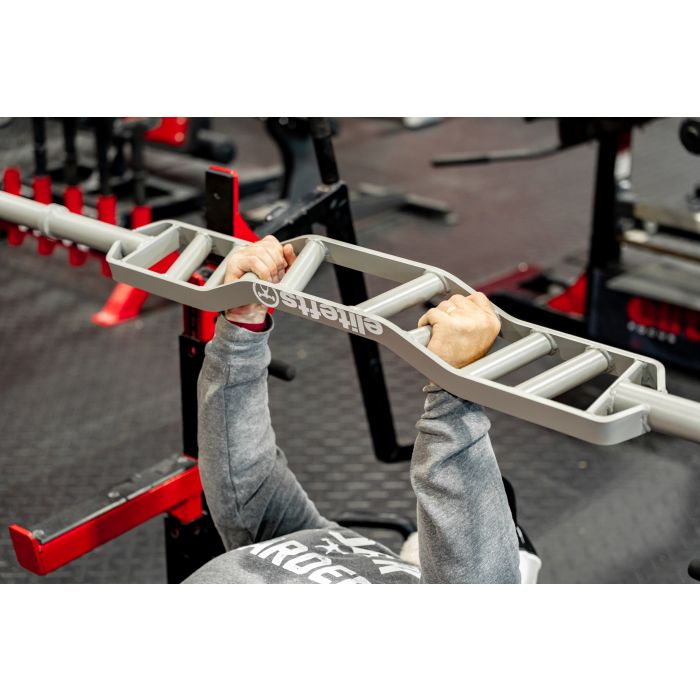
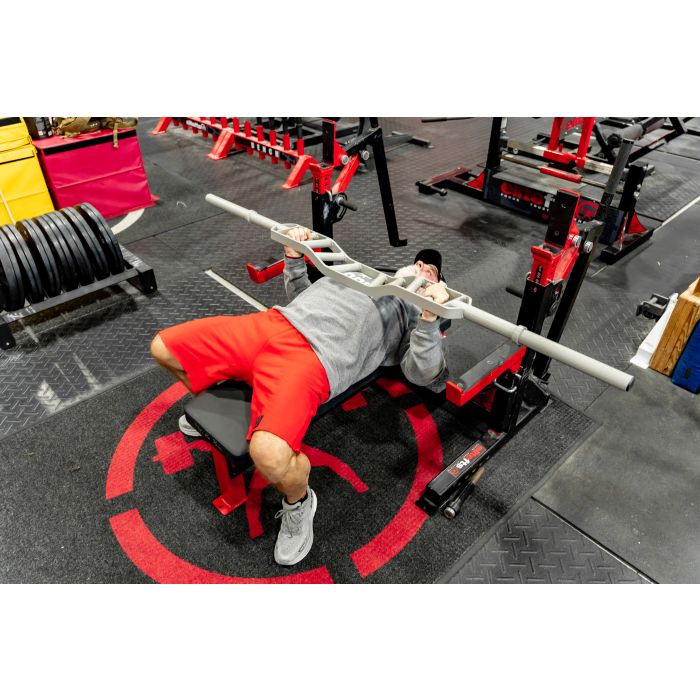
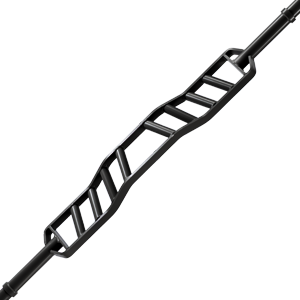
Cambered Bar Work: Following the straight bar, he performs 3 sets of 3 with max weight on a Cambered Bar, pausing each rep.
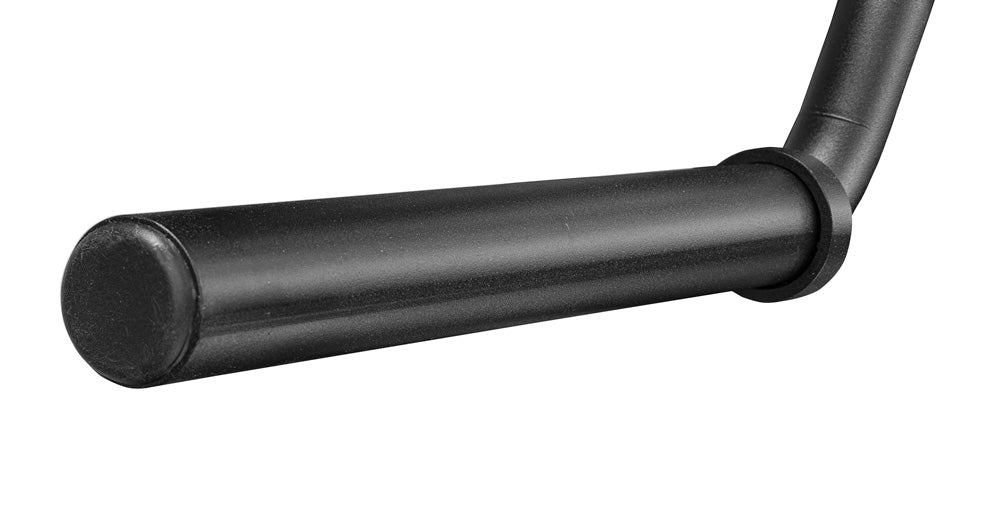
- Lockout Power: He reverses the Cambered Bar (bend pointing down) to perform 3 sets of 5 reps without pauses, which builds lockout strength by limiting the range to the top half of the lift.
The Finnish Deadlift Routine
Developed by Jaska Parviainen and used by world record holders like Veli Kumpuniemi, this routine is designed to add 5% to 10% to a lifter's best pull over 20 weeks. The program is divided into three distinct cycles.
-
Cycle I (7 Weeks): Focuses on stiff-leg deadlifts performed standing on a 5 inch block. All sets are for 10 reps. The bar must not touch the floor between reps to maintain continuous tension.
-
Cycle II (7 Weeks): Transitions to regular deadlifts off a 5 inch block. All sets are done for 5 reps. Again, the bar must not touch the floor.
- Cycle III (6 Weeks): Competition-style deadlifts without a block. This cycle utilizes a mix of sets of 5, triples, doubles, and heavy singles.
The Leaderboard: Proposed Elite Classification Standards
As the sport evolves, John Pettitt proposed an expanded classification system to provide additional incentive for top-tier lifters, adding new "Elite" levels above the standard marks.
| Class (kg) | Elite IV (lbs) | Elite III (lbs) | Elite II (lbs) | Elite I (lbs) | World Record (lbs) |
|---|---|---|---|---|---|
| 52k | 1064 | 1146 | 1229 | 1311 | 1245 |
| 60k | 1246 | 1344 | 1444 | 1543 | 1416 |
| 75k | 1527 | 1653 | 1780 | 1918 | 1827 |
| 82.5k | 1731 | 1780 | 1918 | 2055 | 1857 |
| 100k | 1890 | 1973 | 2121 | 2270 | 2061 |
| 110k | 1824 | 2044 | 2199 | 2353 | 2132 |
| 125k | 1946 | 2105 | 2265 | 2425 | 2143 |
| 125k+ | 2022 | 2188 | 2353 | 2518 | 2420 |

Tactical Training Takeaways
-
Continuous Tension Deadlifts: In the Finnish routine, never touch the bar to the floor between reps to maintain back muscle stimulation and avoid dangerous bouncing.
-
Cambered Bar Explosion: Use the Cambered Bar to build explosive power on the initial drive of the bench press.
-
Reverse Cambered Bar: Reverse the bar so the bend points down to limit range of motion and target lockout power.
-
The 90% Single Method: For the injury-prone, perform multiple singles at 90% of your two-rep limit to gain strength without the risk of absolute maxes.
-
Narrow Grip Triceps: Incorporate benching with only one inch between index fingers to hit the triceps like no other exercise.
-
Rack Walk-Outs: Condition the mind and body by taking 100% plus of your max out of the rack and walking with it.
-
Five-Inch Block Training: Use 5 inch blocks for deadlifts to increase the difficulty and focus on the pull.
-
Glandular Extracts: High dosages of raw glandular substances are cited as providing significant energy and progress in heavy workouts.
-
Recovery Monitoring: Monitor muscle soreness intensely; top benchers ensure they are fully recovered before hitting the lift every third day.
- Self-Hypnosis: Use mental imagery to eliminate the "fear" of heavy weights, treating 900 lbs as just another number.
The Elite Ranking: Top 20 Totals (148 lb Class)
The 148 lb weight class in 1979 was an absolute battlefield, showcasing the incredible depth of the American lightweight scene. Rickey Dale Crain continues to dominate the top spot with a nearly 1600 lb total, but the chasing pack is gaining ground. Ranking at #18 on this list is Bob Wahl. Wahl would eventually go on to become an IPF World Champion in 1983. In the mid-80s, I personally had the opportunity to train with and learn from Bob for several years while attending University, a period of mentorship that we recently recounted during our discussion on Dave Tate's Table Talk Podcast.
| Rank | Lifter | Total (lbs) | Date |
|---|---|---|---|
| 1 | Rickey Dale Crain | 1585 | 11/10/79 |
| 2 | Mike Facteau | 1500 | 12/16/79 |
| 3 | P. Sutphin | 1482 | 7/14/79 |
| 4 | C. Wright | 1480 | 4/22/79 |
| 5 | Welch | 1475 | 6/10/79 |
| 6 | J. Rush | 1465 | 3/18/79 |
| 7 | D. Jones | 1460 | 8/11/79 |
| 8 | T. Hicks | 1455 | 4/21/79 |
| 9 | P. Brunson | 1450 | 3/25/79 |
| 10 | C. Bradley | 1430 | 12/8/79 |
| 11 | R. Estep | 1415 | 4/7/79 |
| 12 | D. Kinley | 1405 | 11/17/79 |
| 13 | J. Grosson | 1400 | 3/17/79 |
| 14 | B. Rosciglione | 1385 | 12/1/79 |
| 15 | L. Sant | 1375 | 8/18/79 |
| 16 | C. Chankwo | 1365 | 3/10/79 |
| 17 | Holman | 1361 | 4/21/79 |
| 18 | Bob Wahl | 1361 | 7/1/79 |
| 19 | P. Trujillo | 1361 | 8/18/79 |
| 20 | M. Jesurun | 1350 | 3/23/79 |

That wraps up this journey through the February 1980 archives. From the brewing political storm between the USPF and the IPF to the technical training insights of Mike MacDonald and Mark Dimiduk, this issue is a true masterclass in old-school strength history. Seeing legends like Bob Wahl on the leaderboard reminds us of the long-standing community that makes this sport great.