

Author: Tasha Wolf Whelan
Strength. Muscle. Performance. Lifters are all chasing more of it—but not everyone knows how to get there. Athletes and fitness enthusiasts are continually seeking training methods that push boundaries and deliver results. As a coach of over 20 years—and an athlete for even longer—I’ve tried nearly every method out there (or at least pretty close), both in my own programming and with clients. Among the best techniques I’ve found, one stands out for its ability to drive real gains: WAVE LOADING.
It’s all about keeping your body guessing. By cycling through sets with different weights and reps in the same session, you challenge yourself in new ways, break through plateaus, and force genuine improvements in strength, muscle, and overall performance. It’s strategic, it works, and it’s one of the most powerful tools in a serious lifter’s toolbox.
Here's how different wave loading schemes typically work:
-
Ascending Waves: In ascending wave loading, the weight gradually increases with each set while the number of repetitions decreases. For example, a lifter might perform three sets of a particular exercise with eight repetitions in the first set, six repetitions in the second set, and four repetitions in the third set. The weight lifted is progressively heavier as the lifter performs fewer repetitions.
-
Descending Waves: Conversely, descending wave loading involves starting with a heavier weight and decreasing the weight with each set while increasing the number of repetitions. For instance, a lifter might perform three sets with four repetitions in the first set, six repetitions in the second set, and eight repetitions in the third set. The weight lifted is progressively lighter as the lifter performs more repetitions.
-
Plateau Waves: Plateau wave loading involves repeating the same weight and repetition scheme for multiple sets before increasing or decreasing the load. This allows the lifter to acclimate to a challenging weight before progressing to the next level of resistance.
-
Mixed Waves: Mixed wave loading combines elements of traditional wave loading with other intensity modulation techniques to create a hybrid approach to training. In mixed wave loading, instead of strictly alternating between increasing and decreasing weights across sets, the intensity may vary in a more randomized or customized fashion.
For example, a mixed wave loading scheme might involve starting with a moderate weight for the first set, increasing the weight slightly for the second set, reducing it for the third set, and then repeating the cycle with different weight increments for subsequent sets. The key is to introduce variability in intensity while still progressively challenging the muscles throughout the workout.
We can define the type of ‘wave’ based on the nature of what the load is doing. For example, in the ascending wave, the load increases throughout the wave while the reps decrease. Conversely, in a descending wave, the load decreases while the reps increase across the wave, but the load can still be progressive between each wave.
Wave loading can be applied to various strength training exercises, such as squats, bench presses, deadlifts, and overhead presses. Intermediate and advanced lifters often use it to induce muscle fatigue, stimulate muscle growth, and improve strength adaptation.
The benefits of wave loading include:
-
Progressive Overload: By gradually increasing or decreasing the weight lifted within a single workout session, wave loading provides a form of progressive overload that challenges the muscles and promotes strength gains over time.
-
Muscle Stimulation: Altering the weight and repetition scheme with each set keeps the muscles guessing and prevents adaptation, leading to greater muscle stimulation and growth.
-
Plateau Breaking: Wave loading can help break through strength plateaus by introducing variations in intensity and volume, forcing the muscles to adapt to new challenges.
-
Efficiency: Since wave loading involves manipulating the weight and repetitions within a single workout session, it can be a time-efficient way to train multiple strength parameters, such as maximal strength, hypertrophy, and muscular endurance.
Wave loading is a versatile strength training method that can be customized to suit individual goals, preferences, and fitness levels. It is often used as part of periodized training programs to optimize strength and muscle development over time.

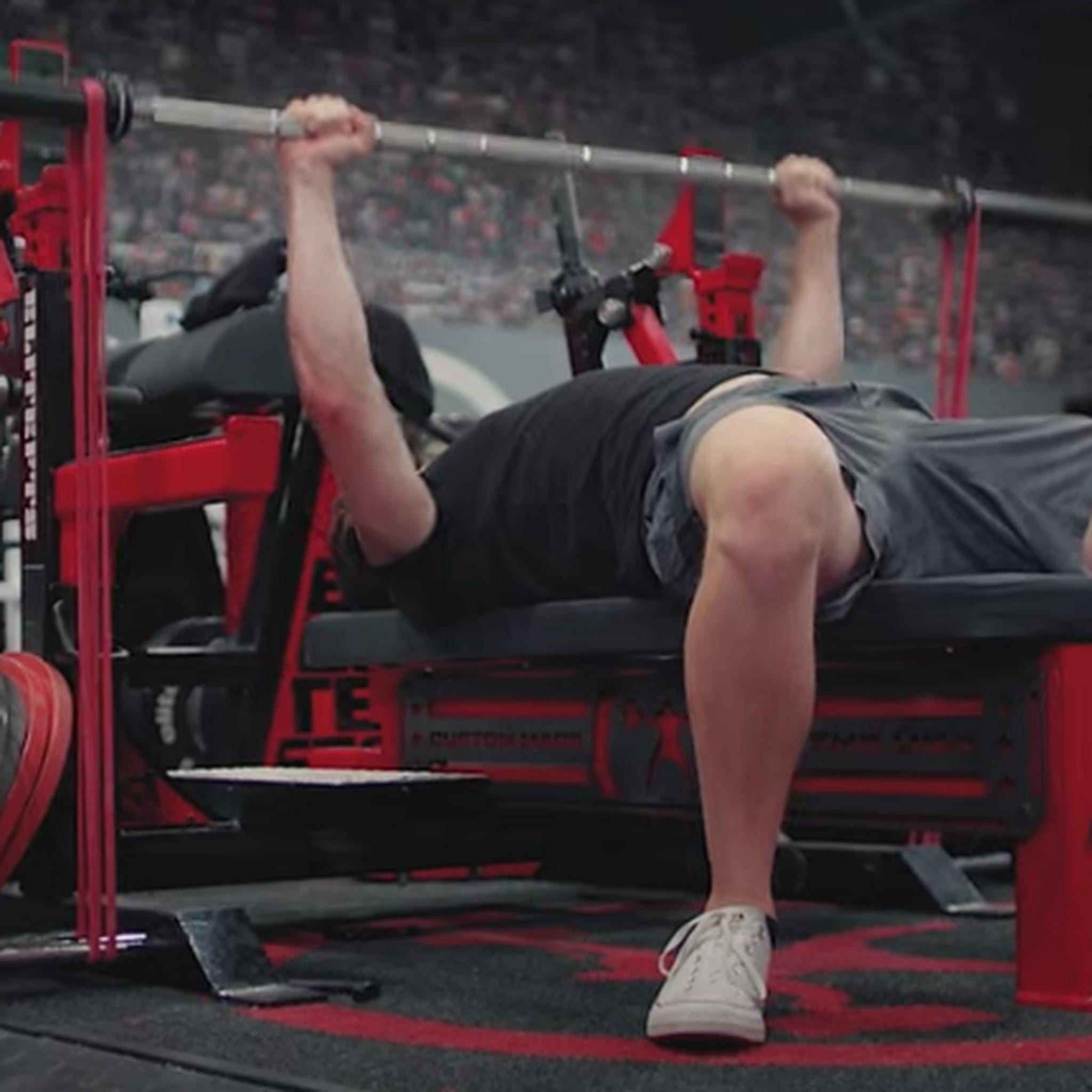
Here are four examples of wave loading for the bench press in a training program:
-
Ascending Wave Loading:
-
Wave 1: 8 reps at 185 lbs, 6 reps at 205, 4 reps at 225
-
Wave 2: 8 reps at 205 lbs, 6 reps at 225, 4 reps at 245
-
Wave 3: 8 reps at 225 lbs, 6 reps at 245, 4 reps at 265
-
Descending Wave Loading:
-
Wave 1: 4 reps at 275 lbs, 6 reps at 255, 8 reps at 235
-
Wave 2: 4 reps at 255, 6 reps at 235, 8 reps at 215
-
Wave 3: 4 reps at 235, 6 reps at 215, 8 reps at 195
-
Plateau Wave Loading: Improve speed and quality
-
Set 1: 8 reps at 70% of 1-rep max (1RM), 6 reps at 75% of 1RM, 4 reps at 80% of 1RM, 2 reps at 85% of 1RM
-
Set 2: 8 reps at 70% of 1RM, 6 reps at 75% of 1RM, 4 reps at 80% of 1RM, 2 reps at 85% of 1RM
-
Complex/Mixed Wave Loading (Combination of Ascending and Descending):
-
Set 1: 5 reps at 205 lbs, 3 reps at 225, 1 reps at 215
-
Set 2: 5 reps at 215, 3 reps at 235, 1 rep at 225
-
Set 3: 5 reps at 225, 3 reps at 245, 1 rep at 235
4-week example of a 1x/week Bench: Ascending Wave Loading
Week 1: Foundation Phase
-
Day 1:
-
Bench Press: Rest 2-5 minutes between sets
-
Wave 1: 8 reps at 60% of 1-rep max (1RM), 6 reps at 65% of 1RM, 4 reps at 70% of 1RM, 2 reps at 75% of 1RM
-
Wave 2: 8 reps at 65% 1 RM, 6 reps at 70%, 4 reps at 75%, 2 reps at 80%
Week 2: Building Phase
-
Day 1:
-
Bench Press: Rest 2-5 minutes between sets
-
Wave 1: 8 reps at 75% of 1RM, 6 reps at 80%, 4 reps at 85%, 2 reps at 90%
-
Wave 2: 8 reps at 77% of 1RM, 6 reps at 82%, 4 reps at 87%, 2 reps at 92%
Week 3: Strength Phase
-
Day 1:
-
Bench Press: Rest 2-5 minutes between sets
-
Wave 1: 5 reps at 80% 1RM, 3 reps at 85%, 1 rep at 90%
-
Wave 2: 5 reps at 83% 1RM, 3 reps at 88%, 1 rep at 93%
-
Wave 3: 5 reps at 85% 1RM, 3 reps at 90%, 1 rep at 95%
Week 4: Peak Phase
-
Day 1:
-
Bench Press: Rest 2-5 minutes between sets
-
Wave 1: 5 reps at 85% 1RM, 3 reps at 90%, 1 rep at 95%
-
Wave 2: 5 reps at 87% 1RM, 3 reps at 92%, 1 rep at 97%
-
Wave 3: 5 reps at 89% 1RM, 3 reps at 96%, 1 rep at 102%
-
Note: *Wave 3 is a PR attempt at either 5, 3, or 1 reps. You may not achieve all 3 but should PR on at least 1 rep scheme.
In this ascending wave loading scheme, the weight gradually increases across each set throughout the 4-week training block. This progression enables a gradual increase in intensity, stimulating strength gains and adaptation while minimizing the risk of overtraining or injury.

4-week training block for 1x/week Bench press: Descending wave load
Week 1: Foundation Phase
-
Day 1:
-
Bench Press: Rest 2-5 minutes between sets
-
Wave 1: 2 reps at 80% of 1-rep max (1RM), 4 reps at 75%, 6 reps at 70%, 8 reps at 65%
-
Wave 2: 2 reps at 85% of 1RM, 4 reps at 80%, 6 reps at 75%, 8 reps at 70%
Week 2: Building Phase
-
Day 1:
-
Bench Press: Rest 2-5 minutes between sets
-
Wave 1: 2 reps at 85% of 1RM, 4 reps at 80%, 6 reps at 75%, 8 reps at 70%
-
Wave 2: 2 reps at 90% of 1RM, 4 reps at 85%, 6 reps at 80%, 8 reps at 75%
Week 3: Strength Phase
-
Day 1:
-
Bench Press: Rest 2-5 minutes between sets
-
Wave 1: 1 rep at 90% of 1RM, 3 reps at 85%, 5 reps at 80%
-
Wave 2: 1 rep at 93% of 1RM, 3 reps at 88%, 5 reps at 83%
Week 4: Peak Phase
-
Day 1:
-
Bench Press: Rest 2-5 minutes between sets
-
Wave 1: 1 rep at 95% of 1RM, 3 reps at 90%, 5 reps at 85%
-
Wave 2: 1 rep at 98% of 1RM, 3 reps at 93%, 5 reps at 88%
-
Wave 3: 1 rep at 102% of 1RM, 3 reps at 96%, 5 reps at 90%
-
Note: *Goal is to PR on 1 or all of these reps' schemes
In this descending wave loading scheme, the weight gradually decreases across each set throughout the 4-week training block. This progression allows for a gradual decrease in intensity while still challenging the muscles and stimulating adaptation.
Here is a 4-week training block on 1x/week Bench press: Plateau Wave Loading
Week 1: Foundation Phase
-
Day 1:
-
Bench Press: Rest 2-5 minutes between sets
-
Wave 1: 6 reps at 70% of 1-rep max (1RM), 4 reps at 75% of 1RM, 2 reps at 80% of 1RM
-
Wave 2: 4 reps at 75% of 1RM, 2 reps at 80% of 1RM, 6 reps at 70% of 1RM
Week 2: Building Phase
-
Day 1:
-
Bench Press: Rest 2-5 minutes between sets
-
Wave 1: 6 reps at 75% of 1RM, 4 reps at 80% of 1RM, 2 reps at 85% of 1RM
-
Wave 2: 4 reps at 80% of 1RM, 2 reps at 85% of 1RM, 6 reps at 75% of 1RM
Week 3: Strength Phase
-
Day 1:
-
Bench Press: Rest 2-5 minutes between sets
-
Wave 1: 6 reps at 80% of 1RM, 4 reps at 85% of 1RM, 2 reps at 90% of 1RM
-
Wave 2: 4 reps at 85% of 1RM, 2 reps at 90% of 1RM, 6 reps at 80% of 1RM
Week 4: Peak Phase
-
Day 1:
-
Bench Press: Rest 2-5 minutes between sets
-
Wave 1: 6 reps at 85% of 1RM, 4 reps at 90% of 1RM, 2 reps at 95% of 1RM
-
Wave 2: 4 reps at 90% of 1RM, 2 reps at 95% of 1RM, 6 reps at 85% of 1RM
In this plateau wave loading method, the weight remains relatively constant across each set throughout the 4-week training block. This allows for a consistent level of intensity while still providing variation in the number of repetitions and volume.
4-week training block 1x/wk Bench: Mixed Wave Loading
Week 1: Foundation Phase
-
Day 1:
-
Bench Press: Rest 2-5 minutes between waves
-
Wave 1: 8 reps at 70% of 1-rep max (1RM), 6 reps at 75% of 1RM, 4 reps at 80% of 1RM, 2 reps at 85% of 1RM
-
Wave 2: 6 reps at 75% of 1RM, 4 reps at 80% of 1RM, 2 reps at 85% of 1RM
Week 2: Building Phase
-
Day 1:
-
Bench Press: Rest 2-5 minutes between waves
-
Wave 1: 6 reps at 75% of 1RM, 4 reps at 80% of 1RM, 2 reps at 85% of 1RM
-
Wave 2: 6 reps at 80% of 1RM, 4 reps at 85% of 1RM, 2 reps at 90% of 1RM, 6 reps at 75% of 1RM
Week 3: Strength Phase
-
Day 1:
-
Bench Press: Rest 2-5 minutes between waves
-
Wave 1: 4 reps at 80% of 1RM, 2 reps at 85% of 1RM, 6 reps at 85% of 1RM
-
Wave 2: 4 reps at 90% of 1RM, 2 reps at 95% of 1RM, 6 reps at 80% of 1RM, 4 reps at 85% of 1RM
Week 4: Peak Phase
-
Day 1:
-
Bench Press: Rest 2-5 minutes between waves
-
Wave 1: 2 reps at 85% of 1RM, 6 reps at 90% of 1RM, 4 reps at 95% of 1RM
-
Wave2 : 2 reps at 80% of 1RM, 6 reps at 85% of 1RM, 4 reps at 90% of 1RM, 2 reps at 95% of 1RM
In this mixed wave loading rep scheme, the repetitions and intensity levels vary across each set throughout the 4-week training block. This variation helps stimulate different aspects of strength and muscle development while providing a balanced approach to bench press training.
This example provides a structured progression through different intensity levels over 4 weeks, incorporating wave loading principles to challenge the muscles and stimulate strength gains. Further, it demonstrates how wave loading can be applied to the bench press by adjusting the weight and repetitions across multiple sets within a single workout session. Depending on the desired training effect (e.g., strength, hypertrophy), one can manipulate the intensity and volume accordingly using ascending, descending, plateau, or complex wave loading schemes.
Conclusion:
By alternating between sets of varying intensities within a single workout session, wave loading challenges the body in unique ways, driving adaptation and progress over time. Whether you're a seasoned athlete looking to break through plateaus or a fitness enthusiast seeking new strategies for improvement, wave loading provides a versatile and adaptable framework for achieving your goals.
By strategically manipulating intensity levels and volume, you can stimulate muscle growth, enhance strength, and optimize performance while minimizing the risk of overtraining and burnout.
References:
Bompa, T. O., & Haff, G. G. (2009). Periodization: Theory and methodology of training (5th ed.). Human Kinetics.
Zatsiorsky, V. M., & Kraemer, W. J. (2006). Science and practice of strength training (2nd ed.). Human Kinetics.
Dewar, M. (2023). Wave loading: The strength training hack for faster gains. OnFitness Magazine.
Bompa, T. O. (1993). Periodization of Strength: The New Wave in Strength Training. Veritas Publications.
BarBend Staff. (2023). How Wave Loading Can Build Strength in Your Squat, Olympic Lifts. BarBend.
Dewar, M. (2021). Wave Loading: What Is It? Why It Works? How To Do It?. Fitbod

Tasha Wolf Whelan is a seasoned fitness professional with over 20 years of experience as a coach, educator, mentor, and leader in the industry. With a unique academic background in cultural anthropology, Archaeology, and Exercise Science, she combines an understanding of human behavior and culture with real-world strength and performance training.
Tasha has spent years helping educate the industry through her work with various companies and by mentoring coaches. She enjoys writing for the fitness community and has been published in Muscle & Fitness magazine and T-Nation. Currently, she is authoring a book for Human Kinetics, furthering her mission to deliver practical and impactful education for trainers and athletes alike.
As an athlete, Tasha has competed and excelled at the highest levels—winning the International Powerlifting League World Championships (2017) and the Arnold Classic Strongman World Championships (2024). She continues to train and compete, bringing the same discipline and drive she expects from herself to the athletes and coaches she works with.
Tasha Wolf Whelan
wolf@idealstrength.com
@ironwolf03