
Why Most Bench Presses Stall
If your bench press progress has hit a wall or your shoulders feel like they’re being chewed up by a meat grinder, the culprit isn’t your chest strength—it’s your architecture. Most lifters approach the bench as if they’re lying down for a nap, then wonder why they look like a salmon flopping around on the pad when the weight gets heavy.
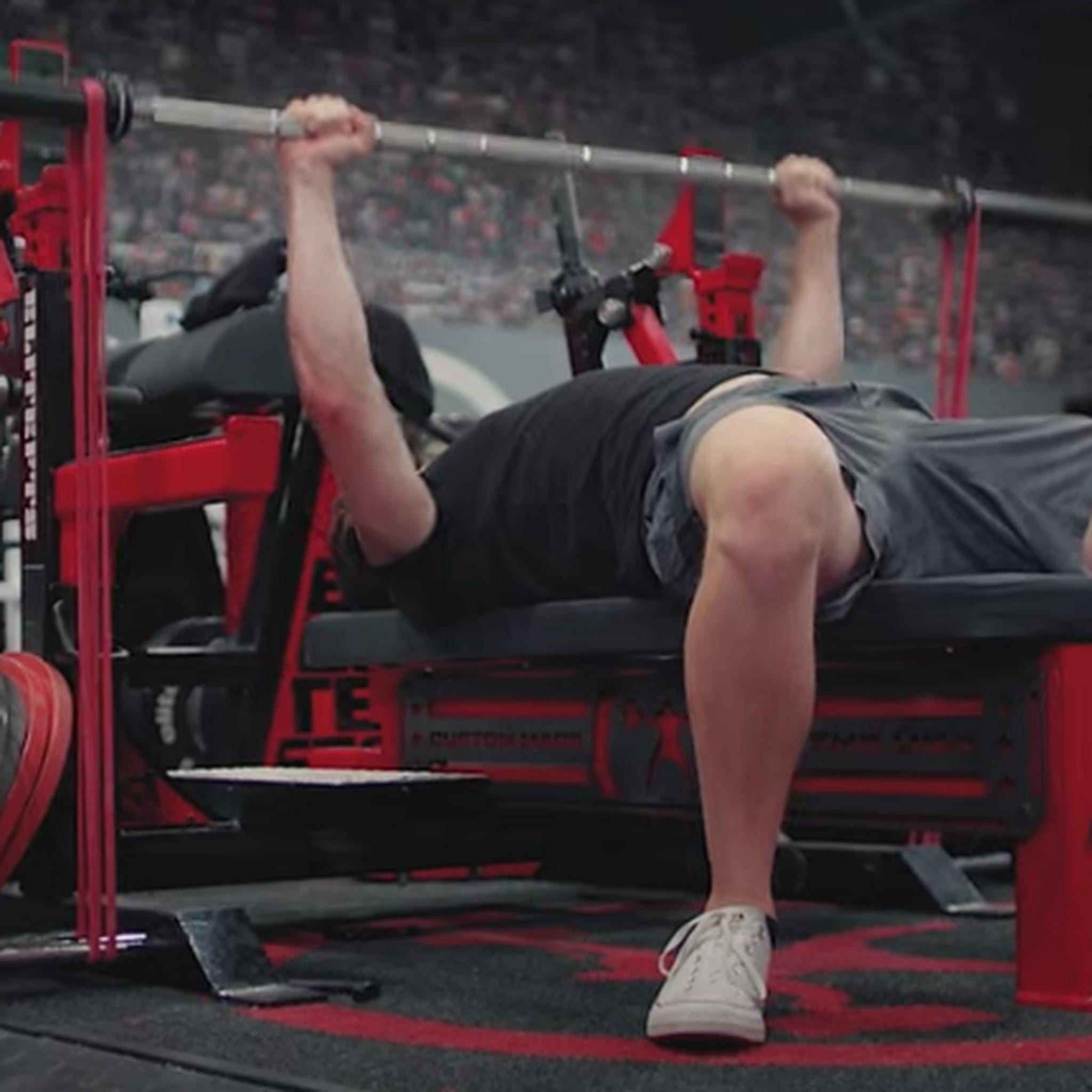
A high-performance bench press is not a resting position; it is a deliberate, full-body wedge designed to transfer force. To move elite weight, you must stop “lying down” and start “wedging in.” We are going to move away from the “Swan Lake maneuvers” of hyper-flexible arching and return to biomechanical principles that prioritize stability, joint longevity, and massive force production.
Width Is More Important than Retraction
The traditional cue to “pinch your shoulder blades together” is among the most misunderstood pieces of gym advice. When you maximally retract and jam your shoulders back into a narrow point, you create a tiny, unstable base of support. You are trying to balance a heavy load on a needle point.
Instead, utilize the “Wide Collarbone” cue. Imagine you are on stage and need to make your upper back as wide as possible to “swallow the bench.” This increases your stability footprint, spreading the load across the entire bench pad. Furthermore, over-retraction prevents the shoulder from naturally gliding to the front and back of the rib cage—a movement essential for the rowing-like motion of pulling the bar down to your chest.
“The problem with [maximal retraction] is that her lats are going to be completely jammed up... they can't actually contribute to the pulling of the bar down to her body.”
The “Long Neck” Rule for Shoulder Longevity
Shoulder health on the bench relies on depression (pulling the shoulders toward the hips) rather than just retraction. We use the “Long Neck” rule: if a coach views you from the side and cannot see your neck because your shoulders are pulled toward your ears, your setup is compromised.
Biometrically, a long neck and depressed shoulders keep the joint packed. This is crucial because as soon as the elbow drops past the midline of the body, shoulder stress increases exponentially. By packing the shoulders down, you create a stable environment where the joint can move without the high wear and tear that leads to chronic injury.
Pro Tip: Use the “mini inverted row” technique to set your upper back. While holding the bar, pull your chest up toward it as if performing a row. Simultaneously, ensure you have “knuckles up” by rotating the upper arm in. This internal rotation stacks the forearm and sets the lats, allowing you to depress the shoulders and lengthen the neck before settling your weight.
Why a Massive Arch Can Actually Make You Weaker
While an arch reduces the range of motion and keeps the elbows in a joint-friendly position above the midline, there is a point of diminishing returns. Extreme flexibility often leads to the “tip-toe squat” trap: if your arch is so severe that only the very top of your traps touches the bench, you’ve sacrificed your footprint of stability for a shorter stroke.
If you lose contact between the bench pad and the meat of your shoulder blades, you lose the ability to anchor the weight. The goal is a “wedge,” not a bridge. You want the shortest range of motion possible, only if it allows the shoulder blades to remain a solid, wide base for the weight to drive against.
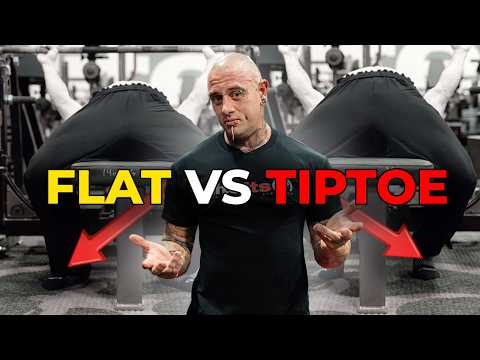
Choosing Your Anchor—Flat Foot vs. Tiptoe
Your lower body setup determines how you “wedge” into the bench. Choose the anchor that matches your biomechanics.
Flat Foot Setup
- Best for: Lifters with shorter torsos or limited spinal flexibility.
- Stability: Provides maximum surface area and horizontal force transfer.
- Key Cue: Position feet at “11 and 1” on a clock face.
- The 90% Rule: Shuffle your feet forward until your heels just barely touch the floor with 90% effort. This creates a fail-safe: even with maximum leg drive, the glutes physically cannot leave the bench.
Tiptoe Setup
- Best for: Highly flexible lifters who want a significant arch.
- The Wedge Mechanism: Unlike the flat-foot setup, you set your feet first (with the balls of your feet down). Then, place your hands on the uprights (not the bar) and actively push your shoulders down the bench toward your feet. This wedges your spine into the immovable anchor of your legs.
- Alignment: Aim for the hipbone to be nearly directly over the heel.
Leg Drive Is a Rhythm, Not a Static Push
A common mistake is maintaining 100% static tension in the legs. If you are already pushing at max capacity to hold your arch, you have no “gears” left to drive the bar off your chest. Leg drive must be a rhythmic “twitch.”
Remember: leg drive is horizontal, not vertical. If you drive vertically, your ass comes off the bench. You must drive your body across the bench toward the head of the pad.
The Leg Drive Sequence (Flat Foot)
- The Eccentric: Contract the hamstrings to pull the hips down and into the bench as the bar descends.
- The Concentric: Instantly transition to the quads, pushing the toes away from the front of the shoes to impart horizontal momentum into the bar.
For tiptoe lifters, who cannot drive forward due to foot position, use the “Heel Stamp”: as the bar touches the chest, try to stamp your heels into the floor. This creates a tiny “pop” in the hips, providing the momentum needed to clear the sticking point.
Conclusion: From “Lying Down” to “Wedging In”
The bench press is a full-body fight between the bar, the bench, and the floor. By shifting your focus from “squeezing the blades” to creating a wide footprint of stability and a rhythmic leg drive, you turn a chest exercise into a total-body power lift.
Stop settling for a comfortable setup. Ask yourself: Is your current setup built for comfort, or for moving weight?
In your next session, ditch the “shrug” and implement the “Wide Collarbone” cue. Secure your anchor, create the wedge, and watch your plateau disappear.