

For anyone serious about building a strong, impressive back, the lat pulldown is a cornerstone exercise. The goal is simple: pull the bar down to engage the latissimus dorsi muscles, creating that coveted V-taper and a wider physique. We all train them, but it turns out that many of us, even experienced lifters, aren't training them in a way that’s particularly efficient.
The central problem is that it's incredibly easy to perform a lat pulldown—or any pulling movement—without effectively targeting the lats at all. Instead of isolating those large back muscles, you might be unintentionally biasing your upper back or biceps, leaving your lats underdeveloped despite your best efforts. You're putting in the work, but the results aren't matching the effort.
This article will change that. We're going to break down a few surprising, science-based tweaks that will fundamentally alter how you approach your pulling exercises. By understanding how small adjustments in your joint alignment and intent can shift the focus of an exercise, you'll learn how to finally target your lats with precision for better, more efficient results.

You're Flaring Your Elbows (And Hitting the Wrong Muscles)
A common sight in any gym is the lat pulldown performed with elbows flared wide out to the sides. While this feels like a powerful position, it makes the exercise significantly "less lat dominant" and shifts the workload to the muscles of the upper back.
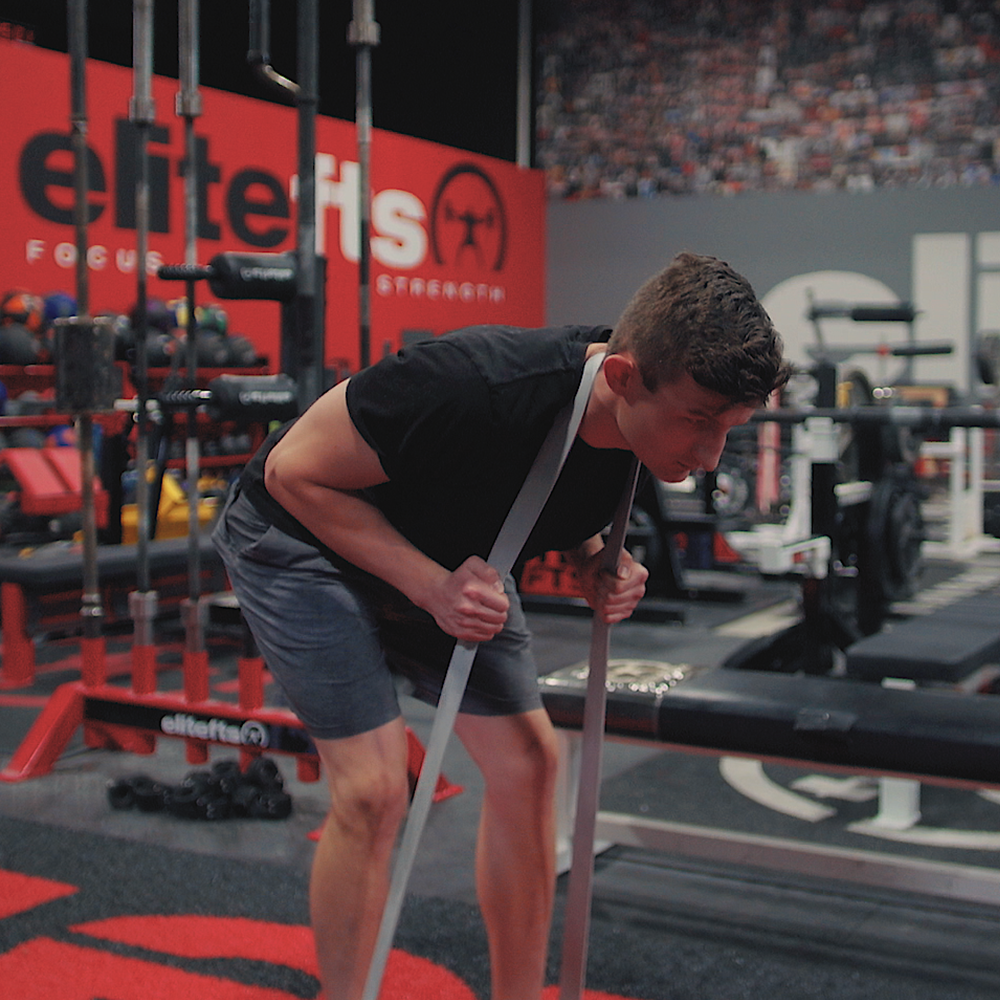
The primary function of the lat is to pull the upper arm down and towards the midline of the body. Flaring your elbows only accomplishes the "down" part of the movement. The cue to twist your elbows forward and keep them tucked is what introduces the critical adduction—pulling towards the midline—that makes the exercise truly lat-dominant. The fix is to get your elbows under your wrists and think about actively twisting them so they point forward throughout the movement. This "tucked" position ensures that your lats are the prime movers on both the way down and the way up.
An Arched Back Is a Shortened Lat
Another common habit during pulldowns is to arch the lower back and puff the chest up, creating "a lot of extension." This posture may make you feel stronger, allowing you to move more weight, but it’s biomechanically counterproductive for lat growth.
The problem is that arching your back starts the latissimus dorsi in a shortened position. Because the lat attaches from the upper arm down to the pelvis and spine, arching the back brings these two points closer together before you even begin the pull. This limits the muscle's available range of motion, which means you can't recruit it as effectively. Often, this isn't just a bad habit; it's a compensation for poor overhead mobility. If your lats are tight, your body is forced into extension just to get your arms overhead at the start of the lift.
"If your lats are tight you can't start at the top of a lat pull down without being in extension... if we are in this position where the lat is shortened to start with we can't get as much range of motion out of it which means we're not going to be able to recruit it as well."
The fix is to maintain a "stacked" posture. Focus on keeping your "ribs down" and your "pelvis tucked under" you. This neutral, stable torso position ensures the lat can fully lengthen at the top of the movement and shorten through its maximum range. A surprising cue for this is to pay attention to your core: if you are feeling your abs work to hold this position against the weight, you're on the right path.
More Range of Motion Isn't Always Better
There's a common belief that to work a muscle harder, you must move the weight through the longest possible range of motion. For the lat pulldown, this often translates to pulling the bar all the way down to the upper chest. However, for the lats, this is wasted effort.
The productive range of motion for your lats ends at the precise moment your elbows can no longer stay stacked under your wrists. Pulling any further than this point introduces internal rotation at the shoulder and disengages the lat. Forget pulling the bar to your chest. Your true, productive range of motion for your lats ends when the bar is level with your face or throat. Any lower is wasted effort.
"The lat or the roll of the lat should we say ends when you can no longer keep the elbow stacked under the wrist. If I pull any further I go here. That's not more lat. If anything we're disengaging it there."
Instead of pulling as low as you can, focus on pulling only as far as you can while maintaining perfect form: elbows twisted forward, stacked under the wrists, and torso stable.

This Principle Changes Every Pulling Exercise You Do
These biomechanical principles aren't limited to the lat pulldown. The angle of your upper arm and your intent can change the prime mover in almost any pulling exercise, allowing you to deliberately target different muscles. The seated row is a perfect example.
To bias the upper back (rhomboids, traps), use a wider grip and purposefully flare your elbows out and up. The key cue is your grip intent: think about putting more pressure on the thumb side of your hand, as if you're trying to "snap the bar." This intent externally rotates and elevates the elbows, creating a flared upper arm angle that makes the pull a very upper-back dominant movement.
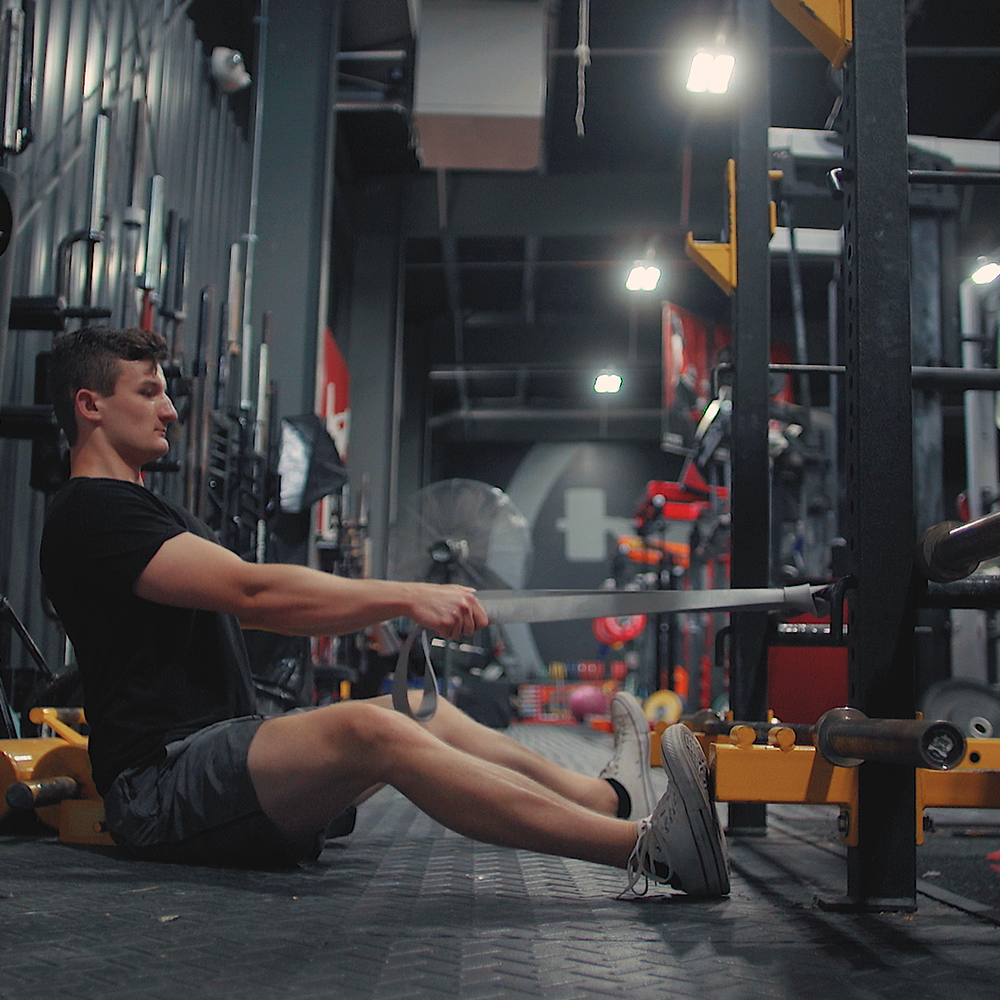
To bias the lats during that same seated row, use a narrower grip and focus on keeping your elbows tucked down and close to your body. Here, the intent is reversed: think about putting more pressure on the little finger side of your hand. This cue causes the shoulders to depress and encourages you to pull the handle lower, towards your stomach. The result is a low, tucked elbow position that mirrors the lat pulldown fix and shifts the work directly onto your lats.
This demonstrates the core principle: your intent and your upper arm angle—not the name of the exercise—determine which muscles do the work.
Train Smarter, Not Just Heavier
Your lats don't know how much weight is on the stack; they only know tension. The biggest takeaway is this: creating that tension through precise, intentional execution is infinitely more important for growth than simply moving a heavy load from point A to point B.
Applying these principles will likely mean you have to reduce the load on the bar, at least initially. However, your lats will be doing considerably more of the work, which is a considerably better trade-off. You're no longer just moving weight; you're building the muscle you set out to train.
Now that you know how to truly target your back muscles, which other exercises in your routine might deserve a second look?

elitefts Coach Tom Sheppard Demonstration Video