

The Biological Ceiling:
What the Enhanced Games Get Wrong
The rise of open pharmacological sport has dragged our obsession with human limits into the light — but the messy reality of the gym floor tells a far more paradoxical story.
Our biological ceiling is the last great frontier of human achievement. For decades, the limit of what a human can squat, sprint, or endure was governed by a silent "natural" consensus. But that consensus is fracturing. The rise of the "Enhanced Games" — a proposed sporting event where performance-enhancing drugs aren't just tolerated but celebrated — has dragged our collective obsession with the glass ceiling of performance into the light.
We are biologically wired to want to know how far the human machine can go. Yet the path to peak performance is increasingly obscured by a thick fog of marketing and a cult-like devotion to data. We have traded gym floor wisdom for spreadsheets, assuming that if we just find the right protocol or the right substance, the ceiling will simply vanish.
The reality, as industry veterans like Dave Tate have observed over decades of elite-level training, is far more complex. Understanding the "physiological overhead" of high performance requires us to look past the headlines and dissect the counter-intuitive reality of what happens when you push the human body to — and through — its natural limits.
The "Enhanced Games" as a Marketing Funnel
While the Enhanced Games are framed as a revolutionary stand against the hypocrisy of "clean" sports, a cold-eyed look at the venture reveals a familiar corporate architecture. The event appears to operate on a two-prong business model: the spectacle of the games provides the top-of-funnel awareness, while the backend is designed to move supplements and telehealth TRT services.
This isn't to say the athletes involved aren't world-class. The games have already attracted legitimate heavyweights like Olympic medalist sprinter Fred Kerley and swimmer Hunter Armstrong. However, the irony remains that high-level "enhanced" environments have existed for years behind closed doors. By moving the spectacle into the light, the organizers are effectively pivoting from a sports competition to a giant marketing play for the longevity and wellness industry.
"It looks like this whole Olympic game thing is like a two-prong business model... this is just a giant marketing play."
The Games offer a fascinating case study in PR — but they overlook the messy, biological reality of the athletes themselves. We assume that "going enhanced" simply raises the ceiling across the board. The physics of the gym floor suggests something far more paradoxical.


The Volume Paradox: Why Enhancement Often Forces a Reduction in Work
The most persistent myth in the "enhanced" world is that PEDs grant a recovery superpower, allowing for infinite volume. In truth, enhancement often necessitates a reduction in overall workload to manage the increased systemic cost.
When an athlete is "on," their ability to generate force increases exponentially. A squat at 90% intensity for an enhanced athlete is not the same biological event as it is for a natural lifter. The sheer explosiveness and the psychological aggression involved create a massive central nervous system (CNS) and systemic fatigue that far outstrips simple muscle soreness.
Furthermore, carrying the increased muscle mass associated with enhancement requires more energy to move the same weights. The enhanced athlete is effectively a high-performance engine that runs hotter and exhausts its fuel faster. While a natural athlete often needs to increase their workload to force a plateau to break, the solution for the enhanced athlete is frequently the inverse: they must back off to stay alive and uninjured.
In the world of pharmacological enhancement,
extreme force production demands a corresponding decrease in training frequency.
The "Power-Building" Trap & the Spreadsheet Delusion
The modern trend of "power-building" — the attempt to maximize powerlifting totals while maintaining a bodybuilder's physique — is a recipe for mediocrity. While a hybrid approach works for the first few years, fatigue management eventually becomes impossible.
Powerlifting requires consistent exposure to intensities above the 90% threshold, which taxes the joints and systemic recovery. Bodybuilding hypertrophy thrives in the 75–80% range with high volume. Attempting to layer a full bodybuilding routine on top of a heavy powerlifting block is a recipe for disaster.
The trap is often psychological, rooted in a "spreadsheet delusion." Athletes become so married to an eight-week block on paper that they ignore the mechanical signals of their own bodies. If a movement is causing joint pain, the "optimized" lifter often pushes through because the app told them to — which Tate identifies as a fundamental failure of intelligence.
"If we take one of the movements that aggravate your knee... and it's like, 'Oh shit, this doesn't feel well on my knee, but I got to do it for eight weeks, so fuck it.' You're not thinking straight."
The Baseline Rule: Establishing Your Genetic "Normal"
Before an athlete ever considers changing their biology, they must understand it. Telehealth and blood testing shouldn't be reserved for the enhanced — they are diagnostic necessities for establishing a natural baseline.
Without a pre-enhancement profile, an athlete has no way of knowing their genetic "normal." Tate recounts how his own hemoglobin levels were consistently high — a potential red flag for PED use — until he discovered his father shared the same genetic trait. Without that context, a physician might misattribute a genetic baseline to a pharmacological intervention.
To understand your own physiological overhead, establish markers for these key indicators:
- Hemoglobin — To identify genetic predispositions to high red blood cell counts before they are misread as a PED signal.
- Total Testosterone — To know whether your natural baseline is 575 or 300 ng/dL before any suppression occurs.
- Vitamin D — To identify common deficiencies that quietly sabotage recovery before other variables mask them.

The "Optimal" Saboteur: Why the Scientist Needs the Chef
The most counter-intuitive takeaway from the elite performance world is that being "most optimized" from day one can actually truncate a career. This is the difference between a scientist and a chef. A scientist can tell you the chemical composition of salt; a world-class chef knows exactly when the dish needs a pinch of it based on the smell, the heat, and the texture.
Mastery in the weight room happens in three distinct tiers:
- Tier One: Foundational Mastery Building the basics of hard training and foundational nutrition. Volume, consistency, and learning to work.
- Tier Two: Autoregulation Developing the gym floor wisdom to know when to push for eight reps and when to stop at six because the recovery isn't there.
- Tier Three: Systemic Stress Management Refining recovery — sleep, inflammation, and psychological load — as the athlete ages and the margins shrink.
If a lifter follows a perfect, app-driven, "optimal" plan from the very beginning, they offload the cognitive labor of training. They never learn to figure things out for themselves — and they become permanently dependent on a spreadsheet that cannot account for the thousand variables of human life.
"If they do all the things exactly as they should... which is the most optimized for their own performance from the very jump, I think they limit their career."

The Moving Goalpost of Potential
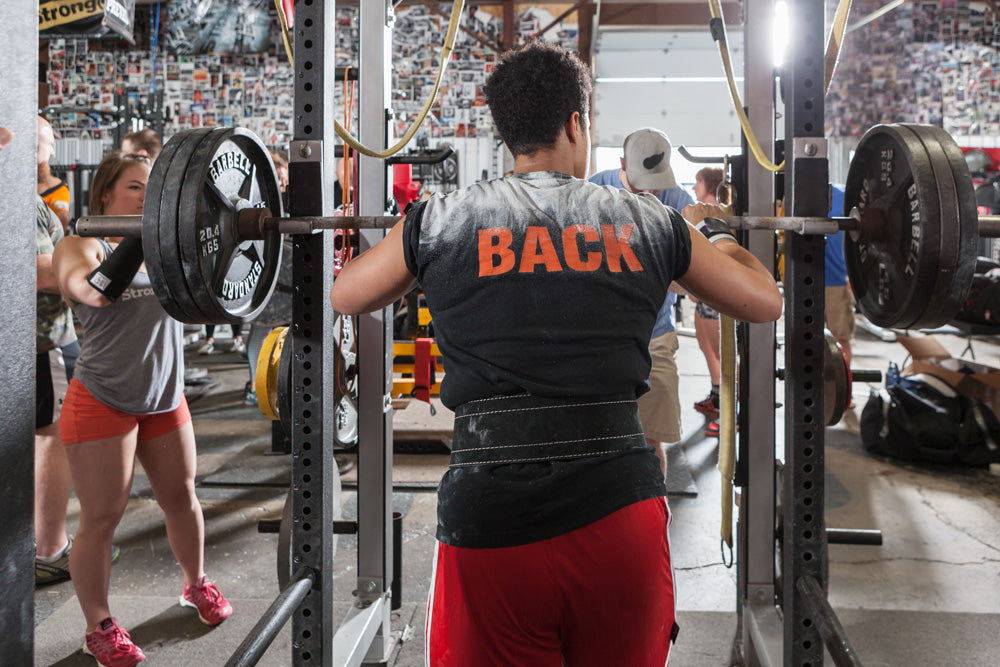
The "natural limit" is rarely a fixed point — it is a moving goalpost that is usually two levels further than the frustrated athlete thinks. Reaching those final tiers of potential isn't found in a new stack or a secret drug protocol. It is found in the nuanced variables of autoregulation: the ability to listen to the numbers on your back rather than the numbers on the paper.
As we move deeper into an era of enhanced transparency and data-driven optimization, we must ask ourselves: are we becoming masters of our own biology, or are we just following a script? Real progress requires the courage to reclaim the ability to interpret your own signals — and the grit to figure it out for yourself.
▶ Watch the Full Breakdown
Live, Learn & Pass On