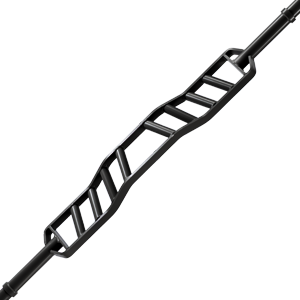


The Biomechanical Cost of Traditional Pressing
For serious lifters, the traditional straight-barbell overhead press often presents a significant mechanical disadvantage. Forcing a rigid, straight implement over the crown of the head requires a level of glenohumeral and thoracic mobility that many athletes simply lack. The result? Compromised joint integrity, "cocked" wrists, and flared elbows that leak force and invite chronic inflammation in the connective tissues.
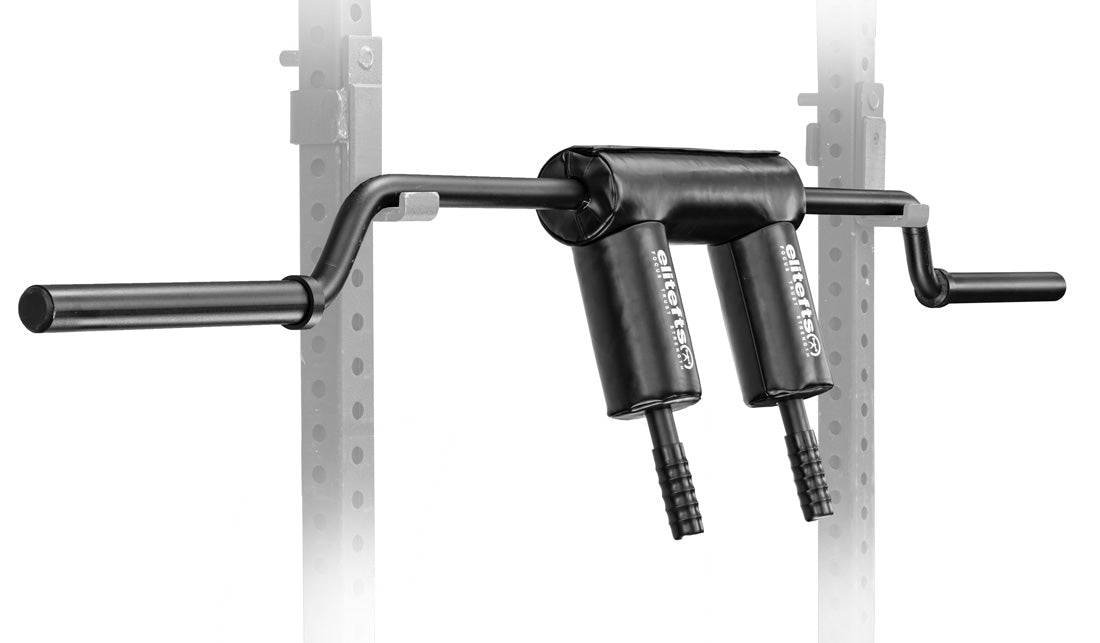
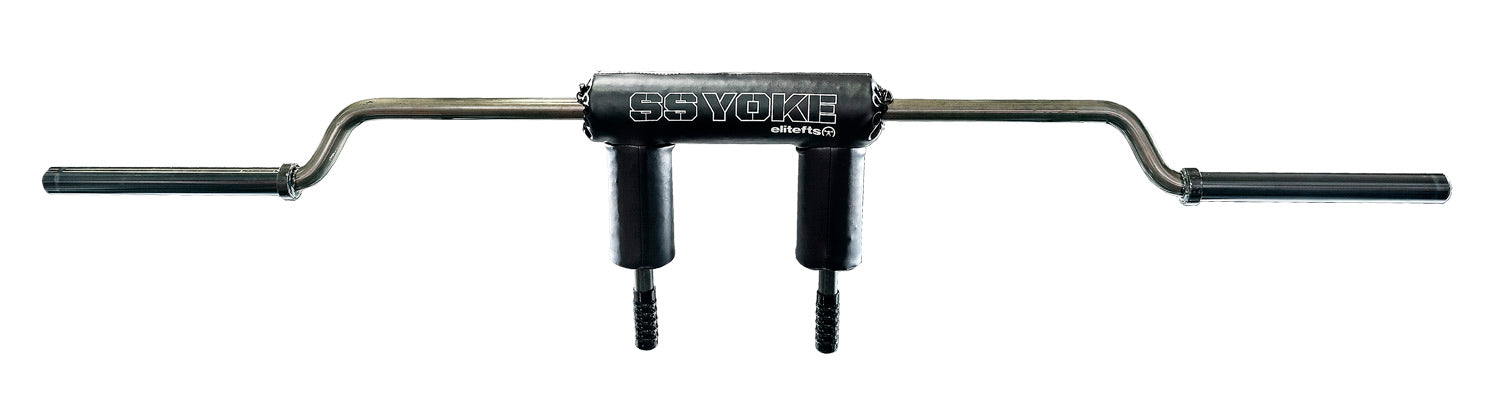
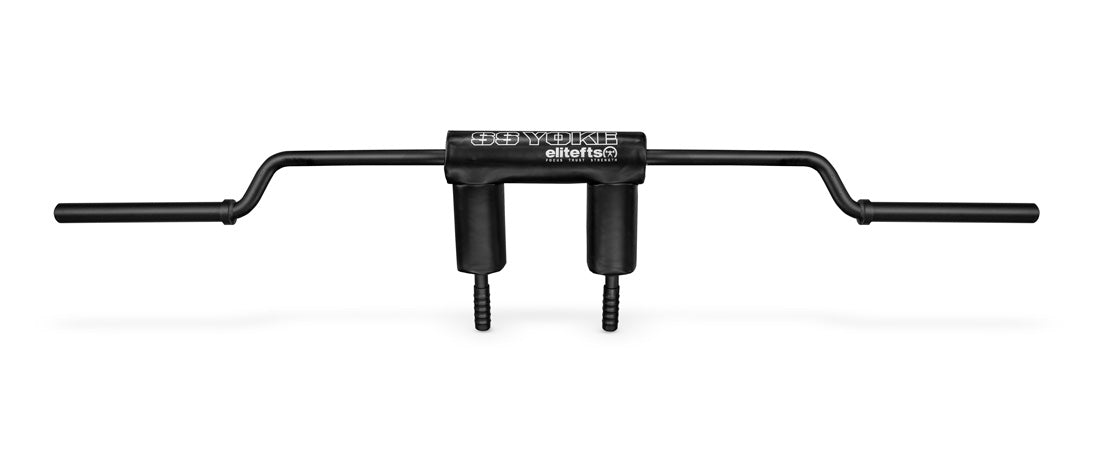
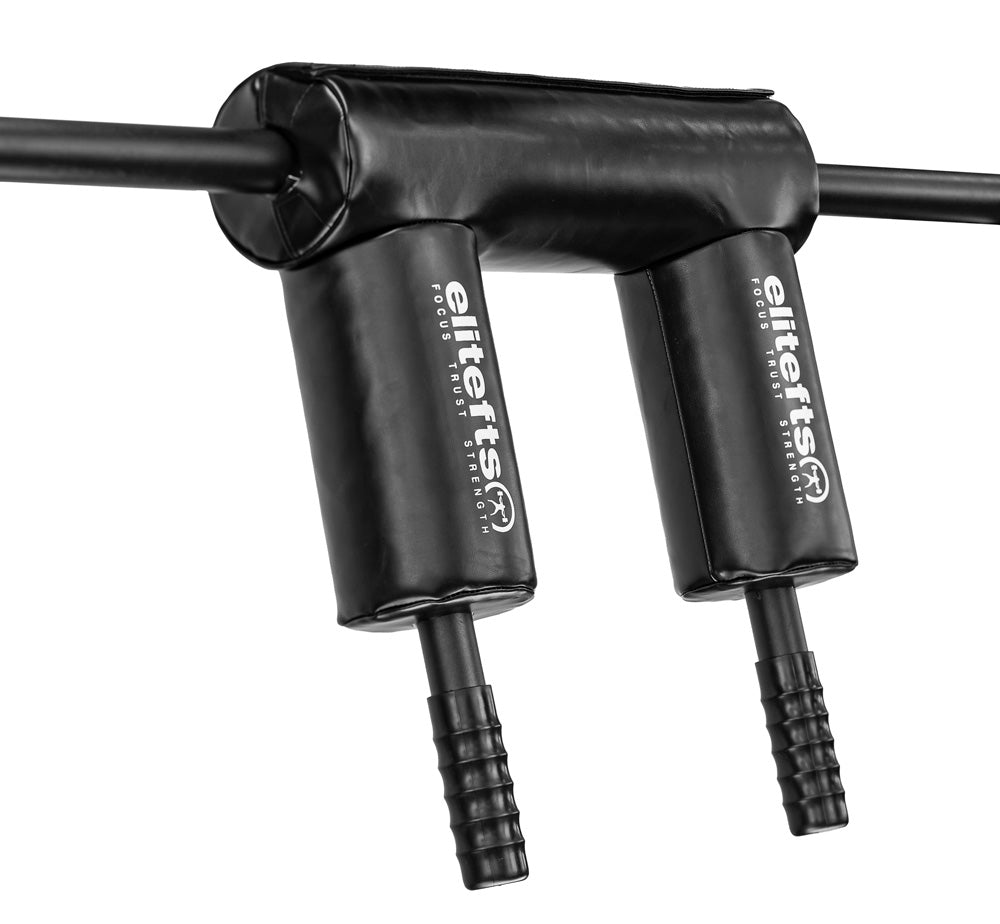
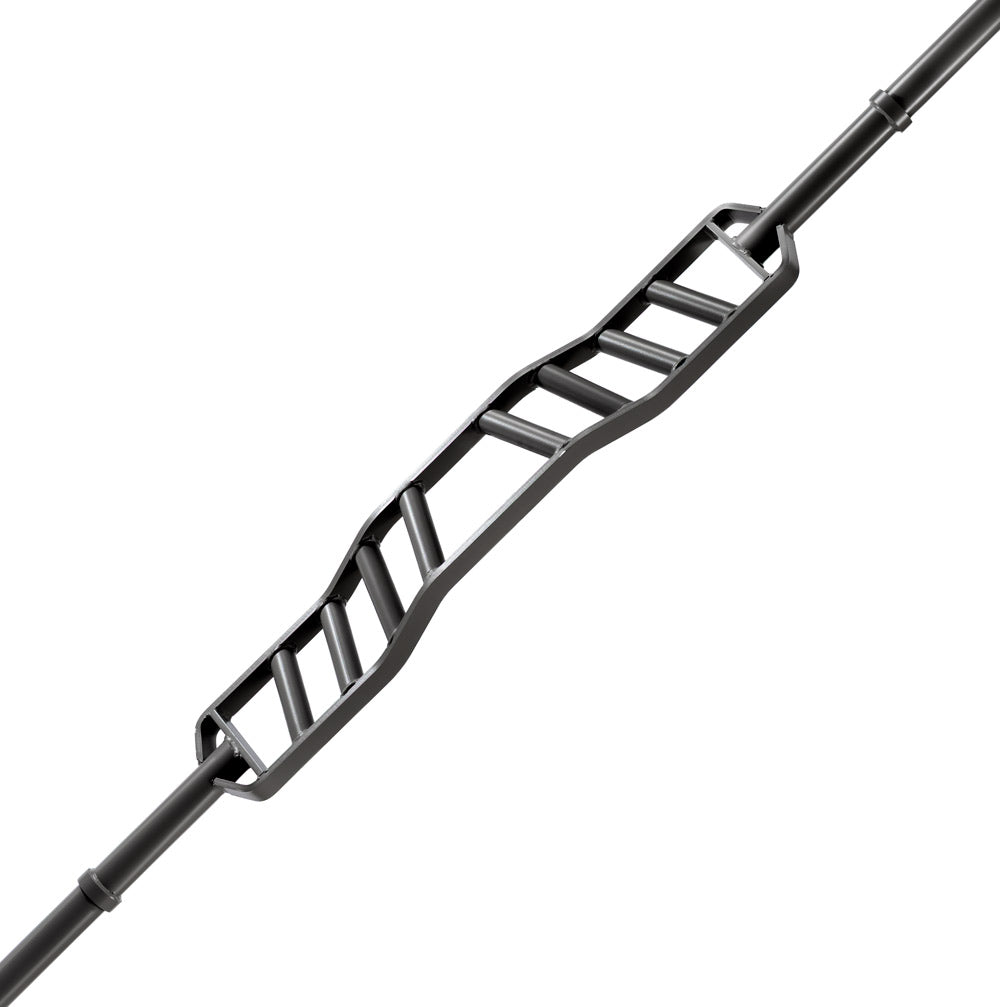
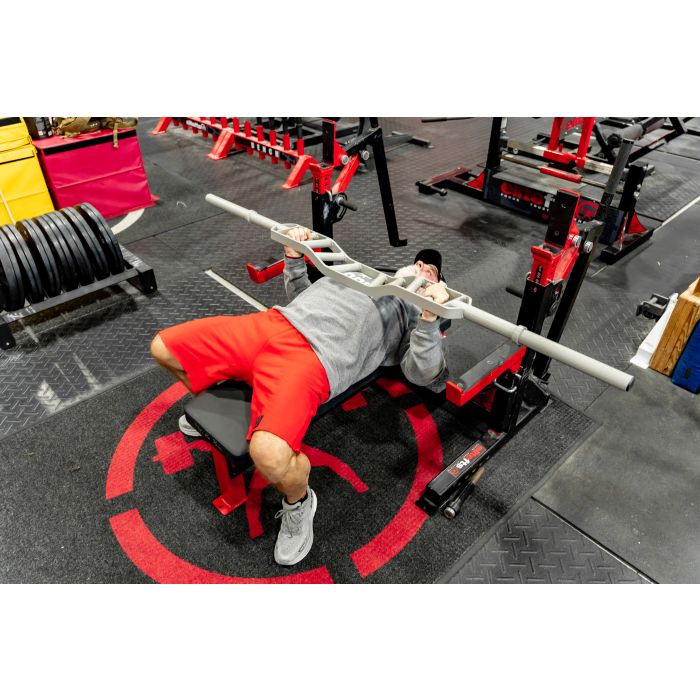
The American Thin Press Bar by elitefts is a specialized intervention designed to solve these systemic issues. By engineering a bar with a radically reduced frame profile and integrated neutral grips, elitefts has created a tool that bridges the gap between the standard barbell and cumbersome specialty equipment. In the world of technical equipment, "thinner" does not mean weaker—it means a more efficient path to maximum force production.
The Biomechanical Failure of the Straight Bar
The primary failure of the straight bar during overhead movements is the "inefficient start position." To clear the chin with a straight bar, many lifters must excessively rotate the shoulders externally and tilt the wrists back. This breaks the kinetic chain before the lift even begins.
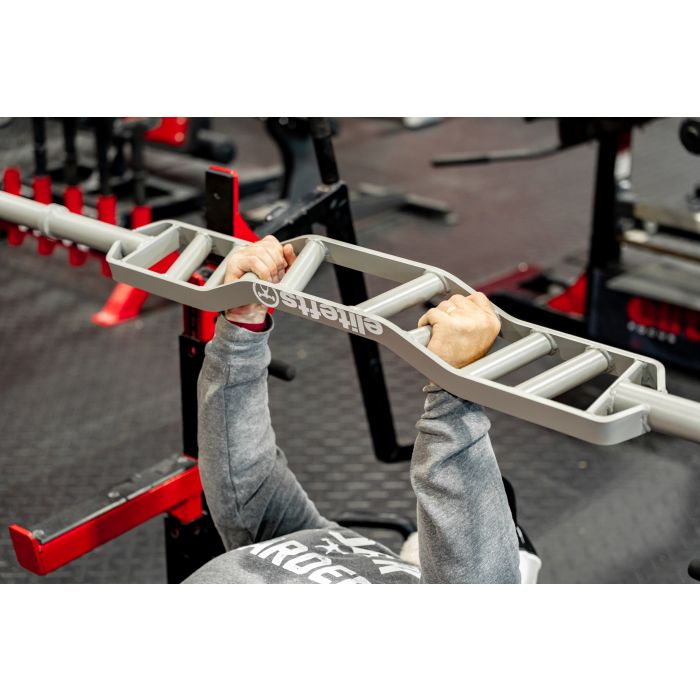
The American Thin Press Bar utilizes neutral grip handles to facilitate "joint centration." This orientation allows for a perfectly "stacked" position, with the wrists remaining neutral and directly over the elbows. This alignment ensures the hips and ribs remain stacked, enabling a vertical transfer of power without requiring excessive shoulder rotation.
"Most people don't have enough mobility unfortunately to overhead press with a straight bar... this ends up not only costing you a lot of weight in terms of you can't move as much because we've got this inefficient start position but it ends up causing discomfort on the wrist and the elbow."
Why This Implementation Eclipses the Traditional Strongman Log
While the Strongman log is a staple for neutral pressing, it is a sub-optimal tool for most trainees. The log has two inherent design flaws: fixed grip widths and an oversized diameter. A fixed grip ignores individual anthropometry; if your clavicle width doesn't match the log, you cannot achieve an efficient start. Furthermore, the log’s massive diameter forces an exaggerated lumbar arch and lean-back to clear the face, leading to postural failure and lower back fatigue.
The American Thin Press Bar solves this with multiple handle spacings, accommodating everyone from wide-shouldered heavyweights to female lifters with narrower frames. Because the frame profile is thin, you can maintain a vertical torso and a tall, "stacked" posture, mimicking a perfect military press without the fatiguing, compensatory arc required by a log.
The "Incline Paradox" and Solving the Decapitation Problem
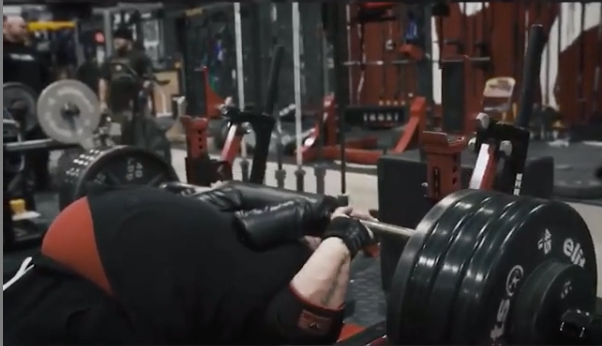
Traditional wide-diameter neutral-grip bars often fail at incline pressing due to what we call the "decapitation problem." To avoid hitting their face with a thick bar, lifters are forced to touch the bar much lower on the sternum. This creates a suboptimal angle in which the elbows are behind the wrists, increasing the rotational moment on the rotator cuff and disrupting force production.
The thin profile of this bar allows for a high, clavicular touch-point while keeping the elbows perfectly stacked under the wrists. This creates a more efficient bar path and maximizes the stretch on the upper pectorals.
"I can bring this straight down, I can keep the elbows stacked under the wrist, and I can achieve this high touch point that I wouldn't be able to achieve if I was using a log or a more traditional neutral grip bar."

Lateral Stability: The Secret to Handling Max Loads
In technical lifting, stability is the precursor to strength. A "chunky" or wide-diameter bar creates a larger distance between the weight's center of mass and the palm. This creates a rotational moment arm that causes the bar to wobble or "tip" in the hands, especially during the lockout phase.
The American Thin Press Bar offers superior lateral stability. Because the bar is not "chunky," the center of mass remains closer to the hand's midline. The weight doesn't want to rotate out of the grip, which reduces the demand on small stabilizer muscles and allows the primary movers to focus entirely on force production. This lack of wobble is exactly why lifters feel more "centered" and can handle significantly more weight overhead.
The Ultimate "Mechanical Drop Set" Protocol
The American Thin Press Bar is arguably the most versatile "burnout" tool in the gym. Its multi-grip design allows you to manipulate leverage as you fatigue, moving from a position of mechanical disadvantage to one of advantage.
The Pulling Mechanical Drop Set (Inverted Rows):
-
Wide Grip: Start with the widest handles. This isolates the upper back, rear delts, and rhomboids by forcing the elbows to flare.
-
Mid Grip: As you reach near-failure, move to the middle handles to increase lat recruitment.
- Narrow Grip: Finish on the narrowest handles, where the biceps are more mechanically involved, to reach total systemic failure.
The Pushing Finisher (Incline Push-ups): Adjust the bar height in the rack. Start with the bar at the lowest possible setting for max difficulty. As your chest and triceps "smoke" out, move the bar one or two pegs higher in the rack to change the incline angle, allowing you to extend the set until the muscles are completely exhausted.
Technical Arm Training: JM Presses and Range of Motion
The American Thin Press Bar excels at isolation work due to its angled handles and narrow frame.
The Tricep "Burnout" Sequence: The angled handles (where the pinky is narrower than the thumb) facilitate "elbow tucking," preventing the flared-elbow "pseudo-press" common in extensions. Because the bar is thin, you gain a massive increase in range of motion, allowing the bar to travel further past the head for a deeper stretch.
-
Step 1: Overhead Tricep Extensions to failure.
-
Step 2: Transition immediately into JM Presses (a hybrid skull-crusher/close-grip bench).
- Step 3: Finish with standard Close Grip Bench Press reps using the same weight.
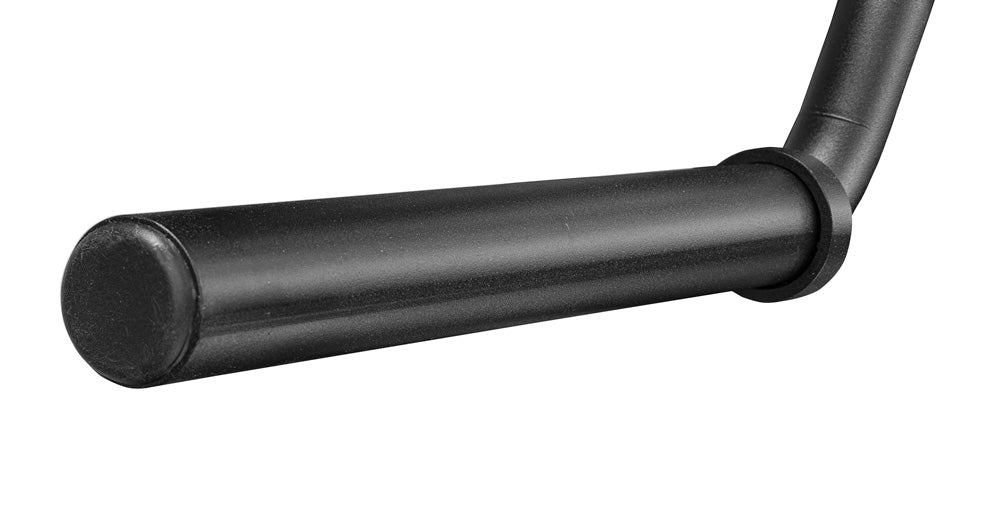
Bicep Hypertrophy and Grip Diameter: Counterintuitively, while the frame of this bar is thin, the handle diameter is thicker than that of a standard EZ-curl bar. This is a deliberate design choice; a thicker grip allows the forearm flexors and extensors to relax, reducing "neural inhibition" and shifting the tension entirely to the biceps. Furthermore, the angled handles provide a "semi-supinated" grip, making it a superior alternative for lifters who lack the wrist mobility to use a straight bar comfortably.
A New Standard for the Pro Gym
The American Thin Press Bar is a testament to the fact that better engineering leads to better mechanics. By prioritizing joint longevity, lateral stability, and adjustable grip widths, this bar unlocks the ability to train movements—like the incline press or deep tricep extension—that were previously limited by equipment bulk.