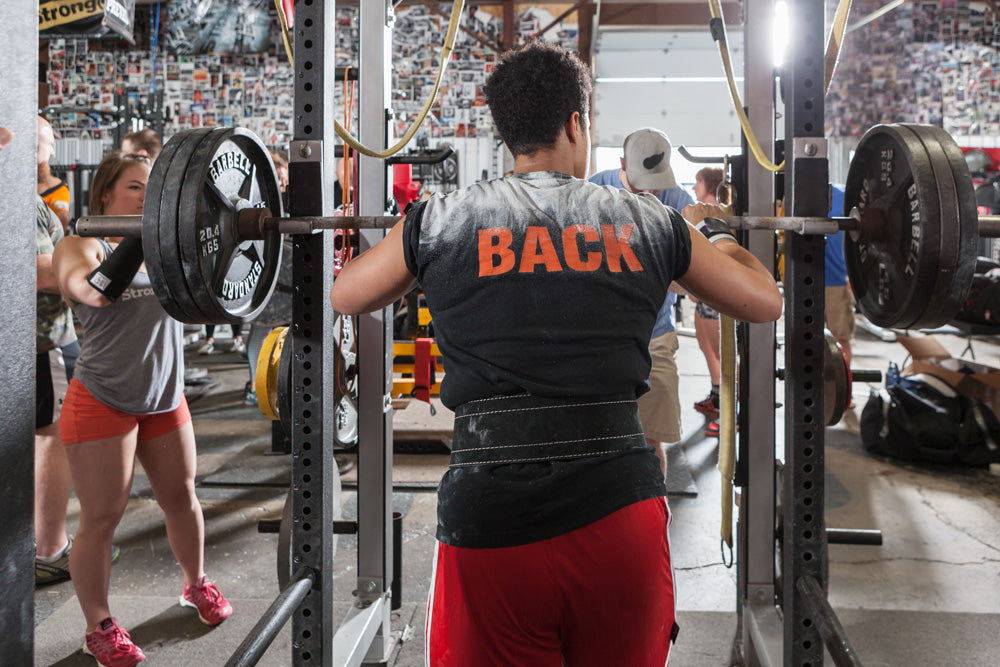


You walk into the gym for a scheduled heavy session. You aren't particularly sore, your nutrition has been dialed in, and your motivation is high. Yet, when you get under the bar, the weight feels 50 pounds heavier than it did last week. Your movement is "slow," and your usual warm-up sets feel like maximal efforts.
In these moments, most trainees mistakenly assume they are losing muscle or that they are failing their diet. However, the bottleneck isn't the muscular system—it's the nervous system. As a performance strategist, I am telling you that you must stop viewing your body as a collection of parts and start viewing it as a system governed by a "neurological budget." This is the finite resource that dictates every lift, sprint, and PR.
You Only Have One Nervous System (The Monday-Wednesday Link)
A fatal flaw in split-routine training is the assumption that because you trained legs on Monday, your upper body is "fresh" for Wednesday. This ignores a fundamental physiological reality: while you have hundreds of muscles, you only have one central nervous system (CNS) to drive them.
The neurological fatigue generated by a demanding squat session will significantly degrade bench press performance 48 hours later, even if there is no muscular overlap. Your "command center" is drained. As the source context notes:
"The nervous system that controls the musculature hasn't recovered and gotten back to its full level of potential."
For athletes who focus solely on local muscle recovery and soreness, this requires a paradigm shift. Recovery is not merely about repairing tissue; it is about the CNS regaining the ability to send high-velocity signals to that tissue.
The Three Stages of a Neurological Crash
Neurological fatigue is a spectrum. It is driven by the demand for cortisol and adrenaline. When you force your body to overproduce these chemicals without adequate rest, you descend through three distinct stages of systemic failure.
-
Stage 1: Receptor Desensitization. This is the "too much coffee" effect. Your beta-adrenergic receptors (where adrenaline binds) downregulate to protect you from overstimulation.
-
Symptoms: A dampening of power output and reflexes; general lethargy.
-
Recovery Timeline: 1 to 2 days.
-
Symptoms: A dampening of power output and reflexes; general lethargy.
-
Stage 2: Noradrenaline Depletion. If you refuse to rest, the body begins breaking down noradrenaline to manufacture more adrenaline.
-
Symptoms: Brain fog and short-term memory loss (e.g., forgetting your keys or walking into a room and forgetting why you are there).
-
Recovery Timeline: 7 to 10 days.
-
Symptoms: Brain fog and short-term memory loss (e.g., forgetting your keys or walking into a room and forgetting why you are there).
-
Stage 3: Dopamine Depletion (True Overtraining). You have dug a deep physiological hole, depleting dopamine to keep the adrenaline cascade moving.
- Symptoms: Anhedonia (the inability to feel pleasure), zero motivation, and severe mood swings.
- Recovery Timeline: Months.

Your "Cortisol Budget" Includes Your Boss and Your Baby
You must audit your life stress because your body does not distinguish between a heavy deadlift and a high-stakes meeting. Think of your capacity as a budget of 100 cortisol units. Training is only one expense. Life stressors—a new job, a newborn, or a calorie deficit—can deplete 40 units before you even step into the gym.
You must understand why cortisol spikes: its primary function is to maintain blood sugar and create readily available energy by breaking down substrate (muscle or fat). It is a survival mechanism—the "sprint from the tiger" response.
This is why "faking it till you make it" through a lift you hate or find intimidating actually increases your fatigue; the psychological stress triggers an unnecessary cortisol spend. This is also why dieting athletes often look "watery and flat." They mistake the systemic burnout caused by elevated cortisol and adrenaline for muscle loss, when in reality, they are simply overdrawing from their neurological bank account.
The 7 Questions Every Serious Lifter Needs to Ask - FREE GUIDE TO AUTOREGULATION

The High-Medium-Low Rule for Sustainable Gains
To achieve sustainable progress, you must manage the "Big Three" variables: Volume, Difficulty (RPE), and Absolute Load (% 1RM).
The Performance Matrix:
-
Volume (Sets / Maximally Effective Reps):
- High: 20–30 sets (25–35 MER)
- Medium: 13–19 sets (15–25 MER)
- Low: 6 sets (~10 MER)
-
Difficulty (RPE / Reps in Reserve):
- High: RPE 9–10 (0–1 RIR)
- Medium: RPE 7.5–8.5 (2 RIR)
- Low: RPE 6–7 (3–4 RIR)
-
Absolute Load (% 1RM):
- High: >90%
- Medium: 70–89%
- Low: 30–69%
The Non-Negotiable Rule: You must never have more than one variable in the "High" category simultaneously.
The Low-Load Caveat: You must not count work below 30% 1RM as a primary stimulus. At that intensity, failure is caused by fuel depletion or muscle acidity rather than neural drive, meaning it does not provide the same neurological adaptation.
Micro-Adjustments for the "Off" Day
When you feel fatigued but refuse to skip the session, you must turn the "smaller knobs" to reduce neurological strain.
-
Axial Loading: Reduce the stress on your spine. If you are slated for a barbell movement like an RDL or Back Squat but feel neurologically drained, swap it for a Hack Squat or an Inverse Curl. Reducing axial load protects the CNS while still allowing for muscular work.
-
Training Density: Increase your rest periods. A higher average heart rate demands more adrenaline. Giving yourself an extra 60–90 seconds between sets lowers the session's neurological cost.
- Exercise Stability: Machines require less neurological "processing" than free weights. Swapping a Front Squat for a machine press allows for high intensity with lower CNS demand.
The "If/Then" Strategy for Strength Athletes:
- If your priority is Load (maximal strength) but you feel "off," Then protect the load by using cluster sets. Instead of 5 sets of 2 at 90% (which has a very high RPE), perform 5 sets of 1+1 with a 30-second intra-set rest. This maintains the load's intensity while reducing RPE and neurological pressure.

Biohacking Your Readiness (Grip, Tap, and Jump Tests)
Elite training requires objective data. Fatigue shows up in the "periphery" (the hands and reflexes) before it hits the larger muscle groups. You must use these three tests to establish a baseline:
-
The Grip Test: Use a hand gripper that you can normally close for a set number of reps. If your strength is down by 7–10%, you are carrying significant neurological fatigue.
-
The Tap Test: Use a 30-second timer and tap a surface as many times as possible. Compare this to your "rested" baseline. This measures your processing speed and reflexes.
- The Vertical Jump: Perform three vertical jumps and take the average. If your average height drops by 7–10%, your fast-twitch fiber recruitment is compromised.
The Threshold Rule: If any of these tests show a 7–10% decrease from your baseline, you are mandated to adjust your session by lowering volume or difficulty.
Listen to the Blueprint
Elite training is not about mindless exertion; it is the surgical management of neurological fuel. Every session is a withdrawal from a bank account that is already being taxed by your career, your family, and your stress levels.
The most effective strategy for breaking plateaus is to identify the "priority variable" of your current phase—whether that is volume for hypertrophy or load for strength—and protect it by ruthlessly adjusting the other knobs.
Stop letting neurological fatigue dictate your progress.
While learning how to adjust your training volume, load, and intensity is crucial for long-term progress, building a truly sustainable program requires honest, daily self-assessment of your body's readiness. Take the guesswork out of your autoregulation and find out exactly what might be draining your central nervous system.
👉 Click here to download your free copy of The 7 Questions Every Serious Lifter Needs to Ask and start unlocking your true strength potential today!