


Build It. Test it. Tune It. Race It.
Paralleling team sport preparation with Formula 1 racing: build the athlete in the off-season, test and tune the system in preseason, and race it when the season starts.
1. Build It
The off-season is the factory floor: strength, structure, aerobic capacity, and body composition.
2. Test & Tune It
Preseason converts capacity into sport performance and exposes weak links before results count.
3. Race It
In-season work prioritizes readiness, availability, micro-dosing, and intelligent weekly management.
The F1 Framework
In Formula 1, no one shows up for the first race expecting the car to be competitive. The process is planned and deliberate. The car is designed and built months before the opening Grand Prix. It then goes through testing, refinement, and troubleshooting. Only after that does the team arrive at race day, when the objective is no longer development. It is performance.
Team sport preparation should follow the same philosophy.
Too often, coaches try to build physical qualities during the competitive season that should have been established months earlier. Development is always possible, but once competition begins, the athlete's primary job is to perform. Just as an F1 team does not redesign the chassis between qualifying sessions, coaches should not expect to make major physical changes in the middle of a demanding competitive schedule.
The yearly training process can be viewed through three distinct Formula 1 phases:
- Build It: Off-Season
- Test & Tune It: Preseason
- Race It: In-Season
Understanding the purpose of each phase helps coaches make better decisions and helps athletes arrive at competition ready to succeed.
Rule changes matter. When the defensive line in Australian rugby league moved from five meters to 10 meters in 1993, conditioning demands changed. After the 2000 season, the National Rugby League moved from unlimited interchanges to 12 interchanges from four replacement players. That shifted off-season planning toward greater aerobic conditioning and, over time, contributed to a decrease in average player size.
Build It: The Off-Season
The off-season is the factory floor. This is where the car is built.
For team-sport athletes, the off-season represents the greatest opportunity to achieve meaningful adaptation. It is where the physical preparation team can shine. There are no competitive demands, and training can be directed toward long-term development rather than immediate performance.
In Formula 1, engineers focus on engine development, aerodynamics, structural integrity, and reliability. Athletes require the same kind of attention. I like my teams overreaching in the off-season and overrecovering during the season.
Strength Development
Strength remains one of the most important foundations of athletic performance. As many sports scientists and coaches have said in one form or another, strength is the mother of all other biomotor qualities.
A stronger athlete has greater potential for force production, robustness, and resilience. Whether the athlete ultimately needs speed, power, or repeated high-intensity efforts, strength often serves as the foundation upon which those qualities are built. The off-season is the period where meaningful strength gains can be pursued aggressively.
Neural Qualities Must Be Protected
One of the fastest ways to destroy an explosive athlete is to bury neural output under unnecessary fatigue. Speed is not conditioning. Power is not conditioning. Acceleration is not conditioning. Yet athletes routinely perform their highest-value work in compromised states.
If you want players who can express force late in the season, neural work must come first:
- Speed before fatigue
- Explosive lifting before volume work
- High-output work when the nervous system is fresh
- Quality before quantity
The athlete who maintains explosiveness becomes more resilient. The athlete who loses explosiveness slowly becomes fragile.
Build Structural Integrity
Before a Formula 1 car reaches maximum speed, every component must tolerate stress. Athletes are no different. Strength matters, but durability matters too: tendons, connective tissue, movement quality, and work capacity.
All of these must be developed before the competition begins. This is where the CARE program — Core Accessory Rehab Exercise — becomes critical. This is not random accessory work. It is strategic development of tissues exposed to collision, velocity, and repetitive stress.
For rugby players, that often includes:
- Neck and upper back
- Hamstrings
- Adductors
- Rotator cuff and scapular stabilizers
- Calves and feet
- Trunk integration
The strongest athlete in the gym is not always the most durable athlete on the field. Availability still wins championships.
Build the Aerobic Engine
Even in collision sports dominated by explosive efforts, aerobic development matters. A strong aerobic system improves recovery between efforts, recovery between training sessions, and recovery across congested schedules.
Think of it as the cooling system in a Formula 1 car. Nobody notices it when it is functioning. Everyone notices it when it is not. Conditioning should support speed and power, not compete with them. Sometimes that means tempo running. Sometimes it means loaded carries. Sometimes it means off-feet conditioning. Sometimes recovery itself is the conditioning intervention. Context determines everything.
Body Composition and Physical Preparation
The off-season also offers opportunities to address body composition goals and physical deficiencies that are difficult to tackle during competition. Armor-plating sessions help increase hypertrophy and are tailored to each player's needs.
The objective is simple: build a bigger and more efficient engine before worrying about race strategy.
Example Off-Season Plan
| Monday | Tuesday | Wednesday | Thursday | Friday | Saturday | Sunday |
|---|---|---|---|---|---|---|
| Speed | Conditioning | Recovery | Speed | Conditioning | Extras | Off |
| Neural complex: lower-body option* | Mechanical 3D upper body | Recovery work | Neural complex: lower-body option* | Mechanical 3D upper body | Needs-based top-ups or catch-up sessions as required | Off |
| or mechanical lower body | + UB armor-plating choice | or mechanical lower body | + UB armor-plating choice | |||
| or metabolic circuit | or metabolic circuit | or metabolic circuit | or metabolic circuit | |||
| + LB armour-plating choice | + mechanical upper body or UB armor-plating choice | + LB armor-plating choice | + mechanical upper body or UB armor-plating choice | |||
| + LB CARE | + UB CARE | + LB CARE | + UB CARE |
* Neural lower-body complex options: horizontal or vertical emphasis; bilateral or unilateral movements.
Test & Tune It: Preseason
Once the car is built, Formula 1 teams do not immediately head to Suzuka. They test. Every component is evaluated under conditions that increasingly resemble competition.
Preseason serves the same function for team sport athletes. The focus shifts from building capacity to expressing and refining it.
Convert Strength into Performance
Raw strength is valuable, but sport rewards the ability to apply force quickly. As preseason progresses, training often shifts toward power development, explosive strength, sprint performance, and change-of-direction ability.
The goal is to convert physical potential into usable sporting performance.
Increase Specificity
F1 testing gradually exposes the car to race conditions. Similarly, athletes need increasing exposure to game-speed movement, position-specific demands, tactical training, and competitive scenarios.
Training becomes more representative of the environment the athlete will face once competition begins.
Identify Weak Links
Testing reveals flaws. A suspension issue that appears insignificant in the workshop may become critical at 300 kilometers per hour. Athletes also reveal weaknesses as training intensity rises. Acceleration may be lacking. Repeated-sprint ability may be insufficient. Recovery between efforts may be poor.
Preseason provides a valuable opportunity to identify and address these limitations before results count on the competition table. No team ever won a championship at this time of year, but a championship can certainly be jeopardized if the preseason is handled poorly.
Find the Minimum Effective Dose
One of the most important preseason tasks is determining how much training the athlete needs to optimize performance. During the off-season, coaches can often push volume and loading aggressively. That luxury disappears once competition begins.
Preseason helps establish the minimum effective dose required to optimize physical qualities during the season. This information becomes invaluable later.
Race It: The Season
In-season training is about readiness — and less is often more. Once the lights go out, Formula 1 teams are racing. Development continues, but performance takes priority. The same principle applies to team sport athletes.
The season is about expressing the qualities developed during previous phases of the training year.
Performance First
Successful in-season preparation follows a simple rhythm from one game to the next:
In-season training should support performance, not compete with it. This sounds obvious, yet many programs continue to prioritize adaptation over readiness. As Bryan Mann has said, “The best ability is availability.”
The primary weekly question becomes needs-based and specific: how do we ensure recovery and continued development early in the week (GD+1, GD+2, GD+3), then readiness and micro-peaking before the next game day (GD-2, GD-1)?
Continue Improving
I apply the Japanese philosophy of kaizen to in-season training: consistent daily improvements over time, those one-percent gains. Not maintenance. Continued growth.
Show me someone trying only to maintain what they built in the previous phases of the year, and I will show you someone leaking gains. The goal is to continue improving at a decreased rate, because health-dependent training requires further individualization of the training week. I have had players set lifetime personal bests in the weight room during the week of a championship game.
No Formula 1 team rebuilds the engine before every race. Instead, they tweak what already exists to get that extra percentage point and become more competitive every race day. The driver talks to the engineers, and the collaborative effort drives further improvement.
The same concept applies to strength and conditioning. Athletes need sufficient training to maintain key physical qualities, but not so much that fatigue compromises performance. This often means lower training volume, strategic intensity, precise exercise selection, and efficient recovery management.
Monitor the System
Throughout a race weekend, engineers constantly monitor data. Athlete management requires a similar approach. Coaches should meet regularly with players to monitor training loads, wellness indicators, performance metrics, and injury risk factors.
The goal is not collecting data for its own sake. The goal is to make better decisions. To paraphrase Einstein, not everything that counts can be counted, and not everything that is counted counts. If you collect data, use it to make players better.
Manage the Championship
F1 teams do not approach every race in isolation. They manage the entire championship. Athletes require the same long-term approach.
There will be periods where recovery takes precedence. There will be periods where performance must be prioritized. There will be periods where small training opportunities emerge.
Successful coaches understand that the season is rarely won through a single heroic training session. It is won through intelligent management over many months. Consistency over intensity — and keeping players fresh, happy, and ready — is the key to success. Also, as I found in my own career, having two once-in-a-generation players in key positions helps quite a bit.
Needs-Based In-Season Week Plan
Key: GD = Game Day. GD+1, GD+2, and GD+3 are days after the game. GD-3, GD-2, and GD-1 are days before the next game.
| Day | GD | GD+1 | GD+2 | GD+3 | GD-3 | GD-2 | GD-1 |
|---|---|---|---|---|---|---|---|
| Focus | Game | Recovery | Development | Development | Recovery | Readiness | Captain's Run |
| Details | Optional primer | Rugby recovery day | Metabolic circuit + loaded carry + CARE or neural lower body/full body or mechanical lower/upper/full body + CARE |
Neural full body or neural lower body + mechanical upper body or mechanical lower/upper/full body + CARE |
Yoga/stretch or swim | Neural full body or neural lower body + mechanical upper body or mechanical full body + CARE |
Optional upper body |
| Speed/Conditioning | Off-feet | Off-feet | Run | Speed |
Gym Session Programming Framework
Here is a summary of the gym session programs I offer my players.
Neural + CARE
- Lower-body neural complex + unilateral hinge superset squat + optional LB armor plating
- Full-body traditional contrasts: explosive pull, push, and squat supersetted with plyometric or medicine-ball movement + unilateral hinge superset squat + optional LB/UB armor plating
- Full-body explosive pull, push, and squat straight sets + unilateral hinge superset squat + optional LB/UB armor plating
Mechanical + CARE
- Full body: squat, hinge, two upper-body pushes, and two upper-body pulls — one bilateral and one unilateral
- Lower body: vertical squat, horizontal squat or Prowler, hamstring-specific work + unilateral squat superset hinge
- Upper body: 3D multi-planar push superset pull — horizontal, diagonal, and vertical push/pull options
Metabolic + CARE
- Circuit training + loaded carries and/or sleds
Hybrids + CARE
- Neuro/metabolic: neural option + circuit
- Neuro/mechanical: neural + mechanical
- Mechano/metabolic: mechanical + circuit
Build the System: Recommended elitefts Gear
Use these suggestions to connect the training framework to the tools that enable it. Match the tool to the phase: strength and structural work in the off-season, speed and power in the preseason, and recovery/readiness in-season.
Prowler® 2
For loaded pushes, drags, GPP, team conditioning, and brutal but simple work-capacity sessions.
Shop Prowler 2Elitefts Pro Resistance Band Pack
Use for assisted work, resisted sprints, banded barbell work, mobility, and warm-up progressions.
Shop Band PackElitefts Power Bar
A straightforward choice for squats, bench, deadlifts, and strength sessions where the basics drive the program.
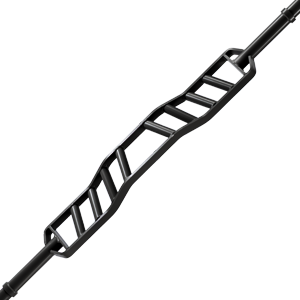
Shop Power BarRackable Cambered Squat Bar
Helpful for squat variation, trunk demand, posterior-chain loading, and shoulder-friendly lower-body training.
Shop Cambered BarPowerMax Medicine Ball V2
Use for throws, explosive push/pull patterns, trunk power, and low-skill high-output power work.
Shop Medicine BallElitefts Head/Neck Harness
A direct fit for CARE work when neck strength and upper-back durability are priorities.
Shop Neck HarnessElitefts Foam Roller 12x6
A simple tool for recovery, mobility, and tissue prep between demanding training sessions.
Shop Foam RollerElitefts Pro Mobility Ball
Use for focused tissue work, trigger points, and small-area recovery work that a roller can miss.
Shop Mobility BallSocial media has damaged the coaching perspective. If a session does not look brutal, people assume it is not effective.
Elite preparation often looks controlled, precise, and intentional. The athlete leaves stimulated instead of destroyed. That takes restraint. Any coach can create fatigue. Very few can sustain adaptation throughout an entire competitive calendar. That is the difference between training and performance preparation.
Formula 1 offers a useful framework for understanding athletic preparation. The factory builds the car. Testing refines the car. Racing reveals the car.
Team sport preparation should follow the same sequence. Build the athlete in the off-season. Test and tune the athlete in preseason. Race the athlete during the season. When each phase is given the attention it deserves, performance becomes less about hope and more about preparation.
— Seneca