

Coaching Efficiency Starts With the Floor Plan
Build the Pod Before You Buy the Toys
Andy McCloy explains why your coaching model—not your wish list—should determine every rack, bench, cable stack, and square foot in the room.
TLTR
Design the room around how many athletes one coach must manage. Start with self-contained rack pods, then add dumbbells, kettlebells, medicine balls, and one cable station per two racks. Only after the coaching model works should you spend floor space on specialty pieces.
Most new gym owners buy equipment the same way lifters attack an accessory day: they chase whatever looks exciting. A pendulum squat shows up on social media. A selectorized piece feels professional. A specialty bar promises a new solution. Soon the room is full, the budget is gone, and the coach is still walking thirty yards between athletes.
That is backwards.
At the elitefts Compound, BCI Sports Performance and Fitness owner Andy McCloy laid out a better order of operations. His point was not that every gym needs the same equipment. His point was that equipment must serve the business and coaching model. If one coach is responsible for six people, the floor should support six. If one coach is responsible for twelve athletes, the layout must let that coach see, cue, and control twelve athletes without turning the session into crowd management.
Start With the Coaching Ratio
McCloy’s athlete model is one coach to twelve athletes. He organizes that group as four athletes per rack, which means three racks create one complete twelve-person training system. His adult model is one coach to six clients, so two racks establish the pod.
That math matters more than the catalog. A rack is not merely a place to squat. Properly outfitted, it is the anchor for squats, presses, pulls, band work, landmine variations, pull-ups, and specialty-bar movements. Wheel a bench in when needed. Store the plates and accessories where the group can reach them. The athletes stay in one area, and the coach keeps the entire pod in view.
| Coaching model | Rack plan | Why it works |
|---|---|---|
| 1 coach : 6 adults | 2 racks, 3 people per rack | Compact pod with short transitions and clear sight lines |
| 1 coach : 12 athletes | 3 racks, 4 people per rack | Enough stations to keep work moving without scattering the group |
Before ordering anything, write the ratio on paper. Then map where athletes wait, lift, load, spot, and move. If the plan forces the coach to turn his back on half the group, the equipment arrangement has already failed.
The Rack Is the Base, Not the Entire Program
The first purchase should solve the largest number of problems. That makes a durable, adaptable rack the logical foundation. The elitefts Power Rack collection gives a facility options for different footprints and training demands, while rack attachments can expand a station without forcing another large footprint onto the floor.
But versatility is useful only when the program drives it. McCloy describes a “coaching-first approach”: establish your beliefs and principles, let them determine the program, and let the program determine the equipment. Do not buy a tool and then invent work to justify it.
Rule: If a piece does not improve coaching visibility, session flow, or the program you already believe in, it is not a priority purchase.
Fill the Power Gaps Instead of Duplicating School
McCloy likes Olympic lifting. That does not mean he automatically makes it the center of a private-sector program. Many athletes already perform Olympic-lift variations at school. Repeating the same pattern simply because it looks like “sports performance” wastes an opportunity to fill a different need.
Medicine balls can train power through multiple planes and patterns. They allow throws, slams, rotations, and explosive intent without demanding another barbell station. Kettlebells create another low-footprint path to power development and are easy to stage beside every rack. McCloy keeps kettlebells attached to the pod so athletes can progress into the next movement without crossing the room.
A thoughtful mix from the elitefts Kettlebell collection and Medicine Ball collection adds options without breaking the pod. The key is placement. Equipment sitting in a distant corner may exist on the inventory sheet, but it does not support efficient coaching.
Build the Pod in Layers
Once the rack layout is established, McCloy fills the system in a practical order. Benches make pressing possible. Dumbbells cover a huge share of assistance work. Kettlebells and medicine balls handle many power and conditioning needs. After those basics, a cable station can add low, middle, and high rows, torso rotation, pull-up space, and storage.
His guideline is simple: one cable station for every two racks. That ratio preserves the same logic as the original pod. The station adds exercise variety without becoming a bottleneck that leaves ten athletes waiting for one handle.
For owners working with limited cash or square footage, this sequence is also a filter:
- Racks and benches: Create the primary training stations.
- Dumbbells: Cover assistance work and individual loading needs.
- Kettlebells and medicine balls: Add power, carries, throws, and conditioning without consuming much floor space.
- Cable station: Add directional pulling, rotation, and another pull-up option.
- Specialty equipment: Fill genuine program gaps only after the operating system works.
This is not a list of what looks best in a facility tour. It is the order that protects throughput.
Earn the Specialty Pieces
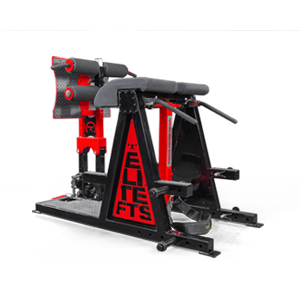
When the base is covered and space remains, McCloy likes a few specialty additions. A glute-ham raise supports isometrics, eccentrics, and full-range posterior-chain work. A plate-loaded T-bar row helps offset the pressing volume common among athletes and general-population clients. Rotating handles create useful freedom for different builds and shoulder positions.
His favorite piece in the room was the pendulum squat. Athletes and adults who have spent years back squatting often turn every squat into a hinge-dominant extension pattern. The pendulum places them in a more upright, stacked position and loads the anterior chain and quads differently. That makes it valuable—not because it is impressive, but because it solves a specific pattern problem the base program may not address.
That is how specialty equipment should earn its floor space. It should solve a known issue, provide a stimulus the pod cannot easily reproduce, or serve enough athletes to justify its footprint. If it does none of those things, it is a toy.
Design for the Coach Who Has to Run the Session
A facility is not a showroom. It is a workplace for coaches and a training environment for athletes. The best layout reduces unnecessary decisions and unnecessary travel. Plates are where they are used. Kettlebells live beside the rack. Benches roll into the station. Four athletes know exactly where their work happens, and the coach can correct one rep without losing sight of the other eleven.
That kind of organization affects more than neatness. It improves safety, makes transition times predictable, and lets a coach spend attention on execution instead of traffic control. It also makes capacity real. A spreadsheet may say one coach can handle twelve athletes, but the room must make that claim physically possible.
So before you spend the next dollar, answer three questions: How many people must one coach manage? What movements does your system actually require? Can every tool be placed where it supports that ratio? Build those answers into the floor first. Then buy the equipment.
Article notes are based on Andy McCloy’s discussion in the elitefts video How to Layout a Gym for 12:1 Coaching Efficiency.