

Conditioning Games for Rugby: Building Fitness Through Competition
Stop separating fitness from rugby. These competitive conditioning games build repeat high-intensity effort, decision-making, communication, and tactical execution under fatigue.
For many years, rugby conditioning was dominated by straight-line running, shuttle tests, and prescribed interval work. Those methods still have value, but they often miss the decision-making, movement variability, and competitive pressure of match play.
Conditioning games solve that problem. When designed correctly, they allow coaches to train fitness, technical execution, tactical awareness, communication, and competitive resilience simultaneously. Players work harder because the focus shifts away from “running” and toward solving problems, scoring points, and beating opponents.
1 Goal Line D
Objective: Develop repeated short-duration attacking efforts under defensive pressure while challenging defensive decision-making close to the try line.
Setup
- Attackers outnumber defenders by two players.
- Attack begins 5 meters from the try line.
- Place a cone 2 meters from the try line.
- Defenders cannot advance beyond the cone line.
Rules
- Attackers score by crossing the try line; grounding is not required.
- If an attacker receives a two-handed touch, possession returns to the 5m starting line.
- Any knock-on, dropped ball, or forward pass ends the attack.
- Teams attack continuously for 2 minutes, aiming to score as many tries as possible.
Coaching Focus
- Repeated acceleration ability
- Decision-making under fatigue
- Attacking creativity
- Defensive communication and organization
2 Offside Touch
Objective: Create high ball-in-play time while promoting support play, transition speed, and defensive work rate.
Setup
- Use a full-width playing area.
- Teams attack toward the far try line.
Rules
- The first pass must travel backward.
- Attacking teams receive two touches before a turnover.
- Following the restart pass, the ball may be passed in any direction.
- All attackers must be inside the opposition's 22m area before a try can be scored.
- The scoring team retains possession.
- Defenders retreat inside the attacking team's half following a score.
Variations
- Man-on-man defensive assignments.
- Add a sweeper who can tag any attacker.
- Grubber-kick-only version with no running after reception.
Coaching Focus
- Transition speed
- High-speed running
- Support play
- Defensive work rate
3 Speed Ball
Objective: Develop aerobic power, transition fitness, and aerial contest skills.
Setup
- Use a soccer ball.
- Play on full-field dimensions.
Rules
- Standard soccer rules apply.
- If a player catches the ball on the full, possession transitions to touch football.
- The attacking team receives three touches.
- After the third touch, the ball is dropped, and soccer resumes.
- Players involved in the final touch sequence cannot immediately re-enter play.
Coaching Focus
- Aerobic conditioning
- Decision-making
- Aerial skills
- Repeated high-intensity efforts
4 One Touch
Objective: Train repeat sprint ability and transition conditioning.
Setup
- Play across the field.
- Teams begin on opposite touchlines.
Rules
- Standard touch football rules apply.
- The attacking team receives only one touch before possession changes.
- Following a touch, all players retreat to their designated try line before re-entering play.
- After a score, the scoring team retains possession, and teams swap directions.
Coaching Focus
- Repeat sprint ability
- Transition conditioning
- Recovery under fatigue
5 Drop-Off Touch
Objective: Increase defensive work rate and repeated-effort capacity.
Rules
- Standard touch football rules apply.
- Six touches per possession.
- No kicking.
- Any player making a touch must sprint around their own goal posts before rejoining the defensive line.
Coaching Focus
- Defensive conditioning
- Repeated accelerations
- Recovery and repositioning
- Communication under fatigue
6 Cone Ball
Objective: Develop attacking vision, kicking skills, and spatial awareness.
Scoring System
| Action | Points |
|---|---|
| Ground ball on the designated cone | 5 |
| Standard try | 3 |
| Receive a grubber kick in the scoring area | 1 |
Coaching Focus
- Spatial awareness
- Tactical decision-making
- Kicking execution
- Attacking vision
Progressions
Variation 1
- Backward passing only.
- Two touches before turnover.
- One grubber kick per possession.
Variation 2
- Passing in any direction.
- One touch before turnover.
- One grubber kick permitted to a teammate.
Variation 3
- Passing in any direction.
- Chip kicks and kick passes are allowed.
- One touch before turnover.
- Any bounce results in an immediate turnover.
7 Multi Ball
Objective: Develop communication, transition skills, and adaptability.
Setup
- Use two evenly matched teams.
- Play across the full field width.
- Use the 22m lines as try lines.
- The coach controls 3-4 balls.
Rules
- The coach may randomly turn possession over.
- The coach may introduce a second ball.
- The coach may change the point of attack.
- The coach may create unexpected transition situations.
- Play 2 x 5-minute halves with a 90-second halftime.
Coaching Focus
- Communication
- Transition speed
- Adaptability
- Continuous engagement
8 Retention Touch
Objective: Develop phase-play fitness while reinforcing team attack structure.
Rules
- Teams have three phases to breach the defense.
- If successful, they receive another three phases.
- Touched players go to ground, long place the ball, and play continues.
- If a team fails to breach after three phases, it must kick.
- Following a try, possession changes, the defending team retreats to the 22m line, and the new attack starts from the goal line.
- Emphasize game tempo throughout.
Coaching Focus
- Attack shape
- Retention under fatigue
- Phase-play conditioning
- Tactical discipline
Additional Conditioning Formats
Continuous Rugby Blocks
- 7 x 3-minute blocks.
- Full-field rugby.
- Start from a set piece.
- Place multiple balls around the field for rapid restarts.
Progression: Build toward 3 x 7-minute blocks over 6-8 weeks.
Captain’s Run Conditioning
- Start from a set piece.
- Play five phases.
- Walk recovery.
- Restart from another field position.
Focus: Match-specific conditioning, tactical execution under fatigue, and controlled intensity.
Designing Effective Conditioning Games
1. Field Dimensions
Larger areas: increased running speed and higher aerobic load.
Smaller areas: more accelerations, increased collision frequency, and greater decision density.
2. Player Numbers
Underloads: increased defensive work rate and greater fatigue.
Overloads: improved ball movement and increased attacking creativity.
3. Touch Limits
Fewer touches: faster transitions and increased sprint demands.
More touches: greater tactical complexity and longer possession sequences.
4. Scoring Incentives
Bonus points: encourage specific tactical behaviors.
Multiple scoring methods: promote creativity and adaptability.
5. Work-to-Rest Ratios
| Duration | Training Outcome |
|---|---|
| 30-60 sec | Anaerobic power |
| 2-5 min | Aerobic power and repeatability |
Key Coaching Principles
- Keep players focused on solving rugby problems rather than simply running.
- Manipulate constraints to achieve the desired fitness outcome.
- Maintain competition and scoring incentives.
- Coach communication and decision-making throughout.
- Ensure transfer to match demands.
- Progress intensity and complexity over time.
EliteFTS Product Suggestions for Rugby Conditioning
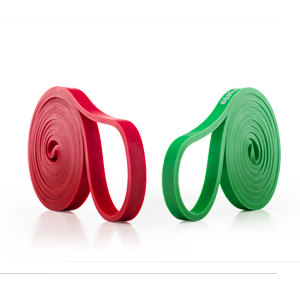
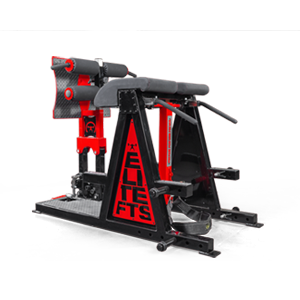
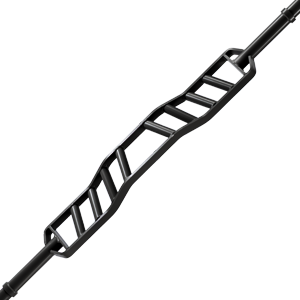
Use these as practical add-ons around the games above - for warm-ups, recovery, sprint work, extra GPP, and team conditioning finishers.
Product availability, pricing, and shipping timelines can change. Check product pages before publishing if the post will mention exact pricing.