
Every Way You Should Be Using Resistance Bands in Your Training
A Complete Guide from Over 30 Years Under the Bar
I've been using bands since my early days at Westside Barbell. Louie Simmons introduced them into our training, and they changed how we thought about loading, speed, and force production. That was decades ago. Since then, I've used bands to peak for meets, train around injuries, coach hundreds of lifters, and keep myself training through two hip replacements and a shoulder that probably should have been replaced years ago.
Most lifters either ignore bands completely or use them incorrectly. Both are mistakes.
Bands are one of the most versatile tools you can own for strength and conditioning. Not a gimmick. Not a trend. A real training tool with real applications across nearly every part of your program. Here's every way to use them.
Accommodating Resistance on the Main Lifts
This is the primary use of bands in strength training, and it's the one most people have heard of, even if they don't fully understand it.
When you squat, bench, or deadlift with a barbell, the weight stays the same through the entire range of motion. But your ability to produce force does not. You're weaker at the bottom and stronger at the top. That's your strength curve. With straight weight, you're limited to what you can handle at your weakest point. Everything above that point is underloaded.
Bands fix this. When you attach bands to the bar, tension increases as you lift. At the bottom, the bands are slack or have minimal tension. At the top, they're stretched and adding a significant load. This matches the resistance to your strength curve, so you're challenged through the entire lift.
There are two other things happening here that matter. First, bands create what we call progressive concentrics and accelerated eccentrics. Think of it like a basketball. If you drop a basketball from shoulder height, it bounces to about waist height. If you slam it down, it bounces much higher. Bands pull the bar down faster than gravity, storing more energy and creating a faster concentric on the way up. Second, bands train you to push all the way through the lift. With straight weight, you start decelerating before lockout. You have to, or you'd throw the bar. Bands force you to keep accelerating because the load continues to increase.
This is how bands are used on days of dynamic effort. You set up a percentage of bar weight plus a percentage of band tension and wave both over a three-week cycle. A good starting point is around 25% of your max coming from band tension, with bar weight ranging from roughly 45% to 65% depending on your level. Start conservative. If the bar moves fast, you're in the right range. If it slows down, back off the weight.
Speed Training and Rate of Force Development
Dynamic effort training is about moving submaximal weights as fast as possible. Bands make speed work better than straight weight alone because of the properties I just described. Accelerated eccentric loading loads the stretch reflex harder. The increasing tension at the top forces you to drive all the way through rather than coast to lockout.
On a box squat with bands, you sit on the box with the bar pulling you down harder than gravity. When you fire off the box, you have to overcome that pull plus accelerate against increasing tension. Every rep trains you to produce more force, faster. That's rate of force development, and it's one of the most trainable qualities in strength sports.
For more advanced lifters, circa-maximal band phases take this further. You use heavier band tension so the top of the lift approaches near-maximal loads while the bottom stays manageable. This is a peaking tool. Not something you run year-round, but when used correctly in the weeks leading into a meet, it can put pounds on your total.
Reverse Bands for Overload and Joint-Friendly Training
This is the opposite setup. Instead of attaching bands from the floor to the bar, you suspend bands from the top of the power rack and loop them around the bar. The bands support the weight at the bottom of the lift and provide less assistance as you press or squat to lockout.
There are two distinct uses for this.
The first is overload. Reverse bands let you handle heavier weights at the top while reducing the load at your weakest point. This is a solid max effort variation for bench, squat, and deadlift. You can work up to heavy singles, triples, or fives with reverse bands and train lockout strength with supramaximal loads at the top.
The second use is the one that matters most to me personally. Reverse bands let beat-up lifters keep training.
I have titanium hips. I have a shoulder that's full of bone spurs and arthritis. Bone degeneration doesn't stop because you got a replacement. Every movement, every rep, clicks that timer down. My doctor told me my hip replacement had 10 to 15 years left on it. To me, that meant 10 years because I wasn't going to go easy.
So I play it smart. I use reverse bands at the bottom of my lifts so the weight is deloaded in the most vulnerable position. That puts more load on the top, where my joints are in a stronger, more stable position. I get the benefits of the max-effort method for bone density and joint stability without the crushing loads at the bottom that would accelerate joint wear.
Bands and chains let me keep lifting. For me, that's worth everything.
Post-Injury and Restoration Work
This is related to reverse bands but deserves its own section because the application is different.
The reverse band press is one of the best post-injury protocols I've seen. You set it up so there's zero weight at the chest. Based on a seven-foot rack, your options are a light band with 65 pounds, an average band with 95 pounds, or a strong band with 135 pounds. The band does most of the work. You do 1 to 2 sets of 100 reps, 2 to 4 times per week, and this replaces your regular bench training until your strength starts coming back.
The keys are letting the band do the work and keeping muscle tension to a minimum. This isn't training for strength. It's training for blood flow, recovery, and getting the muscles firing again without loading the injury.
This same setup works as a restoration workout during regular training. One set of 100 reps at the end of your bench session. It flushes the area and keeps things healthy.
Beyond the reverse band press, bands are excellent for joint traction and distraction. Horizontal shoulder traction is one I use regularly. You loop two average bands together, attach one end to the top of a power rack, slip the other end around your wrist, step away until it feels like your arm is being ripped off, and then move. Pull in every angle and direction you can think of. Elbow in, elbow out, wherever. There's no wrong way to move, but you have to get a full, deep stretch at the end of each rep.
You can do the same type of traction work for the lumbar spine, hips, psoas, and neck. This is not the same as static stretching. You're using the band to create a distraction at the joint as you move through the range of motion. It's loaded mobility work.
Accessory and Supplemental Movements
This is where bands really show their versatility. You can replicate most cable and machine exercises with a band and a power rack.
Leg curls: choke a light or average band around the bottom of a rack, put your ankle in it, sit on a bench 3 to 4 feet away, and curl your heels to your glutes. Good morning: band around your neck, step on the other end, hinge, and stand up. Pull-throughs: band choked low, straddle it facing away, hinge, and pull through. Face pulls: band choked high, pull to your forehead, and squeeze your upper back. Triceps pushdowns: band-choked high; extend.
Pull-aparts are one of the best things you can do for your upper back, and you can do them anywhere. Grab a mini or light band, hold it out in front of you with your arms straight, and pull it apart until your hands are at your sides. Hold for a second, return, repeat. This is an exercise you can do at home on your off days for extra upper-back volume.
Band-assisted pull-ups are great for lifters who have put on significant bodyweight and find that pull-ups beat up their shoulders. Choke a band around the pull-up bar, step into it, and it eliminates some of your bodyweight.
The list goes on: reverse banded rows, floor band pull-downs, banded shrugs, spider crawls with short bands. The variations are nearly endless.
Warm-Up, Activation, and Mobility
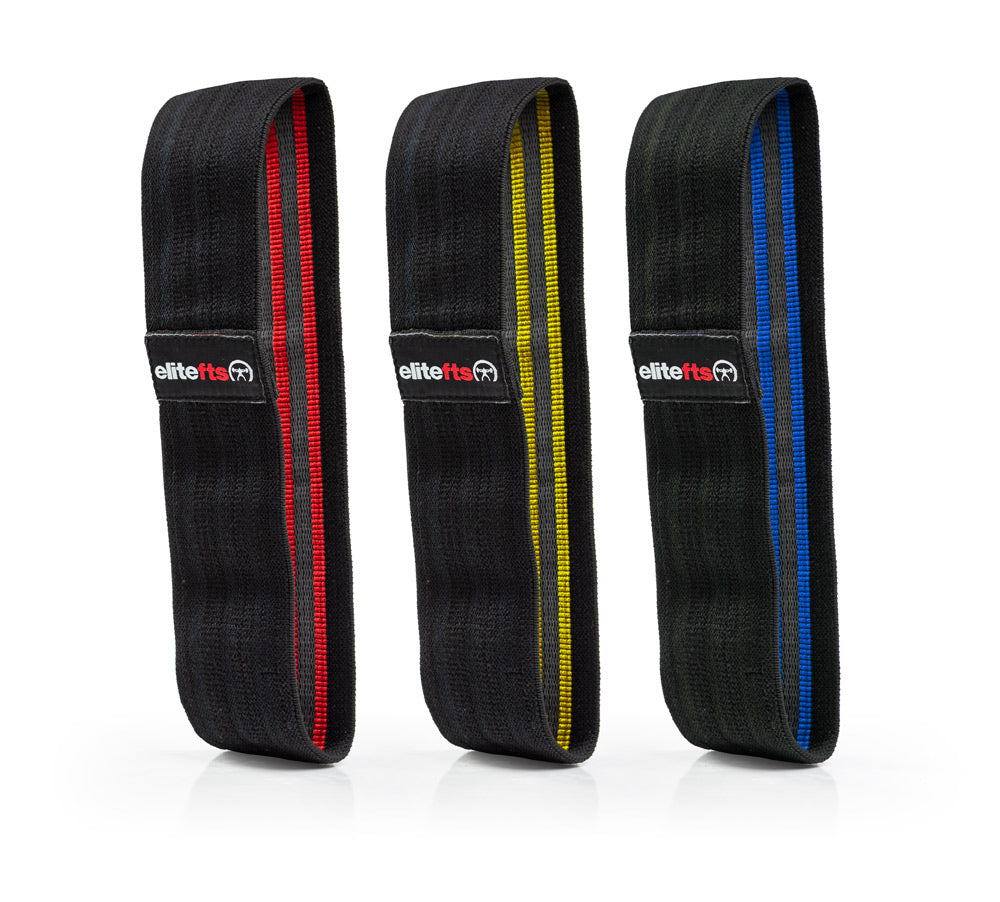
Before you squat, a mini band around the knees or above the knees during your warm-up sets fire to the glutes and teaches you to push the knees out. Mini band shoulder circuits, in both high and low positions, are a staple on bench days. Band abduction and adduction work is a simple way to activate the hips before sumo pulls. Don't overcomplicate it. Pick one drill for each muscle group, do a couple sets, and get to work.
For beginners, a Pro Mini Band on a bar or even a broomstick can teach squatting posture and tightness. The band gives feedback. If you're not tight, you feel it immediately.
Post-training, band stretching works well for restoration. Lower extremity stretches, lat stretches, pec stretches. The key principle here is to return to your normal baseline range of motion. You're not trying to create a new range. You're trying to recover what tightened up during the session. If you're tighter than normal, warm up and bring yourself back to baseline. That's it.
Rehab and Corrective Drills
Bands are a staple in rehab settings for a reason. Band TKEs (terminal knee extensions) and heel touchdowns are used constantly in knee rehab. Band external rotation and PNF diagonals are standard for shoulder work. The Pallof press, an anti-rotational drill with a band, is one of the best core exercises you can do for stability. Trans-adduction work with bands fills in gaps that most lifters never address.
These typically go at the end of a workout or in a separate session. Low intensity, high intention. The point is to strengthen positions and patterns, not to chase fatigue.
Speed, Athletic Development, and Conditioning
For athletes, bands add resistance to sprints, lateral movement, and bounds. Band-resisted 10-yard sprints are a simple, effective way to develop acceleration. Lateral speed progressions with bands build the ability to change direction under load. These are tools that work well for high school and college strength coaches who need to train large groups without a ton of equipment.
For conditioning and work capacity, bands fit into lactic acid tolerance training. High set counts, short rest periods (20 to 30 seconds), submaximal weight plus light band tension. This type of training is appropriate for lifters who need a break from heavy work, need to rebuild conditioning, are returning from injury, or need more hypertrophy. It's also a conditioning tool in its own right. Some of the most brutal training sessions I've seen involved two lifters going back-to-back on banded box squats, set after set, until someone quit. We've seen battles go upwards of 38 sets.
A Few Things to Keep in Mind
First, don't use bands on every movement in your workout. Band tension can inhibit the work of the antagonist muscles. For powerlifters who are always under heavy loads, this may not be a significant issue. But for athletes who throw, sprint, or perform other explosive movements, this can create a risk of joint hyperextension. Without the antagonist's braking effect, the joint has less protection. Use bands strategically, not universally.
Second, beginners can and should use bands. The idea that bands are only for advanced lifters is wrong. A mini band on the bar teaches tightness. Light band tension teaches a beginner to accelerate through a lift. These are good things for a new lifter to learn early.
Third, even experienced lifters can become too dependent on bands. If you use bands on every squat session for years, you may lose the ability to stabilize the bar without them. It's rare, but it happens. Rotate your methods.
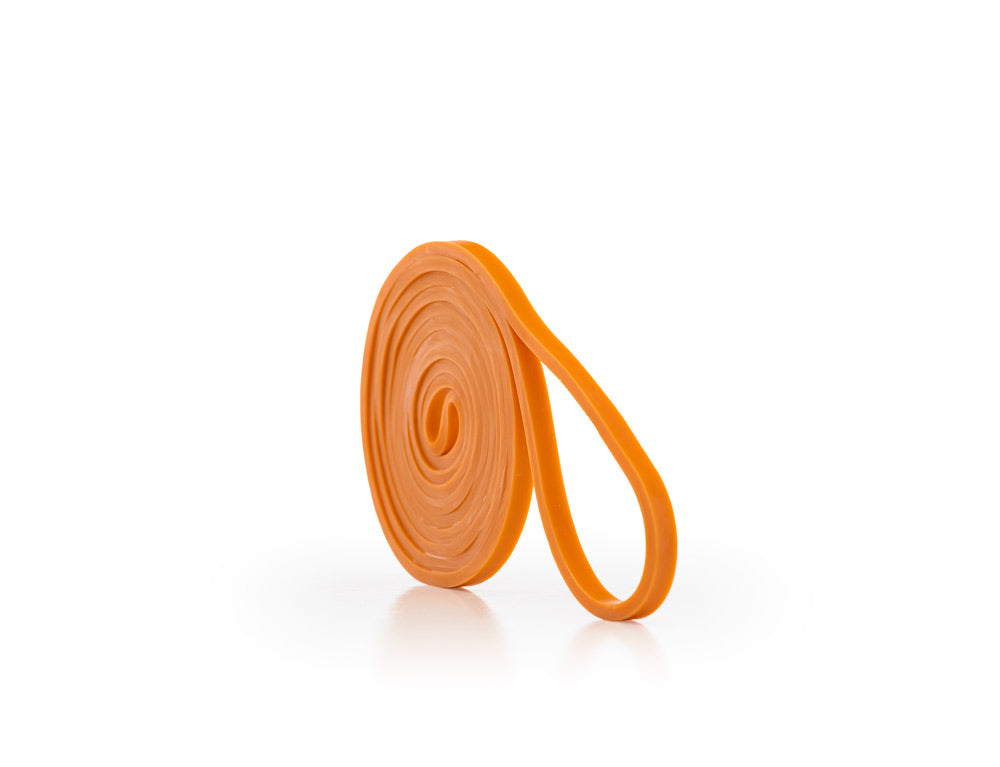
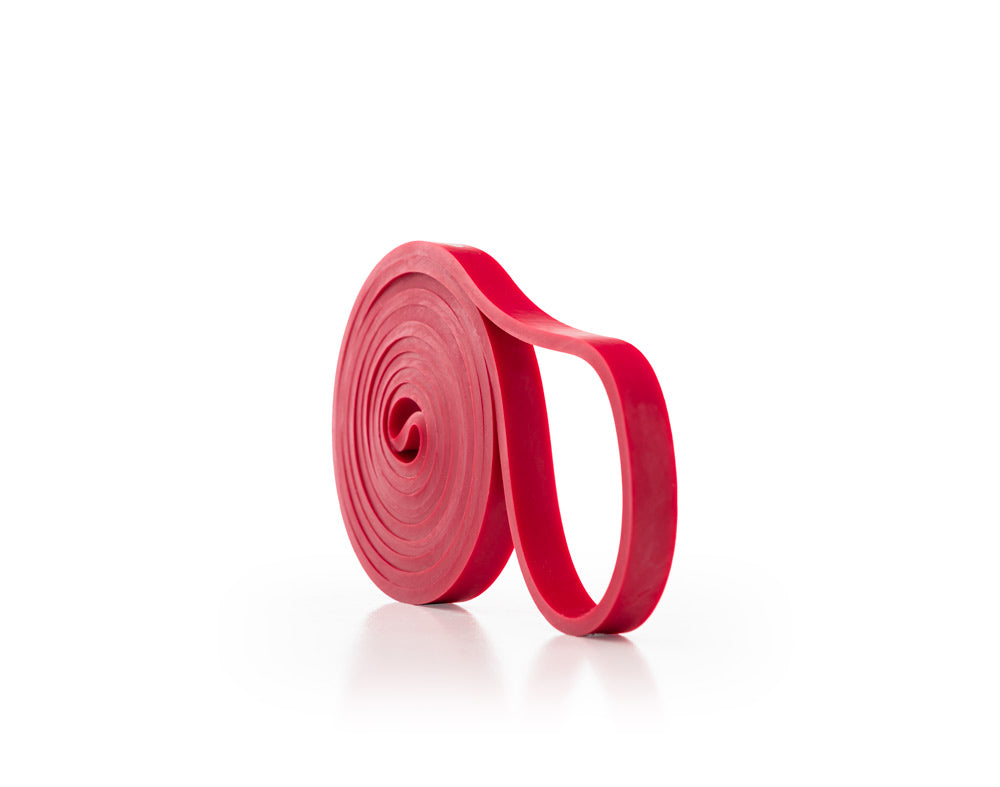
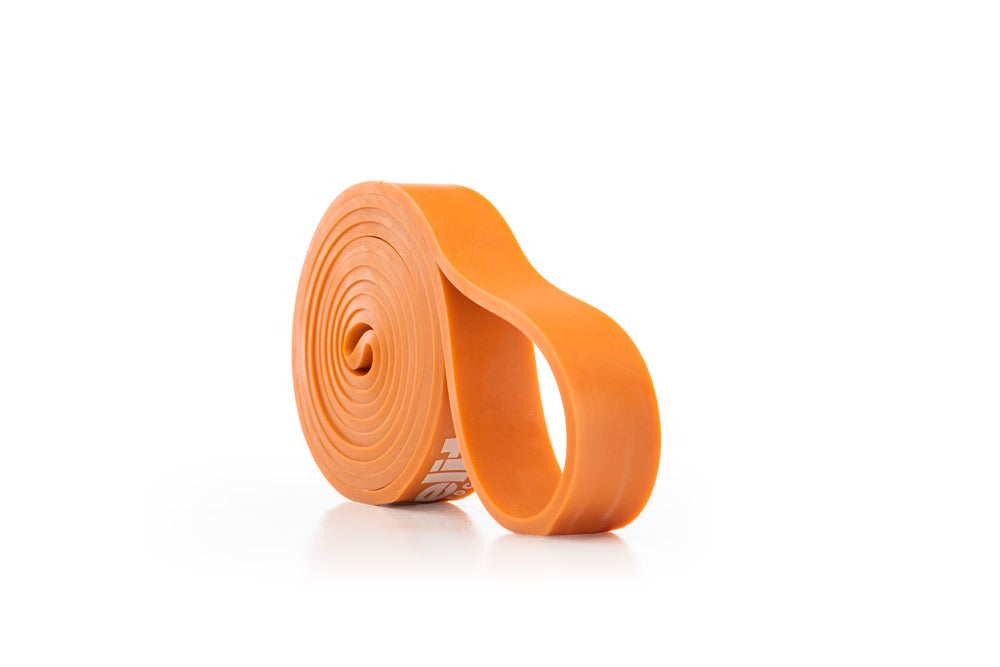
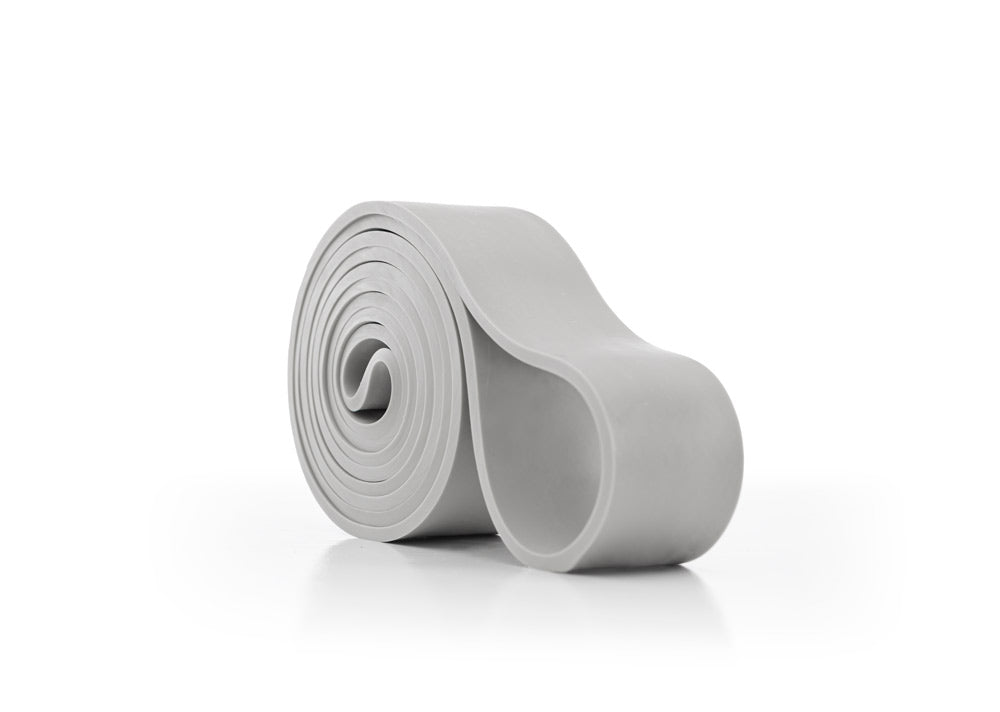
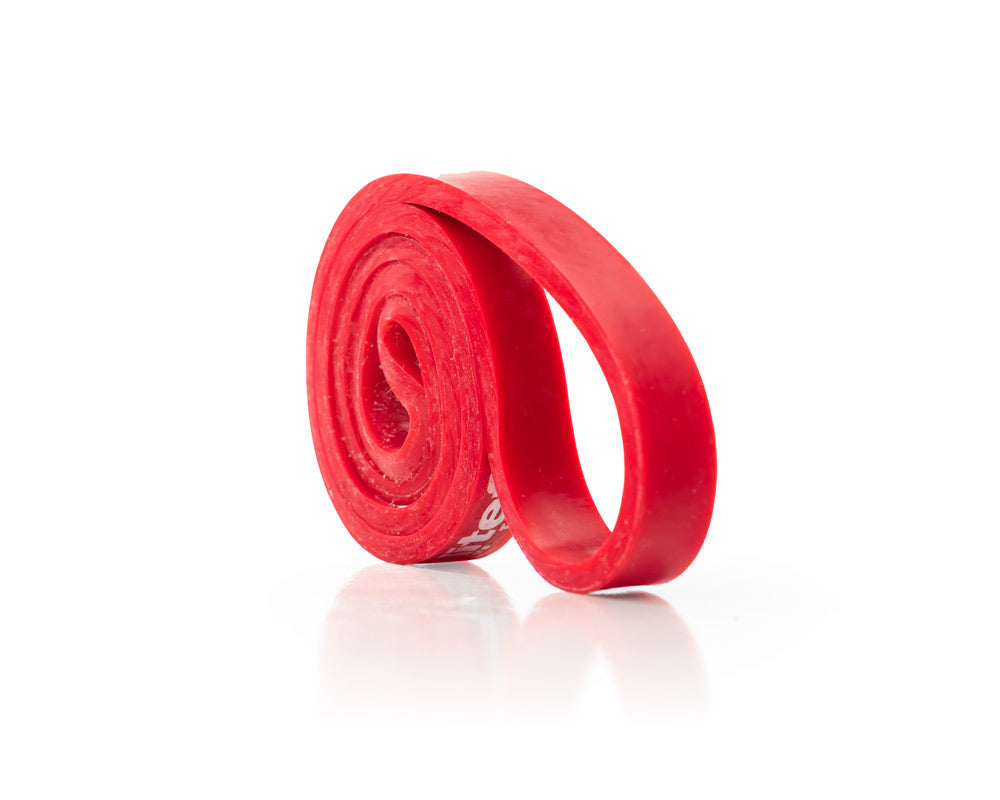
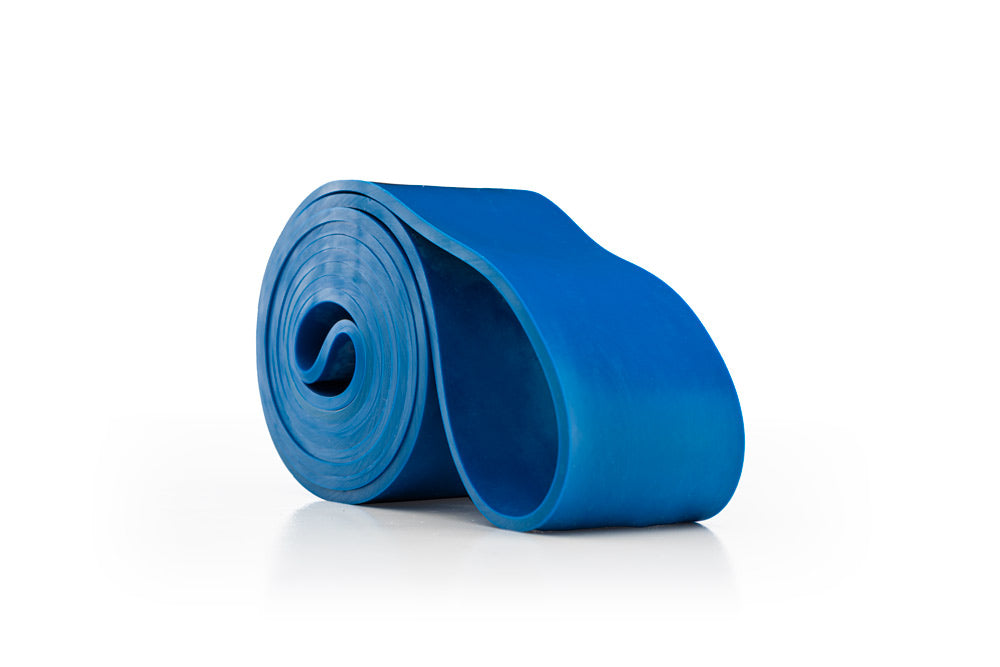
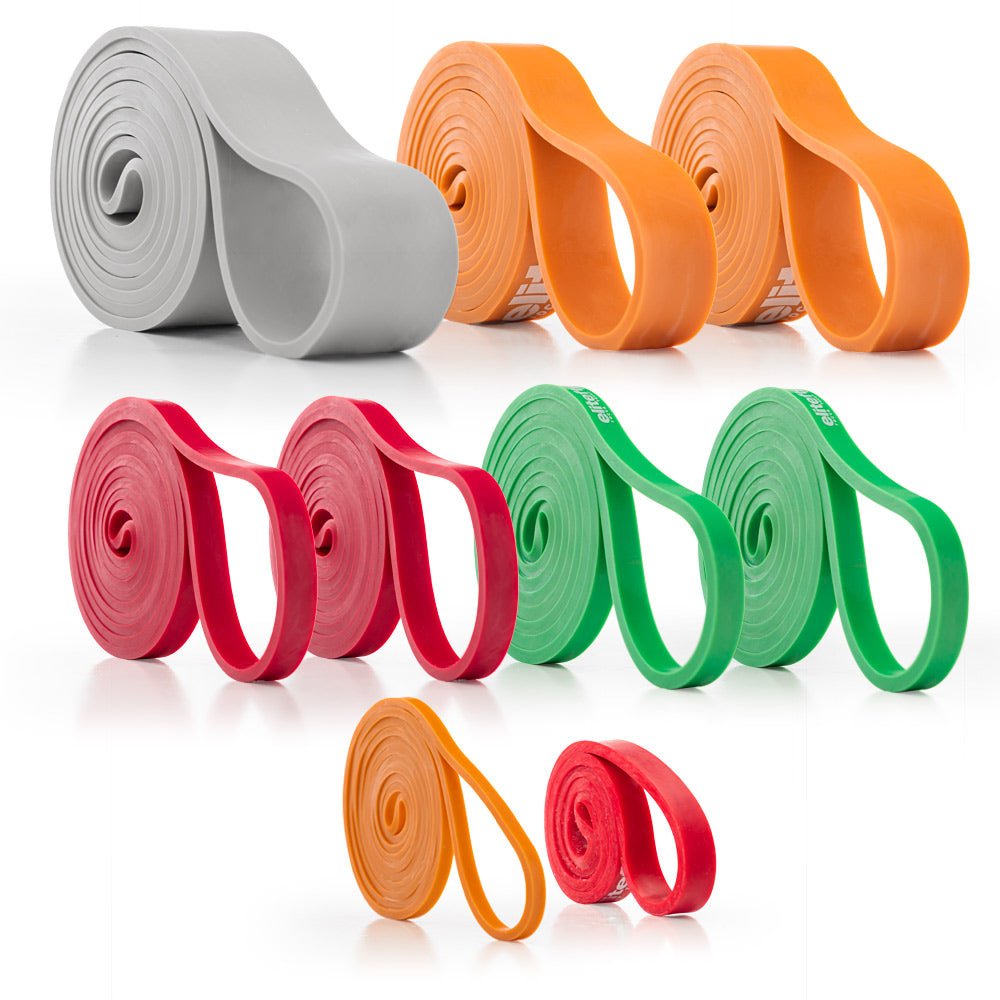
Fourth, find the right band first, then figure out the weight. Buy a pack, start with the smallest band, test it, and move up until the bar starts to slow down. The band before the one that slowed you down is your band. From there, wave the weights.
Bands are not a replacement for heavy barbells, quality equipment, and hard work. They're a tool that makes all of those things more effective.
Whether you're peaking for a meet, training around an injury, coaching a team with limited equipment, or just trying to keep lifting into your 50s and beyond, bands belong in your training.
Get a set. Learn to use them. Train your ass off.
Live, Learn, Pass On.
Dave Tate / elitefts