

November 1980
Powerlifting USA | Records, Politics, and the Iron Game at a Crossroads
The state of powerlifting in late 1980 is a paradox of incredible physical breakthroughs and deep political frustration.
Mike Bridges and Mike MacDonald are busy rewriting the record books with lifts that seem decades ahead of their time.
Meanwhile, the sport's administration is stuck in a morass. The battle between the USPF and the NPA continues to cloud the future. There is a growing, vocal anger regarding steroid use at the Teenage Nationals.
It is a gritty, transitionary period where the raw power on the platform consistently outpaces the organization behind it.
Legend Feature: Hiro Isagawa
Japan's Other "Mighty Mite"
While many associate Japanese lifting with the incomparable Inaba, Hiro Isagawa has emerged as a rising star training out of Whittier, California.
Standing just under 5 feet and carrying 123 to 128 lbs of muscle, Isagawa has progressed from a 286 lb squat to a massive 451 lbs in just four years.
His philosophy is a refreshing contrast to the ultra-complex multi-cyclical programs common in the states.
Isagawa utilizes a venerable Heavy/Light system. He believes reps form the foundation of super strength and that lifters who rely exclusively on heavy singles are asking for serious injury.
He performs each lift twice a week: one heavy session and one medium or light session. Remarkably, he does not use pre-planned poundages until the week before, instead relying on an intimate knowledge of his own recovery to dictate the load.
"Lifters who rely exclusively on heavy singles are asking for serious injury."
Hiro Isagawa
The Isagawa Training Split
-
Monday: Light Squat
Standard weightlifting belt and wraps. Relatively narrow stance. Quick bounce out of the bottom to engage the stretch reflex. -
Tuesday: Light Bench
Traditional Japanese style with maximum allowable grip and pronounced back arch. Most reps are touch-and-go, saving competition pauses for heavy days. -
Wednesday: Heavy Deadlift
Sumo style. Alternates weekly between heavy rep days (Week A) and testing-weight days (Week B). -
Thursday: Heavy Bench
Quick warmups followed by immediate jumps to 275 and 300 lbs. Finishing sets: five sets of five at 265 lbs with paused reps. -
Saturday: Heavy Squat
Pyramid from 135 lbs up to a 440 lb single, followed by back-off sets and hack slides. -
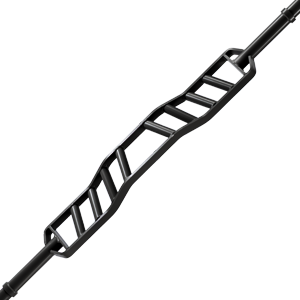
Sunday: Cambered Bar Bench
Used to develop pectoral power while protecting a previously torn pec. Followed by heavy dumbbell work.
The Leaderboard: Top 10 Bantamweights
123 lb Class | 1980
The 123 lb division in 1980 is exceptionally deep, with legends like Precious McKenzie still casting a long shadow over the rankings.
| Rank | Lifter | Total (lbs) | Date Recorded |
|---|---|---|---|
| 1 | Precious McKenzie | 1,372 | 11/12/79 |
| 2 | N. Lach | 1,202 | 07/12/80 |
| 3 | Mike Bridges | 1,182 | 07/12/80 |
| 4 | Gayla Sue Crain | 1,145 | 06/07/80 |
| 5 | S. Enes | 1,110 | 01/01/80 |
| 6 | C. Coles | 1,102 | 03/29/80 |
| 7 | M. Sato | 1,085 | 12/02/78 |
| 8 | Gayla Crain (alt.) | 1,075 | 02/29/80 |
| 9 | M. Sca | 1,075 | 04/04/80 |
| 10 | B. Mason | 1,058 | 04/12/80 |

Tactical Training Takeaways
- The Stretch Reflex Squat: Use a relatively narrow stance, keep the back straight, and employ a quick bounce out of the hole to activate the stretch reflex.
- Traditional Bench Grip: Maximize leverage with the widest allowable grip and a pronounced back arch. Keep the bar path straight on the ascent.
- Avoid Gear Reliance: Beginners should train without supersuits or knee wraps. Relying on gear too early prevents tendons, ligaments, and stabilizing muscles from developing their full potential.
- Sumo Deadlift Knee Wrapping: Some Japanese lifters wrap the knees with Ace bandages during deadlifts to stay light through the bar's upward ascent.
- Rib Box Expansion: Incorporate dumbbell pullovers after chest work to stretch and deepen the rib box. Better leverage on the bench can follow.
- Focus on Power Reps: For the bench press, keep reps between three and five to target power development. High reps are essentially a bodybuilding routine and do not build competition strength.
- Pyramid with Caution: When pyramiding up to a heavy single, do not max out too often. A true maximum attempt should come no more than once every month or two.
- The Rest-Pause Method: If consecutive reps are a struggle, use a weight about 30 lbs under your max and perform five singles with rest between to build comfort under heavy iron.
- Mental vs. Physical Training: Successful lifters like Steve Knight emphasize training the mind as much as the body. Technique is the focus for every rep, every set, no exceptions.
- Walking for Fat Loss: Mike MacDonald suggests weighted walking with 12 lb leg weights to burn excess fat without the muscle density loss often associated with distance running.
Key Takeaway
The lifters who built the foundation of the sport trusted their body over a program, prioritized reps over ego, and stayed out of gear long enough to actually get strong.
Live. Learn. Pass On.