


Master the Fundamentals
Why great coaching never goes out of style—and why technology, variation, and advanced programming only work when the foundation is already strong.
Every generation of coaches thinks it's living through a revolution.
If I started coaching tomorrow with nothing more than a squat rack, a barbell, somewhere to sprint, and a stopwatch, I honestly don't think I'd produce significantly worse athletes than I do today. That statement usually surprises people. We live in an era of force plates, GPS units, velocity trackers, AI programming, and monitoring systems that generate more data before breakfast than I collected during most of my coaching career.
I like a lot of that technology. But here's the uncomfortable truth: none of it replaces coaching. None of it replaces teaching someone to squat properly. None of it replaces building trust with athletes. None of it replaces years of progressively getting stronger, faster, and more powerful.
Every week brings another exercise, another monitoring system, another "game-changing" methodology promising to take athletes to the next level. I've never been against innovation — over the course of my career, I've embraced new technology whenever I believed it could improve athletes. I've used velocity-based training, GPS monitoring, accommodating resistance, Olympic lifting derivatives, contrast methods, strongman training, and countless other tools.
But after more than three decades coaching professional rugby players around the world, one lesson has become impossible to ignore: the fundamentals still win. Technology evolves. Equipment changes. Methods come and go. Human performance doesn't. The coaches who consistently produce elite athletes are rarely the ones chasing every new trend. They're the ones who understand the timeless principles that underpin athletic development, and who apply them relentlessly, year after year. My programs have changed enormously over the years. My principles haven't.
Build Athletes — Not Exercise Collections
One of the biggest mistakes I see young coaches make is confusing variation with progress. Every month, there's another "must-have" exercise. Every week, social media convinces coaches they've been missing the latest secret variation that will transform athletic performance.
It won't. Athletes don't improve because the exercise menu changes. They improve because fundamental movement patterns become stronger, faster, and more efficient through thousands of high-quality repetitions. That's a very different thing.
My athletes squat. They hinge. They press. They pull. They sprint. They jump. They throw. They perform Olympic lift derivatives. Above all, they spend an enormous amount of time developing what I believe is the engine room of sporting performance — the posterior chain.
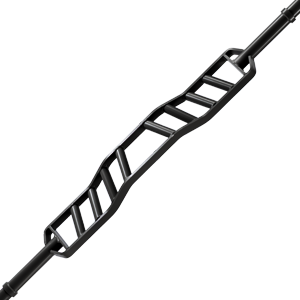
Do the exercises change? Of course. That's what the Conjugate System I run in my program is all about. Front squats replace back squats. Trap bars replace straight bars. Rack pulls replace deadlifts from the floor. We use specialty bars, bands, and chains to accommodate resistance training, Olympic lifting variations, unilateral exercises, and countless other exercises. But that's exactly what they are — tools. The movement patterns remain remarkably consistent, and that's the important distinction.
Variation should exist to solve a problem, not to entertain athletes or satisfy a coach's boredom. Remember, you are there to train, not entertain. Used properly, it accelerates adaptation and helps you avoid one of the biggest program killers: accommodation.
“Variation should solve a problem—not entertain the athlete or the coach.
Louie Simmons frequently referred to the Law of Accommodation — the biological principle that when the same training stimulus is applied repeatedly, it gradually loses its ability to produce further adaptation. The body becomes increasingly efficient at the task, and the stimulus no longer sends a signal strong enough to drive improvement.
That's where intelligent variation earns its place. Not random variation. Purposeful variation. Rotate the exercise, change the loading method, alter the bar, adjust the resistance profile, manipulate the volume or intensity — but always preserve the movement pattern and the training objective. The athlete keeps developing the qualities that matter while getting a fresh enough stimulus to keep adaptation moving in the right direction.
The mistake many coaches make is confusing variation with entertainment. Athletes don't need a new circus trick every Monday morning. They need a consistent plan built around proven movement patterns, with enough intelligent variation to keep the "gain train" moving forward without ever losing sight of the destination.
If an athlete has stopped adapting, variation may provide a new stimulus. If an athlete has accumulated excessive joint stress, another exercise may reduce the load while maintaining the adaptation. If technical limitations exist, an alternative exercise may teach a better movement pattern. Those are good reasons to change an exercise. Changing it because Instagram discovered something "new" isn't.
Athletes often ask me how to build bigger traps, broader shoulders, or bigger arms. My answer usually disappoints them: deadlift heavier, press more, row properly, heavy farmer’s walks. Get brutally strong in the big lifts and build muscle where it matters. As Dan John has long taught: squat, hinge, upper-body push, upper-body pull, and loaded carry. The irony is that athletes who become exceptionally strong in the major movement patterns usually end up with the physique they were chasing anyway.
Isolation exercises certainly have their place; they form the basis of my CARE and armor plating programs. I use them during rehab. I use them for injury prevention. I use them to address specific weaknesses or asymmetries. But sport isn't played one muscle at a time — it's played through coordinated movement. Large compound exercises develop force production, intermuscular coordination, robustness, and movement efficiency in ways that isolation work simply can't replicate.
I've never considered myself a collector of exercises. I'm a builder of athletes. Exercises are vehicles. Movement patterns are the destination. The exercise itself is rarely the magic — consistently applying sound training principles over months and years is where the magic has always been.
Strength Is the Foundation — Not the Destination
Strength matters. As the greats of sports science have told us, strength underpins every other bio-motor quality. But strength is only valuable if it transfers to sport.
A rugby player isn't rewarded for slowly producing force in the weight room. He's rewarded for producing force quickly — while sprinting, changing direction, jumping, tackling, or accelerating into contact. That's why power development never disappears from my programs: Olympic lift derivatives, medicine ball throws, jumps, reactive plyometrics, dynamic effort training, and resisted and assisted sprinting. These aren't phases. They're permanent features because whatever you don't train, you lose.
Maximum strength builds a bigger engine. Power teaches athletes how to use it. Over the years, I've experimented with just about every training method imaginable — accommodating resistance, cluster sets, wave loading, contrast training, complexes, velocity-based training, specialty bars. They all have value. But as Dave Tate and Louie Simmons have both said many times, "Everything works, but nothing works forever."
The problem isn't the methods. The problem is believing the methods are magic. None of them replaces learning how to squat properly. Young athletes don't need more complexity — they need greater competency. I've always believed athletes earn sophisticated programming through technical mastery, not the other way around. Too many coaches rush toward advanced methods before athletes have mastered the fundamentals. Fancy programming doesn't fix poor movement. It simply hides it.
Strong foundations allow advanced methods to work. Without those foundations, complexity merely disguises weakness.
Professional sport teaches another lesson very quickly: no program survives contact with reality. I've thrown away more programs than most coaches have ever written — not because they were poor programs, but because reality intervened. Players get injured. Flights get delayed. The head coach changes the game plan. Someone becomes a father. Someone loses a father. Life happens.
If you can't adapt, you're not coaching — you're administering a spreadsheet. The best programs are living documents, constantly adjusted according to the athlete standing in front of you rather than the program sitting on your laptop. The principles stay the same. The application changes.
During the off-season, my priorities are straightforward: build muscle, increase maximal strength, improve work capacity, and attack individual weaknesses. As competition approaches, volume gradually decreases while speed, power, and movement quality take on greater importance. My programs are always needs-based and grounded in the philosophy of Conjugate.
During the season, strength should never be abandoned—this is the 2020s, not the 1950s. It develops at a slower rate than in the off-season because nothing is ever simply maintained; it is either developing or declining. I have had players set lifetime PBs in the squat rack during the week of the Super Rugby final. Enough intensity to keep building physical qualities. Enough restraint to allow recovery. Enough flexibility to keep players performing every weekend.
Programs exist to serve athletes. Athletes do not exist to serve programs.
“Programs exist to serve athletes. Athletes do not exist to serve programs.
If someone asked me which physical quality has appeared most consistently throughout my coaching career, my answer would probably be posterior chain development: deadlifts, Romanian deadlifts, good mornings, Olympic pulls, glute-ham raises, hip-dominant exercises in all their variations. Acceleration starts behind the athlete. Jumping starts behind the athlete. Most dominant collisions start behind the athlete. The hips, glutes, hamstrings, and spinal erectors are the engine room of athletic performance.
I've never been particularly interested in building muscles that look impressive in the mirror. I'd much rather build athletes who are impossible to move on the field. That's the difference between training for appearance and training for performance. Strength has always been the foundation. It was never the destination.
Recovery Is the Key to Progress
One of the questions I get asked most often is, "Can I fit in another session?" It usually happens during the season. Just the other day, one of our players asked me where he could squeeze in some extra conditioning because he thought he needed to get fitter. My answer was simple: only if you can recover from it.
Years ago, I had a player who told me he liked to run six to ten kilometers the day after every game. When I asked him why, he said it got him moving again and set him up for the training week. Fair enough. But I asked him a different question: "What does that run cost you?" That's the question too few athletes ever ask themselves.
Every training session has a price. Sometimes the price is obvious. Sometimes it's hidden — in reduced quality at Tuesday's speed session, slower recovery from the weekend's collisions, poorer sleep, accumulated fatigue, or simply arriving at Saturday's game a little less prepared than you could have been.
Training creates fatigue. Recovery creates adaptation. Progress doesn't happen while you're lifting weights, running intervals, or grinding out extras after practice. It happens between those sessions, when your body gets the chance to repair, adapt, and become more resilient.
“Training creates fatigue. Recovery creates adaptation.
The stimulus is only half the equation. Recovery determines whether that stimulus actually produces a positive adaptation. This is where many athletes get themselves into trouble — they believe that if a little training is good, more must be better. It isn't. More is simply more. Better is better.
The objective isn't to see how much work you can survive. It's to identify the minimum effective dose that produces the maximum performance improvement while still allowing you to recover, improve, and perform consistently — especially during the competitive season.
In rugby, the game itself is often the biggest training stimulus of the week. Eighty minutes of repeated collisions, accelerations, decelerations, wrestling contests, and high-speed efforts leave a significant recovery debt. Adding more work because you "feel like you should" ignores the biggest stressor of all — the match you've just played.
The best athletes I've coached understood this. They knew when to push. Just as importantly, they knew when not to. Experience teaches you that arriving on Saturday at 100 percent is worth infinitely more than winning the unofficial competition of who trained hardest on Monday.
As coaches, these are some of the most valuable conversations we have. I'm proud of the programs I've written, but I'm even prouder of helping athletes understand why we train the way we do. Anyone can write sets and reps. Coaching is education.
Every question an athlete asks is an opportunity to teach. Rather than simply saying yes or no, I want them to understand the reasoning: Why are we adding something? Why are we leaving something out? What adaptation are we chasing? What problem are we trying to solve?
If athletes understand the principles behind the program, they'll make better decisions when you're not standing beside them. The same applies to young coaches. Don't memorize templates. Understand principles.
Programs change. Exercises change. Technology changes. The principles that underpin successful training don't. Knowledge lasts far longer than any spreadsheet. That's ultimately what coaching is about — not creating dependence but developing understanding. The athlete who understands recovery will almost always outperform the athlete who simply accumulates more work. The coach who teaches athletes to think will always leave a greater legacy than the coach who simply tells them what to do.
The Ordinary Done Exceptionally Well
People often ask me what the secret is. They're usually disappointed by the answer. There isn't one.
Over more than three decades of coaching professional rugby — and preparing teams for hundreds of first-class matches and multiple Rugby World Cups — I've never stumbled across a magic program. The athletes who reached the highest level weren't successful because they discovered some revolutionary method before everyone else. They became exceptionally good at doing ordinary things.
Every year, our profession convinces itself that the next breakthrough is just around the corner. Artificial intelligence will write better programs. Wearable technology will predict injuries before they happen. Force plates will become more sophisticated. GPS units will collect more data. Recovery systems will become more advanced. I genuinely hope all of that happens — better tools help good coaches become even better coaches. But tools have never built great athletes. Coaches do. More importantly, athletes do.
The best players I've worked with came from different countries, different cultures, different training backgrounds, and different stages of their careers. Some were naturally explosive. Others weren't. Some loved the gym. Others tolerated it because they knew it made them better rugby players. Despite all those differences, the truly great ones shared the same habit.
They mastered the boring stuff. They squatted until good technique became automatic. They sprinted year-round when everyone else was looking for shortcuts. They developed strength before worrying about fashionable exercises. They built power continuously instead of chasing it occasionally. They attacked their posterior chain because they understood that's where rugby players earn their living. They recovered with the same discipline they had trained with. Then they repeated those behaviors day after day, week after week, year after year.
No shortcuts. No magic. No secrets. Just relentless consistency. That's the lesson hundreds of professional matches have taught me. The fundamentals don't become less important as technology becomes more sophisticated. They become even more important.
Because when there are two minutes left in a Test match, eighty thousand people in the stadium, millions watching on television, and your season — or your World Cup — is on the line, nobody cares what your force plate reported on Tuesday morning. They care whether your players can produce force on Saturday.
Technology will keep evolving. Artificial intelligence will become part of every high-performance program. Monitoring systems will get smarter. Our ability to measure performance will continue to improve. I'll embrace every one of those advances — although probably not immediately — because they make informed coaching decisions easier. But none of them replace disciplined execution. None of them replaces hard work. None of them replaces great coaching. The fundamentals have survived every trend because they keep producing results.
After all these years, that's still the biggest lesson this profession has taught me. Great athletes aren't built by accumulating more information. They're built by relentlessly applying timeless principles. Do the ordinary things. Do them exceptionally well. Do them long enough. Because great coaching never goes out of style.
A program is nothing more than words, numbers, and symbols on a page until an athlete brings it to life with intent, purpose, and a genuine desire to improve. The best training plan in the world is worthless if it isn't executed with discipline and coached with conviction.
I've seen average programs produce exceptional results because they were delivered by coaches who cared, demanded standards, and created an environment where athletes wanted to improve. I've also seen beautifully designed programs fail because they lacked energy, accountability, and belief.
Coaching will always matter more than programming. Programs don't inspire people. Coaches do.
“Programs don't inspire people. Coaches do.
As a coach, every standard you ignore becomes a standard you accept. Every shortcut you tolerate becomes part of your culture. Every rep completed without intent chips away at the habits required to perform under pressure. Whatever you walk past, you effectively accept.
Don't walk past poor technique. Don't walk past a lack of effort. Don't walk past athletes taking the easy option. If you tolerate mediocrity in training, don't expect excellence on gameday.
Championship teams aren't built on extraordinary programs. They're built on ordinary things done extraordinarily well, every single day. Hold the line on standards, coach every repetition with purpose, and never confuse having a great program with being a great coach.
Tools That Serve the Fundamentals
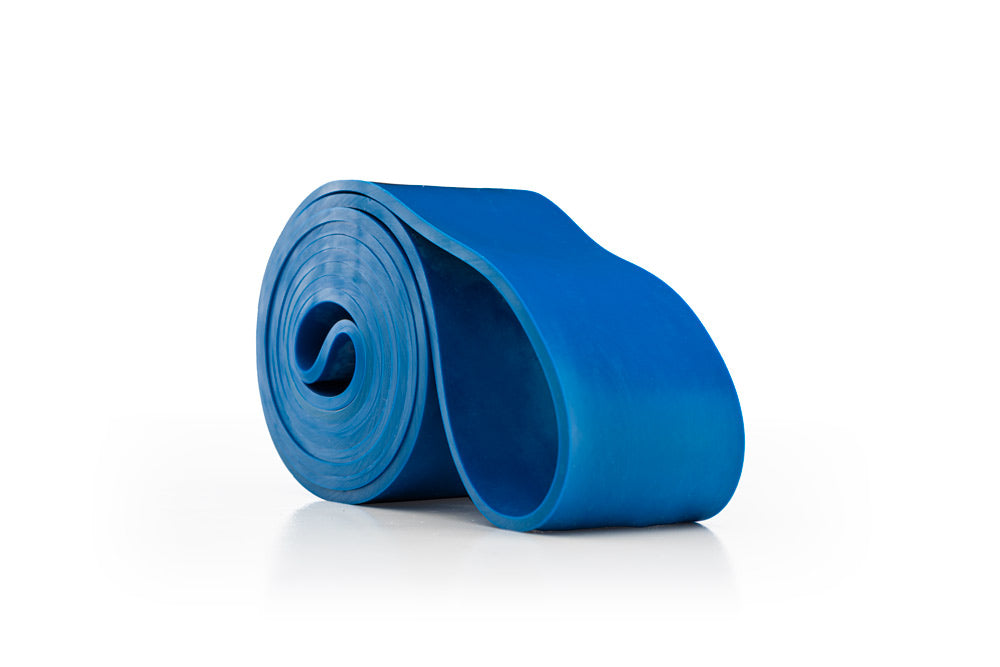
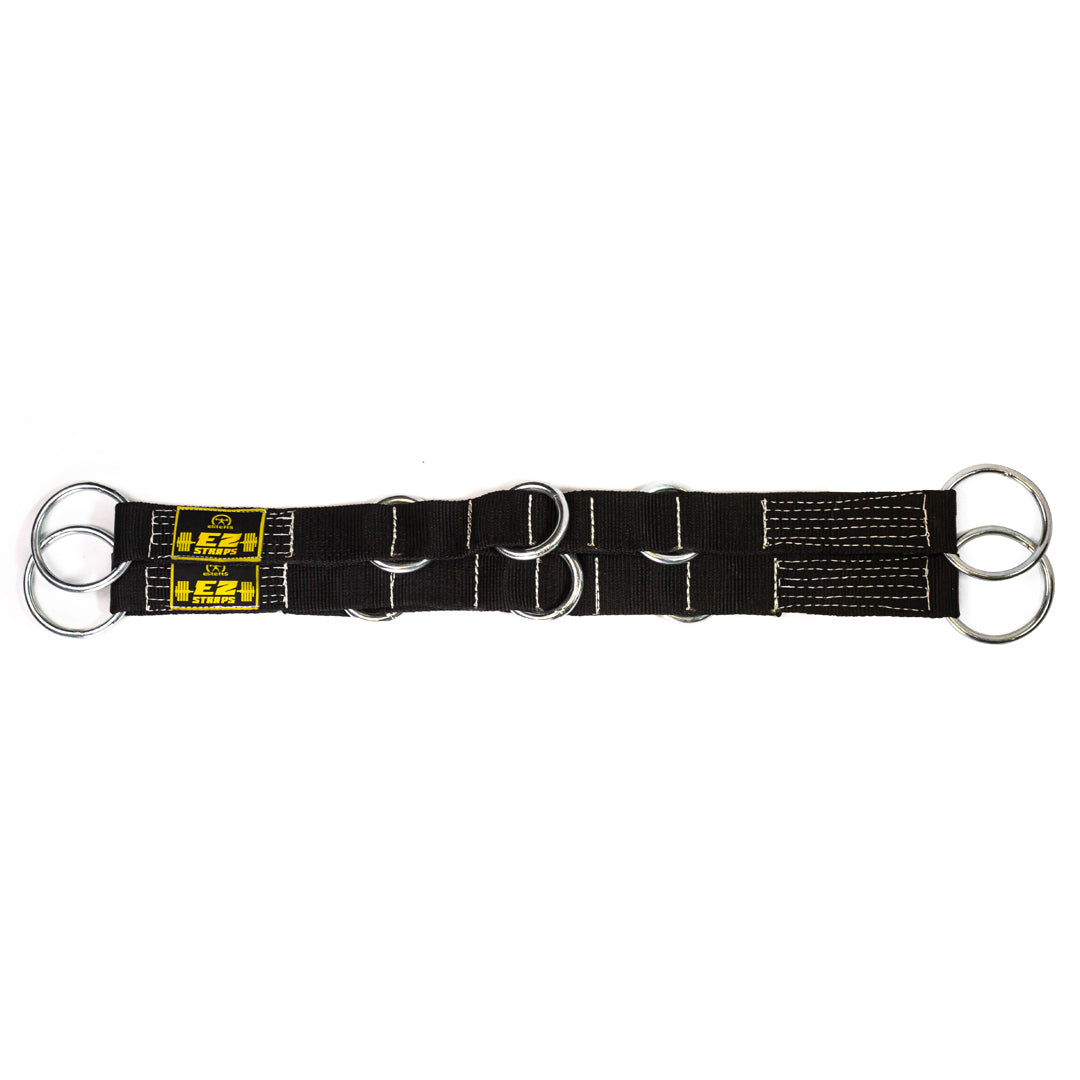
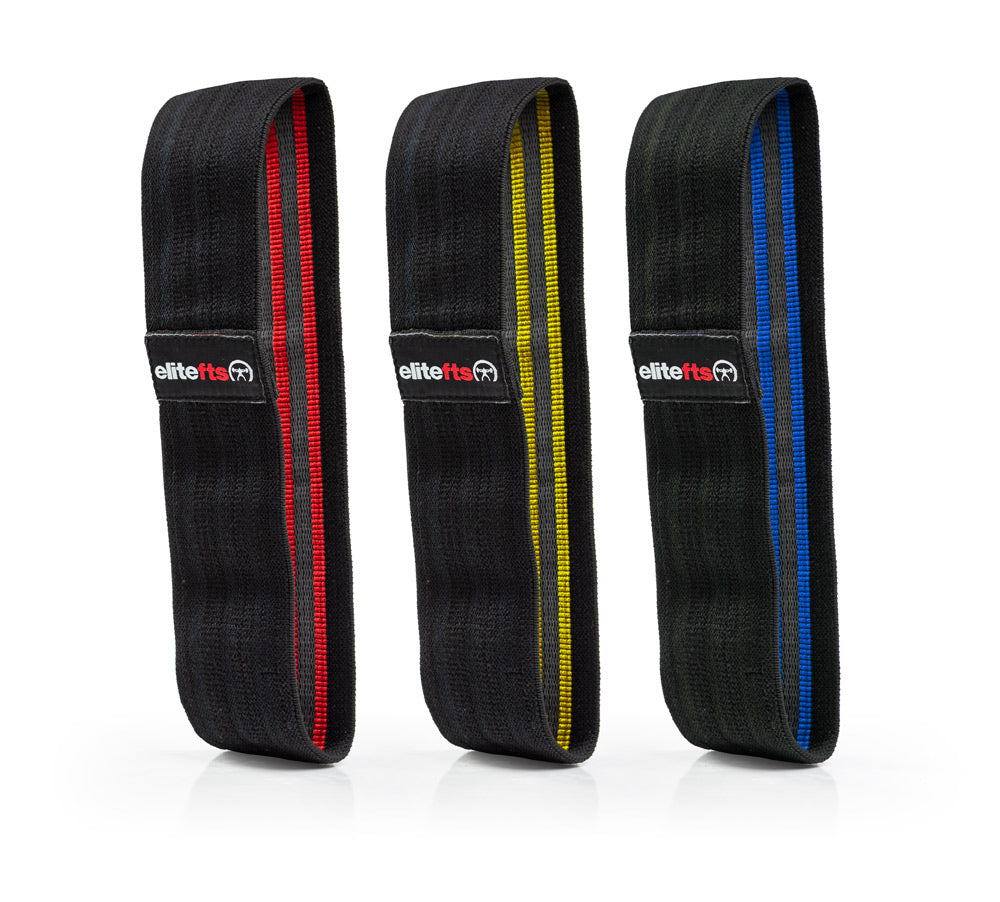
Equipment is never the program. These proven tools support the movement patterns Ashley discusses: squatting, hinging, pulling, accommodating resistance, loaded carries, and posterior-chain development.