



Programs Are Liabilities.
Coaches Are Assets.
For five years the industry said Louie Simmons was wrong about everything. Now that AI writes linear programs for free, the same people are quietly rediscovering conjugate.
For about five years, Louie Simmons was wrong about everything.
Too complicated. Outdated. Doesn't work for raw lifters. Built for a gear era that doesn't exist anymore. You couldn't scroll for ten minutes without somebody with a certification and a ring light explaining why the conjugate system was a relic and why their block periodization spreadsheet was what serious lifters used now.
Now he's right again.
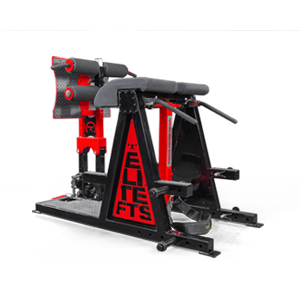
Go look. The same feeds are full of max effort talk, dynamic effort talk, weak point work, accommodating resistance, and reverse hypers. Conjugate conferences. Conjugate certifications. Conjugate content from people who spent half a decade telling you it was garbage.
Nothing about the method changed. Louie has been gone since 2022. The Russian literature didn't get rewritten. Zatsiorsky didn't publish a correction. Prilepin's table still says what it always said.
What changed is the technology sitting underneath everybody's coaching business.
Isn't That Interesting
Ask yourself what a large chunk of the online coaching industry was actually selling.
It was a spreadsheet. Twelve weeks, four days, percentages off a training max, add five pounds a week, deload in week four, test in week twelve. Maybe a fancy name for each phase. Maybe a logo. The same file sent to sixty clients with the numbers swapped and a name typed in cell A1.
Standard linear programming is the easiest thing in the world for a machine to write. It is math with a haircut. You give a language model a max, a timeline, and a frequency, and it builds you a complete periodized block in about ten seconds. Then it builds you ninety-nine more, adjusts them when the client travels, swaps exercises when the gym doesn't have a safety squat bar, and never forgets to follow up on Sunday night.
That product just got commoditized to zero. Not improved. Zeroed.
Now ask what a machine can't do.
A regulated conjugate program runs on variables that move constantly. Technical, physical, mental. The lifter's bench stalls and the answer might be triceps, might be upper back, might be bar path, might be a setup they've been getting away with for two years, might be that they're scared of the weight, might be that their shoulder has been barking since March and they haven't told you. That isn't scheduling. That's diagnosis.
Pre-writing a conjugate meso cycle is the worst possible use of the system. Regulating the micro cycle is where it actually lives, and you can only regulate what you can see. Somebody has to watch the reps. Somebody has to know the lifter's history, their injuries, their gear, their ego, and the gap between what they say they'll do and what they actually do.
That's why programs are liabilities and coaches are assets.
I wrote that before any of this AI conversation started, and it has aged better than I expected.
So the coaches who trashed conjugate for five years aren't rediscovering it because they had a breakthrough. They're rediscovering it because it's the last thing standing between them and a chatbot.
The Checklist a Machine Can't Run
Here's what running the system actually looks like when somebody complains their bench isn't going up.
Is the technique good? Not good enough, good. Is the setup tight, is the bar path consistent, are they staying over the middle of the foot, are they losing the upper back at the bottom.
Are the supplemental and accessory exercises well chosen? Not chosen because they're fun. Not chosen because they film well. Chosen because they attack the specific thing that's failing.
Is the speed work actually speed work? Or is it just moderately heavy singles with extra steps because somebody got greedy with the bar weight.
Is the max effort work up to par? Are they straining for one rep, which is what max effort means, or are they doing a comfortable triple and calling it a max.
Four questions. By the time you get to the bottom of that list, you usually know exactly where to start. But every single one of those requires eyes on the lifter and a coach with enough experience to know what good looks like.
I've said for years that a sticking point is about ten percent mental, twenty percent physical, and seventy percent technical. The problem is that everybody wants a physical answer to what is really a technical issue. Add more triceps work. Add a board press. Add volume. Meanwhile the actual issue is that their elbows flare four inches out of the bottom and nobody has told them.
A model can write you the best board press progression ever assembled. It cannot see your elbows.
We've Been Here Before
This isn't the first time the strength industry has watched a group of people reverse themselves and pretend it never happened.
When online coaching first showed up, it was treated as a joke. A shortcut for people who couldn't hack it on the floor. You weren't legitimate unless you were in the gym under the bar with your hands chalked. Then a decade went by and the same coaches who swore they'd never go online were selling ebooks, running virtual platforms, and paying their mortgage with a coaching app.
Go back further and it's the magazine writers. In the eighties and early nineties, the biggest guys in the gym would tell you those writers had no education and no business talking about training. Some of them were right. Some of them were just mad that somebody else's words reached further than their own.
Go back further than that and it's whatever came before magazines.
Here's the part I'll be fair about. Some of that is honest evolution. The medium changes, the messengers change, and adapting to it isn't hypocrisy. I've changed my position on plenty of things across four decades and I'll change more before I'm done.
The difference is whether you own the reversal.
If you spent five years telling lifters a system was outdated and you now sell conjugate programming, say so. Say you were wrong, say what changed your mind, and say what you learned. That's worth something. People will respect it more than you think.
If you just quietly deleted the old content and started posting box squat videos, that's a different thing entirely. That's not evolution. That's inventory management.
The Part That Should Actually Bother You
I'm not writing this to defend Louie. He doesn't need it and he's well past caring.
I'm writing it because of the lifters who lost five years.
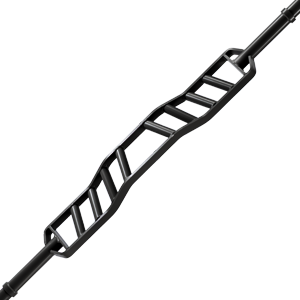
Think about who was on the receiving end of all that. Newer lifters who didn't know enough to filter it. Coaches building their first client roster who took the loudest voice as the correct one. Gym owners who sold their specialty bars because a podcast told them variety was a distraction. People who had a system that was working for them and abandoned it because the internet told them it was embarrassing.
Those people weren't getting coaching advice. They were getting positioning. There's a difference between a coach telling you a method isn't right for your situation and a coach telling you a method is dead because his product doesn't include it.
The tell is always the same. Ask why they changed their mind. A real coach will tell you. They'll give you the specific thing they saw, the athlete it happened with, the study or the seminar or the failure that moved them. Somebody who was just protecting a product will get vague, get defensive, or tell you they always said there was value in it.
They didn't always say that. It's on the internet. It's all on the internet.
And to be clear, I'm not telling you conjugate is the only right answer. I ran western periodization for years before Westside and got good results from it. Those cycles took me as far as they were going to take me, and my total sat still for three years before I walked through that door. Plenty of lifters have done fine on block, on linear, on undulating, on programs I've never heard of. Some of them tried conjugate and hated it. That's allowed.
What's not allowed is pretending the question was ever settled in either direction.
So What Do You Actually Do
Learn all of it.
Not one camp. All of them, well enough to explain to a client why you picked what you picked. Linear, block, undulating, conjugate, concurrent, whatever else comes next. If your entire coaching identity is built on one system, you don't have a philosophy, you have a brand position. Those are different things and only one of them survives contact with a lifter who doesn't respond the way the template said they would.
Then individualize it. Actually individualize it, not swap the name at the top of the file.
If you hire an online coach and they don't ask about your health history, your injuries, your training age, your schedule, your equipment, and what you're actually trying to accomplish, they do not care about you. That's not a hot take, that's needs analysis, and it used to be the first thing taught in any certification thirty years ago. We reject articles at elitefts constantly because they're missing basics that used to be table stakes.
Use the machine for what the machine is good at. Let it do the percentage math. Let it build your exercise substitution lists. Let it draft your client emails and clean up your intake forms and organize your notes. That's real leverage and refusing to use it out of pride is just the online training argument all over again with a new costume.
What you don't do is hand it the part that makes you a coach and then charge for the output.
The floor work is still the job. Watching the reps, making the call in the moment, knowing when to push a lifter and when to pull them off the bar, knowing which weak point is the real one and which is the symptom. That has never been automatable and I don't think it's getting automated any time soon.
Louie didn't change. The economics of everybody else's business did. Five years of noise, and the method is sitting exactly where it always was, waiting for coaches who are willing to learn it properly instead of using it as a marketing pivot.
Get educated on all of it. Individualize it for every single person paying you. Be honest about what you got wrong on the way here.
That was the job before any of this. It's still the job.
Learn It On The Floor
TYAO is hands-on coaching at the S5 Compound. Eyes on your reps, weak points named out loud, and the part of coaching a machine still can't do.
Want the conversation instead? Join the Table Talk Crew.
Live, Learn, Pass On.
Dave Tate / elitefts