


Skilled Is Not Prepared
Michael Fahey explains why sport skill cannot replace a prepared body—and what coaches can do before young athletes become strong enough to break themselves.
A young athlete can be technically good at a sport and still be physically unprepared for its speed, volume, and force. Build broad strength, work capacity, coordination, and tissue tolerance. Use exercise variation only when the athlete can feel the difference. Keep sport practice and physical preparation distinct, then adjust the training to the athlete’s age, attention, and durability.
Michael Fahey has lived on both sides of youth training. He was the 12-year-old who walked into Westside Barbell before he understood what he was looking at. Later, after a freshman football season in which he never appeared in a game, he attacked the weight room, grew from roughly 155 pounds into a 245-pound high school athlete, started on both sides of the ball, and drew Division I interest. Today he has coached more than a thousand kids.
That history gives him a useful filter: the plan that worked for one highly focused kid in a small garage setting is not automatically the plan for a team of teenagers. The principles can carry over. The delivery, exercise menu, and dose must change.
Sport Skill Is Not Physical Preparation
The episode’s central coaching problem is simple: athletes are becoming better at their sport without always building the body required to tolerate that sport. A baseball player can throw year-round. A basketball player can play more games. A powerlifter can practice the competition lifts. None of that guarantees enough general strength, muscle, work capacity, coordination, or exposure to varied movement.
Fahey argues that coaches keep trying to solve injuries at the professional level even though the missing preparation may begin in childhood. He points to rising screen time alongside rising rates of serious sport injuries. That is an observation, not proof that phones directly cause ligament or tendon tears. The coaching takeaway does not require pretending it is proof: many kids arrive with less physical play, less unstructured movement, and less accumulated work than prior generations. Their program has to account for the athlete who actually showed up.
Do not confuse more games, more throws, or more sport-specific reps with a more prepared athlete.
Earn Specificity Through Awareness
Advanced athletes can detect tiny changes. A high-level bencher may know that moving a finger on the bar creates a different movement. A young athlete may change hand placement from set to set without noticing. That gap matters when coaches rotate exercises.
Fahey describes using multiple board heights with high school lifters. The athletes often pressed the same weight from the chest, one board, two boards, three boards, and four boards because the variations did not feel different to them. Removing the in-between options created enough contrast for them to recognize the change. Once they could feel it, the exercise finally produced the intended effect.
| Athlete response | Coaching move |
|---|---|
| Cannot describe or repeat a position | Use fewer exercises and create clearer contrast |
| Technique changes every set | Standardize stance, grip, setup, and tempo |
| Can feel small changes and explain them | Introduce narrower variations and self-correction |
| Needs novelty to stay engaged | Change the task without changing the training goal |
Variation is not automatically advanced coaching. It only works when the athlete can recognize what changed and keep the rest of the movement stable. If every variable changes at once, the coach cannot tell what caused the result, and the athlete cannot build a repeatable skill.
Build Traits Outside the Sport
Fahey makes a distinction strength coaches need to protect: practice builds the sport skill; the weight room builds traits. The two should support one another without becoming copies.
A football player does not need every lift to look like football. A thrower does not need every exercise to look like a throw. A powerlifter does not need every training session to repeat the meet lifts. Squats, rows, jumps, throws, sled work, unilateral work, and controlled bodybuilding can develop force, muscle, coordination, and capacity that the sport itself does not provide.
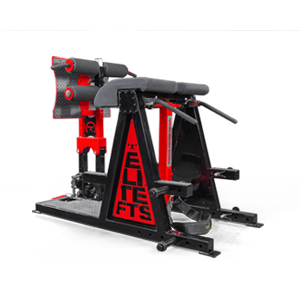
That is why medicine-ball work and sled work remain useful. They allow athletes to produce force, move through different angles, and accumulate work without turning every session into another competition. Current options include the PowerMax Medicine Ball V2 for throws and the elitefts Prowler Quad for pushing, dragging, and general physical preparation. Choose drills, loads, and surfaces appropriate to the athlete and equipment.
The Program Has to Match the Kid
Fahey’s early training was unusually detailed. His father measured percentages, logged every set, and coached him one-on-one. Fahey was curious enough to study the material and focused enough to execute it. Those conditions mattered as much as the exercises.
A team setting is different. Attention is divided. Training ages vary. Some athletes want certainty and repeatable structure; others respond to more variation. A coach cannot assume every kid understands intent, feels position, or knows when fatigue has changed the movement.
Start with a small number of patterns the athlete can own. Track technique and effort, not just load. Build volume gradually. Keep enough repetition for learning, but use enough contrast to expose the athlete to more than one way of producing force. The goal is not to make the program look sophisticated. The goal is to make the athlete harder to break.
That also means resisting the urge to copy an elite athlete’s final program. Advanced lifters often reduce work because years of training already built the base and their heavy work now creates more fatigue. A beginner needs the opposite starting point: enough submaximal practice to learn positions, enough muscle-building work to support those positions, and enough low-cost conditioning to recover between efforts. The dose should rise as the athlete proves they can repeat quality work. It should fall when technique, speed, sleep, or readiness consistently deteriorates.
The progression is not “easy forever.” It is earning harder work without skipping the preparation that makes harder work useful.
A Practical Weekly Check
- Can the athlete repeat the setup without constant correction?
- Is the athlete gaining strength without losing speed or movement quality?
- Does the week include general work beyond sport practice?
- Is soreness resolving before the next high-output exposure?
- Can the athlete explain what they felt and what changed?
Young athletes need progressive overload, but they also need judgment. Pain, persistent loss of function, or a sudden drop in performance is not a cue to add more “mental toughness.” Coaches should stay within their scope and involve qualified medical professionals when an injury is suspected.
Preparation Is the Competitive Advantage
The opportunity in Fahey’s message is not complicated. When fewer young athletes arrive with a broad physical base, the athlete who consistently builds one separates faster. Strength matters. Muscle matters. Work capacity matters. The ability to feel and correct position matters. None of those qualities replace sport practice, but each makes practice more productive and gives the athlete more room for error.
Do not chase sport specificity before the athlete can control basic positions. Do not use variation the athlete cannot perceive. Do not make every hard day another max-effort exposure. Build the body, then teach the body to express what it has built.
Transcript support: Dave Tate’s Table Talk episode 456 with Michael Fahey. The article summarizes Fahey’s coaching experience, his discussion of exercise variation and athlete awareness, and his distinction between sport skill and physical preparation. Injury and screen-time comments are presented as Fahey’s observations, not as proof of causation.