

elitefts Training
The Rest Period Mistake Ruining Your Strength and Muscle Gains
Most lifters track exercises, sets, reps, and load. Then they let one of the biggest training variables drift: the time between sets.

This article is based on the elitefts YouTube video, The Rest Period Mistake Ruining Your Strength & Muscle Gains.
Rest periods matter because they decide what kind of work you are actually training yourself to repeat.
The easy answer is that longer rest allows better performance. If you wait longer, you can usually lift more weight, do more reps, and keep technique cleaner. That is true enough to be useful, but it is not complete enough to build a real training plan around. More rest is not automatically better. Too little rest turns every session into conditioning. Too much rest can make a workout drag, cool you down, kill rhythm, and waste time you could use for more productive work.
The better question is not, How long should I rest? The better question is, What am I trying to get from this part of the session? A peaking squat single, a dynamic-effort bench day, a hypertrophy leg press, a cable curl, and a loaded carry do not need the same rest period because they are not asking the body to do the same job.
The Big Idea
Rest long enough to protect the goal of the set, but not so long that the rest period becomes the workout.
Why The Research Can Mislead You
Research often shows that longer rest periods can produce better strength and hypertrophy outcomes. That makes sense. If one group rests longer, that group often performs more total work at a higher quality. The problem is that most research studies are not built around the real constraints serious lifters deal with every week.
Studies often use shorter time frames, less experienced lifters, lower-volume sessions, and controlled environments where nobody is rushing to finish before work, family, coaching, or life gets in the way. If resting four minutes between sets of curls creates a small advantage in a study, that does not mean it is the best use of your actual training hour.
For a lifter with limited time, the tradeoff matters. If longer rest adds 20 minutes to a session but does not change the result enough to matter, it may be a poor decision. The goal is not to win the spreadsheet. The goal is to train in a way you can repeat, recover from, and progress with.
The Five Variables That Change Your Rest Period
The most practical point from the video is that rest periods are not only about recovery. They are also about rhythm. Some lifters are at their best when the session moves. Others need enough space to bring arousal down before they can perform again. The mistake is forcing one rule onto every lifter, every lift, and every phase.
Complete Rest vs. Incomplete Rest
Complete rest makes the most sense when the next set depends on maximum output. Heavy singles, near-max triples, meet prep, equipped lifting, and top-end strength work all need longer rest. In those cases, rushing the next set usually costs load, bar speed, position, or confidence.
Incomplete rest makes more sense when the goal is to accumulate work, build work capacity, or get a strong stimulus without needing the heaviest possible load. In a hypertrophy block, shorter rest can help you get more productive work done in the time you have. It can also keep loads slightly lower while still driving the session hard, which may be useful when joints are beat up or when you are coming out of a meet.
A Simple Rest Period Equation
The video ends with a practical starting point. It is not law, but it gives lifters a way to stop guessing.
| Factor | Add To Rest Period |
|---|---|
| Each meaningful joint involved | +30 seconds |
| Load at 80-89% | +30 seconds |
| Load at 90% or above | +60 seconds total |
| One rep shy of failure | +30 seconds |
| Set taken to failure | +60 seconds |
| Intensification method such as cluster or rest-pause | +30 seconds |
| Supportive equipment that helps move more load | +30 seconds per piece or layer |
A curl taken close to failure may land around 60 to 90 seconds. A heavy squat may land closer to two or three minutes. A full equipped max-effort squat may need even more. The point is not to worship the number. The point is to create an upper limit, then train yourself to beat it when the phase allows it.
Where This Fits In Real Training
For your main strength work, let performance lead. If you need another minute to keep the next set explosive, take it. For hypertrophy work, cap the rest and learn to perform under a little fatigue. For accessories, stop pretending every set needs to be treated like a platform attempt. For work capacity phases, shorter rest periods are not a penalty. They are the point.
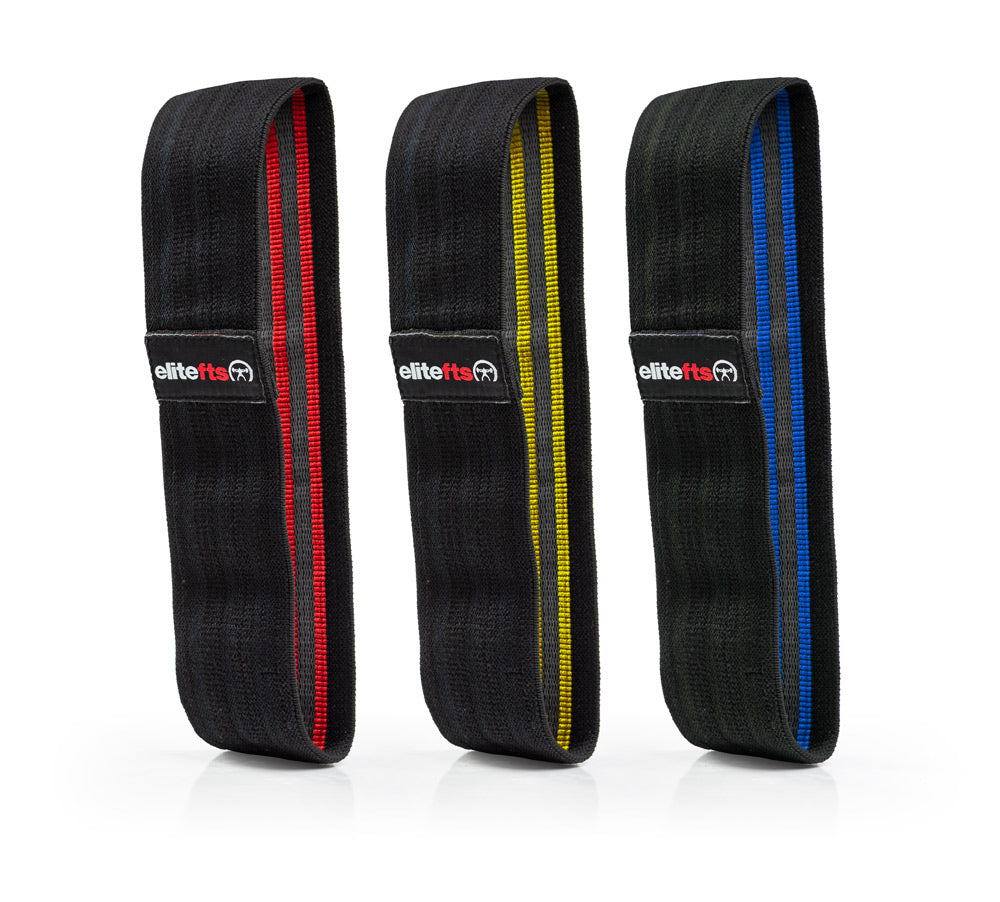
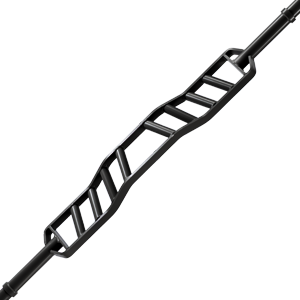
This is also where tools matter. Bands, sleds, specialty bars, and adjustable benches make it easier to build sessions that have a purpose. You can pair main work with low-fatigue activation, use sleds for conditioning without beating up the joints, and use bands for warm-ups, recovery, and higher-density accessory circuits.
Equipment That Fits This Article
Watch The Full Video
Watch the full elitefts video below for the complete explanation, examples, and rest-period equation.
Watch the full video on YouTube.
Transcript-Based Notes
Core topic: Rest periods are one of the most neglected variables in training.
Main framework: The right rest period depends on training goal, intensity, exercise selection, conditioning level, and psychology.
Practical rule: Use longer rest when maximum performance matters most. Use shorter, incomplete rest when density, work capacity, hypertrophy, or lower joint stress is the goal.
Equation: Start at zero, then add time based on meaningful joints involved, load, proximity to failure, intensification methods, and supportive equipment.