

Stop Pressing the Log Away From You
Olly Clark's complete setup, clean, rack, dip, and drive for a stronger log press
TL;TR: A heavy log is lost when it drifts in front of your center of mass. Start close, deadlift it before you lap it, pull it tight to the belt, rack it with high elbows, dip out instead of forward, finish the leg drive through the calves, and keep looking at the log until the elbows lock. Put your head through only after the press is finished.
The log press is not a barbell press with a bigger implement. The diameter changes the rack position, the clean, the line of force, and the margin for error. If you let the log get a few inches in front of you, you are no longer driving it up. You are fighting to bring it back.
Professional strongman Olly Clark breaks the lift into pieces in the elitefts video below. His biggest point is simple: keep the implement over your center of mass from the floor to lockout. Every setup cue either protects that position or throws it away.
Set up to use your legs
Clark starts around shoulder width for the push press. Go too wide and you reduce the leg drive you can put into the log. He also turns the handles slightly away before the pull. That small rotation helps the implement settle into a better position as it leaves the floor.
Weightlifting shoes can help if the heel lets you stay upright and use more quad in the dip. A soft underbelt beneath a thicker belt can reduce pinching during the clean. Those are options, not substitutes for position. The lift still begins with the shins against the log, the hands centered in the handles, and the body braced before the implement moves.
Do not start with the log a foot away. Do not begin by trying to curl it into your lap. Get close, take air, and stand up with it as if you are completing a deadlift. Finish tall and squeeze the glutes. The lap comes after you have created height.
Deadlift the log first. If you try to curl it from the floor, technique may survive light weight and disappear when the load matters.
Build the clean from the lap
Once you stand tall, squat down under control to find the lap. Keep the torso upright and pull the log into the belt buckle with the upper back and rear delts. Your elbows can move out as you create a tight shelf. The log should not float away from the body while you hunt for the next position.
Clark recommends practicing this slowly. That is good coaching. Speed hides the spot where you lose contact. A controlled descent lets you feel whether the log is supported or whether your arms are being forced to hold it in space.
From the lap, apply hip extension and roll the log to the chest. This is where the clean becomes one connected movement instead of a deadlift followed by a desperate arm curl. A larger-diameter competition log can make the lap and roll feel different from a smaller training log, so keep the principle and adjust to the implement: stay tight, find the belt, then use the hips.
Own the rack before the dip
The rack is not a place to relax. For the push press variation shown here, bring the elbows high. If needed, spin the log slightly higher on the chest. Look toward the ceiling and lean back enough to stack the implement over the body.
That lean is not an invitation to dump the load into the lower back. Brace hard and keep the rib cage connected to the pelvis. The goal is to stop the thick cylinder from sitting in front of you. When the log drifts forward, the press gets harder before the shoulders have even started working.
Clark uses a few sharp exhales while staying braced, then takes one final breath to commit to the dip and drive. The exact breathing rhythm may vary, but the standard does not: you need a deliberate brace before the legs fire.
| Phase | Main cue | Common leak |
|---|---|---|
| Pickup | Shins close; stand tall first | Curling the log from the floor |
| Lap and clean | Pull to the belt; extend the hips | Letting the implement float forward |
| Rack | High elbows; eyes up; brace | Starting the dip before position is set |
| Dip and drive | Dip out; extend through the calves | Knees and log tipping forward |
| Lockout | Watch the log until elbows lock | Throwing the head through too early |
Dip out, then finish the leg drive
Point the feet roughly toward eleven and one o'clock. Instead of driving the knees straight forward, let them travel slightly out. That keeps the torso more vertical and prevents the log from tipping away as you change direction.
Then finish the drive. Use the quads, but do not stop there. Extend through the calves as well. Strongman pressing is full-body work, and the last part of that extension can be the difference between a log that accelerates through the sticking point and one that stalls in front of the face.
If the dip is too deep or too slow, energy leaks before the reversal. If the knees dive forward, the log follows them. Practice the dip with a load you can control and judge the torso, not only the depth.
Do not chase the log with your head
This is the mistake Clark keeps returning to. Lifters are often taught to put the head through aggressively on an overhead press. With the log, doing it too early can send the implement forward. Now the arms are trying to lock a moving target that is leaving the body.
Lean back, keep your eyes on the log, and press until the elbows are fully locked. Only then bring the head through. The sequence matters. Lockout first. Head through second.
Film from the side. If the log travels forward as the head moves, you have evidence. Do not solve it by simply pressing harder. Rebuild the rack, the dip, and the timing.
Practice the lift in pieces
Use light sets to rehearse the pickup and lap without pressing. Then practice lap-to-rack cleans. Finish with rack-position dip-and-drive reps. Breaking the lift apart makes it easier to identify the first position that fails.
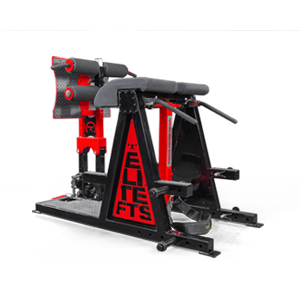
The implement matters. The elitefts Rackable Log Press gives you a verified current option for pressing practice, while the Strongman & Grip collection brings together tools for event training. Choose the setup that fits your space and competition demands, then learn that implement instead of expecting every log to feel identical.
Do not let equipment become the excuse. Clark demonstrates on a smaller-diameter log and still applies the same rules: keep it close, create a stable lap, use the hips, rack high, and drive on a vertical line.
Make the heavy rep look like the warm-up
A bigger press does not come from adding effort to a bad path. It comes from removing the places where force escapes. Start close. Stand up before you lap. Pull the log into the body. Rack it high. Dip out. Finish the legs. Watch the implement until the elbows lock.
Those cues will not make the log light. They make the strength you already built reach the implement. That is the whole point of technique.
Article developed from the transcript of “The Log Press Mistake Keeping You Under 300 Lbs”, featuring professional strongman Olly Clark.