


Workout Templates for Various Athletes
The body doesn’t know whether you're doing higher-faster-sports, Westside, HIT, swiss ball, kettlebell, or any other system. It only knows stimulation and recovery.
Pistol Power: Mastering the One-Legged Squat
What if I told you that by adding just one exercise to your training repertoire, you would be stronger, more flexible, and more coordinated, and also be able to run faster, jump higher, and have overall better health? Would it be worth investing the time to learn and practice?

Unconventional Exercises Using Conventional Equipment
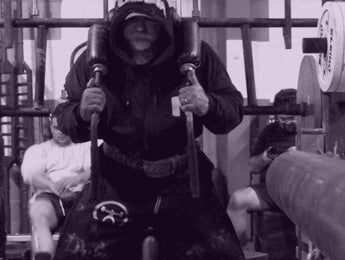
We don’t know the guys who run EliteFTS.com. What we do know from reading the articles and asking questions is that they have helped us become better strength students.

Tire Flipping: Tips and Techniques
Aside from the Atlas Stones, the tire flip could be one of the most recognizable strongman events in the sport. However, it is probably the one event most incorrectly performed by athletes and most improperly used by strength coaches.
Get Out of The Gym!
After you spend an appreciable number of years in the weight room and only the weight room, you start to really look for ways to spice up your training program and get some results.

Mechanic or Race Car Driver?
The way that athletes are taught in our sport expert education system is a problem for me. I feel this isn’t just a problem of the sport expert education system but is also common to other educational systems as well.

Forcing Our Minors to Major: Youth Athletic Specialization
For children living in the United States, sports are as common as television and snack time.
The High School Odyssey
About 12 weeks ago, I started training with a local football player, Caleb Sexton.
Blue Collar Strongman Training
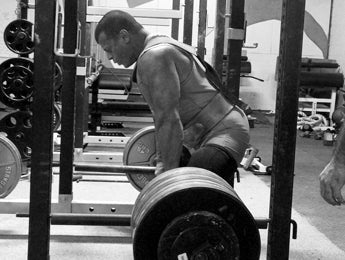
What would be more effective is to change the dynamics of the lift slightly to stimulate new recruitment patterns and increase the use of often neglected muscles.
The Odyssey of a Collegiate Strength & Conditioning Coach
This article is designed to give future strength & conditioning coaches a better insight as to what it takes to get your “foot in the door”.
The Philosophy of Muscle: Examinations of the Big Questions
Spend a few minutes listening to people and gurus talk about speed training nowadays and it shouldn't be too hard to understand why the average person can leave a speed training conversation with a billion more questions then they had when they started.
The Magic of the Pin Pull
Recently I have been flooded with e-mails and questions on the EFS Q/A, and rather than answering them one by one, I decided to put them into an article form so that everyone has access to them. There is a lot of great information in these answers.
Maximum Effort Training for Strongman
As covered in my last article, the dynamic effort (DE) session is dedicated to speed. Max effort (ME) is dedicated to huge weights and re-writing the record books every session you train. My approach is a bit different from the traditional Westside approach.
What Makes Functional Training Functional?
One of my favorite things to do is to sit back and observe people. Sometimes I feel like I am a scientist looking at some weird experiment gone wrong.
I Thought It Was Pretty Simple
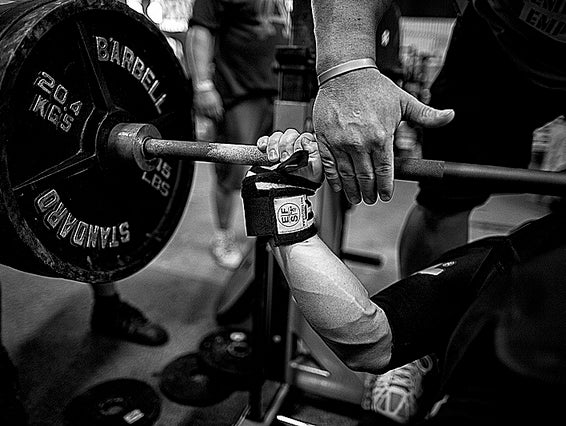
The handoff for the bench is very important but an often-overlooked skill. There are two major mistakes that are often made.
Transformation of a Young Athlete
Dan White had a lot of trouble gaining weight through his years of wrestling. As a freshman in high school he barely weighed 90 lbs and wrestled in the 103 lb weight class. As a sophomore he finally gained enough muscle and was able to wrestle at 103 lbs with no problems making weight.
How to Strengthen Rosie and Her Five Friends
One of the biggest things that I struggled with during my deadlift training was my grip. This was never a big deal when I was lighter (under 250lbs), but as I became bigger my grip began to suffer.
Bench Training with Ed Rectenwald
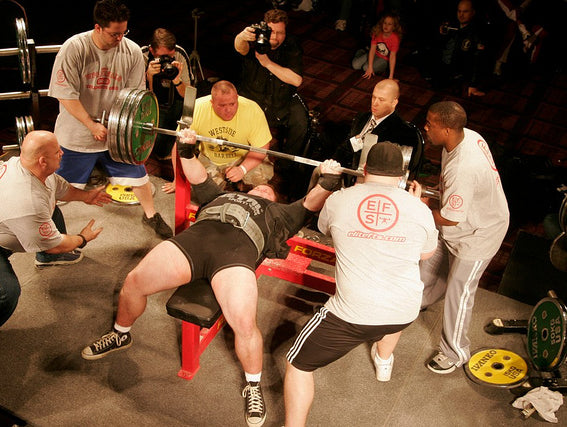
Coming up with new articles each month can be a challenging task and coming up with quality information can be even harder. After a couple hundred articles I find myself repeating myself time and time again.
Push/Pull
This article was inspired by Alwyn Cosgrove and something that he mentioned to me in passing.

3 Training Reasons Behind Baseball’s Steroid Problem
If those guys want to cheat the game and the fans while they destroy their health, then they can suffer the consequences.
Torso Training – Part 3: Advanced Training Exercises
In the past two articles, we have given you ideas and progressions for strengthening your torso. As you know by now, strong abs isn’t all that is needed.
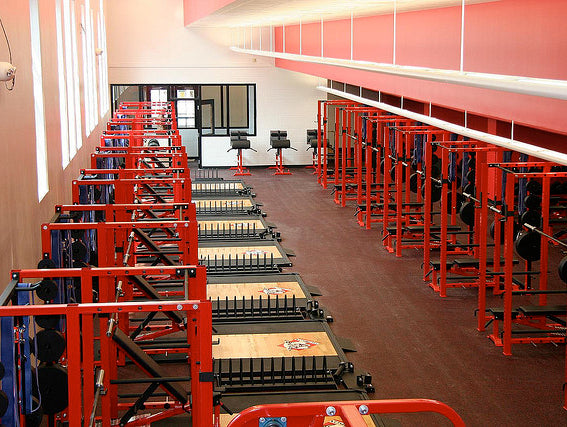
The Individualization of Team Training
In many instances team weight training consists of athletes of varying levels of strength preparedness- all performing the same training parameters.
