
The Anatomy of a Loss: Why You Have to Fail Forward to Build an Empire
Winning can stroke your ego. Losing strips the paint off the walls. The lesson is not in the loss itself—it is in what you do after you stop lying to yourself.
I Don’t Think You Learn a Damn Thing from Winning
Sure, if you are incredibly analytical and a true professional, you might figure out what adjustments need to be made after a victory. But when you win, your ego is stroked, the crowd is cheering, and the outcome can make you overlook the details.
There is nothing like a loss. When you lose, you are forced to strip away the pride, identify what went wrong, sit down, keep it real, and cut the bullshit.
Over the last few years, my life and business have been a masterclass in this exact process. Moving from the fighting arena into the business world—and eventually into the crucible of extreme endurance—requires radical evolution. It forces you to look at your failures, analyze your limiters, and rebuild your approach from the ground up.
Trimming the Fat: The Strategic Business Evolution
Around the end of 2024, I was heavily entrenched in a 10-week campout in Vegas with one of my professional boxers. At the time, I had a massive location in Deerfield Beach, Florida. We were paying about $15,000 a month in rent for what was essentially a personalized content space.
While I was in Vegas waking this fighter up, policing his bedtime, dialing in his nutrition, and managing his recovery like he was my own child, that Florida facility was just sitting there, draining energy and money. There was no commercial aspect to it.
I realized I needed to make a strategic change for the future of my brand and my family. By the grace of God, I was able to break the lease. It cost money to get out of it, but it was one of the best decisions I could have made.
I transitioned private clients to house calls—going directly to VIPs like Timbaland and Kevin James, building out their home gyms so they did not have to travel. The content creation did not stop. I just moved strategically between gyms in Miami, West Palm, and my commercial spot in Port St. Lucie.
Getting rid of that massive overhead and the daily 90-minute commutes gave me the ultimate asset: time. I stopped filling the dead space between clients and used that gap to strategize. I built new frameworks, wrote ebooks, and created systems that enabled me to transition fully into the health and wellness space while giving me more time to be a father and a husband.
The Void of the Arena: Why a 5K Doesn’t Get Me Out of Bed
As I became more meticulous about who I worked with—dropping down to only three or four fighters at a time—I realized something was missing. When you come off the back of a professional fighting career, there is a massive chasm in your psyche.
There is almost nothing in normal life that can match the feeling of fighting for your life in a cage. I had a void to fill. I still had to push boundaries, feel extreme discomfort, and test where my limits were to grow.
I needed a goal, and a regular 5K was not going to do it. I needed something that terrified me, something that required intense preparation and respect. So I decided to ruck 150 miles from Miami to Fort Pierce in three days.
The goals were simple: raise money for military veterans, show people how to fail forward, and glorify God in the process. I wanted to be an example. If I can strap a bag to my back and walk 100 miles, the average person can manage 20 minutes on a treadmill.
Arrogance, Agony, and Rhabdo: The First Attempt
I had a solid aerobic base. My VO2 max was around 56, and my resting heart rate had dropped from 60 to 46. But I went into that first ruck attempt like it was a fight, and that was the downfall.
My competitive nature took over immediately. Within the first five miles, I was basically running, hitting 11-minute miles with 70 pounds on my back. My guys told me to slow down, but I was fired up and wanted to hit my 50-mile quota for the day.
Around mile 10, we hit a narrow corridor flooded by a massive, monsoon-like puddle. I had my best shoes on, but there was no way around it. We waded ankle-deep through the water, and the second I stepped in, I knew I was in trouble.
Wet feet get soft, and soft feet blister. Even though I stopped at a checkpoint to dry off and change into new socks and shoes, the damage was done. The blisters accumulated fast, and the bottoms of my feet tore apart. I had silver-dollar-sized holes spanning from the balls of my feet to my heels. Every step felt like walking on broken glass.
Chart: The First Attempt Broke Down Fast
Numbers are pulled from the article narrative and shown visually for scan-friendly reading.
My pace plummeted from an 11-minute mile to a 20-minute mile, and eventually to a 30-minute mile crawl. By the time I hit Delray Beach, I was 50 miles in. I had been awake for 40 hours and on my feet for 20. It was July in Florida—98 degrees and humid. I lost six or seven toenails.
The physical pain was excruciating, but I kept moving because if I stopped and cooled down, I knew I would not be able to start again. At one point, going over a bridge, I needed absolute solitude. When you are in that much pain, you start questioning all of your life choices.
Eventually, the medical reality caught up with my ego. We went to the hospital at 2:00 a.m. They ran my labs and told me my creatine kinase level was 10,000. A normal hard training session might put you at 300 or 500. I was urinating blood and was deep in rhabdomyolysis.
The doctors told me to stop, and my wife reminded me over the phone that I had fighters, businesses, and a family depending on me. I had to tap out at 51 miles. I lay in that hospital bed, wondering if I had failed. Instead of wallowing in it, I spent an entire year identifying every issue that broke me.
The Blueprint for a Comeback: Strategic Preparation
I learned that jumping into something without a strategy is a recipe for disaster. I needed to prepare not just my body, but my feet, mind, and logistics.
For the second attempt, the ego was removed. The new goal was 100 miles, broken down into 20 miles a day over five days, carrying 50 pounds instead of 70. This time, I presented a complete strategy to my wife: full medical attention, IV treatments, the MERC team on board, and nightly rest for six to eight hours instead of going 60 hours with no sleep. Once she saw the plan, she fully bought in and was by my side every day.
The physical preparation changed drastically. I spent 16 to 20 weeks callusing my feet. Experts might tell you not to do it, but I wore minimalist Vivo barefoot shoes without socks, walking on hard asphalt and gravel to let my skin adapt and thicken. If a soft spot formed, I backed off, trained on the bike or ski erg while it healed, and then went right back to it.
When it came to the actual ruck, I sized up my New Balance shoes to ensure a wide toe box, cushioning, and stability. I layered toe socks underneath wool socks to keep my feet dry and prevent the friction that destroyed me the first time.
| Training Day | Goal | Load / Duration | Purpose |
|---|---|---|---|
| Heavy Ruck | Build load tolerance | 70–90 lb for 30 minutes | Condition posture, trunk, hips, and tissue resilience under heavy load. |
| Fast + Light Ruck | Build pace efficiency | 15–20 lb for 60 minutes | Practice turnover without beating the feet into the ground. |
| Simulation Ruck | Specificity | 20 miles with 50 lb | Rehearse the exact physical and logistical demands of the goal. |
| Strength Work | Structural integrity | Heavy triples on sumo box squats and seal rows | Keep the glutes, back, and posture from collapsing under the weight of the bag. |
My training blocks were meticulously undulating. Three days a week, I varied intensity: one day heavy, one day fast and light, and one long 20-mile simulation ruck on Saturdays with the exact 50-pound competition weight.
To get the aggression out, I used active recovery sessions consisting of an hour of stadium step sprints with a 50-pound vest. To maintain structural integrity, I kept absolute-strength protocols in place twice a week, pulling heavy triples on sumo-box squats and seal rows so my glutes, lower back, and posture would not collapse under the bag.
The result? I finished the 100 miles. Because of the intense preparation and strategy, crossing the finish line almost felt anticlimactic. But it proved the point: I could identify my limiters, fine-tune the details, and overcome the odds.
Chart: Same Athlete, Better Strategy
The difference was not toughness. The difference was preparation, pacing, logistics, and humility.
From the Octagon to the Boardroom: Coaching the Elite
That same obsessive problem-solving process is what I bring to the executives, founders, and CEOs I coach today. A lot of fitness marketing tells executives that working out will magically make them better at business. That is a weak sales pitch to a visionary who has already built a highly optimized, multi-million-dollar company while entirely out of shape.
You cannot just tell them to lift weights like a fighter and expect them to buy in. You have to understand that CEOs and elite fighters are often the same type of person: paranoid, competitive, and completely driven. But while a fighter has a defined fight camp and an off-season, a business owner is in a perpetual state of sparring. The fires never stop burning, and the texts never stop coming.
My job is not just to hand them a workout routine. It is to audit their daily lives and identify invisible limiters. I use predictive analytics and advanced bloodwork—often in partnership with Merrick Health—to establish their physiological baseline.
If a CEO is putting out fires 80 hours a week and their labs look like a disaster, I have to show them the real-world ROI. If they do not invest a few hours a week in their health now, they may end up in a hospital bed, and the culture of the entire organization can crumble because the leader has fallen.
We use personality trait assessments, such as the Big Five or the Braverman test, to assess neurotransmitter dominance. If a CEO is highly dopamine-driven—like most combat athletes—they need constant variation in their training to stay engaged. If they are acetylcholine-dominant, they need conscientious attention to detail. I have to show them the exact sets, reps, and scientific “why” behind the movement before they buy in.
The training itself is an inoculation against stress. When a CEO gets hit with a stressful email or a lawsuit, it can occupy their brain for months and drain productivity. But when I have them in the gym, buried under a heavy sled push with a heart rate of 150 BPM, they are not thinking about that lawsuit. It is a trainable distraction.
By building VO2 max, grip strength, and multi-directional agility, we increase cognitive function. I will literally throw cognitive drills at them—making them memorize a number line like 5-3-1-6-7, perform a max-effort lift, and recite the numbers back under fatigue.
This trains their ability to remain calm in chaos. When they can handle physical friction, problem-solving in the boardroom becomes second nature. Every time they choose logic over emotion—waking up at 5:00 a.m. to train instead of hitting snooze, or passing on a donut—they build intrinsic confidence.
It also removes decision fatigue. By writing out their exact meals, outfits, and training protocols, we strip away the minutia so they can save cognitive bandwidth for the irreversible decisions that actually move the needle in their business.
The Lost Art of Critical Thinking and the Written Word
A massive component of high-level execution is organization and critical thinking, which are rapidly deteriorating in today’s world of instant gratification and artificial intelligence. I am a massive proponent of journaling and writing.
Every night, I organize tomorrow today. I open my journal and draw a line down the middle. On one side, I write down my top three “big rocks”—the absolute most important and hardest priorities that must be executed first thing in the morning, when I am fresh, and my pain tolerance is highest.
On the other side, I list administrative tasks, health metrics like blood pressure, and reports. If it is not written down on physical paper, it does not get done.
There is a profound physiological reason why writing by hand is superior to typing on an app. When you read silently and write, you engage both the visual and auditory fields of your brain—your eyes essentially act as ears. Pair that with motor control, and your brain flags the information as critical, locking it into memory.
Coaches and business owners today are heavily defaulting to AI. AI is a great tool to aggregate data or build a framework, but if you rely on it completely, you can strip yourself of the ability to think critically.
If you can write out a complex business proposal or a deeply nuanced article on plyometrics, it proves you understand the topic well enough to formulate a structured argument. If you know how to think and write, you know how to speak and command a boardroom.
The individual who still takes the time to struggle through the friction of writing and problem-solving is going to wipe the floor with the competition that outsources its brain to a machine. There is a vast difference between learning, understanding, and acquiring true wisdom. Wisdom only comes from time, friction, and real-world experience.
The Demon Hand: Living in Virtue and Purpose
At the end of the day, all the physical feats, optimized businesses, and 100-mile rucks mean nothing if you lack character. In Shaolin Buddhism, there is a concept known as the “Demon Hand.” The philosophy states that to be a truly good and honorable person, you must be capable of inflicting great harm but actively choose peace.
If you are helpless, your peacefulness means little because you have no other option. But if you are highly capable and dangerous, yet choose to navigate the world with a kind heart, that is true virtue.
I have found this to be true among the tier-one tactical operators and elite fighters I have spent my life with. Guys like Bas Rutten—absolute killers in the cage—are often the most peaceful, generous, non-confrontational people you will ever meet in public.
When you know exactly who you are and what you are capable of, you do not need to puff up your chest or let ego dictate your actions. If I know I can lift 800 pounds, I do not have to walk around trying to prove it. That quiet, intrinsic confidence translates directly to the boardroom. You become capable of tearing arguments apart with logic, but you choose to present yourself with calm, poised grace.
This brings me to the ultimate question of purpose. What is the point of all this?
A very important person in my life once challenged me on my purpose. I gave him a generic answer: “Leave a legacy. Be known for what I am doing.” He looked at me and said, “Your true purpose is to know and love God.”
To love means to will the good of the other. How do I do that? By finding my deepest root talents and using the skills I have acquired over four decades to teach people how to overcome their own limiters.
Whether I am coaching a world-champion fighter, an exhausted CEO, or a young man in his twenties struggling with relationships, the goal is exactly the same: to show them what they are capable of.
Success, fame, and money will constantly try to compromise your character. But if you can wake up every day, front-load your hardest tasks, willingly solve problems in the face of immense discomfort, and live in accordance with your core values, you will find what everybody is desperately searching for: meaning, satisfaction, and joyful living.
That is not just how you build a business or finish a 100-mile ruck. That is how you truly live.
Build the System: Recommended elitefts Gear
This article is not about buying toughness. It is about building systems that make toughness usable. These elitefts picks match the training themes in the article: loaded walking, sled work, box squats, rows, and complete strength infrastructure.
PowerMax Weight Vest Long (20LB)
Use it for loaded walks, step-ups, and conditioning sessions where you need a load without tying up your hands.
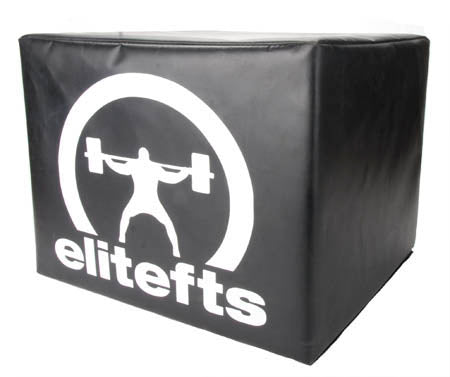
Shop Weight Vestelitefts Squat Box
A real box for box squats—not a wobbly bench, not stacked plates, not guesswork. Use it to train position and power.
Shop Squat Boxelitefts Indoor Sled, Vinyl Bottom, and Strap
A simple option for sled work inside a facility where protecting turf and flooring matters.
Shop Indoor SledPowerMax Push/Pull Sled
For the athlete, coach, or executive who needs hard conditioning, acceleration work, and stress inoculation in one tool.
Shop Push/Pull SledStrength Equipment Collection
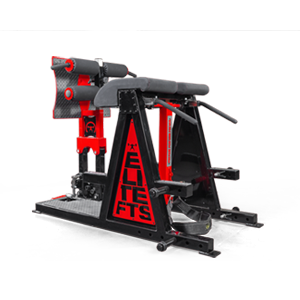
Build the bigger system: benches, racks, rows, posterior-chain tools, plate-loaded equipment, and commercial strength staples.
Shop Strength EquipmentProwlers & Sleds Collection
Browse sleds and prowlers for push, pull, drag, and loaded conditioning work.
Shop Sleds