

Dave Tate | elitefts
The Benefits of the Box Squat:
Why Every Serious Lifter Should Be on the Box
The box squat is the most effective squatting tool available. If you're not using it, your squat is leaving pounds on the platform.
For years, my squat was stuck. Not slightly stuck. Dead stuck. I was sitting somewhere in the 730 to 760 range and could not move it. I trained hard, I programmed smart, and I did what most lifters do when things stop moving: I worked harder doing exactly the same things. That didn't work either. The bar didn't budge for five years.
When I got to Westside Barbell, everything changed. The training was different from anything I'd done before, and at the center of it was one thing I'd mostly ignored: the box squat. Nobody at Westside free squatted except in competition. Every Friday, every dynamic effort session, every time a bar went on someone's back in training, they were squatting to a box.
I wasn't sold on it at first. I'd heard the same things you've probably heard. It's dangerous. It's not a real squat. It won't transfer. I ignored all of it and put myself on the box. Within a training cycle, I knew something was different. The weights started moving again. So did everyone else around me. We were all adding 100 to 200 pounds to our max efforts after making the switch.
That's not a coincidence. That's the box working.
Most lifters plateau for the same reason: they keep doing a movement pattern that stops loading the right muscles once the weight gets heavy. They rely on the quads, the knee shoots forward, the posterior chain gets unloaded, and the squat turns into a grind instead of a drive. The box fixes this. It puts the stress exactly where it needs to be and teaches your body to squat the right way every single time the weight goes up.
The box squat is the best tool for building a bigger squat. That applies whether you're a raw beginner or an experienced powerlifter. The reasons are not complicated, but they matter enough to understand clearly before you start training.
1. It Loads the Right Muscles
The single biggest mistake lifters make in the squat is over-relying on the quads. Walk into any commercial gym and watch people add weight to a back squat. As the weight increases, the knees come forward, the torso tilts, and the shin angle closes. The squat gets shorter. The quads take over. The glutes, hamstrings, and lower back get reduced or removed from the movement entirely.
Those posterior chain muscles are what squat big weights. Glutes, hamstrings, hips, lower back. Think about it this way: a competitive Olympic lifter with a 400-pound deep squat cannot squat 700 pounds in a power squat. A powerlifter with a 700-pound squat can do a 400-pound Olympic squat easily. The difference is posterior chain development. The quads are not the limiting factor at high loads. The back, glutes, and hamstrings are.
The box squat forces you to sit back rather than straight down. When you sit back far enough to reach the box, your shins end up perpendicular to the floor or past perpendicular. That shin position shifts all the stress to the right muscles. The quads drop out of the movement. The posterior chain takes the load. You're now training the muscles that will actually move big weight, not the ones that look good in shorts.
"When your shins are perpendicular to the floor or past perpendicular, all the tension transfers to the squatting muscles. That's the position the box teaches you to find."
— Dave Tate
This also makes the box squat easier on the knees. Because the shin is more vertical and the knee isn't tracking as far forward, the shear force on the knee joint is dramatically reduced. Lifters with previous knee issues or surgeries who struggle to free squat can often box squat without any discomfort. The hips, glutes, and hamstrings absorb what the knee would otherwise take.

2. You Always Know How Deep You're Going
Watch what happens in most gyms when the weight gets heavy on a free squat. The lifter looks good at 60%. At 70%, things start to rise. At 80%, they're doing a quarter squat and calling it a rep. Nobody tells them. Nobody catches it. Their squat keeps getting higher with every session, and they have no idea because they're looking straight ahead and grinding through the weight.
The box solves this immediately. You set the box at the height you want. Every rep hits that same position. There is no guessing. There is no creep. The box is one inch below parallel in competition training. It is where you need to be. Set it there and squat to it every single time.
This is also why the box is a tool for more than just powerlifters. Any strength athlete, any team sport athlete, any coach working with athletes who need consistent, measurable squat depth can use it. You set the height. You train the depth. You don't have to argue about what counted and what didn't because the box is right there.
For competition prep specifically, you can work one inch below parallel all cycle long. The consistency of that position builds muscular conditioning at depth, not just above it. When you get to the meet and the judge wants depth, you've trained for exactly that position. There's no adjustment to make.
3. It Builds Explosive Strength
This is the one most lifters miss completely because they've never had it explained in terms they can use.
When you free squat, there's a continuous eccentric/concentric chain. You descend, hit the stretch reflex, and drive back up. The elastic energy from the eccentric loading transfers into the concentric drive. That's useful, but it's not the only way to build explosive strength, and in many cases it's masking a weakness in your ability to generate force from a dead stop.
The box breaks that chain. When you sit on the box, the hip flexors relax momentarily while everything else stays tight. The elastic contribution is eliminated. When you drive off the box, you have to generate force from a static position. That's called static-overcome-by-dynamic work, and it builds a specific type of explosive strength that free squatting doesn't develop in the same way.
The box also creates a transition from a static contraction into a dynamic concentric contraction. Both of these training effects build explosive and absolute strength simultaneously. That combination is why so many Westside lifters saw their competition squats move significantly without ever free squatting in training. The box was developing qualities the free squat alone was not developing.
For athletes outside of powerlifting, this is also why the box squat has moved into performance training for team sports. The ability to generate force rapidly from a loaded, near-static position translates directly to acceleration, jumping, and change of direction. The box isn't a powerlifting-specific tool. It's a strength development tool for anyone who needs to produce force explosively.
4. It Teaches Technique Faster Than Anything Else
Teaching a lifter to free squat correctly takes months. The hamstrings have to develop to the point where sitting back is possible without falling over. The hip flexibility has to be there. The coordination of bracing, breathing, foot position, knee tracking, and bar placement all have to come together at the same time. That takes time, and in the meantime the lifter is grinding through bad reps that reinforce the wrong movement pattern.
Put that same lifter on a box and within five minutes they're squatting correctly. The box provides a physical target to sit back to. The brain knows where the box is. The lifter learns to sit back rather than sit down because the box is behind them, not below them. The posterior chain gets loaded on the very first rep. Technique that would take months without the box is there in one session with it.
Within a month, the hamstrings start developing from the added stress of sitting back. The flexibility improves. The movement pattern gets grooved. By the time the box is taken away, the lifter has a foundation they couldn't have built in the same time period with free squatting alone.
For coaches working with groups, the box also allows real-time correction at the bottom. With a free squat, you watch the breakdown, cue the lifter, and hope the correction holds on the next rep. With the box squat, the lifter stops at the bottom. You can physically position them where they need to be. You can cue the flex from that position. You can address the problem where it's actually happening instead of trying to predict and prevent it from the outside.
5. Your Recovery Is Better
This one surprises people until they experience it. Box squatting is easier to recover from than free squatting at equivalent intensities. The original Westside Barbell members in Culver City, California were box squatting three times a week. The current Westside model has box squats as the primary squat movement on dynamic effort day with additional work possible on max effort day.
The reason for this comes back to how the box changes muscle loading. Because the quads are largely removed and the movement is shorter in terms of total range of motion for the hips and back, the cumulative fatigue from a box squat session is lower than from a free squat session at the same load. You can put more volume in, recover faster, and come back more frequently.
For most lifters, this means the box squat allows a higher training dose on the squat pattern without the systemic fatigue that would accumulate from free squatting that often. More quality reps, more time under tension in the right position, more sessions per training cycle. The adaptations compound faster because the training can happen more often.
If you're new to box squats, I'd suggest starting with once per week and building from there. Let your body adapt to the new loading pattern. The benefits are real, but they require that you actually recover and come back to train again.
6. It Works for Hip Flexibility and Wider Stances
Most lifters who free squat wide run into an immediate problem: flexibility. The wider the stance, the more hip flexibility is needed to reach depth. Many lifters simply can't free squat below parallel with a wide stance until their hip mobility develops. The box gives them a way to train the wide stance at or above parallel immediately, build the hip flexibility through repeated loaded exposure, and progressively lower the box as mobility improves.
This is a legitimate training strategy, not a workaround. A lifter training a wide stance on a box that puts them at parallel is getting work in the squatting muscles in the right position. The hips are opening. The adductors and hip flexors are being stretched under load. The mobility will come from doing the work, and the box makes it possible to do the work before the mobility is there to support a free squat.
It also works from the other direction. Using a lower box with a wider stance is one of the most effective hip flexibility exercises I know. The load pulls you into the bottom position and the box gives you a target to sit to. You're squatting and stretching at the same time, which is far more useful than static stretching alone.
7. It Builds Confidence in the Bottom
There's something nobody talks about when they list the technical benefits of the box squat: the psychological benefit. A lifter who's never had anything catch them in the bottom of a heavy squat carries a real level of anxiety about missing a weight. That anxiety changes how they sit into the hole. It changes how aggressive they are on the descent. It changes everything.
The box gives a lifter a landing spot. They know it's there. They sit back to it every rep. Over time, that bottom position stops being the place where missed lifts happen and starts being the place where weight gets moved. The box builds trust in the position because the position has been trained hundreds of times with the box underneath them.
When the box comes out, that trust stays. The lifter knows where the bottom is. They know what it feels like to be tight and in position at depth. They drive out of that position the same way they did from the box because it's the same position, just without the box underneath them.
One More Thing: The Box Squat Is Not Dangerous
Every few years someone publishes a piece claiming box squats are dangerous. When you hear that, what they're describing is what happens when the box squat is performed incorrectly: bouncing off the box, using too much weight, losing tightness at the bottom. A box squat performed correctly, with controlled descent and an explosive drive out of the bottom, is safe and extremely effective. At Westside, we went 15 years with no lower back or knee injuries. The only side effects we saw from box squatting were bigger squats.
What Box Do You Need?
For most lifters, a box that puts you between one inch above parallel and one inch below parallel is where you want to be. That typically means a box somewhere between 12 and 14 inches for average height lifters, though taller lifters will need something higher. Parallel is defined as the crease of the hip in line with the top of the knee.
The box needs to be stable under load. Not milk crates. Not a flat bench. Something that will hold position under a loaded squat without shifting. If the box moves when you sit on it, your whole setup is compromised.
The elitefts Box Squat Box is built specifically for this. Solid 2x2 11-gauge steel, adjustable from 11 to 16 inches, and rated for loads that will handle anything you're going to put on a bar. It breaks down into three pieces so it's not a nightmare to move around, and it has an 18x18 base that gives you a real platform to sit to.
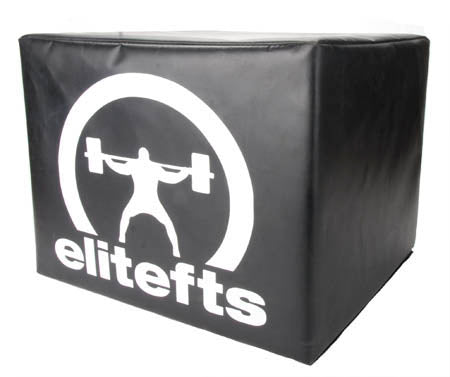
If you're working in a space where you need something lighter or you're adjusting height between multiple athletes, the elitefts Squat Box is a closed-cell foam option with three heights in one box at 14, 16, and 18 inches. It handles adjustment on the fly without having to pin and screw between sets.
Whatever you use, it needs to be wide enough for your stance and stable under your heaviest loads. Nothing else matters more than that.
Get on the Box
Most lifters who aren't using the box squat will read this and think about it. Then they'll go back to the gym and free squat the same way they always have, hit the same wall they've been hitting, and wonder what they're missing.
The ones who actually put themselves on the box will find out within a few training cycles what the difference is. The posterior chain wakes up. The depth becomes consistent. The drive out of the bottom gets explosive. Technique grooves in a way it never did on a free squat.
We've been teaching this for decades. The results show up the same way every time. At elitefts, we believe in passing on what works, and the box squat works. The only question is whether you're going to use it.
Get on the box. Your squat will tell you everything you need to know after that.
Live, Learn, Pass On
Ready to Build a Bigger Squat?
Get the equipment that's been used by some of the strongest squatters in the world. Built at elitefts, tested at the S5 Compound in London, Ohio.