
Kairikido: A System for Building Real-World Strength
A long-term strength system built around standards, skill, work capacity, and the discipline to stay on the path.
- Standards relative to bodyweight
- Movement competency
- Work capacity under fatigue
The path matters more than the belt.
I’ve always been drawn to martial arts—especially the belt system and what it represents. The story of the black belt is well known: a beginner starts with a white belt, and over the years of hard training, that belt becomes stained with sweat, dirt, and effort until it turns black. But the deeper lesson often gets missed.
That idea applies directly to strength training. No matter how strong you get, the process never ends.
In weightlifting, the old Soviet classification system came close to this model. Lifters chased standards—from Class III up to Master of Sport—and each total meant something. It gave direction, accountability, and a clear sense of what came next.
That’s the foundation behind Kairikido: a blended system built around measurable progress and long-term development. The term itself combines kairiki (‘superhuman strength’) and do (‘the way’). It is not just about getting stronger. It is about following a structured path toward strength.
What Kairikido is
A hybrid strength philosophy built for real-world transfer, not just gym totals.
Kairikido is not tied to one discipline. It is a hybrid training philosophy that combines the best of Olympic weightlifting, powerlifting, strongman, gymnastics, calisthenics, and odd-object lifting.
The goal is simple: develop complete strength—not just barbell numbers, but the ability to move, stabilize, and express force in multiple contexts.
Most of my work has been with rugby athletes. The priority has always been to build better rugby players, not just bigger gym totals. But the system applies to anyone who is serious about getting stronger.
Training structure
Balance the system, then adjust the emphasis according to the athlete.
The categories below keep training balanced while leaving room for individual needs.
Less experienced athletes—the ‘white belts’—follow more rigid programming. As they advance, programming becomes more collaborative. Adjustments are made to attack weak links, analyze why a lift or movement is stalling, and decide whether weight-room improvements are transferring to the field.
That shift in autonomy is the heart of the Quadrant Management System shown below.
Quadrant Management System
Autonomy should rise as competency rises. This is the same progression from the original chart, rebuilt in responsive HTML for Shopify.
White → Black → White
A structured path to complete strength.
Kairikido progression is built on three pillars: strength standards, movement competency, and work capacity.
Athletes advance by meeting minimum standards across all three—not just by lifting heavier weights. These standards are not the whole story. They are guideposts. We train to get better for sport—or for life—not just to inflate totals in the gym. Unless noted otherwise, the standards below refer to a one-rep max (1RM).
Beginner
Goal: Build movement literacy, technique, and a baseline of strength.
- Squat: 1.0× bodyweight
- Deadlift: 1.25× bodyweight
- Bench Press: 0.75× bodyweight
- Overhead Press: 0.5× bodyweight
- Bodyweight squat to full depth with control
- Push-ups x15 (strict)
- Chin-ups x5 (strict)
- Basic hinge pattern (RDL pattern)
- Passable front-rack and overhead positions
- Farmer’s walk: bodyweight total for 20 meters
- Five moderate rounds without technical breakdown
- Highly structured
- Fixed programming
- High technical coaching input
Novice Intermediate
Goal: Develop a stronger base and introduce more power.
- Squat: 1.5× bodyweight
- Deadlift: 1.75× bodyweight
- Bench Press: 1.0× bodyweight
- Overhead Press: 0.65× bodyweight
- Chin-ups x10
- Dips x10
- Technically sound power clean
- Front squat with a clean rack position
- Basic handstand hold: 10-20 seconds
- Farmer carry: 1.5× bodyweight total
- Sled push/pull with a bodyweight load
- Improving repeat-effort tolerance
- Structured with small individual adjustments
- Introduction to Olympic lifts and loaded carries
Intermediate
Goal: Build well-rounded, transferable strength.
- Squat: 1.75× bodyweight
- Deadlift: 2.0× bodyweight
- Bench Press: 1.25× bodyweight
- Overhead Press: 0.75× bodyweight
- Clean & jerk: competent
- Snatch: technical baseline
- Controlled pistol squat
- Handstand push-ups x3-5
- Strict chin-ups x15+
- Farmer carry: 2.0× bodyweight total
- Strongman medley: carry + drag + load
- Maintains output under fatigue
- Needs-based programming begins
- Weak-point identification
- More variation introduced with a conjugate influence
Advanced
Goal: Build high-level strength across all domains.
- Squat: 2.0× bodyweight
- Deadlift: 2.5× bodyweight
- Bench Press: 1.5× bodyweight
- Overhead Press: 1.0× bodyweight
- Efficient Olympic lifts under load
- Weighted chin-ups (+50% bodyweight)
- Handstand push-ups x8+
- Advanced carries: uneven, overhead, sandbag
- Strong trunk under odd-object stress
- Heavy medleys without drop-off
- Repeated sprint + lift capacity
- High output across sessions
- Highly individualized
- Needs-based programming becomes critical
Elite
Goal: Master strength expression in multiple environments.
- Squat: 2.25× bodyweight
- Deadlift: 2.75-3.0× bodyweight
- Bench Press: 1.75× bodyweight
- Overhead Press: 1.1× bodyweight
- Fluid Olympic lifts at high percentages
- Gymnastics control: freestanding handstand and strict work
- Strongman proficiency across implements
- No major weak links
- Elite repeatability
- Can express strength under fatigue, chaos, and variation
- Fully autonomous with coaching guidance
- Precision programming
- Micro-adjustments based on performance data
Master Level
Goal: Prioritize longevity, adaptability, and teaching.
- Retains roughly 80-90% of peak strength
- No major dysfunctions
- High movement quality across domains
- Maintains clean movement across the major categories
- Uses intelligent rotation to manage joints and recovery
- Mentors and coaches others
- Trains all categories with smart variation
- Shifts from max output toward sustainable mastery
- Lifelong practice over short-term peak chasing
- Coaching and teaching become part of the system
No skipping levels.
- Meet the strength standards
- Demonstrate movement competency
- Pass the work-capacity benchmarks
Needs-based programming
No two athletes need the exact same template, but everyone still needs a system.
There is no single template. Programming should be needs-based, and no two plans should look exactly the same.
Not every category has to be prioritized year-round, but keeping each one available makes training adaptable and effective. As Louie Simmons put it, ‘Whatever you do not train, you lose.’
Core lifts and methods are cycled over three weeks depending on the goal. In line with a conjugate approach, elements of the plan—or the emphasis inside the plan—change every three weeks to avoid accommodation to the stimulus. Over time, athletes learn how to choose from the sets-and-reps menu below.
elitefts gear that fits the system
The article is about building complete strength. These picks align with the system's actual categories.
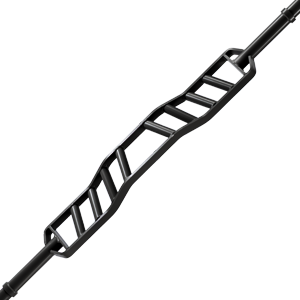
SS Yoke Bar
A shoulder-friendly specialty bar that fits the squat pillar of the system without beating up the upper body. A smart fit for lifters who need more comfort, more stability, or more quality squat volume.
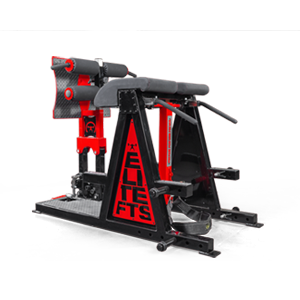
elitefts Posterior Chain Developer
Built for glute-ham raises, back raises, Nordic curls, bilateral leg lifts, and standing leg curls. This lines up directly with the hamstring and lower-back work that drives real-world strength.
E-Series Farmer's Walk Handles
Loaded carries are a core piece of Kairikido. These handles give you a direct way to train grip, trunk stiffness, work capacity, and full-body stability under load.
E-Series Prowler
For sled pushes, pulls, and repeat-effort conditioning. This fits the work-capacity side of the system and gives athletes a brutal but effective tool for lower-body power and repeatability.
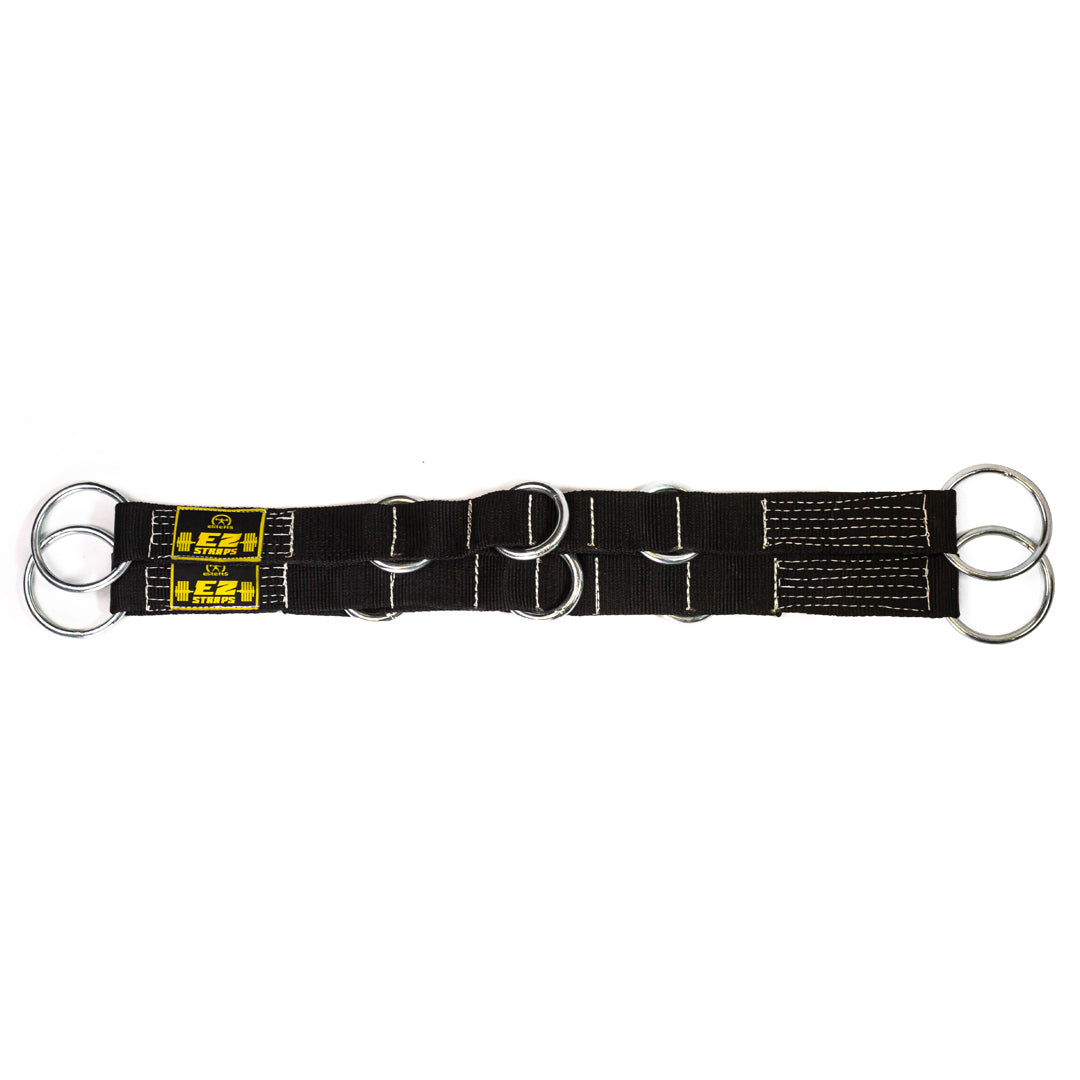
Spud Reverse Hyper Strap Short
If reverse hypers are already in the plan, this is an easy add-on to tighten up lower-back, glute, and hamstring work without overcomplicating the setup.
What Kairikido is—and what it is not
- Pure powerlifting
- Pure weightlifting
- Pure strongman
- Random functional fitness
Strength is not built through random effort. It is built through structure, intent, and progression. Systems matter. Standards matter.
Just like the martial artist’s belt, the endpoint is not the goal. The goal is to stay on the path.
The longer you train, the more you realize there is always more to learn—and more strength to build.