


Sports Performance | Lower Body Training | Strength Transfer
Training the Lower Body for Sports Performance
Build the base, earn the right to progress, then express force faster. This guide lays out a practical path from mechanical strength work to neural contrast training, force-velocity profiling, unilateral development, and sport-specific transfer.
Coach's lens: Do not rush athletes into advanced contrast work before they have earned the strength base. The bigger the base, the taller the building.
Start with the base
This article is aimed at intermediate to advanced athletes, but context matters. For beginners with less than two to three years of weight-training background, I still favor a two- to three-day-per-week off-season plan built around strength, size, and full-body movement patterns.
Beginner full-body template
| Monday | Wednesday | Friday |
|---|---|---|
| Front Squat Romanian Deadlift Bench Press Bentover Row Farmer's Walk |
Deadlift Bulgarian Sprinter's Squat Military Press Chin-Ups Sandbag Carry |
Box Squat Good Morning Incline Bench Press Clean-Grip Upright Row Suitcase/Waiter's Combination Carry |
Tip: scroll the chart horizontally on mobile.
As the athlete progresses, introduce a hybrid week that blends an upper/lower split with a full-body session. This prepares the athlete for more advanced programming without abandoning the movement-pattern foundation.
Progression toward split training
| Monday | Tuesday | Thursday or Friday |
|---|---|---|
|
Lower Body Kettlebell Swing Front Squat Bulgarian Sprinter's Squat supersetted with Split-Stance Good Morning Farmer's Walk |
Upper Body Bench Press supersetted with Bench Row Incline DB Bench Press supersetted with Incline DB Row Savickas "Z" Press supersetted with Chin-Ups |
Full Body Box Squat Romanian Deadlift Military Press Clean-Grip Upright Row Sandbag Carry |
Tip: scroll the chart horizontally on mobile.
Strength standards before the next level
Once athletes approach the standards below, they are generally ready to develop the plan further into a four-day split. These are guidelines, not permission slips to rush the process.
Mechanical lower-body training: strength and size
If an athlete has not reached the standards, I continue to program in the mechanical domain. This phase focuses on maximal force production and increased cross-sectional area through a combination of strength and hypertrophy methods.
Strength menu
- 1 vertical force-production lift: squat or deadlift
- 1 horizontal force-production exercise: Prowler, scrum sled, or horizontal squat
- 1 unilateral squat/hinge pairing: Bulgarian Sprinter's Squat supersetted with Split-Stance Good Morning
- 1 hamstring-specific exercise: Nordics or Harop curls
Favorite three-week loading wave: Week 1: 4 x 6, Week 2: 4 x 4, Week 3: 4 x 2.
Hypertrophy options
- Wright Method: Front Squat 4-6RM to failure, immediately followed by Back Squat to failure for 2-4 sets.
- 6-12-25 Method: Front Squat, Goblet Squat on a slant board, then Leg Press for 2-4 sets.
- Nautilus Classic: Leg Extension, Leg Press, then Back Squat for 8-12 reps to concentric failure on each movement, 2-4 sets.
I would only use the hypertrophy options if an athlete is considerably undermuscled. In my philosophy, size is largely a byproduct of productive strength training. Since strength underpins other biomotor qualities, athletes should not leap into neural power training before they have spent enough time in this stage.
For more on this concept, see Suchomel et al.'s The Importance of Muscular Strength in Athletic Performance and the related conference presentation PDF.
Integrating contrast training, profiling, and sequencing
Elite sport is decided by moments of explosive intent: accelerate, decelerate, change direction, jump, sprint, collide, and repeat under fatigue. Lower-body training, therefore, becomes less about producing strength in isolation and more about expressing force rapidly under sporting conditions.
Traditional linear strength models often fail to bridge the gap between gym strength and sporting explosiveness. Conversely, excessive reactive training without sufficient force-producing capacity limits long-term development. An integrated system combines maximal strength, dynamic effort methods, plyometrics, Olympic lifting derivatives, and assisted acceleration work.
A three-week bridge into neural contrast work
- Week 1: Perform all required sets for one exercise before moving to the next.
- Week 2: Pair the main movement with a plyometric or medicine-ball movement, then move to the next pair.
- Week 3: Perform movements 1A, 1B, 1C, and 1D sequentially, resting 30 seconds between movements and 3 minutes between complete complexes.
Vertical French contrast example
- Back Squat: heavy force production and maximal motor-unit recruitment.
- Box Jumps: conversion of force into rapid concentric propulsion.
- Banded Jump Squats: speed-strength and explosive concentric intent.
- Band-Assisted Vertical Jumps: overspeed stimulus and maximal movement velocity.
Advanced neural contrast method: bilateral
| Type | Week One | Week Two | Week Three |
|---|---|---|---|
| Max Effort | Power Clean Clusters 4 x (3+3) |
Power Clean Clusters 4 x (2+2) |
Power Clean Clusters 4 x (1+1) |
| Plyometric | Tuck Jumps 4 x 6 |
Box Jumps 4 x 4 |
Depth Jump into Hurdle Jump 4 x 2 |
| Dynamic Effort | Band Box Squat, speed-strength 4 x 6 @ 50% bar weight + 25% band weight |
Band Box Squat, strength-speed 4 x 4 @ 25% bar weight + 60% band weight |
Band Box Squat, accelerative strength 4 x 2 @ 50% bar weight + 50% band weight |
| Plyometric | Repeat Broad Jumps 4 x 6 |
Repeat Hurdle Jumps 4 x 4 |
Knees-to-Feet to Broad Jump to Box Jump 4 x 2 |
Tip: scroll the chart horizontally on mobile.
Horizontal force production and acceleration
Acceleration is heavily dependent on horizontal force application. Athletes in rugby, football, and sprint-based sports must project force into the ground during the early acceleration phases.
Horizontal contrast methods
- Prowler sprints
- Heavy sled drives
- Hurdle jumps
- Horizontal bounding
- Cleans and pulls
- Assisted sprinting
Horizontal French contrast example
- Prowler Sprint
- Hurdle Jumps
- Prowler Jumps or Hang Cleans
- Assisted Sprinting
Force-velocity profiling
Elite lower-body programming should not be random. Athletes need interventions based on their current force-velocity characteristics. The force-velocity curve categorizes training means according to movement velocity and force demands.
| Quality | Example |
|---|---|
| Maximum Velocity | Assisted Sprints |
| Speed Strength | Jump Squats |
| Strength Speed | Olympic Lifts |
| Maximal Strength | Box Squats |
Force-velocity contrast cluster example
- Max Velocity: Band-Assisted 10m Sprints x 4
- Strength Speed: Power Clean x 4
- Speed Strength: Depth Jump into Horizontal Jump x 4
- Peak Power: Band Box Squat x 4
Speed complex alternative
- First-Step Prowler Drive
- Band-Resisted 5-10 meter sprint
- Repeat Broad Jumps
- Band-Assisted 5-10 meter sprint
Force-velocity programming example
- Speed: 10-20 meter accelerations with full recovery for 3-5 reps, or until timing slows if using electronic timing lights.
- Ballistics and/or Plyometrics: Scoop toss with a medicine ball or depth jumps, 3 x 3-5 reps.
- Speed Strength: Jump squats with an empty Olympic bar up to 40% of 1RM back squat, 3 x 3-5 reps.
- Strength Speed: Power Cleans at 75%, 3 x 3-5 reps, or Snatch Pulls at 80%, 3 x 3-5 reps.
- Maximal Strength: Box Squat, 3-5 sets x 3-5 reps at 80-90%.
- Assistance Lower Body: Bulgarian Sprinter's Squat supersetted with single-leg hip thrusts, 3-4 sets x 6-10 reps.
Explosive Utilization Ratio
Explosive Utilization Ratio (EUR) compares reactive explosive ability against concentric force capabilities. It can help the coach choose better programming emphases. For a deeper explanation, see A Strength & Power Training Decision Tree.
Lower EUR (< 1.1)
Emphasis: Plyometric and speed-strength focus, 6 x 3.
- Banded Box Squat using a three-week pendulum wave: 50%, 55%, 60% + 33% band tension
- Band-Assisted Vertical Jump
- Hang Clean three-week load: 60%, 70%, 80%
- Pogo Jumps, Tuck Jumps, or Depth Jumps
Higher EUR (> 1.1)
Emphasis: Strength and strength-speed focus, 4 x 2.
- Straight-weight Box Squat at 90%+
- Box Jumps
- Power Clean from Floor
- Prowler Push
Dynamic effort and accommodating resistance
Dynamic effort training, popularized by Louie Simmons and Westside Barbell, remains one of the most effective methods for improving explosive force production. Band resistance alters the force curve by increasing resistance through terminal extension while demanding rapid acceleration.
| Week | Prescription |
|---|---|
| Week 1 | 50% bar weight + 25% band tension |
| Week 2 | 25% bar weight + 60% band tension |
| Week 3 | 50% bar weight + 50% band tension |
The intent is maximal acceleration on every repetition. Accommodating resistance also teaches athletes to keep producing force through the movement rather than decelerating near lockout.
Unilateral lower-body development
Sport is predominantly unilateral. Sprinting, cutting, lunging, and directional changes all require single-leg force expression and stability. Unilateral contrast methods are essential for pelvic control, asymmetry reduction, and sport-specific force transfer.
Unilateral contrast sequence
- Split Squat: maximal unilateral force production.
- Borzov Hops: elastic reactive stiffness.
- Banded Step-Ups: dynamic concentric acceleration.
- Single-Leg Plyometric Progressions: transfer into sporting movement patterns.
| Type | Week One | Week Two | Week Three |
|---|---|---|---|
| Max Effort | Split Squat 4 x 6 |
Split Squat 4 x 4 |
Split Squat 4 x 2 |
| Plyometric | Borzov Hops 4 x 6 |
Box Hops 4 x 4 |
Single-Leg Depth Jump into Hurdle Jump 4 x 2 |
| Dynamic Effort | Band Step-Ups, speed-strength 4 x 6 @ 40% bar weight + 33% band weight |
Banded Step-Ups, strength-speed 4 x 4 @ 25% bar weight + 60% band weight |
Banded Step-Ups, accelerative strength 4 x 2 @ 50% bar weight + 50% band weight |
| Plyometric | Repeat Hops for Distance 4 x 6 |
Repeat Hurdle Hops 4 x 4 |
Knees to One Foot to Box Jump 4 x 2 |
Tip: scroll the chart horizontally on mobile.
Planes of motion training
Lower-body preparation should not become excessively sagittal-plane dominant. Athletes compete in multiplanar environments that require lateral and diagonal force capabilities.
Inspired by Gunthor Werner Training:
- Bulgarian Sprinter's Squat or Barbell Split Squat supersetted with Borzov Hops.
- Lateral Lunges or Lateral Squats supersetted with Diagonal Bounds or Speed Skaters / Heidens.
- Rear-Foot-Elevated Single-Leg Good Mornings supersetted with Reverse Lunge to Hop.
Contraction method sequencing
One effective strategy is sequencing multiple contraction types within the same complex. This exposes athletes to varying neuromuscular demands while improving force absorption, stiffness regulation, and concentric explosiveness.
- Reactive Plyometric: Depth Jump + Hurdle Jump x 3
- Explosive Concentric with Accelerated Eccentrics: Banded Box Squats x 3
- Isometric: Isometric Squat from Bottom Position x 6 seconds
- Eccentric: Flywheel Squat 3 + 6
Overall philosophy
This system blends Westside Barbell maximal and dynamic effort methods, Verkhoshansky-style plyometrics, triphasic/contraction-based sequencing, force-velocity profiling, and Olympic lifting integration.
Recommended Elitefts equipment for this article
These tools line up with the article's training categories: maximal strength, dynamic effort, accommodating resistance, plyometrics, sprint transfer, and unilateral development.
Recommended tool
Elitefts SS Yoke Bar
Squat patterns without beating up the shoulders; perfect for max-effort and strength-speed work.
Shop at eliteftsRecommended tool
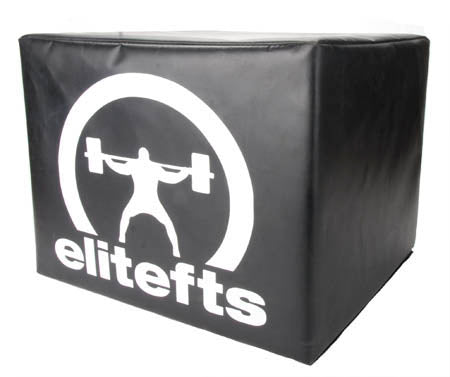
Elitefts Squat Box
Build repeatable depth for box squats, step-ups, and lower-body power work.
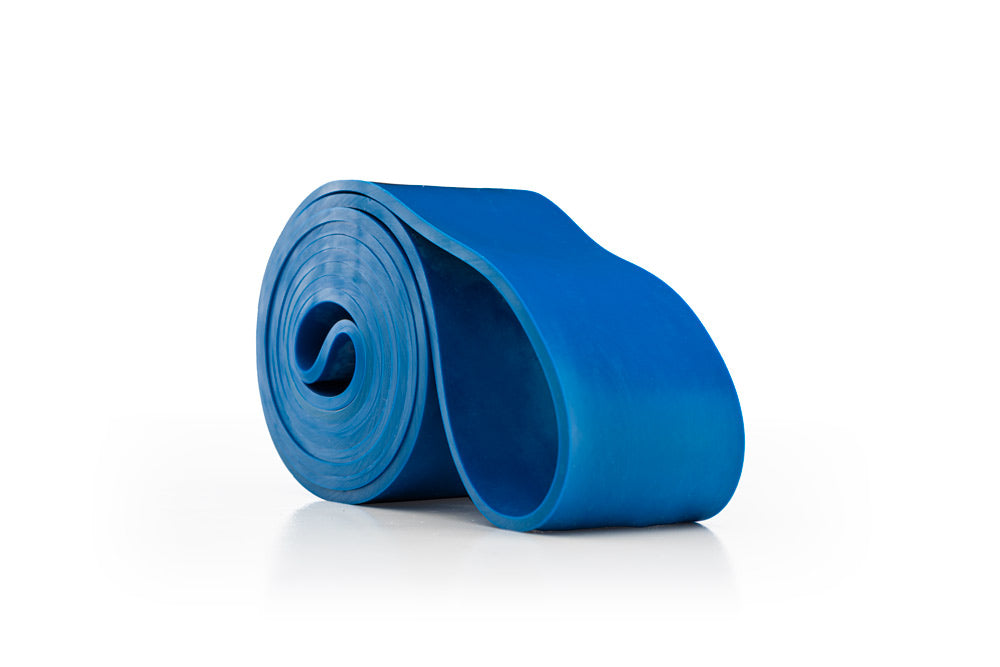
Shop at eliteftsRecommended tool
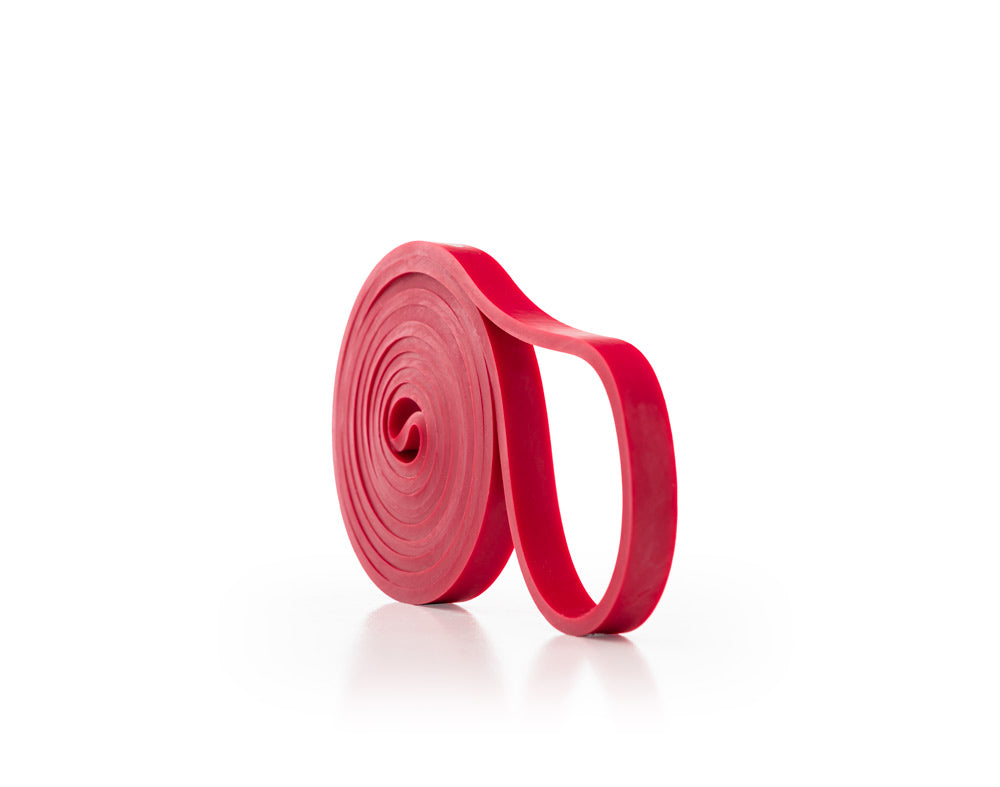
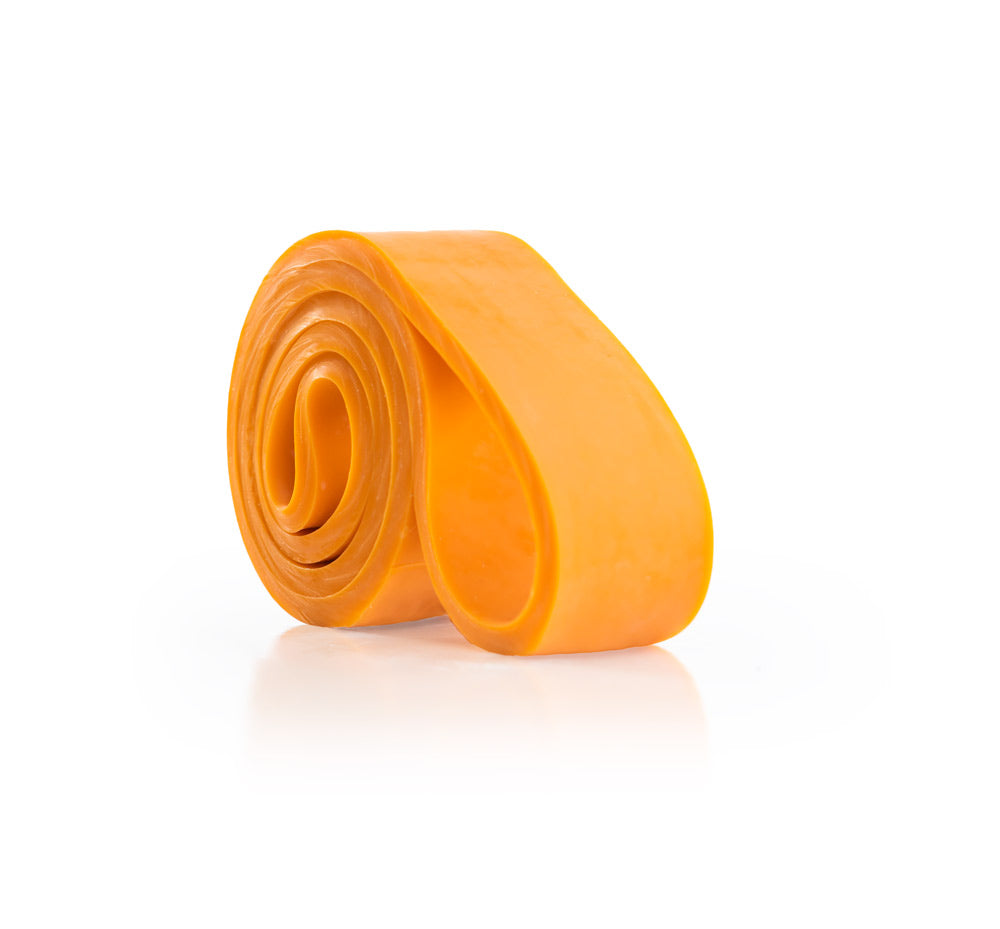
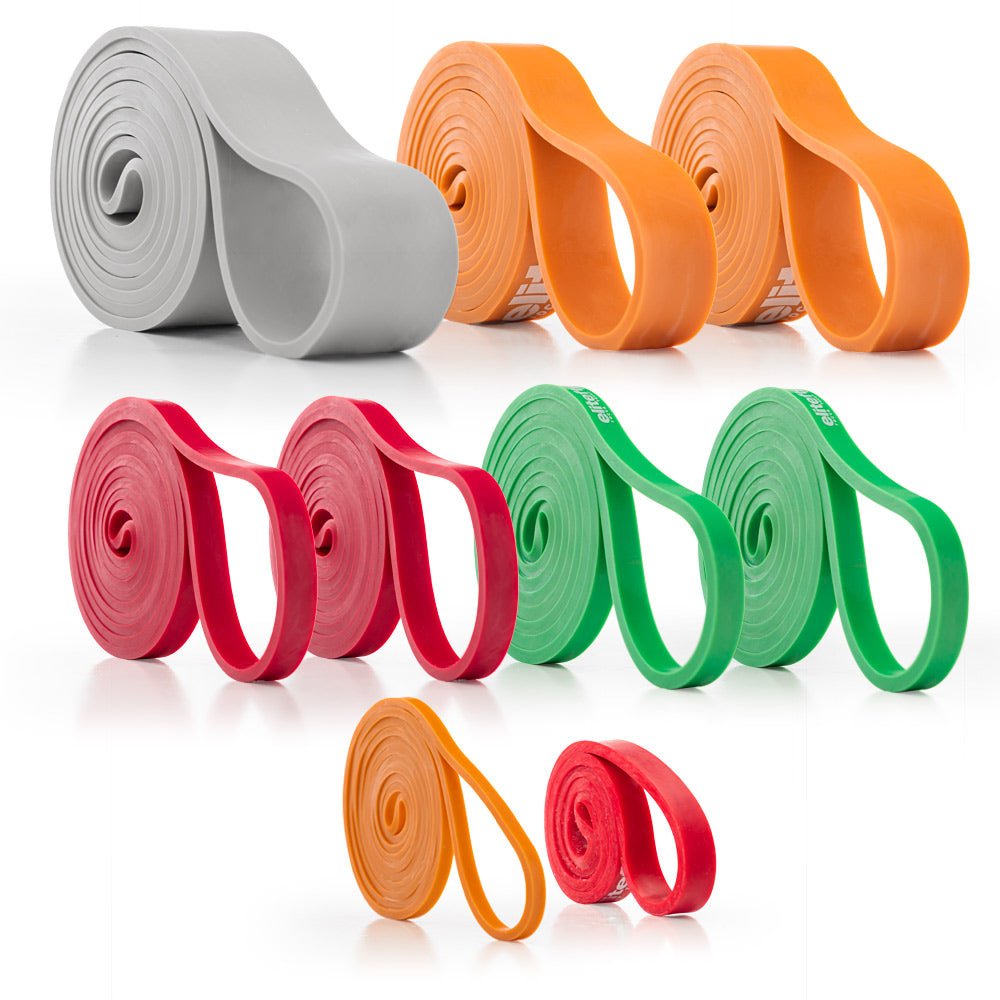
Elitefts Pro Strong Resistance Band
A high-tension band for dynamic effort, accommodating resistance, and explosive lower-body work.
Shop at eliteftsRecommended tool
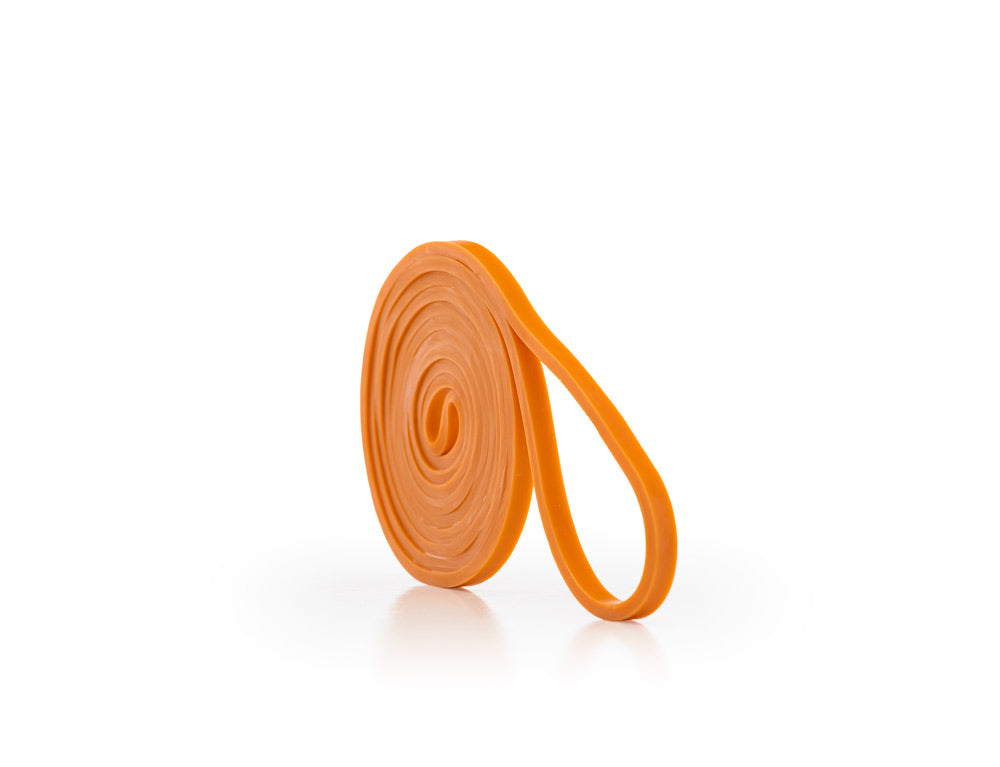
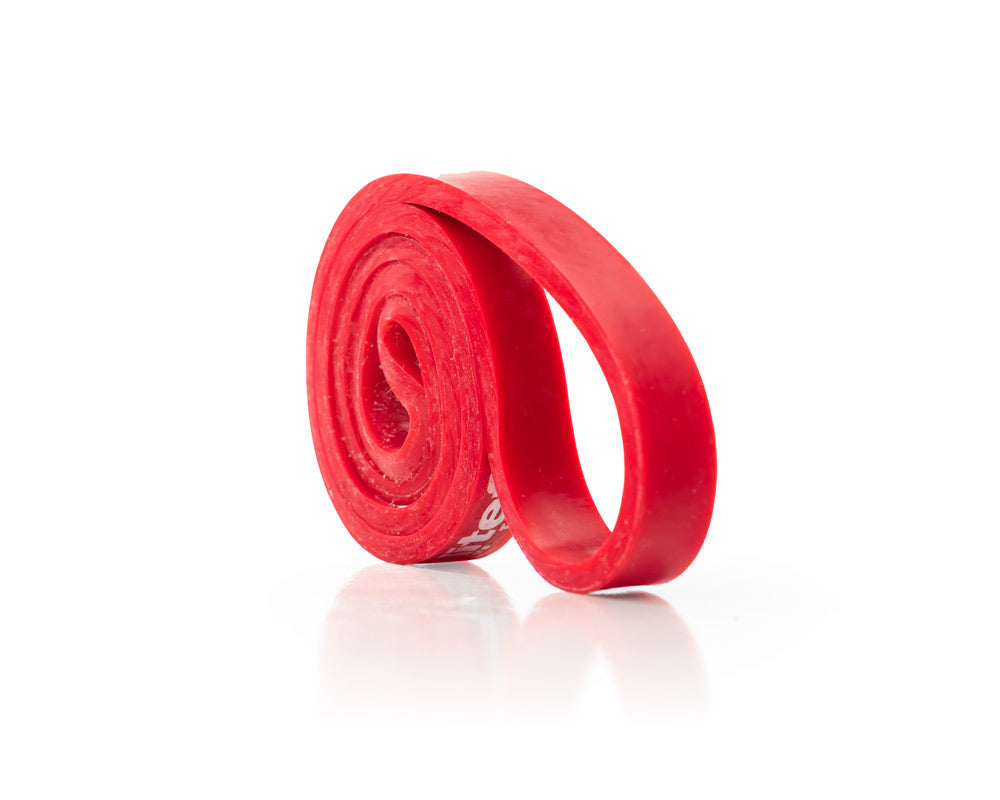
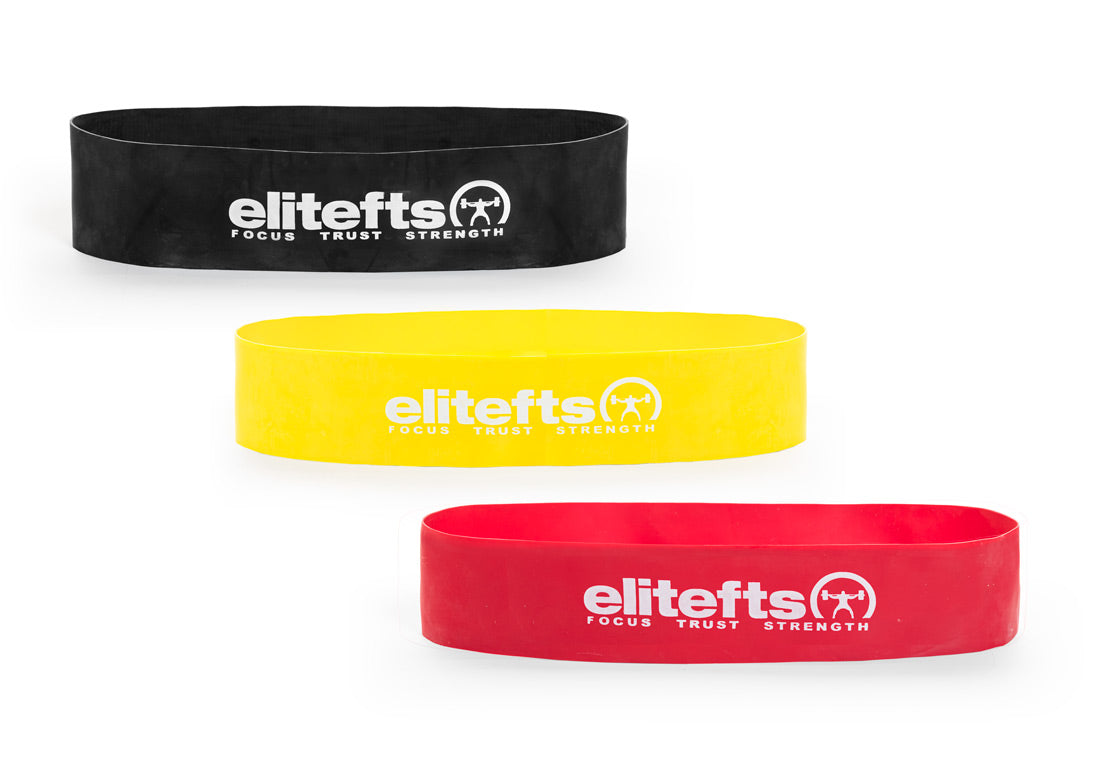
Elitefts Pro Light Resistance Band
A versatile band for speed-strength, mobility, warm-ups, and resisted lower-body work.
Shop at eliteftsRecommended tool
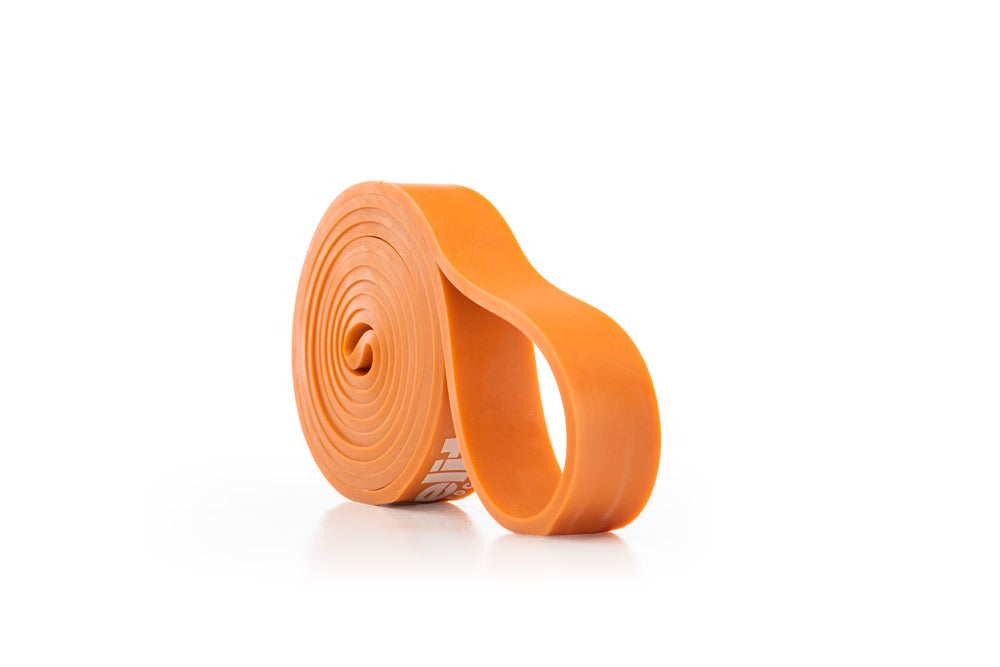
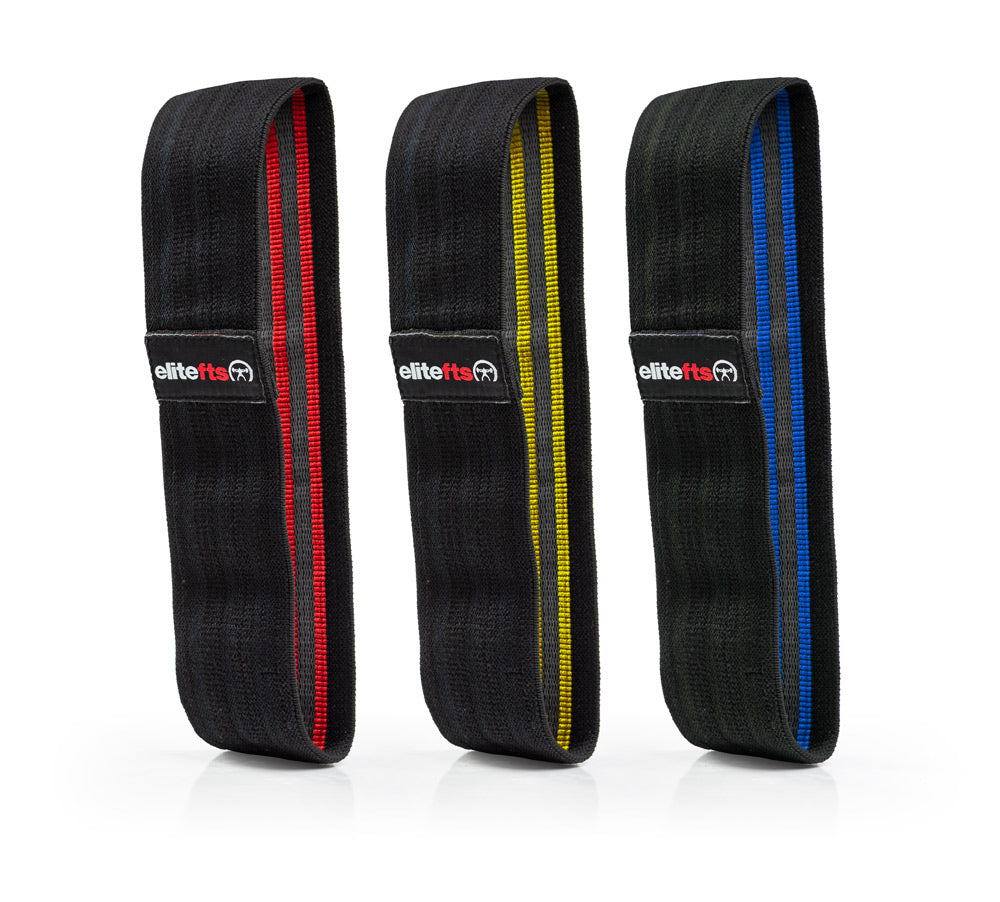
Elitefts Pro Average Resistance Band
A stronger band option for squats, pulls, jumps, and assistance work.
Shop at eliteftsRecommended tool
Prowlers & Sleds
Best fit for horizontal force production, acceleration, and repeat-effort conditioning.
Shop at eliteftsRecommended tool
Plyoboxes
Use for box jumps, depth-jump progressions, step-ups, and unilateral plyometric work.
Shop at eliteftsRecommended tool
Medicine Balls
Add throws and ballistic work to speed and power sessions.
Shop at eliteftsBuild. Test. Transfer.
Put the force where sport demands it.
Strength matters. Transfer matters more. Use the right exercise, the right velocity, and the right progression for the athlete in front of you.
Conclusion
Lower-body training for sports performance must account for the athlete's stage of weight-room development and program accordingly across the force-velocity curve. The modern athlete requires integrated development of maximal strength, explosive power, reactive ability, sprint mechanics, and neuromuscular efficiency.
When combined thoughtfully with profiling, maximal effort training, accommodating resistance, unilateral development, and plyometric sequencing, these methods can enhance athletic transfer. Successful lower-body preparation is not simply about making athletes stronger. It is about improving their ability to express force rapidly, efficiently, and repeatedly under sporting conditions.