


I've had a lot of conversations at this table. Some of them confirm what I already believe. Some of them make me reconsider things I thought I knew. Paul Carter's second appearance on Table Talk fell into both categories at once.
Paul has over 30 years in the trenches. His focus now is on muscle physiology, biomechanics, and anatomy research. He's not a guy who reads the abstract and runs to Instagram. He digs into the actual mechanisms, puts them to work in his own training, and then refines based on real outcomes. That combination of intellectual rigor and practical application is rare, and when he starts talking, you'd better be paying attention.
We spent the first chunk of our conversation on something that most people in the hypertrophy space get completely wrong. Not wrong in a minor way. Wrong in a way that's been repeated so many times it now sounds like fact.
The Thing Almost Nobody Understands About Muscle Growth
Mechanical tension. You've heard that phrase. It gets thrown around constantly. The problem is that most people who repeat it don't actually know what it means, so they're building training programs around a concept they fundamentally misunderstand.
Paul broke it down clean.
There are two types of mechanical tension. Passive mechanical tension happens during the eccentric phase, when you lower the weight. It comes primarily from titin, a protein that runs through the sarcomere, and from the detachment rates between actin and myosin. The key point is that during an eccentric, you need very low activation to lower a load you can actually lift. That means only the lower-threshold fibers are doing meaningful work. The type two fibers, the ones you actually want to grow, are not getting meaningfully loaded on the way down.
Active mechanical tension occurs during the concentric. Cross-bridging between actin and myosin. This is where growth happens. This is the mechanism. Not the eccentric. Not the stretch. The concentric, driven by a high degree of effort and the involuntary slowing of contraction speed that happens when you're moving a genuinely heavy load.
That last piece is the one people keep getting wrong. If you're intentionally moving a weight slowly, your effort is low. Low effort means low motor unit recruitment. Low motor unit recruitment means the fibers you're trying to grow aren't even fully active. You can't create meaningful mechanical tension on a fiber that isn't activated. That's not an opinion. That's the physiology.
What you want is maximum effort applied to a load that won't let you move it fast, no matter how hard you try. That's when contraction speed slows involuntarily. That's when cross-bridging is maximized. That's when active mechanical tension is actually doing what it's supposed to do.

So, Why Isn't Everyone Just Training Heavy?
This is where the conversation got interesting, and where I think the current hypertrophy discourse has gone most sideways.
The social media version of muscle-building in 2024 and into 2025 is full of stretch position training, slow eccentrics, finishers, and the pump. All of it packaged to look like cutting-edge science. And if you point out that most of it isn't doing what people think it's doing, you catch a lot of heat.
Paul isn't afraid of that heat. Neither am I.
Here's the truth on each of those:
Stretch position training creates longitudinal adaptations, meaning sarcomeres in series, meaning the muscle gets longer but not meaningfully bigger in cross-section. That is a different adaptation than radial growth, which is the actual hypertrophy you're training for. The stretch stuff also dramatically increases muscle damage, which prolongs recovery and reduces your ability to climb up on the motor unit recruitment scale in subsequent sessions. Overemphasizing stretch position work is working against yourself.
Slow eccentrics are getting credit for hypertrophy they're not actually producing. The passive tension that occurs during eccentric contractions creates adaptations different from those of active mechanical tension. They're not the same thing. Controlled eccentrics are useful for standardizing your range of motion and protecting your joints. Training them as the primary growth stimulus is misguided.
The pump does nothing for hypertrophy. In vitro research actually shows that muscle swelling, which is essentially what the pump is, may impair force production at the neuromuscular junction, reducing the motor unit recruitment you need for growth. Studies have compared short rest periods with heavy longer rest periods, and the heavy lower-rep, longer-rest approach consistently wins on hypertrophy outcomes. A pump feels good. It does not build muscle.
Finishers are the worst thing most people add to their training. By the time you get to the end of a session, your most stimulating sets are behind you. High-rep failure work at the end creates disproportionate fatigue and muscle damage relative to any stimulus it provides. You're not adding growth. You're subtracting from your ability to recover and perform in the next session.
The Effective Reps Model and What It Actually Means
Paul and Chris Beardsley have done extensive work on what's been called the effective reps model. Here's the simplified version.
Only the last four to six reps of a set taken to failure are the ones creating the growth stimulus. Those are the reps where effort is maximal and where contraction speed has slowed involuntarily. Those are the reps with active mechanical tension on your highest-threshold motor units.
For a five-rep max, full motor unit recruitment is happening from the first rep. You're getting your effective reps early, and your fatigue cost is lower. For a set of fifteen reps to failure, you're grinding through the first ten reps, accumulating metabolites and fatigue, before you get into the effective range at the end. Same growth stimulus. Much higher fatigue cost.
This is why heavy training isn't just a preference or a powerlifting holdover. It's, mechanistically, the most efficient way to accumulate growth stimulus while minimizing the fatigue that impairs your ability to do so again.
People ask why powerlifters don't always look like bodybuilders. The answer isn't the rep range. The answer is that most powerlifters spend the majority of their training cycle working at submaximal velocities, far from failure, optimizing neural adaptations for competitive performance. They're not trying to mechanically load the target fibers to failure. When they do, they grow.
The Point: Progressive Overload Is Still the Only Answer
Everything Paul and I talked about for two hours circles back to one thing.
Load the movement. Then load it more over time.
That's it. That's the mechanism. That's the magic bullet that everyone keeps looking for while training half-measures, finishers, and drop sets.
If you're lifting 25-pound dumbbells on lateral raises and you're still lifting 25-pound dumbbells two years later, you haven't grown. You've maintained. The body has no reason to add muscle when you're not giving it a reason to.
The overcomplicated approach is almost always a way to avoid confronting that basic truth. Chronic routine changes, finishers, periodized rep ranges, stretch protocols, and pump work. All of it can be explained, when it produces results at all, as something that helped the person train harder for a period of time. Not because the mechanism itself was driving new growth.
Paul made a point I've heard versions of before but he laid it out cleanly. If you prefer training in a certain rep range, you'll put more effort into it. More effort results in greater motor unit recruitment. More motor unit recruitment means more effective reps. The periodization didn't do it. Your willingness to work harder in a format you enjoy did it.
That's useful to know. It means you have more latitude in how you structure your training than the hypertrophy content machine wants you to believe. It also means the excuses run out fast. If you're not progressing, you're not overloading. That's the whole conversation.
What We Actually Know About Fatigue Management
This part of the conversation might be the most practically useful for most people training right now.
Fatigue is real, measurable, and far more costly than most people account for. Paul has moved away from training everything to failure all the time specifically because the research on fatigue accumulation is compelling. One set to failure, taken above 15 reps, can impair motor unit recruitment for up to 2 days. If you're stacking that kind of work across a session and doing it multiple times a week, your subsequent sessions are degraded before you even start.
The approach he's landed on, and that he's seen produce the best progressive overload outcomes in his own training and the people he works with, is to train primarily in the four to eight rep range, stop one rep short of failure on most work sets, and include actual failure sets as a calibration tool rather than the primary driver. The failure sets tell you whether you're gauging your proximity to failure correctly. They're not supposed to be every set.
What this looks like in practice: you do your heavy sets, you work hard, you leave one rep in the tank on most of them, and you track whether you can add a rep or add load over the weeks. If you can, the training is working. You don't touch what's working.
One of Jim Wendler's stories about changing his programming when everything was going great came up in our conversation, and I've seen that mistake made more times than I can count. The training is working. You feel good. So you change it. And then it stops working. Ride the wave. That's not apathy. That's the discipline of leaving something alone when it's delivering results.

We've All Been Looking for the Shiny Thing
When Paul and I were coming up, there was one magazine a month. You waited for it. Whatever was in there, that was your information for the next thirty days. You didn't get distracted by the next protocol because the next protocol wasn't available until next month.
That's a kind of constraint that, looking back, made us better at the basics. You had to train the squat, the bench, the deadlift, and whatever assistance work you'd decided was worth your time. Then you did that for a year. And you got stronger. And if you were training for size, you got bigger.
Now the noise is constant. Every week, there's a new study, a new creator, a new protocol claiming to be the thing you've been missing. And the consumer of that content, understandably, wants to believe it. The actual answer, which is to train heavily with good execution and add load over time, is boring. It doesn't make for a good short video. It doesn't have a catchy name.
But it's the answer.
We have the same conversation at this table over and over from different angles, with different guests, across different sports and disciplines. And it always comes back to the same place. Load the pattern. Recover. Repeat. Add load when you can. Be patient when you can't.
The people who do that over a decade look different from the people who spent the same decade chasing methods.
What This Means for Your Training
You don't need to overhaul everything tomorrow. Start by asking a simpler question about every exercise you're doing: Can you add load to this over the next twelve weeks?
If the answer is yes, you're in the right place. Keep the movement, add load at a rate your body can support, and don't change it until you've actually plateaued.
If the answer is no, figure out why. Is the movement too unstable to load effectively? Is your technique breaking down under load? Are you accumulating so much fatigue that you're never actually recovered when you come back to it? Those are the problems worth solving.
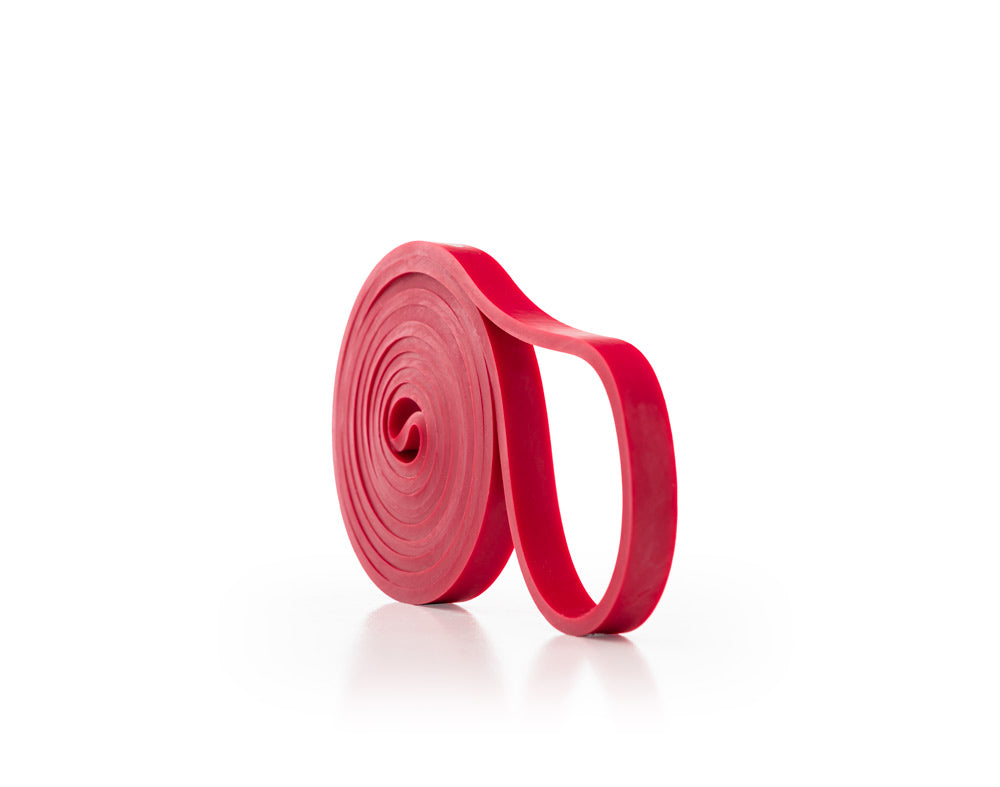
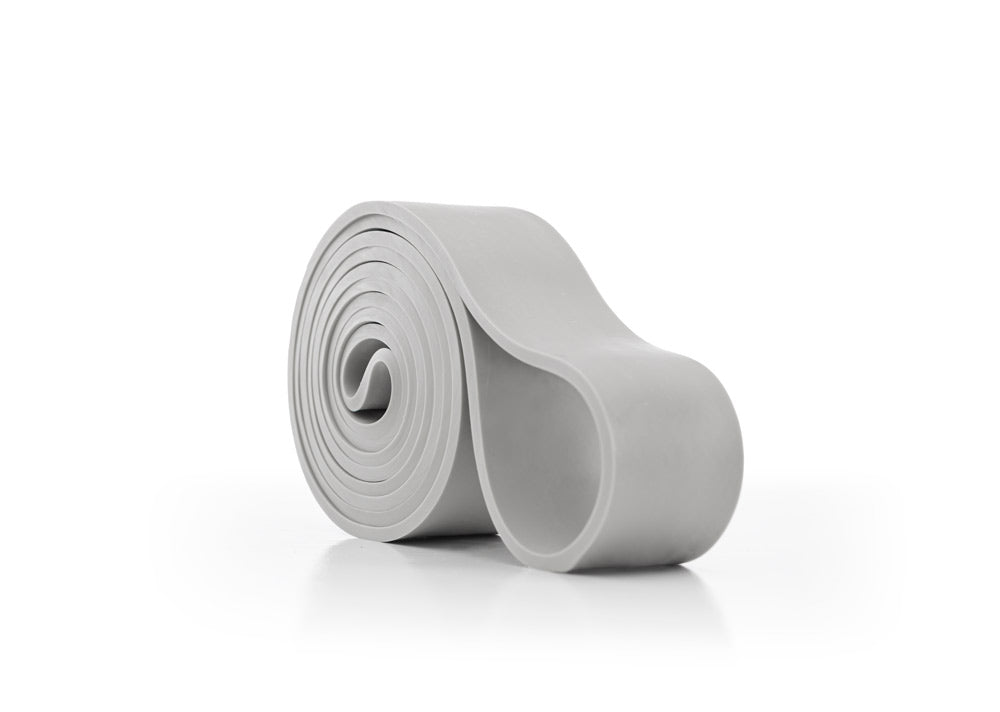
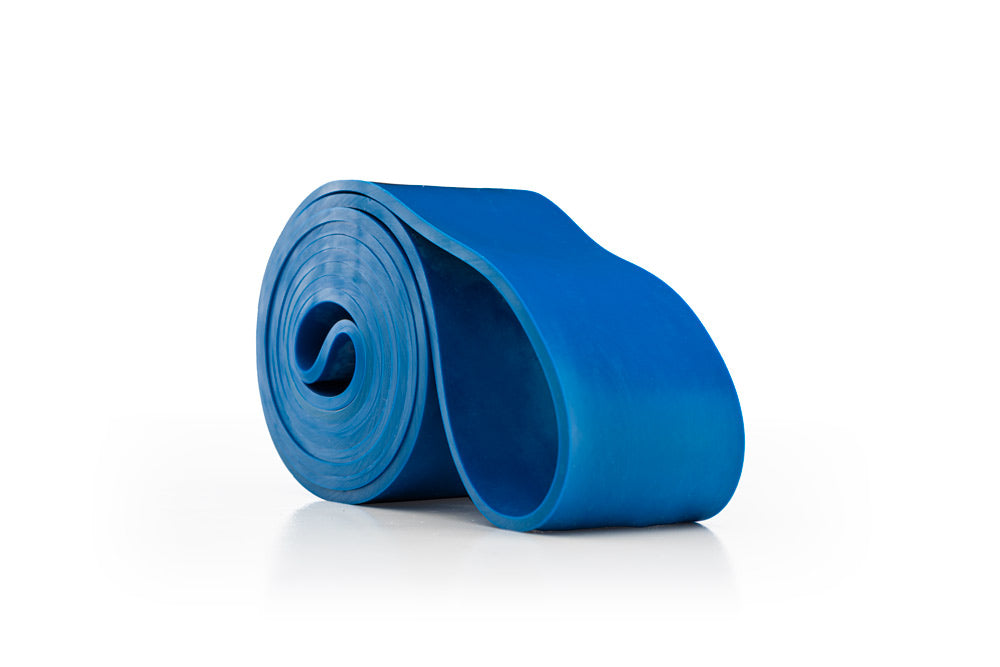
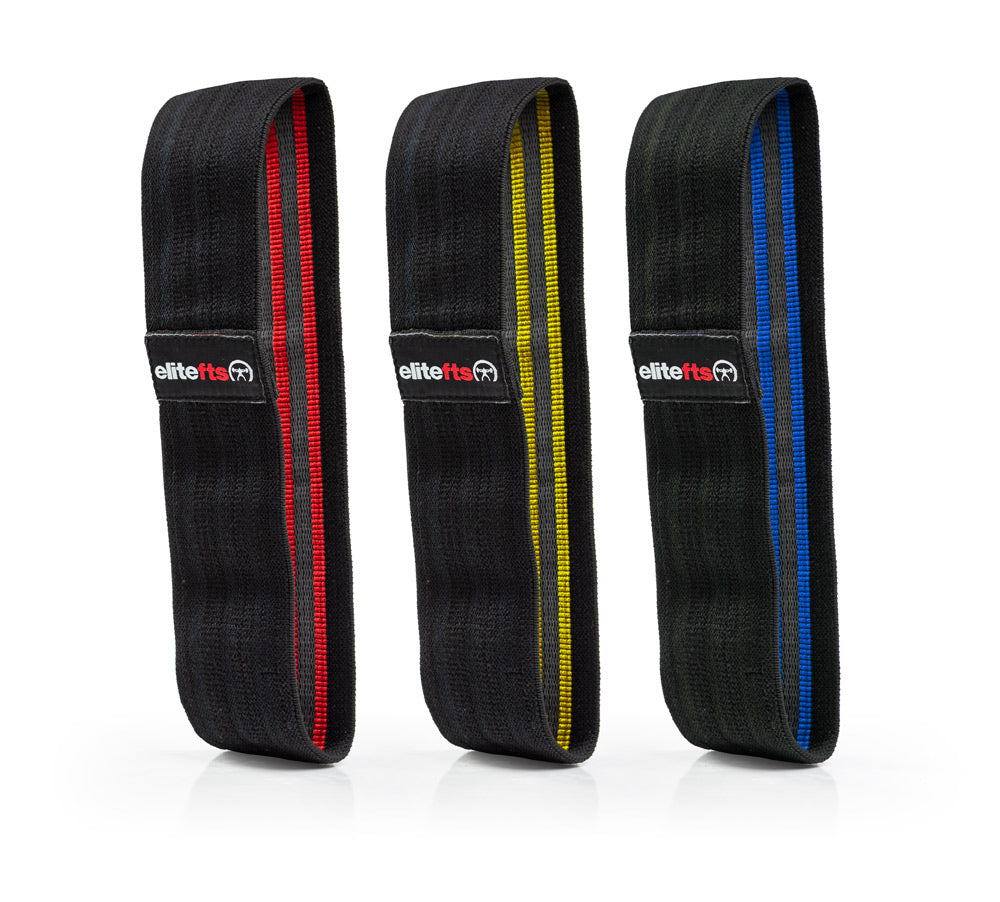
The tools you need to load movements effectively and train with real intensity don't have to be complicated either. Resistance bands from elitefts can add accommodating resistance to pressing movements, squats, and rows in ways that keep tension through the full range without requiring more weight on the bar. They're one of the most underused tools for people who are trying to overload a pattern without adding axial load.
The training itself is simple. The discipline to stick with the simple is the hard part.
Paul Carter has been at this for over three decades. He's run the research, and he's run it in his own body. The thing that's changed for him over time isn't that he's discovered something more complicated. It's that he's gotten better at doing the basics without compromising them. Heavy loading. Proximity to failure without living there. Movement quality that lets you actually load the pattern. Frequency that keeps the muscle in an anabolic state without burying you in fatigue.
That's the framework. Everything else is noise.
Watch the full conversation on Table Talk #303.