

elitefts Training Column
Your Leverages Are Not a Liability
The lifter who spends their career trying to look like someone else's highlight reel will never find out what they were actually built to do.
I have watched thousands of lifters train over the past four decades. Seminars, meets, the compound, online footage, private coaching sessions. Thousands of people under the bar.
And there is one mistake I see more consistently than almost any other.
Not a technical flaw. Not a programming error.
It's this: people trying to perform a lift the way it looks in a video instead of the way it works in their body.
Someone with a long torso, short femurs, and narrow hips will try to squat like a guy built like a brick house with hips wide enough to park a truck. Someone with arms that nearly touch the floor when they stand upright will try to deadlift with a setup designed for a guy built like a T. rex. And they wonder why they never look right. Why do they always feel wrong? Why the lift never comes together, no matter how many cues they apply.
The answer isn't more coaching. The answer is that you are trying to be a round peg, and you were never built to be one.
The internet made it worse. Before footage was everywhere, you learned to lift from the guys in your gym, from the coaches who put hands on you, from the feedback loop of doing it and adjusting. Now you have access to ten thousand highlight reels and zero context.
What you see in those videos is not "how to squat." It is how that specific person, with that specific bone structure, that specific hip anatomy, that specific femur-to-torso ratio, squats. It may not have any application to your body whatsoever.
The squat that wins a world championship does not look the same on everybody that attempts it. A high-bar Olympic squat is built for one structure. A wide-stance, low-bar powerlifting squat is built for another. Neither one is wrong. They are solving the same physics problem with different tools.
Style is personal. Form is governed by physics.
The question is not whether your lift looks like the textbook. The question is whether your lift works for your body, moves the bar efficiently, and lets you progress without tearing yourself apart.
If you've spent any time around serious powerlifting, you've heard the word "leverage" thrown around. Most people use it loosely. Here's what it actually means in practice.
Your body is a system of levers. Your bones are the rigid arms. Your joints are the fulcrums. Your muscles supply the force. Every movement you perform in the gym is a mechanical problem, and the length and arrangement of your levers determine how that problem gets solved.
Take the deadlift. A lifter with long arms and a shorter torso has a mechanical advantage pulling from the floor. The bar doesn't travel as far. Their back angle stays more upright. They drive hard with the legs and the bar moves.
Put a lifter with short arms and a long torso into that same setup and watch what happens. The bar is now miles from their center of mass. To get tight and maintain a safe back position, they have to drop their hips so low they're practically squatting. Or they hinge dramatically, load their lower back constantly, and grind through every pull, wondering why it never feels right.
That second lifter is not doing it wrong. Their structure demands a different solution. Maybe sumo. Maybe a different stance. Maybe a specific bar height. Maybe none of the above applies, and they need to build the posterior chain to compensate for the leverage disadvantage.
But none of that becomes clear when you're too busy trying to look like the guy in the video.
The same principle applies to the squat. Hip socket depth and placement, femur length, tibial length, torso length: all of these change where you need to stand, how wide your stance needs to be, and how much forward lean is not only acceptable but necessary. A lifter with deep-set hip sockets physically cannot squat narrow and stay upright. Asking them to is not coaching. It's ignorance.
Here's where it gets nuanced, because this is not a blanket permission slip to do whatever you want and call it "leverages."
There is a difference between a personal style and a technical flaw that is limiting you.
A rounded upper back in the deadlift? It might be functional. If the lower spine is rigid, tension is correct, and the bar is moving efficiently, that may be exactly what that lifter's structure requires. Some of the biggest pulls in history have come from backs that would make a physical therapist faint.
But that same rounded back, if it's rounding because of weak spinal erectors and a complete inability to create tension, is not a style. It is a problem. The bar drifts. The hips shoot. The lockout grinds. That is a weakness, not a leverage adaptation.
The Question You Have to Ask
Is this how my body moves most efficiently, or is this what my body defaults to when it's struggling? Those are not the same thing.
This is also why cookie-cutter programs fail people so consistently. They are built around the average. And the average lifter does not exist. You've got people with hip anatomy so unique that no standard cue applies, running the same twelve-week squat program as the guy next to them who happens to fit the template perfectly. One of them makes progress. The other spends twelve weeks grinding against their own structure and wonders what they're doing wrong.
Nothing is wrong. The program is not built for them.
One of the things I learned from training at Westside under Louie Simmons was that the template is a starting point, not a prescription.
The system is designed to detect what a specific lifter needs and make adjustments on the fly. Isn't your squat going up? Walk through the checklist. Is it a technique issue? A weakness issue? A recovery issue? The answer determines the fix. And the fix for one lifter is not the fix for another.
That's what made Westside work for so many lifters who had struggled everywhere else. It wasn't the conjugate method by itself. It was the philosophy underneath it: every lifter has different needs, and the program has to bend to meet those needs, not the other way around.
The lifters who got the most out of that environment were not the ones who executed the template perfectly. They were the ones who understood the principles well enough to apply them to their specific situation. That requires knowing your body, which requires being willing to ask the right questions instead of just doing what the program says and hoping it works.

Stop asking "how should I squat?" and start asking "how should I squat given my structure?" These are different questions. The first has one answer. The second has thousands.
Start with an honest structural assessment. Stand without a bar, then squat naturally. Where do you sit? What is your stance? How much does your torso lean? That position is your body giving you information. It is showing you where it moves most efficiently. That is your starting point.
Pull from the floor and look at your back angle at setup. Where is the bar relative to your shins? How far does your hip have to drop to get tight? If you're fighting to get into position before you even pull, something in the setup needs to change.
On the bench, lie down and pay attention to where your elbows want to be when the bar is at your chest. Don't force them. Let them land. That natural position tells you something about your structure and where your power actually lives.
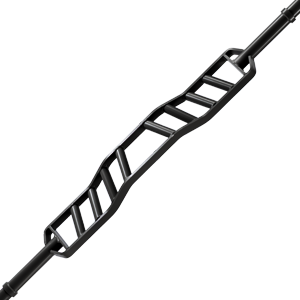
From there, build around what you find. Use tools that accommodate your structure instead of fighting it. The Safety Squat Bar does things for lifters with shoulder issues, long torsos, or specific hip mobility limitations that a straight bar simply cannot do. It's not a crutch. It's a tool that fits more structures than people give it credit for.
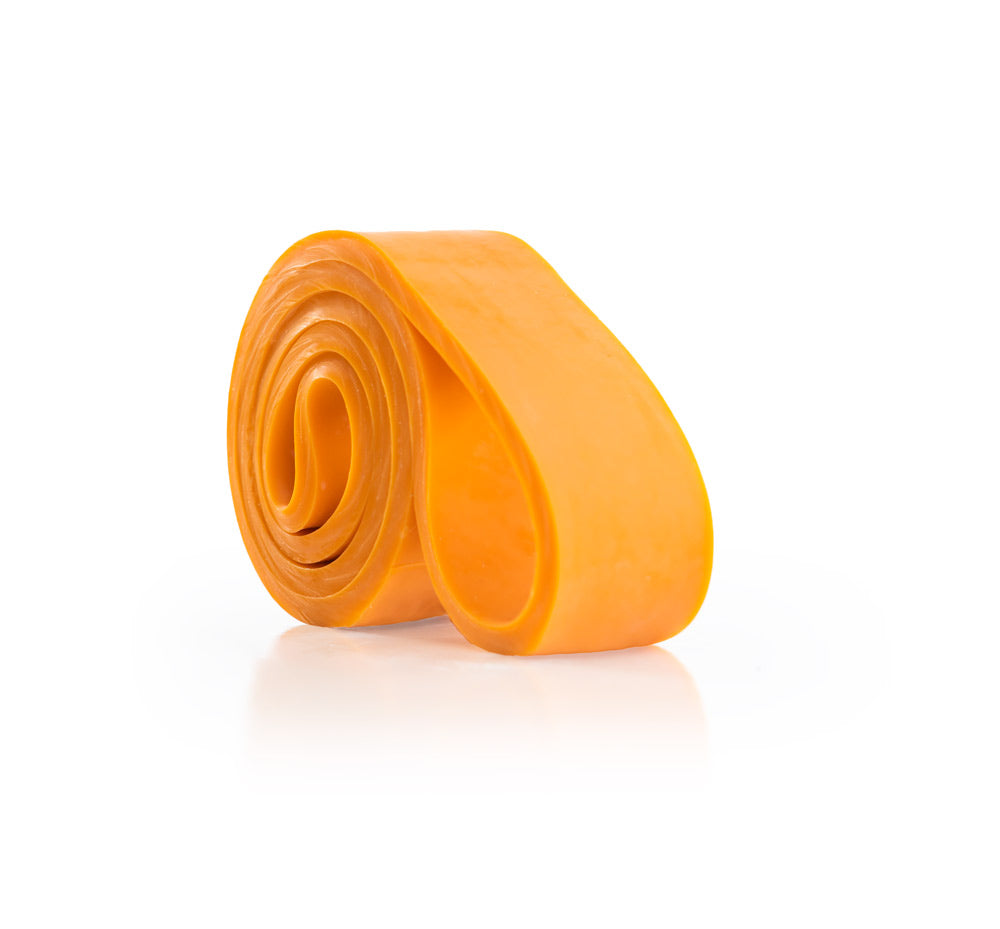
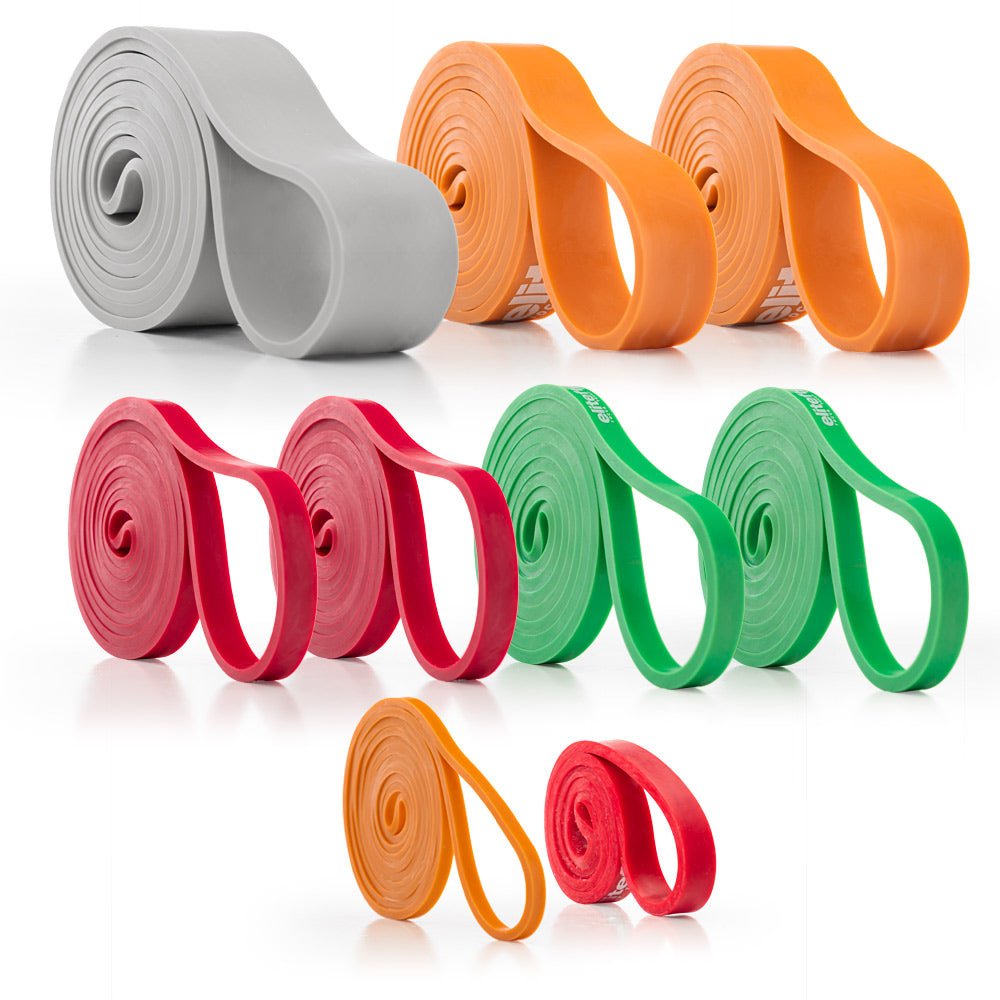
Bands and chains change the loading curve across the range of motion. For lifters with partly structural sticking points, accommodating resistance can be what finally makes a lift trainable in a way that matches how their body actually produces force.
The goal is not to perform a lift that looks like someone else's. The goal is to build a lift that is efficient for your structure, progressively overloaded over time, and sustainable enough to keep doing for years without destroying yourself.
I've seen short-armed guys apologize for their deadlift their entire career. Long-torso guys who couldn't squat upright, spending years convinced they were just doing it wrong. Wide-hip lifters were told their sumo stance was "cheating" rather than the biomechanically correct choice for their anatomy.
None of that is productive. None of it makes anyone stronger.
Your structure is fixed. Your femurs are whatever length they are. Your hip sockets sit where they sit. Your arms are as long as they're going to get.
What is not fixed is how you use what you have. The musculature you build to support your structure. The technique you develop to exploit your advantages. The intelligence you bring to programming around your limitations instead of pretending they don't exist.
A long torso is a liability in a high-bar Olympic squat. In a wide-stance deadlift, that same long torso becomes an asset. The lifter who figures that out early has a significant head start over the one who spends a decade trying to make their body fit a lift it wasn't built for.
Maybe you don't fit the standard because you were never meant to.
Build around what you are. Find the movements that fit your structure. Load them progressively. Attack your weaknesses without pretending your structure doesn't exist. That is where the PRs live.