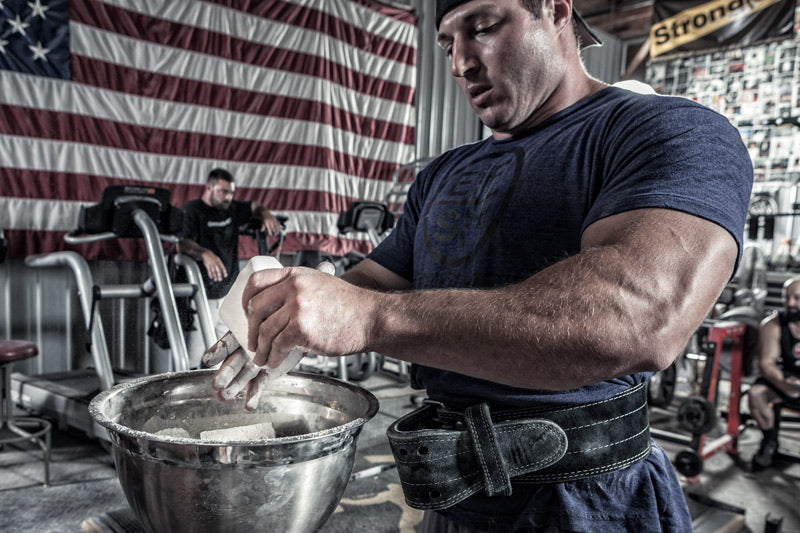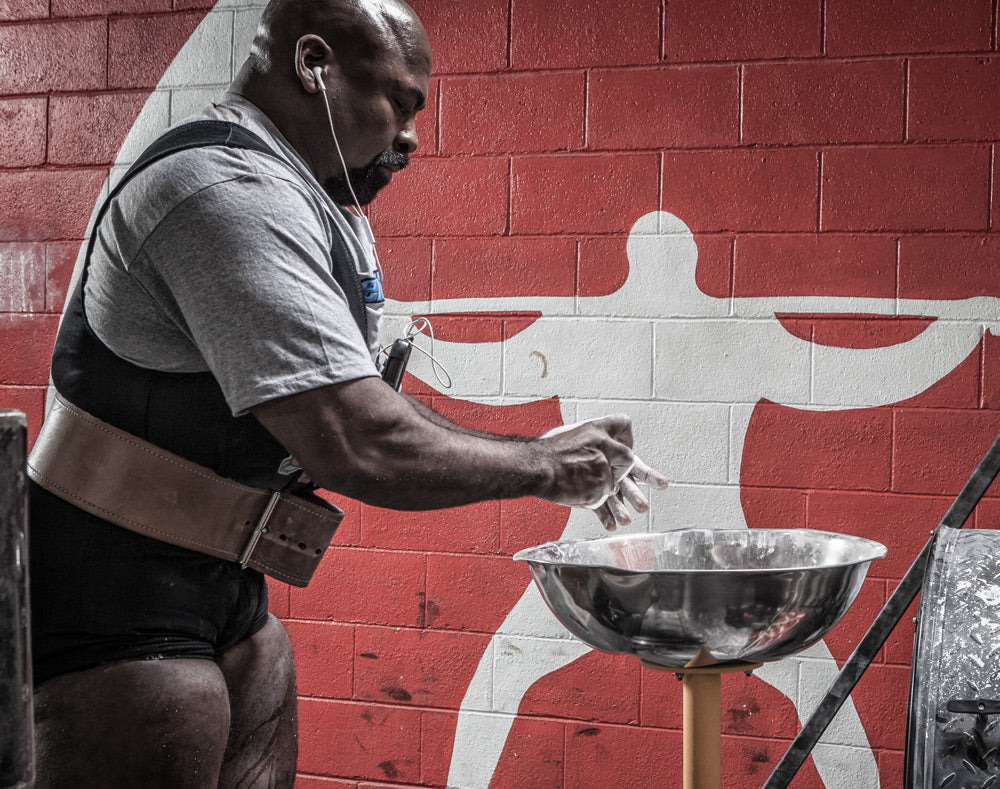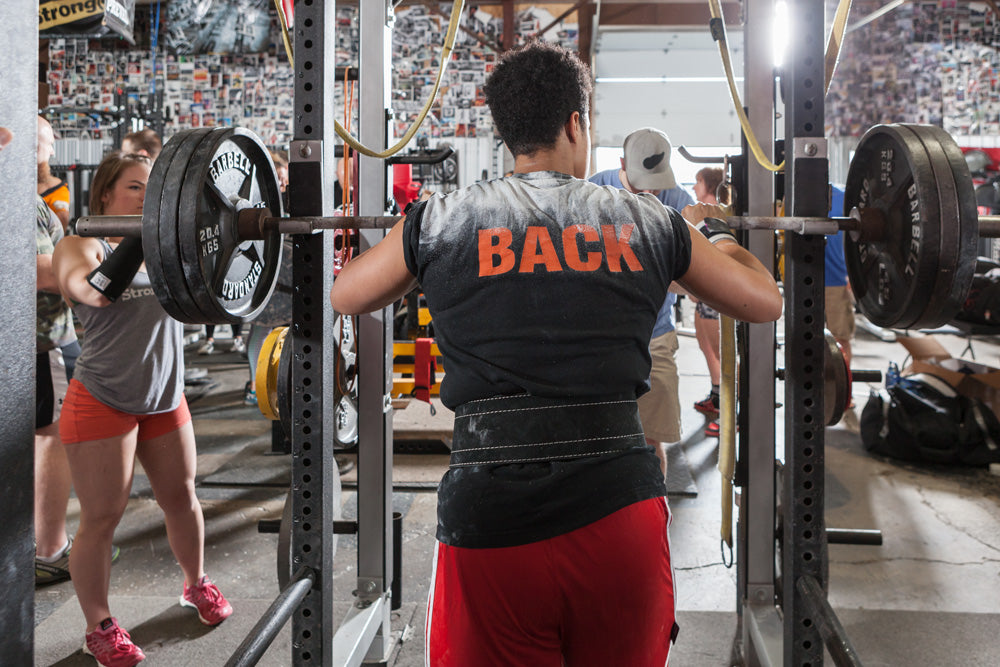

Walking into Flex Gym in Virginia Beach—the heart of the 757—is an immediate assault on the senses. It isn't just the smell of ammonia or the rhythmic clatter of calibrated plates; it’s the weight of thirty years of "black iron" history etched into the walls. You see it in the faded photos of Jay Cutler and Ronnie Coleman, and you hear it in the stories of legends like Kenny Sellers, a man who once tore his lat mid-workout, walked next door for a few shots of whiskey, and came back to finish his sets in a shirt that read Next Stop: Valhalla.
This is the world of Zachary "Zeus" Smith, the "Voodoo Viking" who inherited the mantle of Flex Gym after the passing of his mentor, Al. To the uninitiated, powerlifting is a solitary pursuit of numbers. To Zachary, it is a high-stakes arena of community-building, mental warfare, and the grueling labor of digging a tunnel that never ends. Through his transition from the violence of the Muay Thai ring to the calculated grit of the platform, Zachary has synthesized a philosophy that turns a niche hobby into a profound curriculum for living.
Rivalry is the Engine of Growth (The Power of the Meme)
In the current landscape of the Iron Game, the transition from a participant-only hobby to a spectator-driven event requires more than just high totals; it requires a narrative. Zachary’s ongoing head-to-head rivalry with Joe Jackson Doko is a masterclass in modern sports promotion, but it’s rooted in something deeper than an ego trip.
Marketing Through the "Barbershop" Lens By utilizing "barbershop-style" trash talk and wrestling-inspired memes—drawing on the theatrics of WCW and rap music videos—Zachary and Joe transformed a niche competition into a regional event. This wasn't just noise; it was tactical. This "wrestling-style" approach engaged the community, drawing 50–60 spectators from a single gym to travel for a meet.
Analysis: The Personal Connection Zachary emphasizes that trash talk only functions if there is an underlying personal connection. Without that "barbershop" rapport, it’s just two people being jerks. When done correctly, rivalry creates a digital paper trail that invites outsiders in, turning a solitary platform performance into a team-based drama.
"I think I had somewhere around 50 or 60 people that drove up for the America Pro 2 just because of the memes... People were messaging me that I had never spoken to before... even people in Joe’s gym... made friendships along that whole trash-talking bit because people just liked it."
Resilience vs. Quitting (The Fighter’s Paradox)
Zachary’s journey is defined by a hard-won psychological framework: "Fighting taught you how to lose; powerlifting taught you how to not quit." In combat sports, a loss is often a definitive stoppage—a knockout or a referee’s intervention. Powerlifting, however, is a game of attrition where the only real end is the one you choose.
The Loss of Identity and the Broken Hand Zachary’s transition to powerlifting was born from a crisis of identity. After a series of severe physical "losses"—including torn ACLs, LCLs, and the mounting fog of concussions—the 240-pound fighter could no longer run his ritualistic six miles on a Sunday. The identity of the "man of action" was threatened. This was compounded by the death of his mentor, Al, and the financial weight of business loans.
Analysis: Surviving the Ebbs and Flows Strength isn't linear. Zachary argues that powerlifting parallels business because it is defined by "ebbs and flows." Character is built in the periods where strength decreases, yet the athlete refuses to walk away. This was epitomized when Zachary tore his bicep just weeks before a meet, or when he competed in the Rumble with a hand broken in a street confrontation. He didn't win every lift that day, but he refused to quit. To Zachary, the "win" is found in the tenacity required to stay in the game when your body—and your bank account—are screaming for you to stop.
The "Legacy Shirt" (Character is the Only Metric)
At Flex Gym, respect is not a commodity for sale. You can't buy your way into the inner circle with a high total or a fat wallet. This is best exemplified by the "Legacy Shirt," a badge of service that carries more weight than any trophy. It signals to every new member that the wearer is obligated to help them.
The "Sweep the Sheds" Philosophy Borrowing from the "All Blacks" rugby philosophy of "Sweeping the Sheds," Zachary enforces a culture where no one is too elite to do the small things. Whether you are a "Gears of War" character like Roger or a powerhouse like Stella Kpinsky—who Zachary watched bench 315 pounds—everyone is expected to spot, load, and clean.
Criteria for Earning the Legacy Shirt:
-
Duration: Minimum of one year of active, consistent membership.
-
Participation: Completion of at least three sanctioned competitions under the Flex banner.
-
The Coaching Requirement: The member must coach another athlete from start to finish, demonstrating they can invest in another athlete's growth.
- The Vote: Final approval is granted only by unanimous vote of the team leadership (President, Vice President, Social Chair, and Secretary).
Enforcement via the Sled: Standards at Flex are enforced with sweat. Leaving weights loaded or equipment out results in a "Sled Push" punishment—20 to 100 trips down the 40-yard fire lane. For severe infractions, like team infighting, Zachary has even required a one-page essay, due by midnight, explaining why the offender deserves to remain on the team.
The Standoff at Flex Gym (Community as a Shield)
The strength of a gym’s culture is truly tested when its walls are threatened. Zachary narrates a harrowing event that proved Flex Gym is less a business and more a fortress. When two aggressive "Golden Globe" boxers began harassing members and spitting on cars, the situation escalated into a violent confrontation.
The Escalation and the Drawdown After Zachary physically neutralized both intruders inside the gym—breaking his hand in the process—the men returned with an arsenal of sawed-off shotguns and AR-style rifles. In that moment, the "savory and unsavory" family of Flex revealed itself. A "squad" of members, ranging from police officers to "heavy hitters" with deep ties to the city’s rougher edges, drew their own weapons. They stood their ground, protecting the families and children inside.
Analysis: The Family Unit. This standoff was the ultimate proof of community-building. While Zachary was away at a competition, DCS-certified security and military operators stood guard nonstop to ensure the facility was never disrespected again. It proved that a gym is not a collection of equipment; it is a shield forged from the loyalty of people who treat each other as family.
The "Tunnel" Metaphor (The Reality of the Business Grind)
Ownership and elite performance are often described as a "tunnel." Zachary’s original metaphor was stark: you start digging for the sun, but eventually, you realize the tunnel is your life. You realize you are going to die in the tunnel.
The Aquarium and Ghost Digging. Refining this with a concept from Dave Tate, the metaphor evolves into the "aquarium tunnel." While the grind of digging is eternal, the environment around you becomes a beautiful ecosystem of "whales and sharks"—the successes and massive milestones of the community you’ve built.
Analysis: The Legacy of the Dig The most "intellectually rugged" aspect of this philosophy is the concept of Ghost Digging. Zachary reflects on Al, who worked at Flex until the day he died. Al had finished his dig, but the tunnel kept moving forward because of the momentum he created.
"It hits you that you’re going to die in the tunnel... but the tunnel is more what you make it. It doesn’t have to be only the grind. You can make it nice."
Looking Toward 2026
As Zachary "Zeus" Smith looks toward 2026, his focus is shifting from the individual "lifter" to the "architect." His goals are focused on permanency: securing a location to "concrete the gym" as a fixture of the 757, mentoring the next generation of high school athletes, and evolving from a lifter into a pro event coordinator for meets like the East Coast Classic.
His journey reminds us that the iron game is a tool for building something much heavier than a one-rep max. It is about the "Sweep the Sheds" mentality—the idea that the strength you gain is only as valuable as the support you provide to the person coming up behind you.
A Final Thought: Are you just lifting for yourself, or are you digging a tunnel that others will be proud to follow you into? Whether in the gym or in business, the ultimate metric isn't the weight on the bar—it's the legacy you leave in the dirt.