
For most lifters, traditional stretching exists in a frustrating gray area. We know that neglecting mobility leads to tightness, poor positioning, and an increased risk of injury. Yet, spending 20 minutes on passive stretches often feels like a time-consuming chore with minimal, temporary returns. This leaves many athletes doing the bare minimum or skipping it altogether, leaving valuable performance gains on the table.
What if there was a method that not only delivered profound mobility improvements but also built muscle, forged bulletproof tendons, and even boosted mental fortitude? This is the promise of "Loaded Stretching." In its simplest form, loaded stretching means going into a stretch position under a load that pushes you deeper. Crucially, it's an active process where you often use opposing muscles to pull yourself further into the range of motion, transforming a passive activity into a potent training stimulus.
This article reveals the seven most surprising and impactful benefits of this underutilized method. By the end, you'll see why loaded stretching isn't just a better way to get flexible—it's a powerful tool to build a more resilient, muscular, and higher-performing body.

It Builds Armor-Plated Tendons
While your muscles adapt and grow relatively quickly through lifting, your tendons tend to lag. This developmental gap creates a significant risk for tendon-related injuries, especially as you get stronger. The stronger the muscle pulling on the tendon, the more strain that connective tissue must endure.
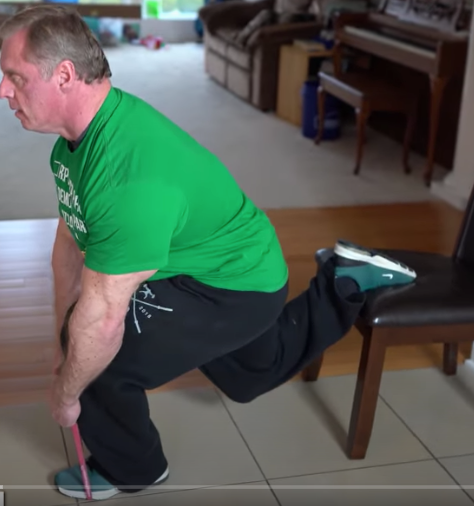
Loaded stretching provides a fantastic and highly efficient stimulus for strengthening tendons. The common alternative, “super maximal partial range of motion lifts,” requires handling weights that are intimidatingly heavy. In contrast, spending two or three minutes at the bottom of a front foot elevated split squat provides a similar tendon-building benefit with a much lower recovery cost. It is far easier to integrate into any training plan. For a greater emphasis on mobility alongside tendon health, the load should be light enough to allow for this more extended hold of two to three minutes in a single set. This focus on tendon health is a critical investment in your long-term lifting career, building resilience against common injuries that can sideline even the most dedicated athletes.
But strengthening connective tissue is just the beginning; this method can also directly contribute to building more muscle.

It Stimulates "Free" Muscle Growth
Mobility work that also builds muscle sounds too good to be true, but it's a primary benefit of loaded stretching. Holding a loaded stretch for an extended period creates significant time under tension in a muscle's lengthened position—a well-established and potent stimulus for hypertrophy (muscle growth).
To prioritize hypertrophy and tendon development, the source suggests holding the stretch for a shorter duration with more load—typically 60 to 90 seconds for 2-3 sets. This makes loaded stretching an incredibly productive tool, especially for strength athletes whose programs don't have room for traditional, high-volume bodybuilding work. It allows you to add a powerful muscle-building stimulus without the high recovery cost associated with more pump work or isolation exercises. You get a "two-for-one" training effect: unlocking new ranges of motion while adding valuable, low-fatigue muscle-building volume.

It Forges Mental Fortitude by Increasing Fatigue Tolerance
One of the most potent benefits of loaded stretching is also the most counter-intuitive: it makes you mentally more challenging. The source of this is its effect on "central fatigue," a type of systemic fatigue that builds up from all physical activity. The problem with central fatigue is that you can't easily perceive it building up; you just show up to the gym feeling fine, only to find your performance has unexpectedly dropped.
The discomfort of holding a loaded stretch for long periods is one of the quickest ways to build a stronger tolerance to this performance-killing central fatigue. Just as your legs adapt to the strain of heavy squats, your central nervous system adapts to the discomfort of the stretch. This is a game-changer for long-term progress. A higher tolerance for central fatigue means you can handle more total training volume and physical activity, leading to better gains over time. The "uncomfortable" nature of the exercise isn't a bug—it's a feature with a direct training benefit.
It Can Replace Your Entire 20-Minute Warm-up.
If your pre-lift routine involves a lengthy sequence of foam rolling and band drills, loaded stretching offers a radically more efficient path. For many lifters, one or two well-chosen loaded stretches can effectively replace a 10- to 20-minute warm-up, allowing you to get under the bar faster and with better preparation.
This efficiency is a recurring observation with athletes who adopt the method.
We take people's routine warm-ups that take them anywhere between 10 and 20 minutes, and they get replaced with one or two loaded stretches, which, when performed well, put them in pretty much the same position. So they can just get right under the bar and start going.
This approach delivers a dual benefit. Not only does it save precious training time, but it also provides the powerful tendon-strengthening and muscle-building stimuli that a traditional warm-up simply does not offer. For instance, instead of a 15-minute band routine before squats, you could perform a two-minute loaded stretch for the quads (like a Reverse Nordic) and another for the hamstrings (like a Jefferson Curl) to achieve better positioning and build tissue resilience simultaneously.
It Creates Stability Where Injuries Happen Most
Most muscle and tendon injuries don't happen in a muscle's strongest, mid-range position. They occur in lengthened positions where stability is low but mechanical stress is high. This is crucial for avoiding injuries like quad tears at the bottom of a squat or pec tears at the bottom of a bench press. Simply stretching a muscle passively doesn't prepare it for the demands of these vulnerable positions.
Loaded stretching directly addresses this vulnerability. By spending extended time under load at your end-range of motion, you are actively teaching your body how to create force and stabilize there. This is a proactive form of injury prevention. Instead of just lengthening a muscle, you are training it to be strong, stable, and resilient in the exact positions where it is most likely to fail.
It Releases "Internal Brakes" to Unlock Explosiveness
Years of repetitive lifting, while beneficial for building strength, can also lead to the development of "internal tension" in muscles, causing them to carry residual tightness even at rest. This creates a braking effect on your own movements. Imagine trying to throw a baseball with a very tight bicep; that tightness actively resists and slows down the tricep's ability to extend the arm rapidly and forcefully.
This self-resistance is especially limiting during the eccentric (lowering) phases of lifts, where muscles are trying to lengthen under load. Releasing it makes these movements considerably smoother and more controlled. By reducing this internal resistance, your movements become faster and more powerful, allowing you to be more explosive and lift heavier loads over time.
It's a Highly Adaptable Tool, Not a Single Method
Loaded stretching isn't a single, rigid protocol; it's a highly adaptable system with different variations that can be tailored to specific goals. Using the dumbbell bench press as an example, here are the four primary methods:
-
Regular Loaded Stretch: To improve mobility, start at the bottom of a dumbbell press and use your upper back muscles to actively pull the dumbbells deeper, relaxing your pecs to sink into the stretch.
-
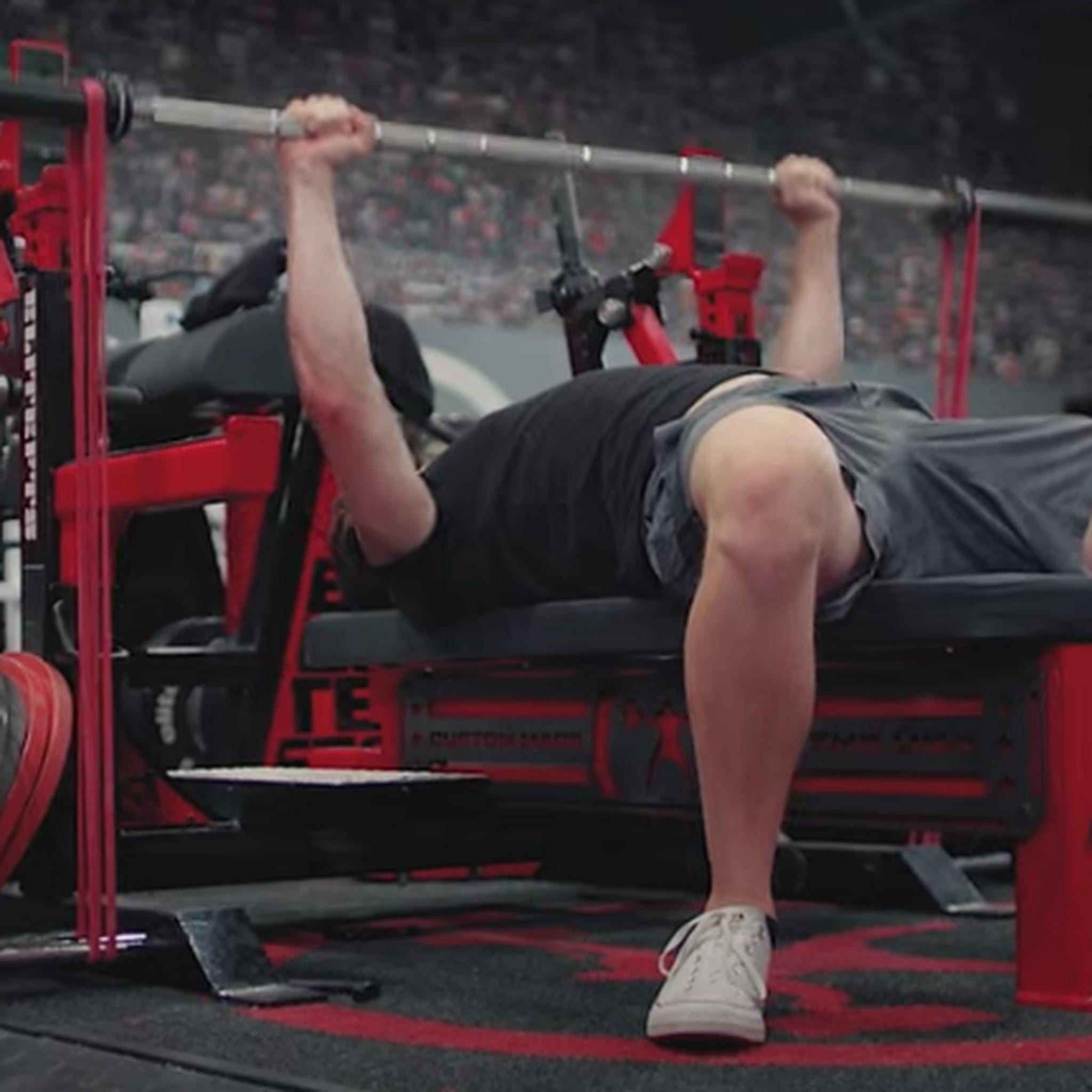
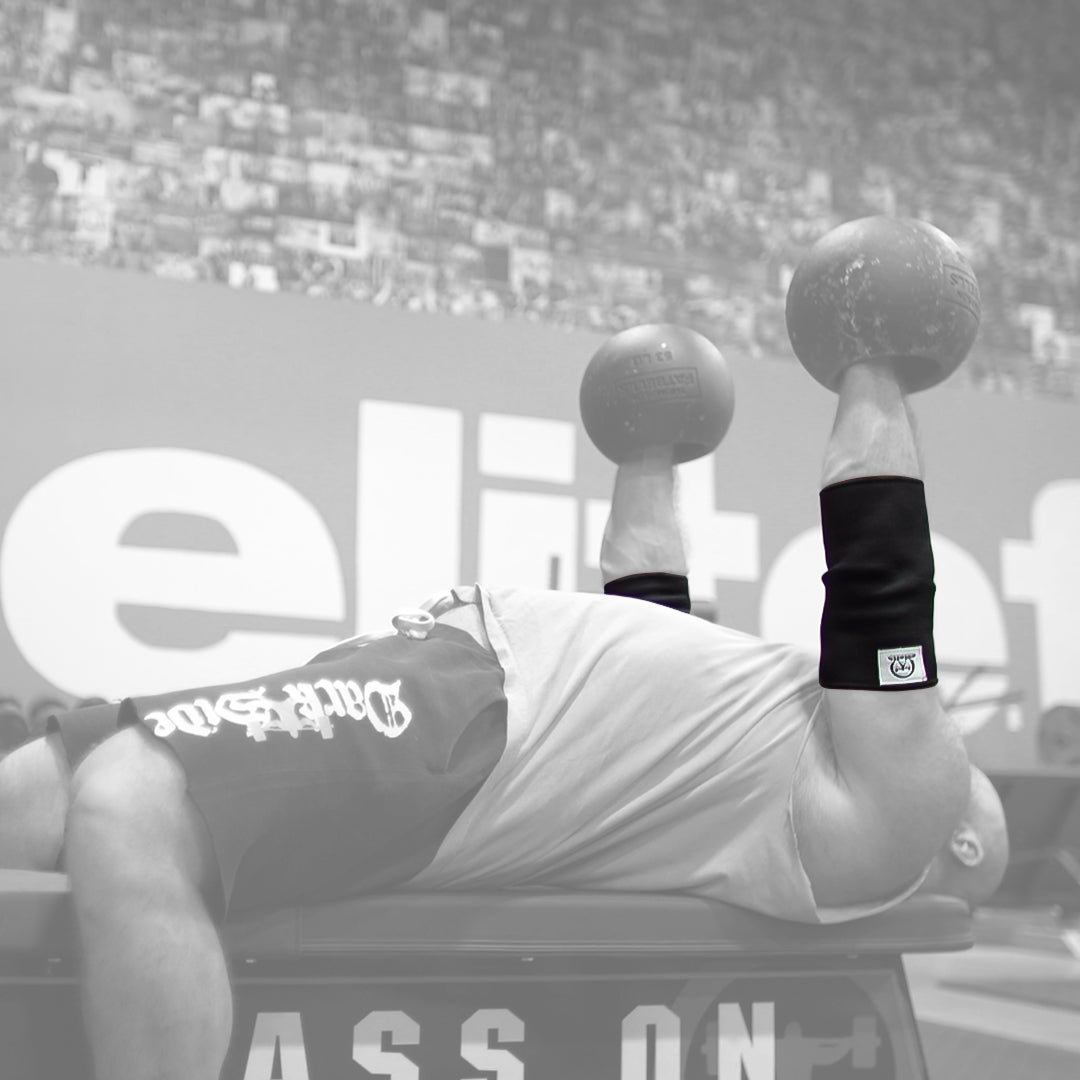
Overloaded Isometric: To build end-range stability and prevent injury, a partner gently presses down on the dumbbells at the bottom of the stretch, forcing you to resist and learn how to create force in that lengthened position.
-
Ballistic: To train the stretch reflex for explosive power, a partner applies a light, oscillating pressure at the bottom of the stretch, teaching you to reflexively absorb and reverse the force.
- Extreme Isos: To maximize hypertrophy, you go to the bottom of the dumbbell press stretch and actively squeeze your pecs as hard as possible for the entire duration, creating immense time under tension.
This adaptability means the technique can be programmed for nearly any goal. Whether you need to improve your squat depth, add muscle mass, or build explosive power, there is a loaded stretching variation that can help you achieve it.
Stop Stretching, Start Building
Loaded stretching is far more than a simple mobility drill. It is a powerful training modality that builds a more resilient, muscular, and higher-performing body. By combining mobility work with stimuli for tendon health, muscle growth, and central fatigue tolerance, it offers a return on investment that traditional stretching can't match. It’s a tool that works with your lifting, not just a chore you have to do before it.
elitefts Coach Tom Shappard Loaded Stretching Video