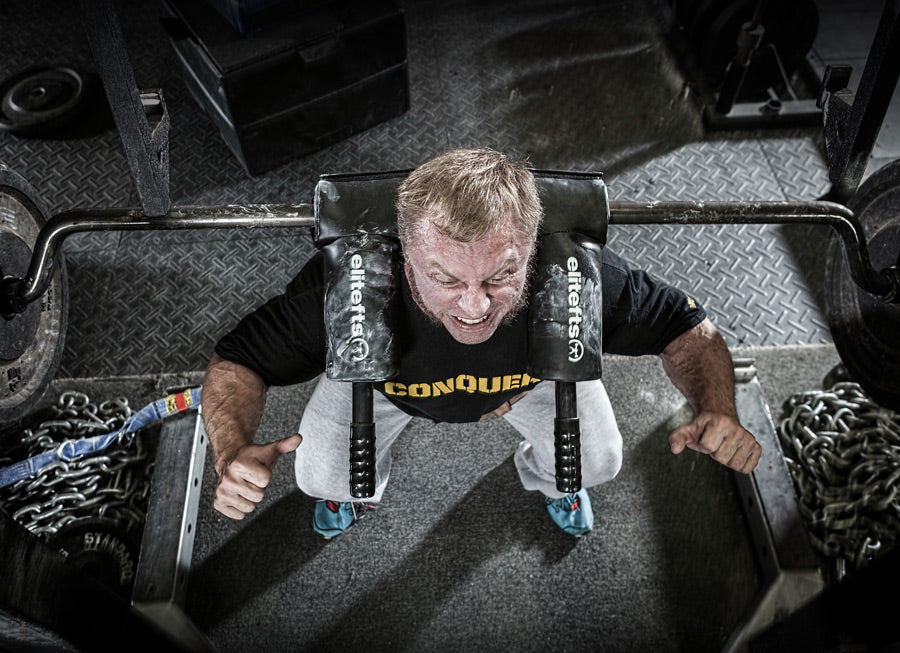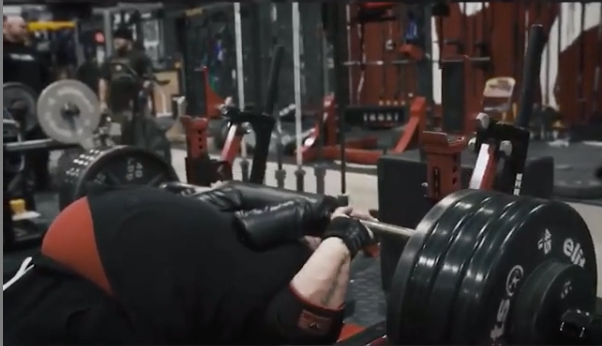

The story of Justin Zottl...
The Two Finish Lines
I have a picture from the finish line of a cycling time trial I won as a kid. My lips are white, there's a trail of slobber across my face, and moments after the photo was taken, I passed out. I had just become a provincial champion. I should have been ecstatic. However, the truth is that the joy wasn't in the ride; it was purely in the victory. A powerful love of winning drove me, but I didn't love the sport at all.
Years later, I stood on a different kind of platform. I was at my first powerlifting meet, armed with a cheap fabric belt and the wrong kind of knee wraps, completely naive but running on pure adrenaline. After my last deadlift, a feeling hit me with the force of a thousand pounds. It was raw, immediate, and undeniable: This is it. This is fucking it.
That day, I felt a passion I'd never experienced on a bike. It raises a question I think every athlete, artist, or professional has to ask themselves eventually: What's the difference between being good at something and truly loving it? For me, discovering that difference was a journey that took me through burnout, an identity crisis, and some of the hardest lessons of my life.
The Gilded Cage of a Junior Cyclist
A Champion Who Hated the Ride
I started racing bikes when I was 11 years old. By the age of 16, I was a national champion. On paper, I was a success story. My dad was my coach, and he was incredible—cutting edge, meticulous, and dedicated. Everyone around me assumed this was my future. The problem was that I was living a paradox.
"I didn't like it. I didn't like it at all. But I loved winning."
That obsession with victory was enough to propel me to the top, but it was a hollow foundation. I wasn't fueled by a love for the open road or the rhythm of the pedals; I was fueled by the primal need to beat the person next to me. While that drive taught me invaluable lessons, it couldn't sustain me forever.
The First Lessons in Pain and Process
Cycling may have been the wrong sport for me, but it was the right teacher. It forged two core principles in me that became the bedrock of my powerlifting career.
-
Pain Tolerance: Grueling sports teach you a fundamental truth: pain is okay. You learn to sit in that uncomfortable zone where everything sucks, knowing that what you truly desire is on the other side of the struggle. It’s a mental skill that separates those who endure from those who quit when things get hard.
- Following a Plan: My dad used data, such as lactic threshold testing, to create precise training plans. I learned to look at my power meter, hit my numbers, and execute the plan—regardless of headwind, rain, or how I felt that day. This taught me to trust the process, a skill that is essential when you're chasing long-term strength goals.
I was a champion built on a foundation I didn't love. When that foundation finally cracked, the entire identity I'd built came crashing down with it.
The Crash: Losing an Identity
Stepping Off the Bike and Into the Void
I quit cycling for good at 19, completely burnt out. The void that followed was immediate and immense. Cycling had been such an integral part of my identity that my high school even gave me a co-op credit just for riding my bike. Suddenly, that person was gone.
The fallout was disastrous. I stepped off the bike in September at about 175 pounds. By New Year's Eve, I had gained 60 pounds. I remember looking at myself in the mirror—stretch marks and all—and thinking, "Who the fuck are you? You're not an athlete." The life I knew, the identity I had, was completely gone. I was in a downward spiral, with no idea what to do next.
A New Year's Resolution
That New Year's, I became the person people sometimes complain about in January: a "New Year's resolutioner." I joined a gym and started my first real program, "Dr. Stoppani Shortcut to Shred." It was brutal. I remember doing sets of bench press with 60 seconds of HIIT cardio in between. But I fell in love with how hard it was. It sparked the same feeling from cycling—the understanding that I just had to get through the difficulty to reach what I wanted.
The weight room became my sanctuary. It wasn't about winning; it was about the work itself. I was rebuilding myself, one painful, ugly, and glorious set at a time. I had rediscovered my love for hard work, but I was still just wandering. It took a snapped elbow and a brutally honest athletic trainer to point me toward my true north finally.
Finding the Iron: The First Meet
The Push I Needed
In a scattered search for a new competitive home, I started playing both rugby and a little semi-pro football. Inevitably, I got hurt playing rugby and snapped my elbow. This is where my path took its most crucial turn. The team's athletic trainer was a sharp woman, and she noticed something I hadn't fully admitted to myself.
She kept busting me for trying to sneak into the weight room with my arm in a cast. Finally, she pulled me aside and said, "Justin, I don't think rugby is it for you... I can see you doing something here, because I can't keep you out of this goddamn weight room."
That was it. That was the external push I needed. Someone else saw where my true passion was, even when I was blindly chasing the feeling of hard work. She pointed me toward the one place I truly wanted to be.
"This is F**king It"
I signed up for my first powerlifting meet with a local gym. I showed up completely clueless, with a fabric belt that wasn't allowed and a pair of Russian-style knee wraps that did absolutely nothing. But my raw strength, built from years of cycling and a newfound love for the iron, carried me through. My numbers that day were:
- Squat: 600 lbs
- Bench: 345 lbs
- Deadlift: 600 lbs
The moment I finished my last pull, the feeling was overwhelming and crystal clear. It wasn't the joy of victory; it was the joy of the act itself. This wasn't just another sport to win; it was a passion. This was my passion. I knew it in my bones: "This is it. This is fucking it."
Finding my passion was the first step. The most complicated and most important lessons about what it truly means to dedicate your life to something were still to come.

The Hard Lessons of "All-In"
The Misunderstood Path to Progress
When you first start lifting and are naturally strong, it's easy to fall into the trap of thinking progress is a straight line, headed directly for the stratosphere. I was no exception. During my immature phase, I remember trying to squat 660 pounds for something like nine weeks in a row, repeatedly failing and just running my body into the ground.
Patience is a hard lesson to learn, especially when you're young and full of fire. But I eventually realized that strength isn't built in a day; it’s forged over years of consistent, intelligent work. That was the first lesson. The second was much, much harder.
The "Conveniently" All-In Phase
The phrase "all-in" is often used loosely, but many people misunderstand its true meaning. This flawed, "conveniently all-in" mindset—where I was a hero in the gym and a "shithead" everywhere else—cost me dearly. It was a major reason my first marriage ended. I was "all-in" on the things that were easy for my ego, not for my actual progress. Here's the difference:
|
The Convenient "All-In" (The Wrong Way) |
The True "All-In" (The Right Way) |
|
"I'm willing to go into the gym and shit a spleen." |
"What I'm not willing to do is eat a salad..." |
|
"...go for a walk, stretch, or drink this thing called water." |
Getting good sleep and managing stress. |
|
Ignoring your life and relationships outside the gym. |
Having a support system that loves you. |
|
Blasting gear to make up for bad recovery. |
Actually doing the recovery work. |
I was winning on the platform, but I was losing at life.
The Breaking Point and the Turning Point
The catalyst for change was meeting my current wife. She became an external value system that was more important than a number on a bar. I realized that "she matters more than that." This forced me to find balance.
I'll never forget the first time I totaled 2200 pounds. I was at the biggest meet in Canada, projecting this huge persona, but my little sister took one look at me and said, "You're fucking dead inside, dude." And she was right. After I pulled the final deadlift to hit that total, I didn't celebrate. I ran to hide behind the platform and just started bawling my eyes out, because I knew this wasn't it. It was a false, propped-up idea of strength built on a nonexistent foundation.
The irony is that once I started organizing my life better, my lifting performance improved significantly. I learned that you have to separate who you are from what you do. Powerlifting is something you do; it is not who you are. When you give yourself that freedom, you allow yourself to progress in a way that’s sustainable, healthy, and ultimately, much stronger.

Strength Redefined: The Mature Athlete
The Wisdom of Listening
My perspective now is entirely different. Maturity in lifting isn't about brute force; it's about wisdom. It’s about the battle between your ego and your brain, and having the self-awareness to know when "today is not the day." I’ve literally driven an hour and a half to the gym, eaten my pre-workout meal, walked out of the bathroom, and said, "Fuck it, I'm going home."
That’s not a quitter’s mentality; it's a victory of the mature athlete over the immature ego. It's understanding that you only have so many bolts in the chamber each prep. If variables like sleep, stress, and recovery aren't aligned, forcing a session isn't just a waste of a bullet—it's a recipe for injury and regression. I have the patience to wait 24 hours because I know that one good day is worth more than three shitty ones.
A Newfound Appreciation
A recent health scare cemented this perspective. My body just started shutting down. There were days when I physically couldn't get out of bed; my wife had to help me put on my socks. I went to the gym and failed a 700-pound squat—70% of my one-rep max. It was terrifying.
I started having conversations with myself, wondering, "If this is it, am I happy?" The thought that my career could be over was heartbreaking. I sent texts to close friends that, as they told me later, "broke my heart" to read. But after getting the right medical help and answers, I made it back. That experience gave me a profound resurgence of passion. It was a moment of clarity: "Dude, you fucking love this. Let's get after it." That fear gave me a new appreciation for every single day I get to train. It was a stark reminder of what a gift it is to be strong and healthy, and I don't take a single session for granted anymore.
More Than a Number on the Bar
True strength, I've learned, isn't just about the weight you can lift for one rep on a perfect day. It's the resilience you build by navigating the messy, imperfect reality of life. It’s learning from your failures, having the humility to change your approach, and finding a passion that truly fuels your soul, not just your ego.
For anyone starting this journey, know this: it will be long. It will test you in ways you can't imagine. It will demand that you grow as a person, not just as an athlete. But if you're willing to listen, to learn, and to build a life as strong as your lifts, you’ll find that the personal growth is the ultimate prize. The number on the bar is temporary; the person you become in the process is forever.