

Michel de Montaigne wrote that line sometime in the 1500s. He never touched a barbell. Never walked into a powerlifting meet. Never stood at the chalk bucket staring down a third attempt, he already knew he was going to miss.
But he understood something about human nature that most coaches never figure out.
Fear doesn't wait for the bad thing to happen. Fear starts billing you the moment you decide something is going to go wrong.
I know this because I lived it at a meet in Toledo in 1990. And it took a weight stapling me to the floor, and a few words from Louie Simmons, to make Montaigne's point land in a way I've never forgotten.
Toledo, 1990
The Toledo Hall of Fame powerlifting competition. My second attempt was 760 pounds.
This wasn't a random number. I'd spent four months training for this weight. It was a 20-pound personal record. I'd done the work. I'd earned the right to be there.
The bar came down. I didn't get out of the bottom. The weight stapled me to the floor.
That's not hyperbole. Stapled. I didn't grind through it, didn't fight it, didn't come close. The floor won, and it wasn't a contest.
Here's where most people would chalk it up to a bad day, maybe a form breakdown, maybe nerves. Put it behind them and prep for the third.
That's not what happened.
What happened was that from the moment I walked off that platform until the moment I stepped back on it for the third attempt, I started living inside the miss. Running it on a loop. I could feel how it went. I could feel how it was going to go again.
That's what fear does. It takes a moment that's already over and turns it into a prediction. And once you've accepted the prediction, you're not really competing anymore. You're just going through the motions while waiting to be proven right.
My third attempt was the same weight. 760 pounds.
What Louie Said
While I was getting wrapped for that third attempt, Louie Simmons walked up to me.
Louie didn't ask how I was feeling. He didn't try to pump me up or run through a pep talk. He told me to get my abdominals tight.
I had no idea what he was talking about.
He told me to expand my belly and push it into the belt. Not flex, not suck in. Expand and push out.
I'd been told to flex my abs my entire lifting career. Nobody had ever told me to expand and push out. These are not the same thing.
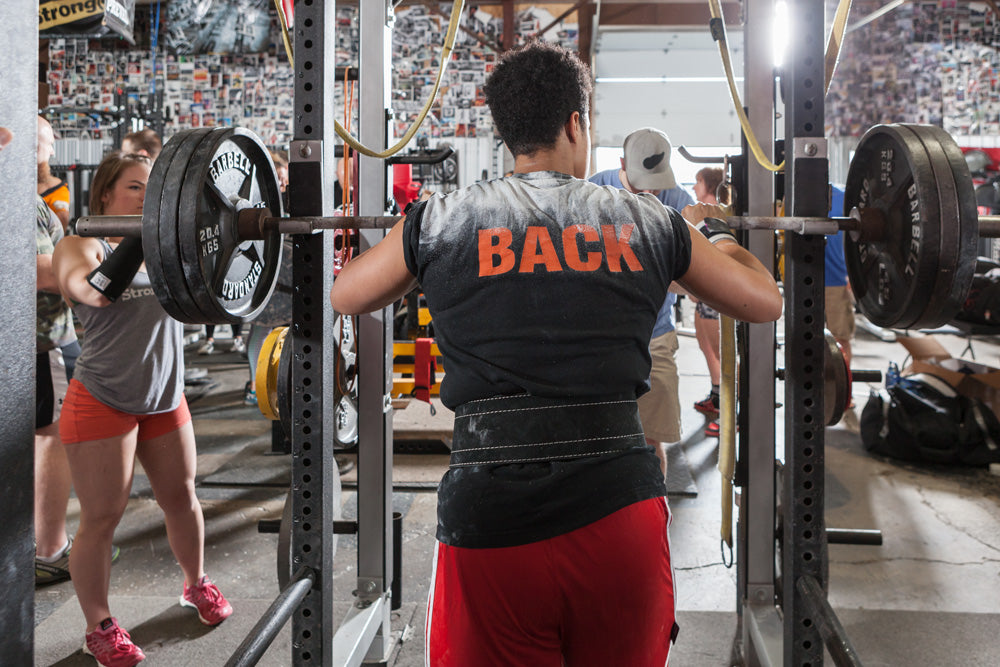
As I walked out and got under the bar, I noticed something I hadn't felt on the second attempt. I felt tight. Completely locked in. The kind of stable that makes 760 feel like it's sitting where it's supposed to sit instead of fighting for its own agenda.
I set up. I locked my back. I kept my belly pushed into the belt, and I blasted the weight up.
Same bar. Same weight. Same day. Same body.
Different setup. Different result.
The Part Nobody Talks About
Here's what I've thought about for years since that day.
The technical correction Louie gave me was real. Learning to breathe into your belly and push out against your belt, rather than flexing your abs inward, is one of the most misunderstood concepts in the sport. Lifters who learn this add weight to their squat without adding anything else. All the power generated by the lower body is transferred through the core to the bar. If that core isn't tight, the power gets lost. You're generating force that never arrives.
But there's a second thing that happened between the second attempt and the third, and it doesn't get talked about the way the abdominal cue does.
I stopped running the tape of the miss.
When Louie walked up and gave me something specific to do, something technical and concrete, it broke the loop. Instead of standing in that gap between attempts running a preview of the failure, I had a job. One cue. One thing to focus on. The fear had been living in the empty space between what happened and what I was afraid was going to happen again. Louie walked up and filled that space with something useful.
Fear needs space to operate. Give it nothing to work with, and it can't get its feet under it.
Montaigne's line says that the man who fears he will suffer already suffers because he fears. What he's describing is a kind of pre-suffering. A self-inflicted version of the bad outcome that starts before the outcome has any chance to happen.
We do this constantly.
Before a heavy set. Before a meet. Before a training block, we're not sure we can finish. We build a detailed version of what going wrong looks like, and then we start preparing for that version like it's already confirmed.
The weight doesn't care about any of this. The bar doesn't know you failed your second attempt. It doesn't know you're scared. It responds to what you do with it, not what you've been rehearsing in your head for the last ten minutes.
How This Shows Up in Training
I'm not talking about ignoring real problems.
If your technique is broken, fix your technique. If the weight is genuinely too heavy, that's information. Fear and honest assessment are not the same thing, and confusing the two will hurt you.
What I'm talking about is the specific kind of suffering that happens when there's nothing wrong except the story you've started telling yourself.
Every lifter knows this feeling.
You're in a training block, and the weights feel heavy. Not injury-heavy. Not form-breaking heavy. Just heavy. And you start doing the math. If I'm struggling here, what's going to happen when I try to peak? And now you've turned a training session that's going reasonably well into evidence of a future disaster that hasn't happened and may not happen at all.
Or you've had a bad meet and bombed an attempt. Maybe two. And now the next meet is three months out, and you're already living inside the possibility of bombing again. Every session between now and then gets filtered through that fear.
The suffering you're experiencing isn't from the meet. The meet is over. The suffering is from what you've decided the next meet is going to look like.
This is what Montaigne identified. And it's something every serious lifter has to confront sooner or later.

The Gap Between the Moment and the Decision
Fear lives in the gap between the moment and the decision.
Standing at the bar, there's a window between when you walk up and when you commit. That window is where fear does its work. The longer you stand in it, the more material fear has to work with.
The lifters who handle heavy weights consistently aren't fearless. That's a myth. What they've learned to do is close the gap. Make the decision and move. Not reckless, not blind, but committed. The commitment itself is a technical skill, not a personality trait.
You can practice it. You can build it the same way you build anything else under the bar. You do it over and over until it becomes the default response instead of the hesitation.
The setup matters here. Having a pre-lift process that gives you something specific to do in that gap is one of the most practical ways to crowd out the fear before it gets established. Louie gave me a cue. One concrete, physical thing to focus on. It worked not just because the cue was correct, but because it filled the space where the fear had been living.
Your setup doesn't have to look like mine. But it should be yours, specific, and give you something to lock onto in the seconds before you lift. If you're walking up to the bar with nothing but awareness of how the last attempt went, fear will fill that space automatically.
Don't give it the opening.
Same Bar, Different Mind
I smoked 760 pounds at the Toledo Hall of Fame meet in 1990.
The same 760 pounds that had stapled me to the floor fifteen minutes earlier.
The bar didn't change. The weight didn't change. My body didn't change. My mind changed. One cue from Louie Simmons, one decision to commit, and the lift that had already beaten me twice got done.
That's not a motivational story. That's a demonstration of something real and trainable.
The suffering you do in advance of a hard lift, a hard block, a hard meet, is still real suffering. It costs you energy, it costs you focus, and in some cases, it costs you the lift before you ever step on the platform.
Montaigne figured this out without a barbell. You can apply it with one.
Get under the bar. Make the decision. Push your belly into the belt.
The weight will tell you what happens next. But at least you'll have given yourself a legitimate shot.
Equipment That Earns Its Place Under Heavy Weight
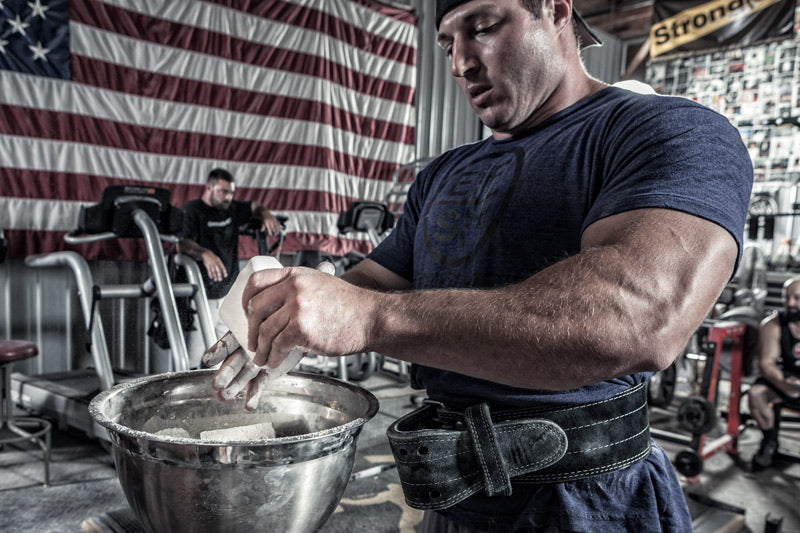
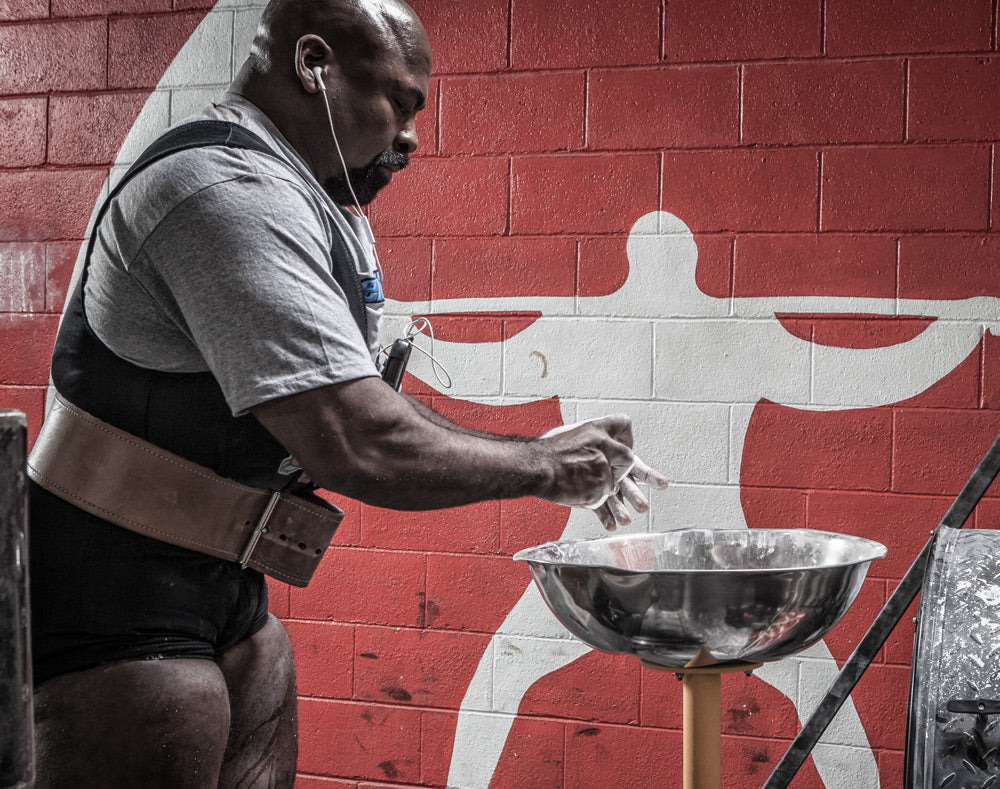
The setup Louie Simmons taught me that day in Toledo is built around one piece of equipment that most lifters wear but few use correctly: the power belt.
Learning to expand your belly and drive into the belt creates a base that transfers force instead of losing it. The belt isn't a crutch. Used right, it's a technical tool for building the kind of intra-abdominal pressure that makes the difference between a lift that moves and a lift that doesn't.
elitefts has built and sourced power belts for decades. If you're training with serious weight and you're not using your belt, you're leaving something on the table that has nothing to do with strength.
Live, Learn, Pass On.