

Building a Powerful and Safe Bench Press
A strong and impressive bench press is built on a foundation of precise technique, not just brute force. Every world-class lifter knows that small details in setup and execution make the difference between a new personal record and a failed attempt. By focusing on key technical cues, you can create a more stable, powerful, and safe lift.
This guide will break down four essential cues for a perfect setup and execution, based on expert advice from elitefts. Mastering these will help you fix common mistakes, engage your entire body, and unlock your true strength potential.
The four cues we will cover are:
- Squeeze the Pinkies
- Drive Your Elbows Out
- Push the Floor Away
- Pull Your Chest Up
Cue #1: Squeeze Your Pinkies
"Squeeze your pinkies... chest up, shoulders down. This is going to make sure that we're not flattening out when we press."
What It Means
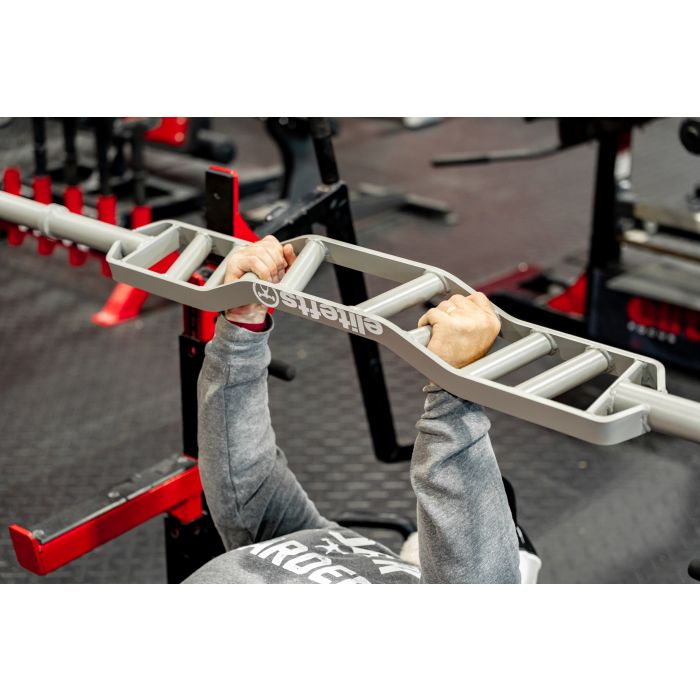
This means actively trying to crush the bar or snap it in half with your pinkies. It's a constant, aggressive squeeze throughout the entire lift, not a passive grip. This is the first point of contact with the bar, and your intention here sets the stage for everything that follows.
Why It Matters
This simple action is the first step in creating a solid connection between your body and the bar, initiating a cascade of positive effects that lead to a much stronger and safer press.
-
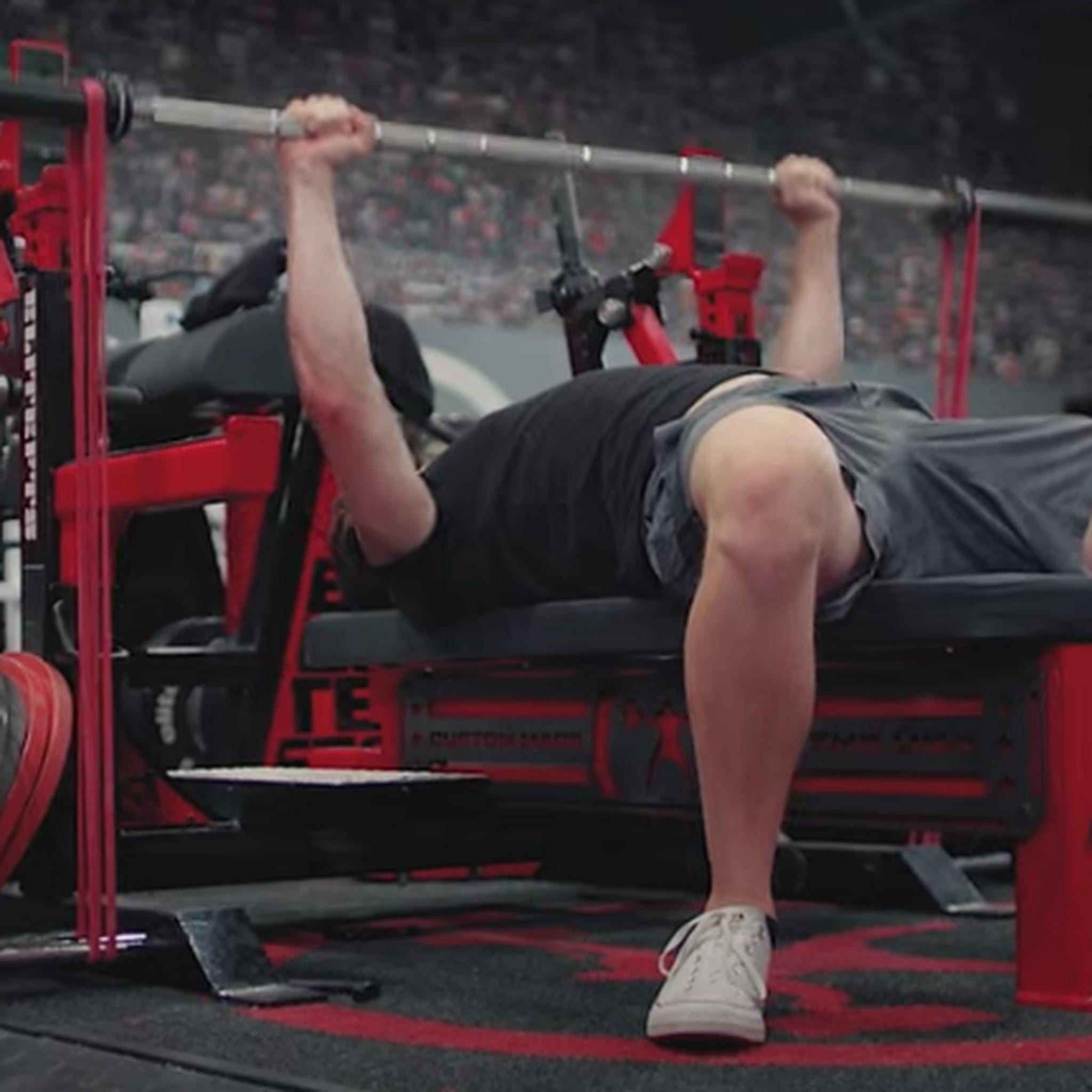
Creates a Stable Upper Back: Squeezing your pinkies helps you automatically depress your shoulders (pull them down towards your glutes). This locks your upper back into a tight, stable position and prevents your chest and back from "flattening out" as you push the weight.
- Ensures Proper Forearm Angle: This is the first step toward achieving a perfectly vertical forearm. Failing to do this leads to an angled forearm that not only wastes power by forcing you to "fight your own body" to lock out, but also actively "bangs up our front delts and our biceps," introducing unnecessary injury risk into your training.
A stable grip and locked-in upper back create the perfect foundation for correct elbow positioning, which is our next critical cue.
Cue #2: Drive Your Elbows Out
"Drive our elbows out, keeping that vertical forearm"
What It Means
"Driving your elbows out" is an intentional action you perform during both the descent (bringing the bar down) and the ascent (pressing the bar up). You are actively pushing your elbows away from your body's midline, maintaining this intention throughout.
Why It Matters
This cue is the solution to the most common power-leaking mistakes in the bench press. It keeps your lats engaged and your force directed properly into the bar.
-
Prevents 'Elbow Flare': Many lifters let their elbows flare out wide as they press off the chest. This is a weak position that is biomechanically easier at the start, much like yanking a deadlift off the floor." However, this mistake disengages your powerful lat muscles and causes you to lose your stable shoulder position. The result? You'll "get right up to 90° and stop right there"—a guaranteed failed lift.
-
Maintains a Vertical Forearm: Paired with squeezing the pinkies, this cue is the key to keeping your forearms "straight up and straight down." This alignment ensures that every ounce of force you generate goes directly into moving the barbell.
- Avoids the 'Bend the Bar' Mistake: A common but incorrect cue is to "bend the bar." While well-intentioned, this often leads to an "overtucking situation where the bar is just going to fly right back into the rack." Driving the elbows out is a more precise action that keeps the bar in the correct path.
With your upper body locked in, the next step is to generate power from the ground up by engaging your lower body.
Cue #3: Push the Floor Away
"push our feet down and out on an angle, almost like we're trying to shove this bench into the wall behind us."
What It Means
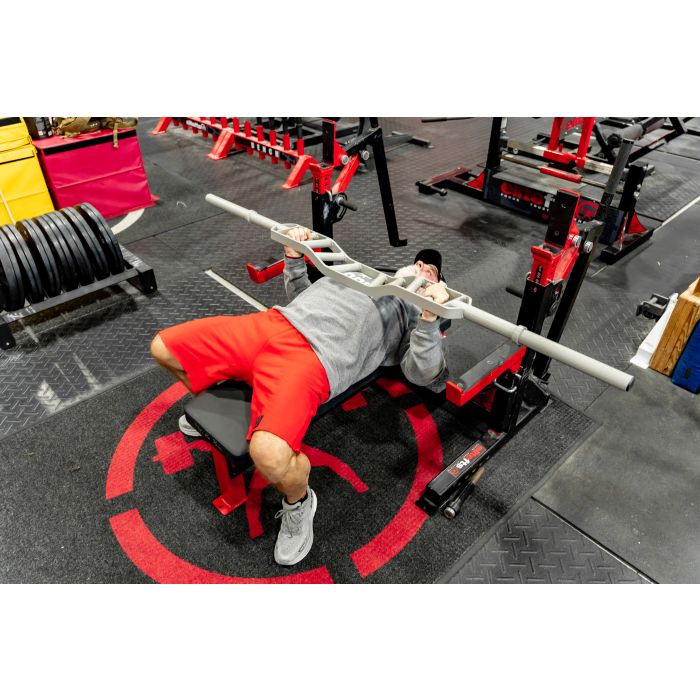
Proper leg drive isn't about stomping your feet straight down into the floor. Instead, apply pressure both downward and away from you at an angle. Imagine you are trying to slide the entire bench backward along the floor with your feet. This specific direction of force is the key.
Why It Matters
This is the secret to using the immense power of your legs legally and effectively. Driving down and away translates horizontal force into the bench, creating stability. Driving straight down translates the vertical force that lifts your hips.
-
Keeps Your Butt on the Bench: Driving your feet straight down often causes your butt to pop up off the bench, which results in a failed lift in competition—a true "heartbreaker." Pushing down and away directs the force horizontally, keeping your glutes pinned to the bench.
-
Adds Power Off the Chest: This is how you correctly transfer momentum from your legs, through your stable torso, and into the barbell to initiate a powerful press off the chest.
- Bonus Tip: The source also recommends driving your knees out as you press. This action helps to "glue you directly onto the bench," further increasing stability and ensuring your leg drive is as effective as possible.
This robust and stable base allows you to execute the final cue, which perfects your point of contact with the bar.
4. Cue #4: Pull Your Chest Up
"we want to pull our chest up we want to meet the bar at the pause point."
What It Means
This is an active, not a passive, movement. Instead of simply letting the bar descend and crash onto your chest, you should actively pull your sternum (breastbone) up to meet the bar at the bottom of the repetition.
Why It Matters
This small but crucial adjustment transforms your chest from a soft landing pad into a solid launching platform, leading to a much stronger and more controlled press. This technique is universal, whether you perform a "soft touch" or "sink" the bar.
-
Prevents the 'Double Bounce': A common fault is a "double bounce" where the bar sinks and bounces on the chest before the press. Actively meeting the bar with your chest eliminates this. In competition, this fault is "complicated for a ref to see it, but if you have a good refereeing crew, you will get stapled for this."
-
Creates a Solid Pressing Platform: Passively receiving the bar can lead to a "flat chested position." By pulling your chest up, you make a solid, arched base from which to press powerfully.
- Improves Press Commands: In a competition, demonstrating this level of control by meeting the bar cleanly can lead to a faster press command from a referee, rewarding your excellent technique regardless of whether you sink the bar or touch it softly.
Your New Bench Press Checklist
The bench press is a full-body technical lift, not just a chest exercise. By integrating these four cues, you treat it as such, creating a system where every part of your body contributes to a stronger, safer press. Use the table below as a quick-reference checklist before your next session.
|
Cue |
Primary Benefit for a Beginner |
|
Squeeze the Pinkies |
Creates a stable grip and keeps your shoulders in a safe, strong position. |
|
Drive Elbows Out |
Maximizes power transfer into the bar and protects your shoulders from injury. |
|
Push the Floor Away |
Uses your legs for more power without having your butt lift off the bench. |
|
Pull Your Chest Up |
Builds a solid, stable base to press from and ensures a clean, controlled lift. |
Practice these cues consistently, and you will establish the technical foundation necessary to improve your bench press and set new personal records.