

AUTHOR:
Eric Maroscher
In this installment of the Beginner Series, we are going to focus on the items that will help you not only now, at the start of your powerlifting journey, but throughout the entirety of your journey in this glorious sport you are now a part of.
There are numerous practical steps a new lifter can take to build their lifts, specifically in the case of the deadlift. Still, there are two critical essentials that, if you learn and implement right now, and religiously utilize them, will be a game-changer for you for the duration of your powerlifting career. These pillars to your deadlift are deadlift step-backs and never negating the eccentric portion of the deadlift.
Before we move forward, something for you, as a new lifter, to be quite aware of is that almost everything you do, if you have never powerlifted before, will make you stronger. You can be on the most sub-part lifting program, utilizing inadequate technique, and also over-train all at the same time, and you will still become strong(er). The reason is that going from no lifting to even bad lifting will stimulate some strength and muscle growth. During this phase in the beginner's lifting journey, the weights are not quite large enough, and the lifter typically doesn't have enough strength, power, and torque to rupture anything quite yet. Floor a 1977 AMC Pacer, and it wheezes along. Floor a 2025 Koenigsegg Gemera, and the sheer force can rip it apart. That’s the difference between a new lifter’s sloppy pull and a veteran’s one‑inch form error. Additionally, for a while at the beginning of this journey, as a beginner, you will be able to physically “muscle up” a weight regardless of any form issues. Think about all the turtle back deadlifts you have seen already.
That initial rate of increase in growth and strength status is temporary, however. With poor form, a flawed program, and overtraining, these issues, if left uncorrected, will put an end to the new lifter's journey before it even has a chance to begin. Said another way, you can carefully and proportionately water the seeds and create a resplendent and burgeoning garden, or you can flood and drown the seeds, which ends things right then and there. Poor form, harmful programs, and overtraining will eventually catch up to the beginning lifter. I say this with decades of competing, a lifetime “under the bar,” and having seen this scenario play out over and again with those new to the sport, lifters who fall into this trap.
I have had the unique privilege of training with and alongside some of the greatest powerlifters ever to grace the platform. That said, over the decade, I have also witnessed, up close, lifters whose excessive training methods rendered them irrelevant and injury-ridden. Said another way, I’ve seen the full spectrum of what works and what quickly derails a lifter in this sport.
I share this because “Live, Learn, Pass On” is not some logo but rather the culture at elitefts, and as a part of this team, I want all the beginners who read elitefts to learn from those with a record of success behind them and the lessons to impart.
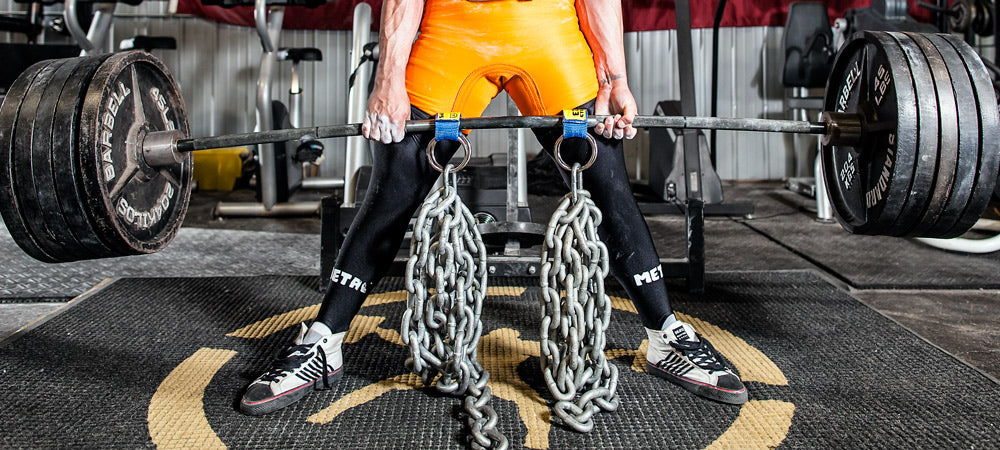
Let’s talk about step-backs in the deadlift, specifically the powerlifting deadlift. What you often see in training is sets where the bar is pulled to lockout, but the instant the lifter reaches the top, the rep ends, and the bar crashes back to the platform. This cycle repeats for the prescribed reps, say, three sets of four and a final triple. On paper, nothing seems wrong. In practice, however, the set tends to drift away from actual powerlifting work and into the territory of heavy powerbuilding or hypertrophy. Why? Because there is no real lockout, no deliberate hold at the top, and the eccentric, the controlled lowering that forges both strength and power is abandoned. That eccentric strength, painstakingly built in training, is precisely what the lifter must call upon when maximal weight is on the bar in competition. Compounding the problem, every “drop-rep” erodes starting form. With each bounce, the hips creep higher, drifting farther from the meet-ready position. And instead of demonstrating the power required to move a motionless bar from the floor, the lifter wastes energy yanking against a bar given false momentum by its own rebound.
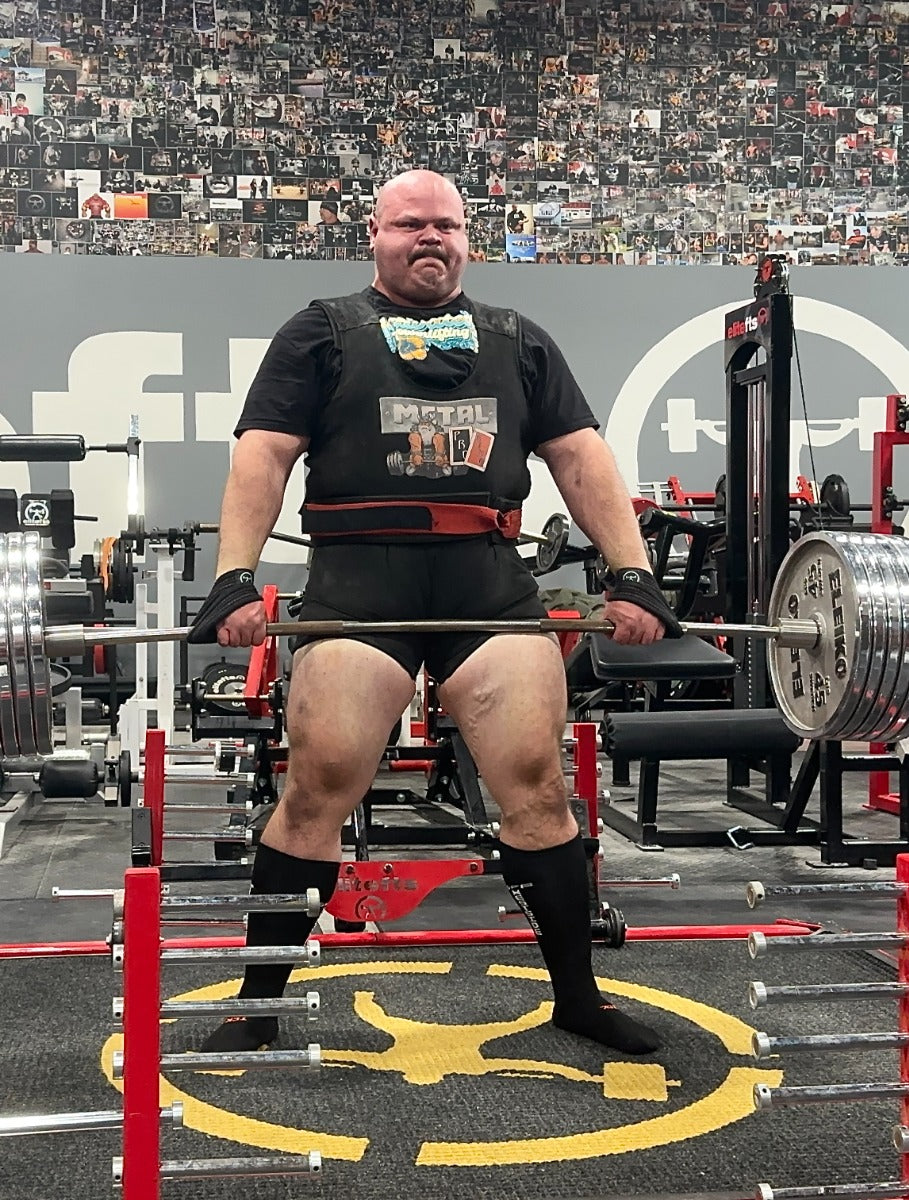
What we want from a set of four deadlifts is not a blurred string of half-reps, but four distinct, competition-style pulls. Each rep should begin with the bar motionless on the floor: dead weight, not artificially charged with rebound from a dropped eccentric. At the top, we want an actual lockout: a deliberate pause, with knees locked, erectors contracted, and shoulders tight. Then comes the controlled descent, where real strength and power are forged. That eccentric matters. It is not wasted motion; it is training the very capacity you’ll need when maximal weight is on the bar.
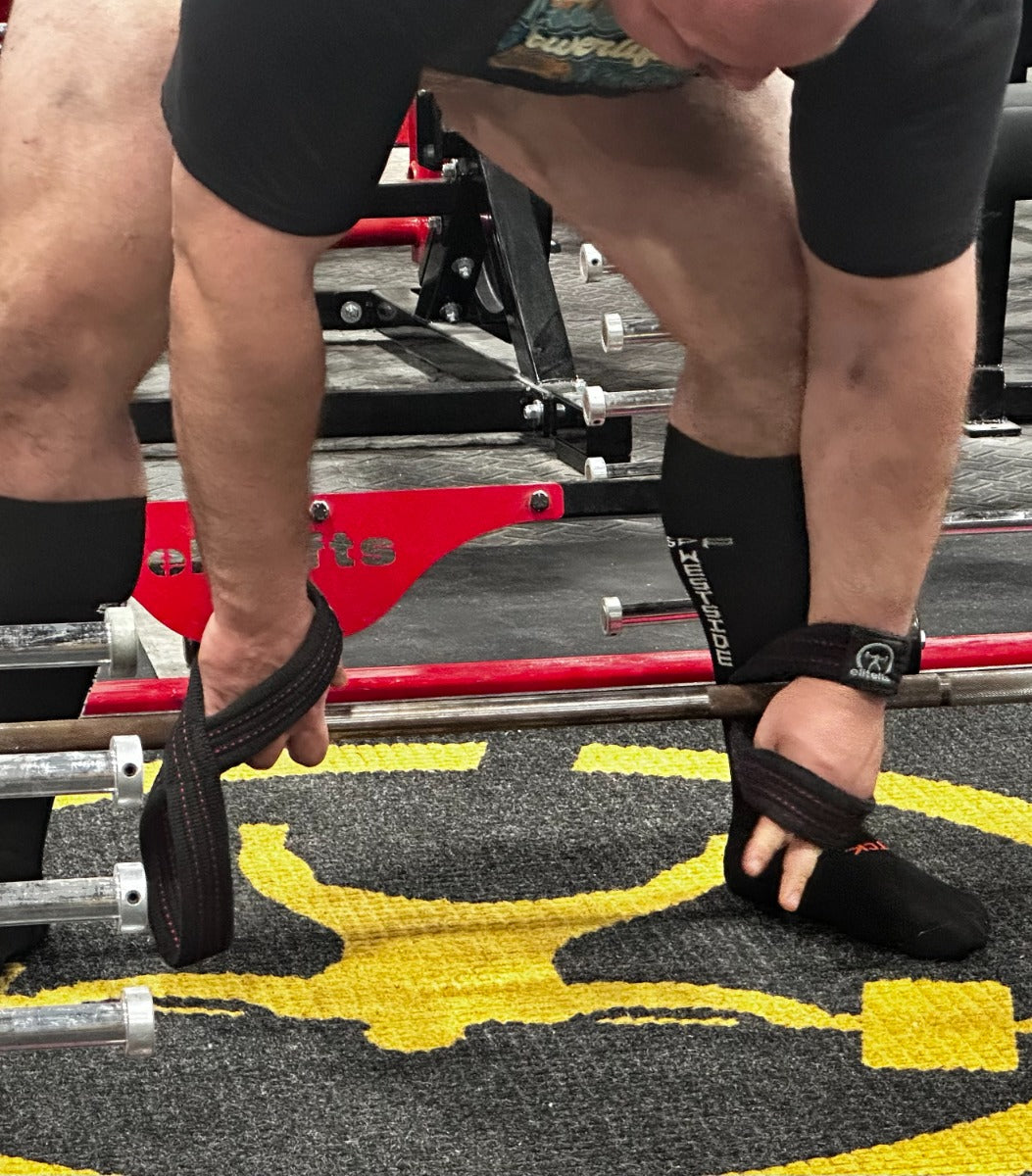
Here’s the sequence: rep one, lock out, descend under control, bar still, hands off, small step back, reset, and pull again. Repeat until you’ve earned all four reps. That’s a powerlifting set.
“But Eric, if I do this, I can’t hit my coach’s prescribed numbers.” Exactly. Because now you’re actually deadlifting. You’re not bouncing, you’re not stalling at the top, you’re not cutting the lift in half. You’re doing the hard work, the work that literally builds strength. And yes, despite what TikTok and Insta-lifters will tell you, the deadlift has an eccentric phase. Ignore it, and you’re undeniably amputating half the lift. With the touch-and-go pulling, out of four reps, only the first comes from the proper starting position required on the platform. If you want a brutally strong pull that transfers to competition, you need to train the entire deadlift, every rep, every time.
The louder the crash of the bar on the platform, the more power you just squandered. Coaches, especially online coaches who charge for programming and coaching, should know better than to let lifters discard the eccentric. Although there are exceptions, each time I see it, I’m reminded of how little accountability exists in much of modern coaching.
While I am at it, a thought for you to ponder: if your coach, whether in-person or online, has competed in fewer than ten competitions, they are likely still novices themselves. Don’t settle for an “Insta-awesome” trainer. Find a lifting Yoda, someone who has both the scars and the wisdom to teach you what real deadlifting is. Don’t get it twisted, this is not a sermon, but words to heed so you can reach your fullest potential. 
If you’re a lifter who likes the science side of training, think of it this way: touch-and-go deadlifts are mechanically easier because they bypass raw force production. Each time the bar slams down without a controlled eccentric, you get kinetic energy carryover, about 8–12%. In other words, the bar is helping you, not you helping yourself.
In stark contrast, the lifter who trains from a complete dead stop has to overcome true static inertia, precisely as it occurs on the platform. Every pull requires maximum recruitment from a motionless barbell, and every rep is a rehearsal for meet day. So ask yourself: do you want your lifts to sound like big pulls, or do you want actually to earn big pulls? That choice is what separates lifters training for ‘likes’ and lifters training for success on the platform.
For the new lifter, touch-and-go deadlifts can bring quick progress. You’re going from nothing to something, and that alone produces gains. But if your goal is not just improvement, but the pursuit of your maximum potential, then the details matter. And in the deadlift, the detail that defines your ceiling is the initial pull from the floor and the dead stop. That means an actual lockout at the top, an absolutely deliberate eccentric, a full stand-up and re-focus, and then the repeat of that sequence, rep after rep.
Still not clear? Picture this: pushing a stalled car. The first shove from a dead stop takes everything you’ve got. Once the vehicle is moving, though, it takes far less to keep it rolling. If “car pushing” were a sport, the only way to build raw power would be to push from a dead stop, let it stall, and then try again. That’s the deadlift. We’re training for a one-rep max on the platform, not for how much weight we can bounce through a touch-and-go set.

If, as a beginner, you can absorb this truth, put your ego in a drawer, successfully ignore the TikTok wanna-be, and apply it throughout your lifting career, you’ll sooner than you think, out-pull your “imaginary twin” who stuck with touch-and-go reps. This is because you will have built strength inch by inch, from zero, the way it must be built. There’s nothing flashy about it, and nothing easy. But that’s precisely why we powerlift.
I’ll leave you with this reflection from Marcus Aurelius via his journal, Meditations (read the book!): “If someone can show me that what I think or do is not right, I will happily change, for I seek the truth, by which no one was ever truly harmed.”
With that Stoic reminder: as a beginner lifter, don’t lift for the noise….lift for the truth of what your strength and power really are. Because that is what makes a true powerlifter.
Wishing you the best in your training and meet prep. Ever Onward!

Eric Maroscher is a renowned powerlifting champion and co-founder of the famous Monster Garage Gym (MGG) with NFL alum Phillip Daniels, a premier US gym known for serious strength training and producing champions, featured heavily on EliteFTS and their own channels, offering a hardcore environment for powerlifters.