
Two Different Worlds, One Answer for Your Knees
Before a recent podcast recording, a guest connected Louie Simmons' sled work to Charles Poliquin's knee rehab protocol, and the conversation filled in a gap I had lived for decades without fully explaining.
The podcast hadn't officially started yet.
We were still getting set up, adjusting mics, doing the usual pre-show work, when my guest started talking about knees. And sleds. And painkillers.
He had bought his first Prowler sled from elitefts at 16 years old. He told me that. I appreciated it. He was 34 when we had this conversation, which means this thing had been in his life for 18 years. And somewhere in the middle of those 18 years, dragging a sled backward had gotten him off painkillers for his knees.
That got my attention.
Then he started connecting Louie Simmons to Charles Poliquin, and I got quiet. Not because what he was saying was wrong. Because what he was putting together was something I had lived inside of for years and never fully laid out in one place.
This article is me laying it out.
The Origin Story You Probably Got Wrong
If you know the sled, you probably know it as a Westside thing. That is fair. Louie Simmons popularized it, and Westside was the gym where most people in powerlifting first saw it used as a serious training tool.
But Louie did not invent the concept. He got it from somewhere else.
There was a man named Sakari who spent a significant amount of time at Westside. He came from Finland. And Sakari told Louie that Finnish lifters working in the forestry industry were dragging logs out of the forest. That was their labor. They were also strong as hell, with deadlifts that reflected it. Louie heard that, filed it, and the sled became part of what we did at Westside.
My guest had the broad version of this story. He had a few details off. I was able to fill those in. And that exchange, correcting one detail before the podcast even started, set the tone for everything that came after.
Because what my guest understood was that Louie was not just copying something. He was solving a problem.
What Louie Was Actually Building
The sled at Westside was never just a conditioning tool. That was part of it. But the deeper application was recovery.
We used it on off days.
Here is why that matters, and it is what ties this entire conversation together. The sled, specifically backward sled dragging, is almost entirely a concentric movement. Step back, pull the sled, repeat. You are producing force. You are not absorbing it.
Concentric contraction is how you build output. Eccentric contraction is what tears your tissue down. The soreness you feel two days after a hard squat session is not from the squatting up. It is from the lowering. That controlled descent, the muscle fighting to slow the load, is where damage accumulates.
When we dragged the sled on off days, the reason it did not crush our recovery was that there was no eccentric load to speak of. You could do a significant amount of work, get blood moving, keep the tissue healthy, and show up the next day without being destroyed. We knew it worked. We used it. But I am not sure I ever said it quite that simply.
My guest said it simply. And when he did, I realized there was a connection I had never made out loud.
What Charles Poliquin Built With the Same Tool
Charles Poliquin was an Olympic strength coach. His world was not powerlifting. He trained track and field athletes, Canadian downhill skiers, Olympic-level competitors. The methodology he built was grounded in a framework completely different from what was happening at Westside.
But he arrived at the same place.
Poliquin had athletes coming to him with knee injuries and no time to spare. Olympic qualifying cycles do not wait for rehab. His solution was backward sled dragging, done daily if needed. The reason was the same reason Louie used it on off days at Westside: the eccentric was removed.
When you walk backward with a sled, you are also walking with your knee tracking over your toes. That position, which is often treated as dangerous in many circles, is actually how the knee was designed to load under controlled conditions. The sled makes it manageable because there is no weight pressing down into the knee. There is no controlled lowering on the way back. The muscle produces force, the knee moves through that range of motion, and you walk away without the damage that comes from handling the eccentric portion.
For Poliquin, this became an entry point into something more. He progressed athletes from backward sled dragging to reverse step-ups on a slant board. The goal was to eventually control the body through that same position under load, owning the eccentric that the sled had removed. You build the range concentrically first. You add the eccentric back in once the tissue is ready.
My guest put it this way: the harder he worked on the sled, the less his knee pain went down. Not because he was avoiding the problem. Because he was solving it from the ground up, starting with work his knees could tolerate and building from there.
That is not a physical therapy cue. That is a training principle.
The Eccentric Is the Variable Nobody Adjusts
Most people trying to train through knee pain default to one of two approaches. They either ignore it and pay for it later, or they shut everything down and wonder why they are losing strength faster than expected. Neither of those is training. They are decisions based on pain management, not performance management.
What Louie and Poliquin arrived at separately, from completely different directions, is a third option: remove the eccentric, stay in the game, and rebuild.
Backward sled dragging gives you quad work, hip extension, and knee tracking through a full range without the breakdown component. That means you can use it on days when you could not touch a barbell squat. You can use it after training when your joints are already spent. You can use it to fill the volume your squat rack simply cannot provide right now.
If you are beat up, concentric work is your friend. It builds. It does not tear down. And a sled loaded with moderate weight, dragged backward for six to ten sets of twenty to thirty yards, is one of the highest-return investments you can make in your long-term training longevity.
The Progression: How to Actually Use This
If you are dealing with knee pain, or if you are building more durable knees for the long haul, here is how the progression works.
Step 1: Backward Sled Drag
Start light. A 45-pound plate on the sled is enough for most people to start. Focus on smooth steps, constant tension on the strap, and your knee tracking naturally over your toe with each step back. Do not force anything. You should feel your quads engage. You should not feel your knee grinding.
Six to ten sets of twenty to thirty yards. Rest as needed between sets, but keep moving. The goal is volume and blood flow, not intensity.
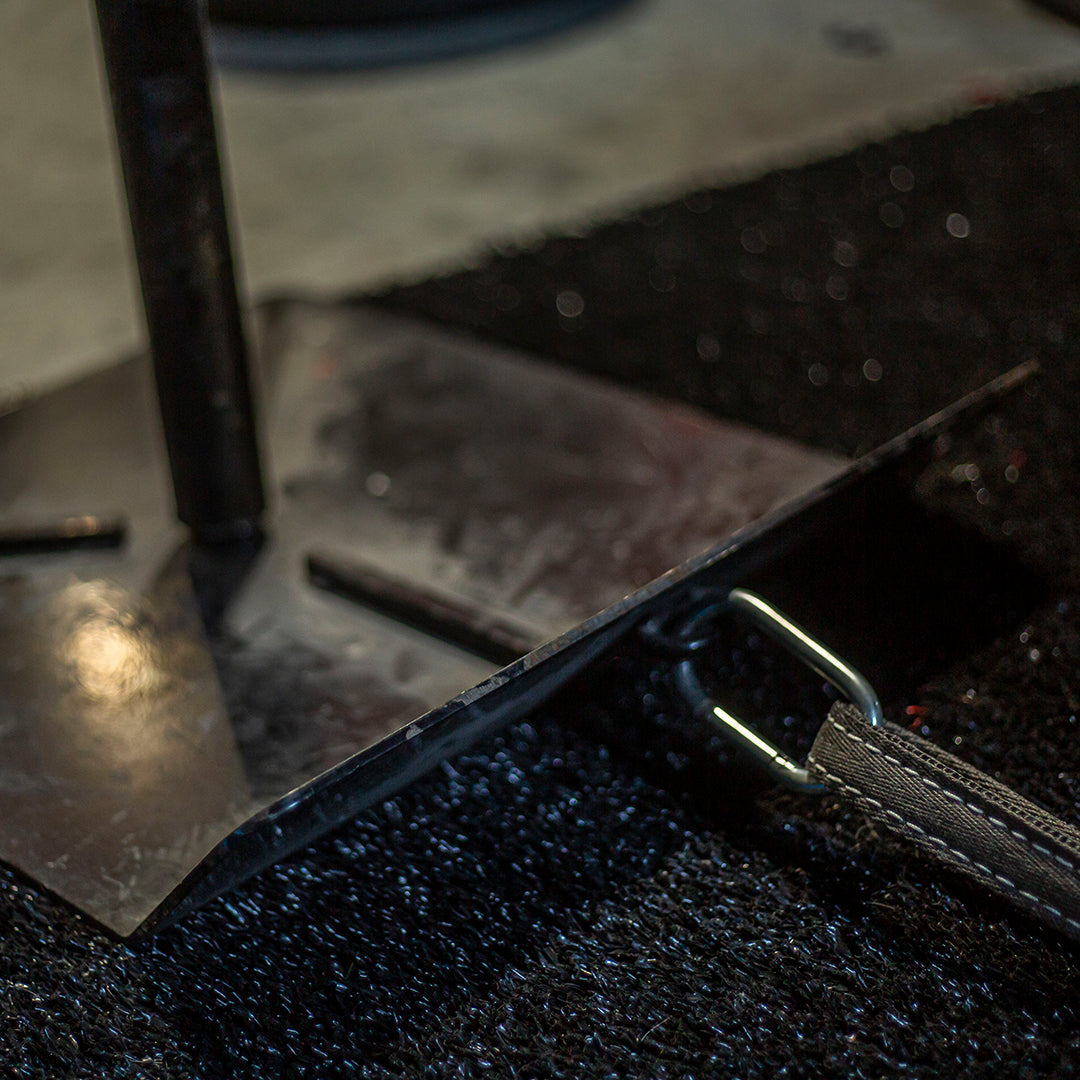
The elitefts Indoor Sled with Strap is worth considering if you train in a facility that will not allow metal on the floor. It is built for turf, carpet, and rubber surfaces, includes a 95.5-inch strap, and you can be loading plates and moving in minutes. For outdoor use on grass or concrete, the elitefts Compact Dragging Sled is the standard. If you want the most versatile conditioning tool available, the Prowler 2 gives you push and drag options in one piece of equipment.
Step 2: Reverse Step-Up on a Slant Board
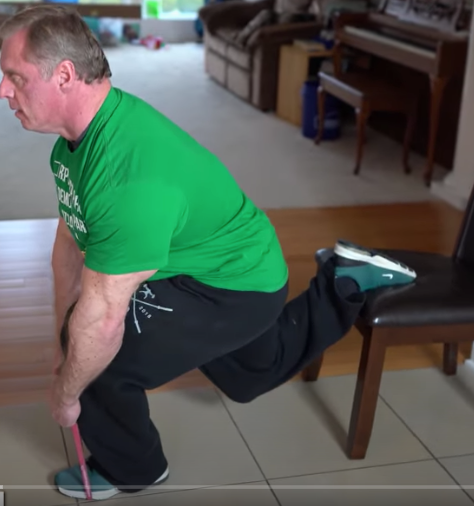
Once backward dragging feels smooth and your knee tolerates it without issue, you can start loading the eccentric back in. A reverse step-up on a slant board, stepping back and down in a controlled fashion, mimics the same knee-over-toe position but asks you to own the lowering phase under bodyweight first.
The key is the slant board. It elevates the heel enough that most people can reach full depth without the ankle restriction that causes compensations up the chain. Start with just your bodyweight. Focus on control on the way down. The concentric, stepping back up, should feel easy. The eccentric is the training.
My guest called this the 80/20 of his knee maintenance. Twenty percent of the effort and complexity, eighty percent of the results. A slant board, bodyweight, controlled reps. That is it.
Step 3: Full Range Loading With Chains
This is where the second half of our pre-podcast conversation came in.
When my guest coached high school football players, he was trying to get them into a full-range-of-motion squat without compromising their confidence or safety. The tool he used was chains with a full-depth squat.
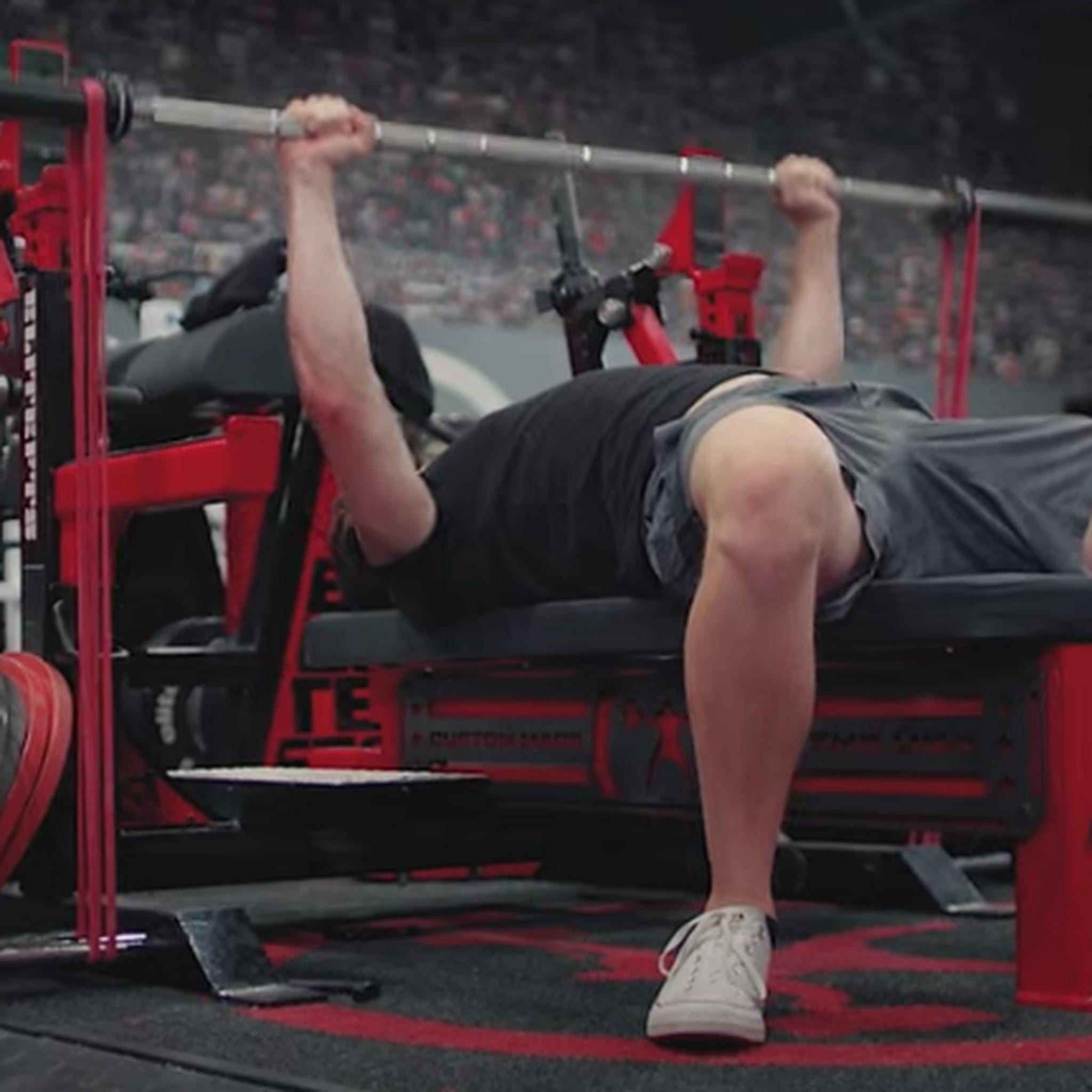
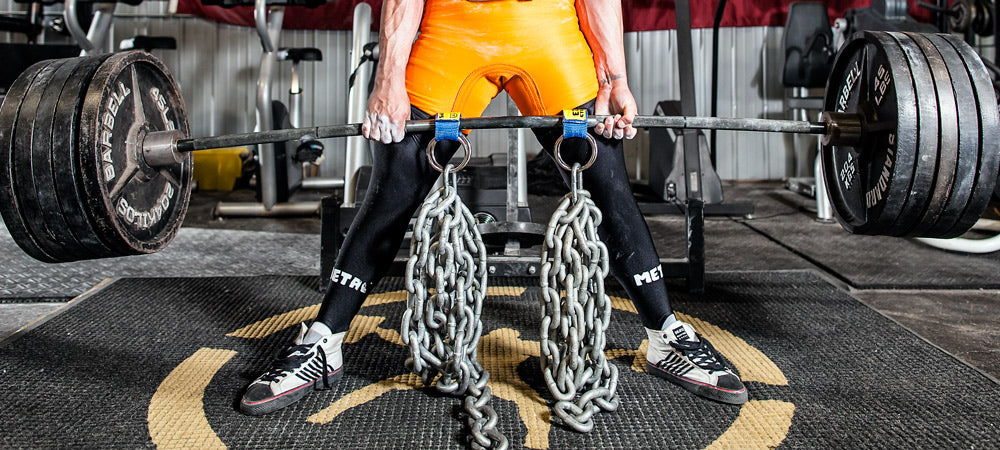
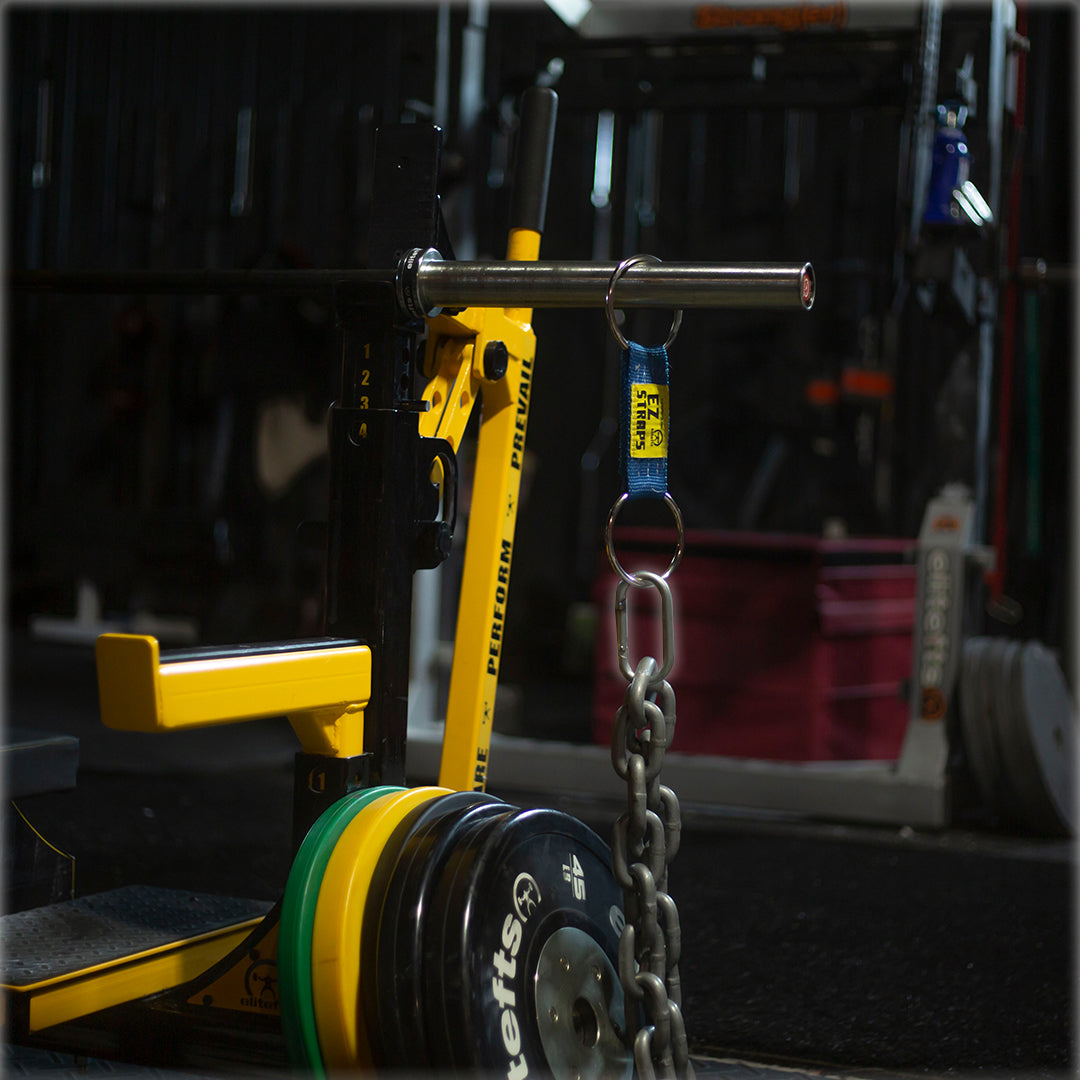
Chains, as we have used them at Westside for decades, deload at the bottom of the squat as the links pile on the floor. The weight at the top of the squat is heavier than the weight at the bottom. The hardest, most demanding part of the movement, the hole, becomes more manageable because the load is actually lighter there. You can chase depth without fighting through the bottom with a load your hips and ankles cannot handle.
For those football players, chains allowed them to own full range of motion without having to choose between a powerlifting squat and an Olympic squat. They got the challenge at the top where they were strong. They got the accommodation at the bottom where they needed help. And the coaches could use chain height to set a depth target: the athletes could hear the chain until the links hit the floor, then they knew they had reached depth and could drive back up.
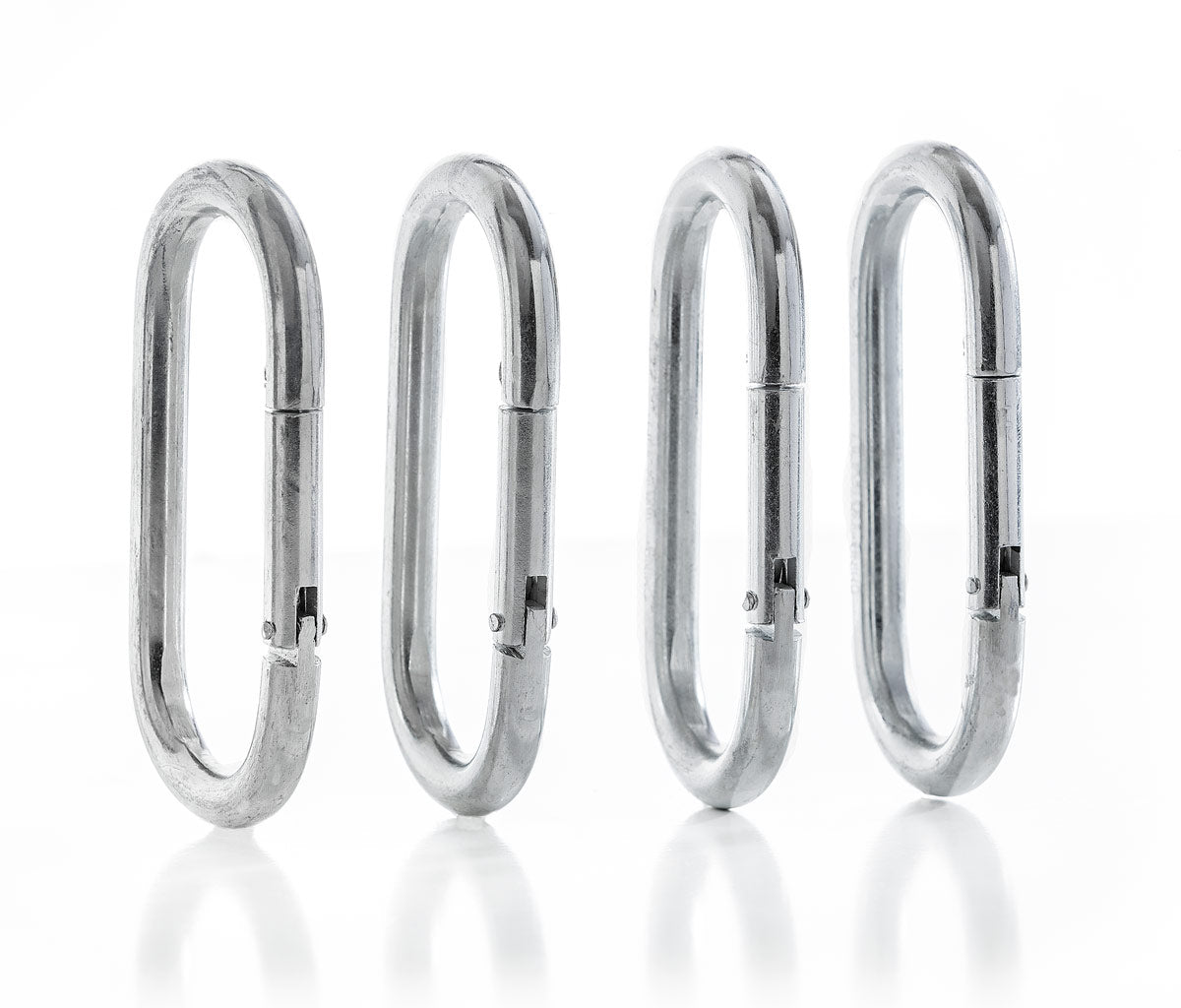
That same principle applies to anyone rebuilding their squat. If the bottom of your squat is painful because it is loaded too heavily for where your joint health currently is, chains take the load away right when you need it most. The elitefts Pair of Chains is five-foot, 18-pound per side galvanized steel. Set them up so they unload at the point in your range where you need the relief, and you have a tool that lets you train deep without grinding through pain.
Why These Two Systems Were Never Actually That Different
The conversation that morning began with my guest saying he had nothing to teach me. I pushed back on that in the moment, because that is not how I think about these exchanges. There is always something in a well-lived perspective that fills in a gap somewhere.
What he had was a coherent explanation for why the things that worked actually worked.
Louie built the sled into Westside because Sakari told him strong Finnish loggers dragged things and pulled heavy loads. He took that observation and turned it into a training tool used by powerlifters, football players, and athletes of every kind for thirty-plus years. He knew it worked.
Poliquin took the same movement and used it to save Olympic careers. He saw the knee injury rate on the Canadian ski team. He implemented backward dragging and slant board progressions. The injury rate dropped.
Neither of them was working from a clinical study. They were working by watching what happened to people who did the thing consistently.
What my guest connected for me was the underlying reason: concentric movement rebuilds. Eccentric movement breaks down. When the tissue is already compromised, giving it concentric work keeps it in the game. When the tissue is ready, you add the eccentric back and let it get stronger.
That is not a complicated idea. It is just one that rarely gets said in those exact words.
What to Do With This Starting Now
If your knees are healthy, add backward sled dragging to your warm-up or your off-day recovery work. Six to ten sets of light dragging, forward and backward, will do more for your joint health over the long haul than most things you are probably already doing in that time slot.
If your knees are beat up, start with backward drags and stay there until the work feels easy. Then add the reverse step-up with a slant board. Then, when your squat is ready, use chains to rebuild your depth without fighting through a loaded hole your joints cannot handle right now.
The sled is the entry point. It always has been. Two coaches, two eras, two completely different systems. The same answer for your knees.
That is worth paying attention to.
Get the tools to build this into your training.
Indoor Sled with Strap Compact Dragging Sled Pair of ChainsDave Tate / elitefts
Live, Learn, Pass On.