

by Max Barnhart, MA, CSCS
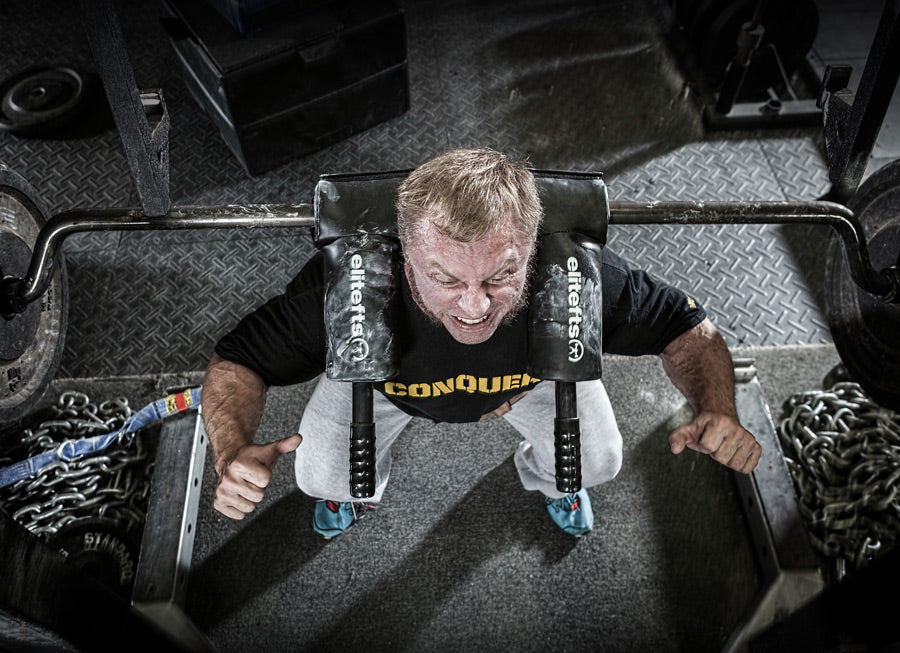
Which Zercher Movements can you seamlessly incorporate into your training? We will examine the demands of the exercise, specifically relating to mobility, setup, and mechanical advantages/disadvantages. Based on these factors, we are left with exercise variants that can be incorporated into your existing program to promote muscle growth and strength, with a lower learning curve and a reduced risk of injury.
Zercher Deadlift:
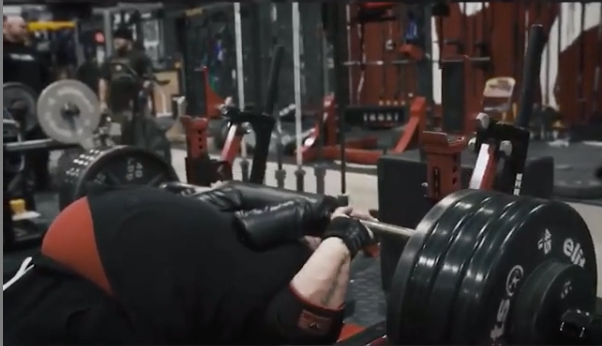
It’s difficult to classify this as a simple undertaking because of the massive biomechanical disadvantage that one must endure to start the set. To cradle the barbell in the crook of one’s arms to begin and complete the lift, the torso must be lowered well beyond parallel to the floor. This requires tremendous hip mobility/flexion in multiple planes of motion, as well as thoracic spine mobility, which most people lack, even if they work on improving it. This leads to the lumbar/lower back rounding, which puts the spine out of alignment; the lifter is now weakened and at a higher risk of injury. Without the tremendous amount of hip flexibility required, compensation can cause heightened recruitment of muscles that are tight, and this means usually weak: the hamstrings, adductors, and hip flexors. If these muscles are recruited beyond their range of motion capabilities, the likelihood of strain increases.
The solution: set the barbell at a pin height that allows you to perform the set within your individual range of motion. The pins can be adjusted over time to a lower setting, thus improving flexibility in the hip musculature. You can induce adaptation through exercise overload by using a stimulating load (above-average weight) at a pin height that meets your individual needs, as well as by adjusting or modifying the pin height. This pulling variant places great emphasis on the lats, traps, rhomboids, and spinal erectors, making it a tremendous back-builder.
Zercher Squat:
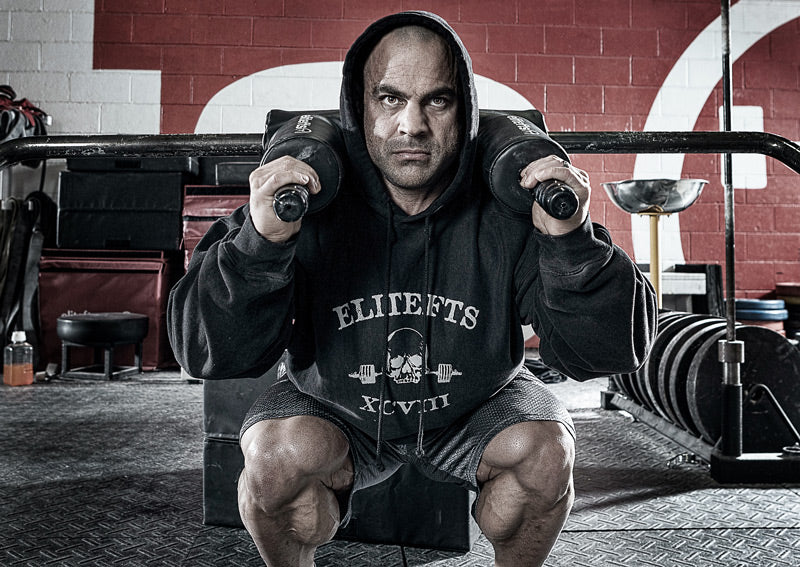
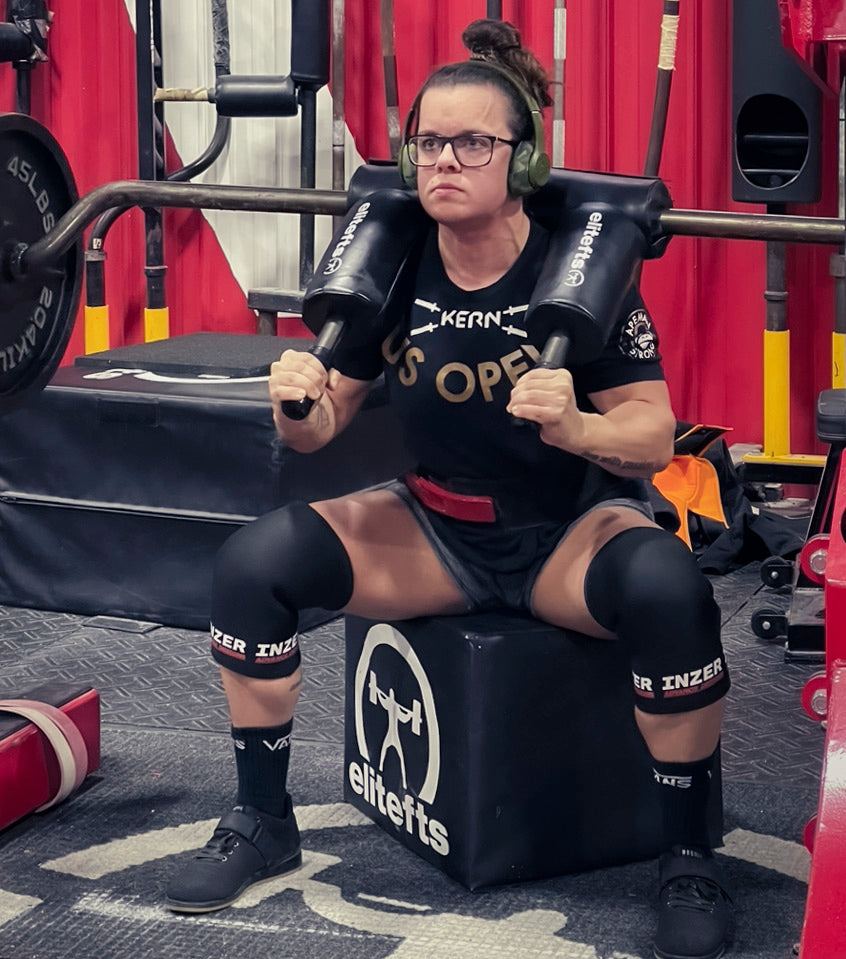
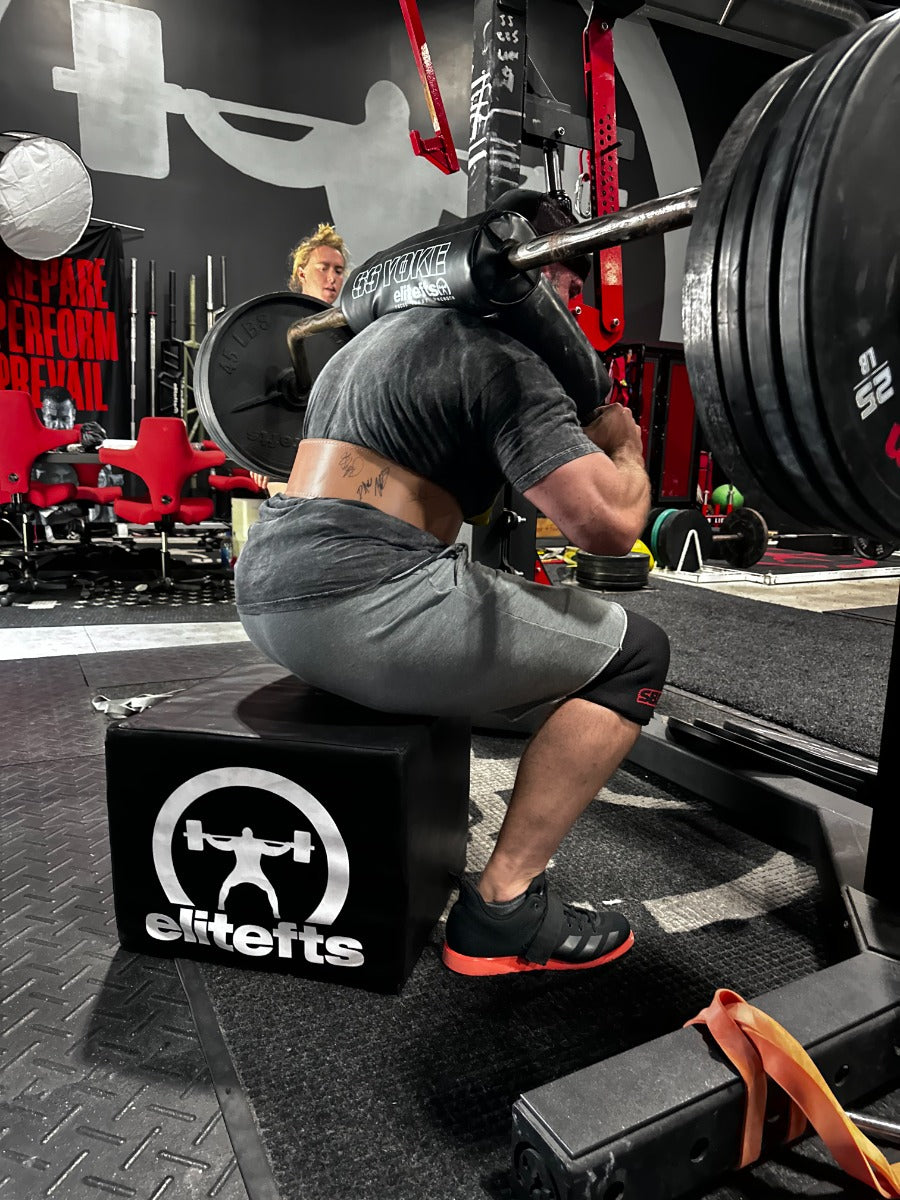
This lower-body push variant can be started from the rack or deadlifted from a frog stance, with the bar placed on the thighs, parallel to the floor. Consequently, the setup is relatively safe, and biomechanical disadvantages are limited. Movement safety also comes from the front-loaded position, as it eliminates the need for spotters. The frog-stance is recommended so the lifter can achieve depth; the conventional-stance would cause the elbows to hit the thighs, reducing range of motion.
Should you experience shoulder issues related to bar placement across the back, the Zercher Squat provides some relief. Altering bar placement is considered a qualitative change, meaning that the exercise is altered, and adaptation will occur. In doing so, you will prevent stagnation in your lower-push main movement. Additionally, front-loaded movements draw the lifter into a forward-leaning position. Training the Zercher Squat will force the lifter to fight against this, strengthening posture under load and developing strength from the bottom-most part of the range of motion. The deadlift will benefit from knee extensor development, as it requires lower-body drive to initiate a proper deadlift. Lacking this drive results in an over-reliance on hip extensors, which is visible in an early rise of the hips during the pull and subsequent duress on the lumbar spine.
Zercher Romanian Deadlift:
Romanian Deadlift variations are included in programs for a myriad of reasons: size development of the posterior chain (glutes, hamstrings, lower back) at higher volumes, strength development of the aforementioned muscles at lower volumes; training the bent-posture of a failed squat; improving the strength needed to overcome the high hips of a deadlift when lower-body drive is a limiting factor.
The lower back tends to be underdeveloped; it is a key issue amongst all populations. Not only will the lower back be fortified to handle heavier weights, but the entire posterior side of the torso will be developed, as well. Performing a hip hinge (flexion and extension of the hips) in this fashion, whereby the bar constantly slides forward from the bend of the arm toward the forearm, will result in a stronger contraction of the elbow flexors compared to its other Zercher counterparts. Having to work harder to keep the bar pinned to the torso recruits the middle and inferior trapezius and rhomboids to prevent the shoulder blades from protracting. In contrast, the upper trapezius prevents the shoulder blades from being pulled downward by the weight. The lats actively keep the humerus in extension (pinned to the sides and drawn backward), causing a significant amount of recruitment that stimulates muscular strength and size development in this region. The abdominal wall will strengthen to provide optimal bracing during the descent and ascension.
Zerchers are a great addition to any program, whether as a main movement or a primary accessory to your main movement. Much like other compound lifts, attention to technique is paramount. You may progress it in a linear, undulating, or conjugate fashion. Ensure that the variants have a transference of effect to your primary objective. If an exercise isn’t mechanically similar to your primary sporting pattern, then the cost-benefit ratio must be taken into consideration.
Strength coaches of all levels of sport should consider including these variants in their programming. The Zercher also has significant carryover to combat sports, including Wrestling, Jiu-Jitsu, and Sambo (all of which require the athlete to produce force to overcome external resistance located anteriorly), as well as contact sports such as Football (where a lineman produces force off the line from a flexed, bent position).
Max Barnhart, MA, CSCS, is a strength and conditioning coach with 17 years of experience working with athletes across multiple levels of sport. He holds a Certified Strength and Conditioning Specialist (CSCS) credential through the NSCA and has spent roughly a decade coaching at the Division I collegiate level.
In addition to his work in the weight room, Max earned the rank of Black Belt in Brazilian Jiu-Jitsu, an achievement that reflects his long-term commitment to both physical preparation and combat sport. This dual background has shaped his coaching approach, blending high-level strength training with a deep respect for movement quality, resilience, and long-term athletic development.