


Training Method
5 Things People Get Wrong With the Max Effort Method
The max effort method is one of the most powerful tools in strength training. It's also one of the most misunderstood.
By Dave Tate | elitefts
I've watched a lot of lifters pick up the max effort method and immediately start using it wrong.
Not because they're dumb. Not because they're not working hard. Because the method looks simple from the outside. Pick an exercise. Max out. Done.
That's not it. That's the surface. And when you stay on the surface, you get surface-level results.
We've been training and teaching conjugate methods at elitefts for a long time. I spent years learning this system at Westside Barbell under Louie Simmons before I ever wrote a word about it. We've put it to work with lifters across every level, from beginners just touching heavy iron for the first time to some of the strongest people who have ever stood on a platform.
What I know is this: the max effort method, done correctly, will build a level of maximal strength that almost nothing else can match. But there are five specific mistakes I see over and over again. Every one of them will stall your progress. Some of them will get you hurt.
Quick Definition
The max effort method means training at or above 90% of your 1RM. It develops maximal strength, teaches you to strain under load, and builds the muscular and neural qualities needed to move limit weights. It is one of three core methods in conjugate training alongside the dynamic effort method and the repetition method.
Mistake 1: Thinking Max Effort Means Maxing Out Your Competition Lifts
This is the first and most common misread of the method.
Lifters hear "max effort" and they assume that means going heavy on the squat, the bench, and the deadlift every week. They picture walking up to a loaded barbell and grinding a 1RM on their main lift. Then they wonder why they're beaten up, overtrained, and stalling by week four.
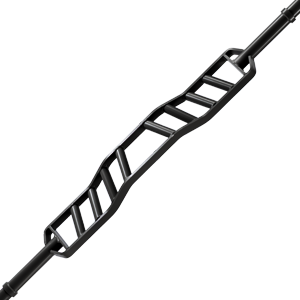
The entire point of the max effort method is variation. You rotate through a wide pool of exercises that train the same movement patterns and the same muscles, but attack the lift from different angles and ranges of motion. Board presses. Close-grip bench. Floor presses. Box squats with specialty bars. Pin pulls. Good mornings. The list goes on.
There are many ways to introduce maximal methods into training beyond working up to a 1RM on a competition movement. Multiple exertion methods, maximal concentric movements, partial range work — these are all tools inside the max effort umbrella. The lifter who only knows one of them is working with a fraction of the system.
When you repeat the same max effort exercise too long, the body adapts and you stop breaking records. At that point, you're no longer getting a training stimulus. You're just testing yourself and failing. Rotating exercises regularly keeps the training fresh, targets different sticking points, and allows you to apply maximal force without running the same pattern into the ground.
The competition lifts need to be trained. But the max effort method is not where you do it every single week.
Mistake 2: Not Knowing When to Rotate (And Why It Matters)
Most people who understand the rotation principle still don't apply it correctly. They either stay with one exercise too long or they change so often they never get meaningful feedback.
Here's how to think about this. Every max effort movement has its own life cycle. The more advanced you are, the faster it expires. A beginner can run the same max effort exercise for up to three weeks and keep making progress. An intermediate lifter moves to a two-week rotation. An advanced lifter needs to change every week. This reflects how fast the nervous system adapts and how quickly the lifter can exhaust the training response from a given movement.
Exercise Rotation by Training Level
Beginner: Rotate every 3 weeks
Intermediate: Rotate every 2 weeks
Advanced: Rotate every week
Not sure which level you are? Treat yourself as a beginner. Everyone new to this style of training should start there.
The check and balance is simple: are you breaking records? If you ran a two-board press in week one and hit 315, then 320 in week two, and you can't match 315 in week three, the movement has run its course. Switch it. If you're still hitting PRs in week three, you can stay.
The problem I see most often is lifters holding on to a movement because it feels comfortable. They hit a big number on the box squat or the floor press and they want to keep milking it. But once you stop breaking records with a movement, you're not training the max effort quality anymore. You're lifting a heavy weight that your body has already figured out how to handle.
Let the records tell you when to move on. That's what they're there for.
Mistake 3: Ignoring Eccentric Load and Recovery
The max effort method taxes the CNS and puts real stress on the body. Lifters who treat every max effort day the same way, week after week, with no management of eccentric load, are going to hit a wall.
The negative phase of a lift is where the most muscle damage occurs. It's also where most injuries happen. This is not a reason to avoid it. Eccentric loading is critical and should not be removed from training for extended periods. But it needs to be cycled intelligently.
There's a practical way to manage this. Look at a four-week phase structured like this:
Sample 4-Week Recovery Phase (Bench)
Week 1: Board Presses — work up to 1RM (partial range eccentric)
Week 2: Close-Grip Bench Press — maximal exertion method (full range eccentric)
Week 3: Chain-Suspended Lockouts — concentric only (deload eccentric)
Week 4: Rest
Out of four weeks, you've stressed the eccentric phase maximally for only two of them, and one of those was a partial range. That is by design. The concentric-only week allows the body to recover while you're still training maximally. You still work up to a true max. You still apply the method. You're just doing it in a way that manages structural stress on the body.
Lifters who skip this kind of management grind themselves down until they can't recover. They think the method isn't working. What's actually happening is they're applying max effort work at full eccentric stress every single week with no variation, and the body has had enough. Build in the recovery. It's part of the program, not a shortcut around it.
Mistake 4: Neglecting the Work That Actually Builds Strength
This one surprises people when I say it out loud.
The max effort method tests your strength. It does not build it. The work that builds your strength is the supplemental and accessory work that follows the main movement.
Most people understand the max effort method well enough. Pick an exercise and max out. It's simple. The dynamic effort method also becomes intuitive once you understand what it's for. The place where people make the most mistakes in conjugate training is not the main methods — it's the supplemental and accessory lift selection that follows them.
Instead of figuring out what their body actually needs, lifters will spend hours debating max effort exercise choices, obsessing over band tension and chain length, and completely glossing over the accessory work. They throw in a few sets of whatever feels good and call it done.
Those exercises are the program. A JM press or a close-grip extension builds your bench. A stiff-leg deadlift or a reverse hyper builds your squat and pull. The max effort movement showed you where the problem is. The supplemental work fixes it.
Supplemental Template
Max Effort Squat/Deadlift Day
Max effort movement → Hamstrings → Lower back → Abdominals
Max Effort Bench Press Day
Max effort movement → Triceps → Shoulders → Lats/Upper back
The key to picking supplemental and accessory lifts is to choose exercises that build your squat, your bench, and your deadlift. Don't just train the muscle. Train the movement. A kickback works the tricep. A JM press builds your bench. There's a difference. Know the difference.
Make sure you are choosing exercises that address your particular weaknesses and build on your strengths. That's what makes the supplemental work worth doing. That's what actually moves your total.
Mistake 5: Accidentally Crossing Into Max Effort Work on Dynamic Days
This one flies under the radar because it doesn't feel like a mistake when it's happening.
Dynamic effort work is submaximal weight moved at the highest possible speed. That's the definition. The point is to train force production and the rate of force development. The loads are lower, the intent is explosive, and the rest periods are short for a reason. The moment that stops being true, you've left the dynamic method and entered the maximal effort zone.
I've talked to lifters who tell me they're doing speed deadlifts. Then I find out they're using 90-second rest periods and pulling at 80 to 90 percent for singles. The bar is moving slowly. The strain is high. That is not speed work. That is max effort work with a different name on it.
This matters because the body can only absorb so much maximal effort training in a given week. If your dynamic effort day is functioning as a second max effort day, you're doing two max effort sessions per week without planning for it. The quality of the real max effort day suffers, or recovery breaks down, or both.
The fix is not complicated. On dynamic days, the weight needs to actually move fast. If the bar slows down significantly, either the load is too high or the rest periods are too long. Both need to be corrected. When you can maintain true compensatory acceleration across all your work sets, you're in the dynamic method. When you can't, you've crossed over.
Know which method you're using on any given day. The purpose of each day has to be protected for the system to work the way it's designed to.
Put It Together
The max effort method is one of the best tools for building maximal strength that exists. Louie built some of the strongest powerlifters in the world with it. We've seen what it can do when it's applied correctly, and we've seen what happens when it isn't.
Rotate your exercises based on when your records stop climbing. Manage your eccentric load over time, not just week to week. Put real effort into the supplemental work that follows the main movement. And protect the purpose of your dynamic days so they don't accidentally become a second max effort session.
Get those five things right and the method will do what it's designed to do.
Go Deeper
If you want the full framework — the exercise banks, the cycle structures, and the conjugate system laid out step by step — the elitefts manuals are where to start. The elitefts Basic Training Manual and the elitefts Bench Manual are built around these methods and give you everything you need to implement them properly.
The platform is the proof. Train accordingly.
Live, Learn, Pass On.
Dave Tate