

Training & Performance
6 Principles That Will Change How You Train
Dr. John Rusin on Breathing, Bracing, Posture, and the Movement Mastery Mindset
By Dr. John Rusin | elitefts
You're training consistently, putting in the work, and then you hit a wall. Numbers stall, progress grinds to a halt, or that same nagging ache in your shoulder or lower back refuses to leave. The common response is to double down, more volume, more intensity, more brute force. But what if the answer isn't to push harder? What if the key to unlocking your next level of performance and achieving pain-free PRs lies in mastering the foundational principles you've been overlooking?
The following six principles, drawn from the expertise of Dr. John Rusin, challenge some of the most common dogmas in the fitness world. They are powerful, counterintuitive truths that shift the focus from simply moving weight to mastering movement. Prepare to change how you think about getting strong.
The term "functional training" has been diluted to the point of meaninglessness, often associated with bizarre exercises on unstable surfaces. It's time to reclaim its true definition. Dr. Rusin puts it simply: functional training means you have a complete human movement system and a training program that at least maintains that for life.
For every client, from a mother of four to a Major League Baseball player, the primary goal isn't just to be bigger, faster, or stronger. It's to be healthier. Orthopedic and systemic health is the non-negotiable foundation that allows you to weather the storm of your training volumes and intensities for long enough to actually achieve what you're capable of. Without it, you are building a pyramid on a house of cards, destined for plateaus and breakdowns.
I don't manage my major league baseball players any differently than my powerlifters, any differently than my mom of four who just wants to lose 20 lbs. Lifelong performance is what we should be going after.
In Dr. Rusin's system, breathing and bracing are the absolute foundation of all movement. These skills are so critical that they are taught before a client's very first training session. How many people walk in the door already knowing how to do this correctly? According to Dr. Rusin, the answer is zero.
He recounts a defining moment early in his career while training with strength coach JL Holdsworth. Holdsworth stopped him mid-squat, told him to wrap his arms tightly around his torso, and then generated a brace so powerful it broke Rusin's grip entirely. That moment revealed the profound gap between theory and application.
He breaks my grip and says, "That's how you lift 1,000 lbs."
Dr. Rusin realized that while he knew the science, he had never truly felt the raw, rapid, high-threshold neurological skill of a master practitioner. A true brace is not an on/off switch. It's a dimmer switch that must be consciously scaled up or down to match the demands of the task, whether that's a 1-rep max deadlift or a 30-rep set of goblet squats.

The idea that any deviation from a perfectly neutral spine during a lift is a one-way ticket to injury is a pervasive myth. The reality is far more dynamic. Dr. Rusin introduces the concept of the "zone of neutrality," a fluid range of motion with buffering zones into both flexion and extension, where your spine is strong and resilient.
This zone isn't fixed. It expands or shrinks daily based on a host of variables well beyond training load alone.
Variables that affect your zone of neutrality: hydration levels, nutrition quality, sleep quality, daily positions, and lifestyle stresses. For the average person lifting, the zone is narrow. For the serious lifter who has put in the work, the zone is wide.
Finding your optimal neutral position isn't about having a coach manually position you. It's about learning to generate tension in the pillar system, the shoulders, and the hips. By locking in those two anchors first, you create a stable chassis for the spine, allowing it to find its strongest, most resilient position automatically.
Our modern daily postures and positions are genuinely terrible. This isn't just a problem for office workers. It is the great equalizer that affects everyone from the general population to elite athletes. The most significant offender is handheld technology. With phones, we don't bring the object to us. We bring ourselves to the thing. The head initiates this movement, triggering a postural collapse that cascades throughout the body.
The damage is not trivial. Dr. Rusin recalls an NBA athlete whose high-quality, hour-long training session was effectively negated by the 45 minutes he spent hunched over his phone immediately afterward. To combat this constant forward-flexed state, there is a simple, actionable rule:
The One-Minute Rule: Every waking hour, stand up, squeeze your glutes, squeeze your upper back with a face pull or band pull-apart, and get in one minute of quality postural restoration work. Every. Single. Hour.
The band pull-apart is one of the simplest and most effective exercises for shoulder health, yet it is also one of the most commonly butchered. The two most frequent mistakes are using a band that is far too heavy and using a static grip throughout the entire movement. Fix both, and the exercise transforms.
Follow these steps for a perfect rep:
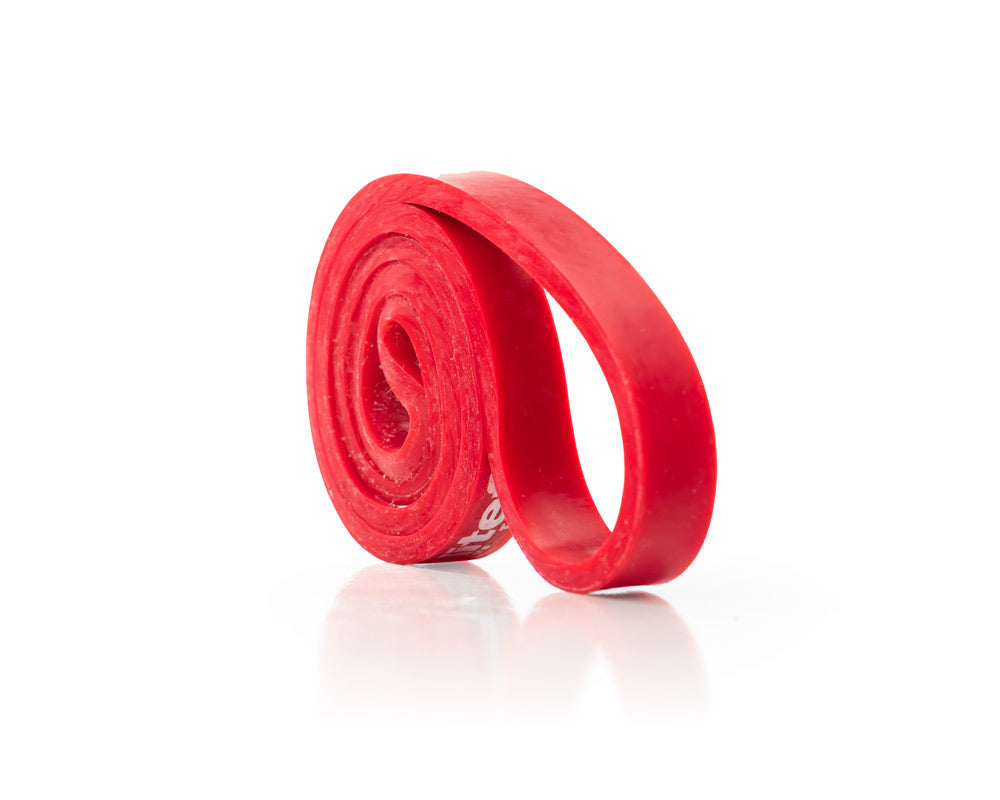
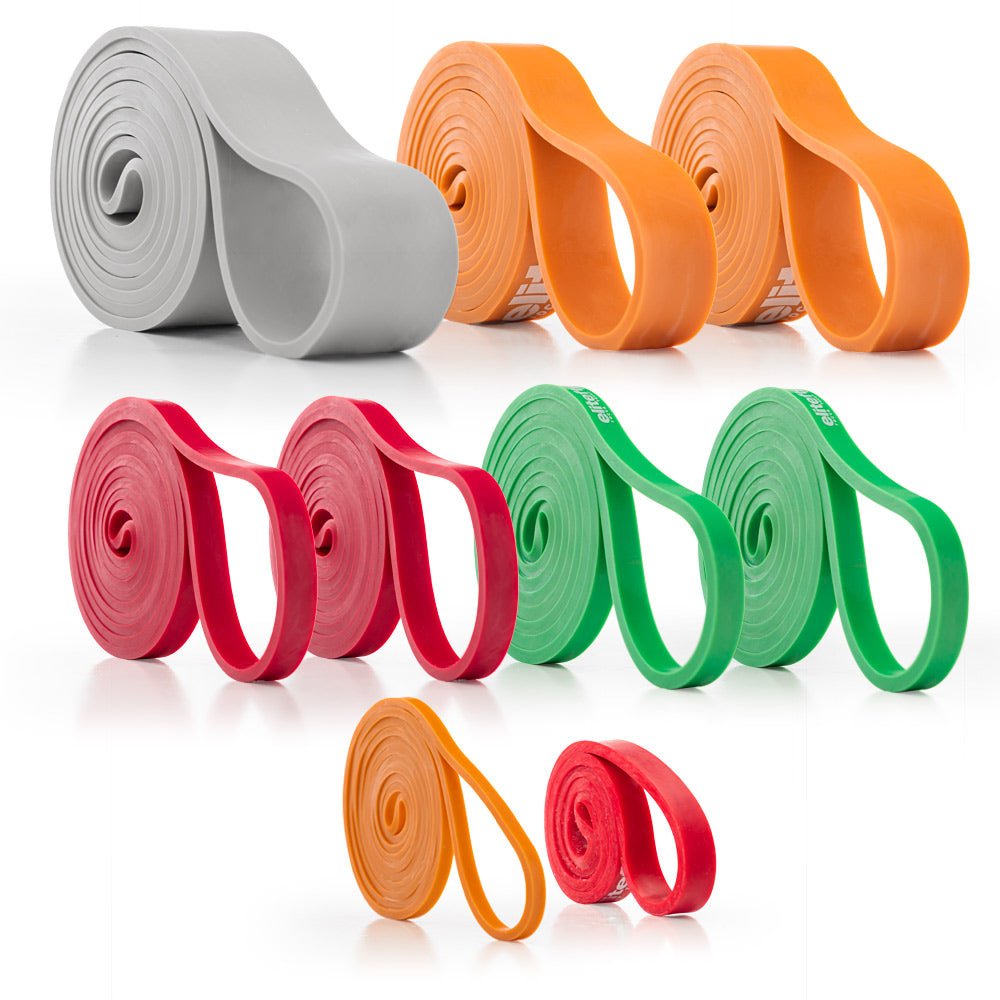
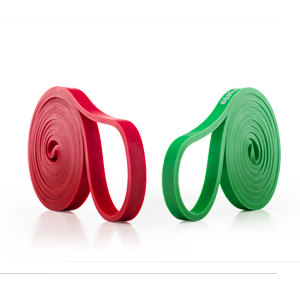
- Use a light micro-band. The goal is quality activation, not maximal tension.
- Start with a double pronated (overhand) grip, hands about 12 inches apart, holding the band at eye level. Always keep slight tension on the band from the start. Never a saggy band.
- As you pull the band apart, simultaneously pull it down toward your chest, finishing at about nipple height.
- As you pull, rotate your hands externally by 90 degrees. This dynamic rotation is the key to shoulder health. The shoulder is a rotational joint. Moving dynamically from internal to external rotation is what restores function. A static grip misses the primary benefit entirely because it's the relative change in angle we're after.
- Finish with your shoulder blades pulled down and back, in depression and retraction.
There is a critical distinction between doing an exercise and feeling an exercise. Most lifters are so focused on execution, moving from point A to point B, that they fail to mentally process how it feels. They miss the essential feedback loop required for improvement and mastery.
Dr. Rusin shares the story of a world-class WTA tennis player who would spend hours on the court making tiny micro-adjustments to her serve, yet in the weight room, the very place meant to address her shoulder pain, lower back pain, and hip labral tear, she was completely disengaged. Even elite athletes fail to recognize that movement quality in the gym directly fuels health and performance in their sport.
The trap is a quantity-over-quality mindset. Beginners get away with it. Anything they do in the first three years produces results. But the very strategy that built their initial success is what causes the inevitable plateau. When progress stops, the first instinct is to do more rather than do the same thing better.
If we never actually master the one thing that we're doing, we're going to be spinning our wheels for the next couple of years, never getting what we need out of those movements.
True, lifelong strength isn't built solely on brute force. It's built on a foundation of health, intention, and an unwavering commitment to movement quality.
By embracing these principles, you shift your focus from chasing numbers to developing a deeper understanding of your own body. You stop fighting against yourself and start building a more resilient, capable, and pain-free system.
That's not weakness. That's the long game. And the long game is the only one worth playing.
Watch: Dr. John Rusin on elitefts