
I have been squatting exclusively with the elitefts SS Yoke Bar since 2005. That is not a preference. That is the only way I can squat. Years of heavy training, shoulder surgeries, and the kind of accumulated damage that comes from competing in powerlifting for over two decades put a straight bar out of reach for weekly squatting. The yoke bar kept me in the game when nothing else could.
What started as necessity turned into one of the most valuable pieces of education I have ever gotten on squat training. When you use a bar every single week because you have no other option, you stop treating it as a specialty tool and start learning everything it can do.
Most people who own a yoke bar use it as a straight bar substitute when their shoulders are acting up. That is the smallest part of what this bar is capable of. The lifters who figure out the full range of applications are the ones squatting more, building more posterior chain strength, and training longer without breaking down.
The point is simple: the SS Yoke Bar is not a backup plan. It is the most versatile tool in the gym, and if you are only squatting with it, you are leaving significant development on the table.
Here is every application worth knowing.
Why the SS Yoke Bar Is Different from Everything Else
Before getting into the movements, you need to understand what makes this bar behave the way it does. That understanding changes how you approach each exercise.
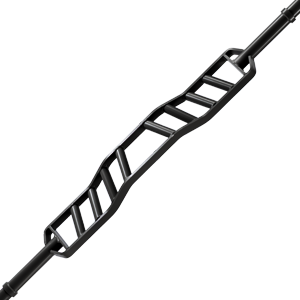
The bar sits high on the traps and the camber is constantly trying to push you forward. That is not a flaw. It is the entire point. To stay upright, your lower traps, upper back, and lats have to work overtime. Most lifters miss squats because they lean forward or their chest caves in. This bar directly attacks that weakness every single rep.
The fixed sleeves are also intentional. There are no rotating sleeves on the SS Yoke Bar, and people occasionally ask why. It comes down to how the bar loads the muscles during movements like thoracic extension work. If the sleeves rotated with the plates, the loading would change, and you would lose a significant portion of the benefit. That design decision was deliberate.
The handles are shorter and thicker than older safety squat bar designs. This keeps the lifter from accidentally assisting the lift or getting pulled into a bad position out of the hole. And the pad is denser and longer than anything else on the market, distributing weight across the upper back without daylight and without breaking down over time.
If you have used cheap safety squat bars, you already know what a bad pad feels like. Most of them are duct-taped within a year. The pad on the SS Yoke Bar is something we refused to compromise on. When this bar goes out of stock, nine times out of ten it is because of the pad. We will not ship it without the right one.
The bar weighs 65 pounds and is 92 inches long. Factor that into your working weights when you first use it, because it will feel heavier than a 45-pound straight bar even before the camber physics are in play.
Squatting with the SS Yoke Bar
Box Squats
This is where most people start, and for good reason. The SS Yoke Bar on a box is one of the best max effort squat variations you can run.
The bar position forces the weight slightly forward, which mimics what happens when a squat goes wrong. You are training the exact pattern your lower traps and upper back need to prevent a missed lift. Every rep is teaching your body to fight forward pressure and stay upright.
For dynamic effort work, take about 60 percent of your best max effort box squat with the straight bar and apply that to the yoke bar on the same box. Ten sets of two is a solid starting point. Work up three to five percent over the following two weeks before rotating the variation.
Do not be surprised if the yoke bar box squat humbles you in the first few sessions. That is the bar doing its job. The weakness it exposes is real, and addressing it will carry over to your competition squat.
Free Squats
All squat variations that work with a straight bar also work with a yoke bar. High bar, low bar position is handled by the pad, so the emphasis here shifts to stance width and depth.
For lifters who cannot hold a straight bar due to shoulder, elbow, or wrist issues, the yoke bar means squatting does not get cut from training when those injuries flare up. I have seen people squat in arm slings using a yoke bar. That is not an exaggeration. When you cannot hold anything, the handles let you brace and stabilize without loading the joint.
If your shoulder health limits your straight bar squat, this is not a workaround. It is the solution.

Good Mornings
Standard Good Mornings
Place the SS Yoke Bar across the upper back the same as you would for a squat. Keep your back arched, hinge at the hip, and drive back up. The forward weight distribution of the bar makes this movement more demanding on the posterior chain than a standard good morning with a straight bar.
Good mornings are the most underutilized strength builder in powerlifting. A minimum good morning of 60 percent of your max squat is a meaningful benchmark for where your posterior chain needs to be. Most lifters who stall on the squat are nowhere near that number when they first test it.
Chain Suspended Good Mornings
This is one of the most effective max effort exercises you can run for both the squat and the deadlift. Hang the SS Yoke Bar from 3/8-inch chains at the top of the power rack so it suspends at approximately navel height, then position yourself under the bar and perform a good morning from that starting point.
There is no eccentric portion. You walk under the bar and set it up. That makes it a concentric-only movement, which directly mirrors how a deadlift is performed. The carryover is real and measurable.
The chains can be set to any height, but keep it consistent so you are tracking your numbers accurately. If you do not have chains, pins in a power rack will work. The concentric-only nature of the movement is the same.
Any stance width can be used. Wide, narrow, sumo, it all works. Pick the width that connects most directly to your competitive pull or squat and run the variation there first.
Thoracic Extension Good Mornings
This is what some call an upper back good morning. The lifter hinges forward, then extends through the thoracic spine on the way back up. This is not a hip hinge movement in the traditional sense. It is upper back and lat training with serious load.
This is one of the movements where the non-rotating sleeves matter most. If the plates spun independently, the loading shift would change what muscles are being targeted and how. The fixed sleeve design keeps the load exactly where it needs to be to train upper back extension.
Zercher Squats
The SS Yoke Bar Zercher is a different animal from a straight-bar Zercher. The pad position is already set up to accommodate holding the bar in the crook of the elbows without the same level of pain that comes from using a knurled straight bar. It is still uncomfortable. It is just manageable.
Zercher squats hammer the quads, core, and upper back simultaneously. They also force an upright torso, which makes them useful for lifters who fold forward out of the hole. If falling forward is your squat problem, Zercher squats will address it.
Back Raises and 45-Degree Work
45-Degree Back Raises
Put the SS Yoke Bar on your back during a 45-degree back raise and the loading on the lower back, hamstrings, and glutes increases significantly. The bar also adds load to the upper back region, building real mass in the traps and lower traps over time.
This can also be done on a standard back raise or hyperextension piece of equipment. Keep the load conservative when you first add the bar. The position is unfamiliar, and the balance requires adjustment.
Glute-Ham Raises
This one is for advanced lifters only. The bar stays on the back in the same position as a squat while you perform the glute-ham raise. It is extraordinarily difficult and should not be attempted without a solid base of unloaded glute-ham raise volume already in place.
If you can do it, the hamstring and glute development from loaded GHRs is in a class of its own.
JM Presses
Here is where the detachable handle design pays off in a way most people have not thought about. Remove the handles from the SS Yoke Bar and you have a pressing tool with a pad that keeps the bar off the throat. That makes the JM Press significantly more accessible and safer to perform, especially for lifters dealing with wrist or elbow positioning problems.
The JM Press is a triceps movement that builds lockout strength and upper arm mass simultaneously. It is a staple for powerlifters who need to extend the arm against maximal load. Having a way to perform it with the yoke bar eliminates a barrier that keeps many people from using the movement at all.
Remove the handles, set up on a flat bench, and perform the JM Press with the pad sitting across the chest in the bottom position. The bar path and elbow tracking are identical to the standard version. The pad just removes the threat of the bar sitting on the throat if you miss.
Lunges and Walking Variations
Lunges
The SS Yoke Bar lunge is a loaded single-leg movement that builds leg and hip strength in a range of motion that squatting alone does not fully address. The forward camber of the bar adds an upper back component to a movement that is already demanding on the quads, glutes, and hamstrings.
Keep the weight lower than you think you need to when you first try these. The balance demands of lunging with a bar that is trying to push you forward are real.
Weighted Bar Walks
Load the SS Yoke Bar and walk. That is the entire exercise. Set a distance, walk with a training partner, and trade sets. The goal is total body endurance, trap and leg development, and mental toughness under a sustained load.
Do not perform this often, and do not load it heavily to start. It will destroy you. The builds it creates in the traps, legs, and overall work capacity are significant. But it takes a toll on recovery and has to be programmed with that in mind.
Programming the SS Yoke Bar Across a Training Cycle
The SS Yoke Bar is most effective when you rotate it in as a genuine max effort variation or use it consistently on dynamic effort days as the shoulder-sparing alternative to straight bar squatting.
For max-effort lower-body work, treat yoke-bar box squats, suspended good mornings, and standard good mornings as distinct movements. Rotate every one to three weeks depending on your training level. The more advanced you are, the more frequently you can rotate.
For dynamic effort, using 60 percent of your max effort weight with the yoke bar on the same box you use for straight bar dynamic work is a proven starting point. The bar is harder than it looks at that percentage. Respect the weight.
Do not introduce the yoke bar multiple weeks out from a competition if you have not been using it consistently. Any new training stimulus needs time to settle before peaking. Build it into your training well in advance of the competitive window, and it will pay dividends where it counts.
Who Needs This Bar
Every gym that trains serious lifters needs an SS Yoke Bar. That is not a position I have softened on in decades of training and coaching. It is not niche equipment. It is a direct answer to the most common problems that show up in the squat and the deadlift.
If you have shoulder issues, the bar lets you keep squatting. If you fall forward out of the hole, the bar pulls you back out. If your upper back is weak, the bar attacks that weakness every session. If your training partner blows a shoulder and cannot rack a straight bar, neither of you misses a squat session.
We built the elitefts SS Yoke Bar from the inside out because I needed a bar that worked for me long-term, not just for a cycle or two. That process took over ten months, more prototype bars than I want to count, and a lot of squat sessions that would have convinced most people to just take a week off. What came out of it is the bar I have trusted with every squat session since.
If you have questions about integrating the SS Yoke Bar into your specific training, drop them below.