

Nobody Gives You a Day Off From the Work
Labor Day is the one holiday that actually understands what training is, because both come down to the same thing: work nobody applauds you for.
The Holiday Nobody Actually Celebrates
Labor Day weekend. Cookouts, one last trip to the lake, mattress sales, and a Monday where most people sleep in and think about absolutely nothing.
That's fine. People need a break.
But the holiday exists for a reason, and the reason is not the mattress sale. It exists because, at some point, this country decided that the people doing the work deserved a day when someone said out loud that the work mattered. Not the people who owned the plant. The people on the line.
I've been in gyms for four decades. Home gyms, commercial gyms, hardcore gyms, garage gyms, my own gym. And every Labor Day it's the same. The gym is either empty or it's got the same six people in it who are always in it.
Those six people are the whole article.
Who I've Trained With
Over the years, I've trained alongside police officers, teachers, coaches, students, drug dealers, doctors, lawyers, construction workers, factory line workers, truck drivers, business owners, prison guards, ex-felons, bouncers, trainers, nurses, exotic dancers, roofers, and warehouse managers.
Some had egos. Some were humble. Some were introverts, some were extroverts. Some were great people, and some were assholes.
Here's what I noticed a long time ago and never stopped noticing: none of that mattered once somebody got under the bar.
The lawyer spotted the roofer. The nurse is pulling plates for the ex-felon. Nobody asks what you do. Nobody cares what you did last week, or what your title is, or how much you make. The bar does not know your job. The bar knows what you can do with it today.
Powerlifting has never been a white-collar sport. It has never been a blue-collar sport either. It's a sport for people who are willing to work, and that willingness shows up in every zip code and every tax bracket. What you do for a living is a fact about your life. It is not a fact about your training.
I've seen guys who ran companies get outworked by guys who ran a forklift. I've seen it go the other way. The job never predicted anything. The willingness did.
That's why the gym is one of the few places left where people from completely different walks of life end up genuinely respecting each other. Not because anybody gave a speech about it. Because they watched each other work.
Pride Is About How, Not What
My neighbors growing up went to work in factories, stores, restaurants, and fields. They did the best they could every day for their families, for the company they worked for, and for themselves.
A lot of them did not love the work. They took pride in it anyway.
That distinction is the whole thing, and most people never make it.
Pride should be about HOW you do something, not what you do.
Read that again if you need to.
You do not need a job that impresses people to do that job well. You do not need an exercise that impresses people to do that exercise well. And the second you start needing the thing itself to be impressive before you'll do it right, you've got a problem that no program is going to fix.
Nobody is impressed by your rows. Nobody is filming your glute ham raises. Nobody claps for a sled drag or a face pull or a set of curls that you actually controlled instead of heaved. There is no crowd for the assistance work.
Do it right anyway.
The lifters who get strong over decades are the ones who bring the same standard to the boring work as they do to the max-effort single. They don't have two gears. They don't have a "this one counts" mode and a "this one is just accessory stuff" mode. They have one way of doing things, and they do it that way whether anybody is watching or not.
The guy who mops a floor right when nobody is checking is the same guy who does his back work right when nobody is checking. It's the same trait. It just shows up in two buildings.
The People Selling You Out of the Work
Here's something I've had a problem with for a long time.
If a cashier comes up short on their register at the end of a shift, the difference comes out of their pay. They don't like it. They understand it. It's their responsibility, and they own it.
Now go look at the people selling you the six-figure blueprint, the shortcut, the hack, the twelve-week transformation, the system that finally makes it easy.
If you follow their program and it doesn't happen, do they take responsibility?
You know the answer.
The cashier is accountable for forty dollars. The guy selling you the dream is accountable for nothing.
The training world runs the exact same con. There is an entire industry built on convincing you that the reason you're not strong is that you haven't found the right method yet. That somewhere out there is a program, a bar speed device, a supplement, a percentage scheme, or a guru who is going to take the work out of it.
They are selling you the idea that you're one piece of information away.
You're not. You're one decade of consistent work away, and nobody can sell you that, which is exactly why nobody does.
I'm not saying methods don't matter. I've spent my life on methods. Conjugate, accommodating resistance, max effort, dynamic effort, special exercises, all of it. Those things are real, and they work.
But methods are a multiplier on work. If the work is zero, you can multiply it by anything you want, and you still have zero.
Labor Is the Method
Reijo Kiviranta won the world championship in the 242s in 1981. He put it about as simply as it can be put: the one who lifts the most has trained the most.
That's it. That's the secret. There isn't another one.
There are no secrets at all, just pure hard work. It's the cold, hard truth.
The variable almost nobody wants to examine is the total honest work performed over the years. Not the peak week. Not the best training cycle you ever ran. The accumulated total, including all the years you were hurt, tired, busy, unmotivated, and going through something.
Everybody wants to talk about their best training block. Very few people want to talk about their worst one, which is the one that actually determined where they ended up.
The lifters who last are not the ones who had the best cycles. They're the ones whose worst cycles were still pretty good. They didn't disappear for three months. They didn't go from six days a week to zero. When life came at them, they went from six days to three and kept the plates moving.
That's what work looks like at the level that actually matters. Not intensity. Not an effort on your best day. Presence over time.
Show up hurt and train around it. Show up tired and train what you can. Show up when the program is boring, because the program being boring usually means it's working.
The training log is a labor record. That's all it is. Every entry is a shift you clocked.
What Lazy Actually Means
I flunked out of Bowling Green after one quarter. Failed everything except a D in earth science, and I only got that because I'd taken it in high school.
I went home that spring, figuring I'd find a factory job and be done with it. I'd been told my whole life I wasn't college material, and I finally believed it.
That changed in the parking lot of my old high school weight room, in a conversation I did not want to have.
I got told, straight out, that regardless of what anyone had ever labeled me, I wasn't stupid. That in thirty minutes I'd taught more about training than the guy had learned in twenty years under the bar and out of books.
My problem wasn't that I was stupid.
My problem was that I was fucking lazy.
I drove around for two hours after that, absolutely furious. Because I didn't know if it was true. I'd never actually applied myself to anything except lifting weights. I had no evidence either way.
So I went back to find out. My GPA was 0.75. The first goal was to get it to a 2.5.
Here's why I'm telling you this on a holiday about work.
Lazy people rest on labels. They rest on what other people said about them, their genetics, their injury history, their schedule, what their federation did, and what their coach didn't do. All of those things can be completely true and still be an excuse.
People who make a difference work for it. Some of us have to work a hell of a lot harder than most, and that is not unfair. That's just information about what your particular job will require.
I'm not putting that out there as a motivational line. I'm putting it out there as a diagnostic one.
Sit with it honestly. Are you actually stuck, or have you just been comfortable calling it stuck?
Most people never ask. It's a brutal question, and there's no upside to asking it unless you're willing to hear the answer.
Look at your last twelve weeks of training. Count the sessions you actually completed, not the ones the program said you should have done. That number is your answer.
How to Actually Use a Day Off
So it's Labor Day. What do you do with it?
There are two right answers and one wrong one.
Train
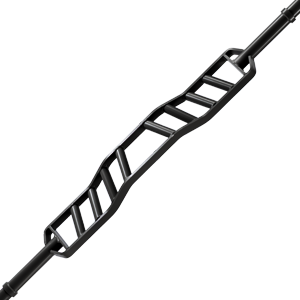
The gym is empty. Nothing is a rush. You're not waiting on a rack or a bar or a bench. You can take the rest you actually need between sets instead of the rest the guy behind you lets you take. Some of the best sessions I've had have come during holidays for exactly this reason. If you're training at home and the schedule is the only thing standing in the way, a specialty bar or a sled covers more ground than most people think.
Don't Train, and Mean It
A planned rest day is work too. Recovery is part of the job, not its absence. If you scheduled the day off, take it. Eat, sleep, get outside, be with your family, and come back Tuesday ready to go. There's nothing noble about training on a day you planned to rest.
The Wrong Answer
The accidental skip. The one where you didn't decide anything, the day just kind of got away from you, and then Tuesday gets away from you too, and by Thursday you've missed a week, and you're telling yourself you're deloading.
That's not a deload. That's a drift. And drift is how most training careers actually end. Not with an injury and not with a decision. With a slow leak, nobody noticed.
Decide. Either one is fine. Deciding is the part that matters.
The Backbone
If you have a job and you work, you are the backbone of this country. That's not a slogan. No job and no person should ever be made to be less than another. We don't have that right.
The same is true in the gym.
If you show up and do the work, you belong there. It does not matter what you lift. It does not matter what federation you're in, whether you compete raw or equipped, whether you're chasing a total or just trying to stay in one piece at fifty-five. The guy pulling 700 and the guy pulling 275 are doing the same job. One of them has been at it longer.
You're a spoke in the wheel. So is everybody else in there.
Take pride in how you train, not in what your training looks like to somebody else. Do the boring work right. Show up on the bad days at whatever level the bad day allows. Stop looking for the thing that makes it easier, because the people selling that thing are not coming back to check on you.
Then get up on Tuesday and clock in again.
That's the whole method. It always was.
Come Do the Work in Person
Two days at the S5 Compound. Hands on the bar, eyes on your technique, no shortcuts sold.
TYAO applicationLive, Learn, Pass On.
Dave Tate / elitefts