

elitefts Equipment Education
The Squat Box:
What It Fixes, How to Use It, and Why It Belongs in Your Gym
The box squat is not a shortcut. It is a tool. Used right, it teaches position, power, and repeatable depth. Used wrong, it turns into a lazy sit-down with a bar on your back.

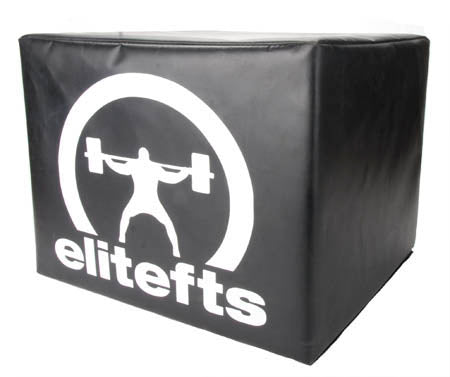
The elitefts Squat Box gives you a consistent target so you can train the same position, the same way, rep after rep.
The Short Version
- Best use: Box squats, teaching the squat, controlling depth, dynamic effort work, and building the hips, glutes, hamstrings, and low back.
- Main training effect: Sitting back shifts more work to the posterior chain and keeps the shins more vertical.
- Power benefit: The pause on the box breaks the eccentric and concentric chain so you have to generate force from a dead stop.
- Coaching benefit: The box gives the lifter a consistent depth target and exposes position problems fast.
- Product advantage: The elitefts Squat Box gives you 14, 16, and 18 inch heights in one closed-cell foam box.
- Important: This is for box squats. It is not a box jump box.
Most lifters do not miss a squat because they are weak everywhere. They miss because something breaks first. The knees shoot forward. The hips tuck under. The chest caves. The back goes soft. The bar drifts. Then the lift turns into whatever the lifter can survive.
That is where the box squat earns its place. It gives you a fixed point to squat to, but that is not the best part. The better part is what happens on the way down, on the box, and on the way back up. You have to sit back. You have to keep the shins more vertical. You have to stay tight. You have to pause without relaxing. Then you have to produce force from nothing.
The elitefts Squat Box was built for that job. It is simple. That is the point. Flip it and you have three training heights without dragging three boxes around the gym.
In a garage gym, that saves space. In a team room, that saves time. In a powerlifting gym, that saves arguments about depth. The box gives the coach, the lifter, and the program one standard to work from.
The box does not fix bad lifting by magic. It exposes bad lifting fast.
Why Box Squat in the First Place?
The box squat has been misunderstood because too many people look at the box and think the box is the whole exercise. It is not. The box is feedback. The lift is still the lift.
If the lifter crashes, relaxes, rocks forward, loses the arch, or turns every rep into a different movement, the box did not fail. The execution failed. This is why I like the box. It tells you what is really happening.
Here are the reasons I still use it, teach it, and want lifters to understand it before they start loading the bar like they already know everything.
1. It Shifts More Work to the Posterior Chain
When you sit back correctly, the shins stay perpendicular to the floor, or even a little past perpendicular. That changes the movement. You are no longer just dropping straight down and letting the quads take over. You are forcing the hips back and loading the hamstrings, glutes, and low back harder.
This is the part most lifters miss. Sitting on a box does not make it a box squat. Sitting back does. If the knees shoot forward and the lifter just taps the box, all they did was make a regular squat worse.
Use case: If a lifter always folds forward out of the hole or loses the hips at the bottom, box squats can teach them how to keep tension where they need it. The box gives them a place to learn how far back they can sit while still keeping the torso, arch, and upper back locked in.
2. It Builds Explosive Power From a Dead Stop
A free squat has a stretch reflex. You come down, reverse, and use that rebound to help get out of the bottom. There is nothing wrong with that in a meet squat. You need to use everything you legally can.
The box squat removes that crutch. The pause breaks the eccentric and concentric chain. You lower under control, pause on the box, stay tight, then drive from a static position. That is why I have called it plyometrics for the hips. You are teaching the body to go from static to dynamic without bouncing your way out.
Use case: This is why box squats fit so well with dynamic effort work. Lighter bar weight, more speed, cleaner intent, and every rep starts from the same bottom position. You cannot hide behind a bounce.
3. It Fixes Form Instability by Giving You a Real Target
The bottom of the squat is where most form problems show up. It is also where most lifters have the least awareness. They think they are tight. They think they are at depth. They think their knees are out. Then the weight gets heavier and the truth shows up.
The box gives a lifter a consistent target. Same depth. Same setup. Same bottom position. If the lifter hits the box in a different place every rep, you know the setup or descent is off. If they relax on the box, you know they are losing tightness in the hole.
Use case: With a beginner, the box turns the squat into something they already understand. Sit back like you are sitting in a chair. Keep the knees out. Keep the chest up. Stay tight. Stand up. That simple cue can save months of bad reps.
4. It Can Reduce Knee Stress When Done Correctly
When a lifter sits back instead of dropping straight down, the movement tends to place less demand on the knees and more demand on the hips. That does not mean the box squat cures knee pain. It means the movement pattern can be friendlier for many lifters because the knees are not being driven forward rep after rep.
Use case: If a lifter needs to keep training the squat pattern while managing cranky knees, the box can help control range, shin angle, and depth. Start higher. Own the position. Then lower the box only when the lifter earns it.
5. It Is Easier and Safer to Teach
I have said for years that teaching a beginner to free squat can take a long time. Some learn fast. Some turn it into a full-time job. The box squat gives you an anchor. Most people understand how to sit down. That does not make them good squatters, but it gives you a starting point.
The box lets a coach teach the right pattern fast: push the hips back, spread the floor, keep the arch, stay tight, and drive up. You can see the errors immediately, fix them immediately, and get better reps in the same session.

The box teaches you where you really are at the bottom. If you relax, rock, or crash, the box will tell on you.
The Product: Three Heights, One Box
The elitefts Squat Box is 18 x 16 x 14 inches. Flip it to the side you need and you have three training heights without needing three separate boxes.
| Height | Best Use | Coaching Note |
|---|---|---|
| 18 inch | High box work, larger lifters, beginners, range control | Start here if the lifter cannot hold position lower. |
| 16 inch | Common parallel reference for many lifters | Check hip crease, knee height, and build before calling it parallel. |
| 14 inch | Low box work and stronger position demands | Only go here when the lifter earns it. |
The closed-cell foam matters. A hard box with sharp edges can make lifters think about the edge instead of the lift. This box is firm enough to give feedback, but it is not a steel corner waiting to bite into you. You still have to control the descent. You still have to stay tight. The box just gives you a better surface to train on.
Watch: 3-in-1 Squat Box Versatility
How to Use the Box Without Screwing It Up
Set the box behind you so that when you sit back, you land in the position you want to train. Do not set it so far back that you have to reach for it. Do not set it so close that your knees shoot forward and you plop straight down.
Unrack the bar the same way you would for a squat. Get your air. Lock in the upper back. Push the knees out. Break at the hips. Sit back under control. When you reach the box, pause while staying tight. Do not bounce. Do not relax. Do not let the pelvis roll under. Do not rock forward to get momentum.
To come up, drive the head, traps, and upper back into the bar first. If the first thing that moves is the hips, the lift turns into a good morning. If you drive back into the bar and keep the knees out, the hips can come through the way they are supposed to.
If you sit down, exhale, and rest, you are no longer training the box squat. You are taking a break with a bar on your back.
Use Cases That Actually Matter
Teaching Beginners
Start with a higher box. I do not care if the internet says it has to be low. A lifter who cannot hold position on a high box has no business chasing a low one. The first goal is learning how to sit back and stay tight.
Dynamic Effort Squatting
The box squat is a staple for speed work because it gives you consistency. You can control depth, break the eccentric-concentric chain, and measure intent from the same bottom position every rep.
Posterior Chain Development
If your squat is all quads and no hips, the box will show you fast. Sitting back correctly teaches the hips to load and makes the hamstrings, glutes, and low back do their job.
Controlling Depth and Recovery
Depth gets real interesting when the weight gets heavy. The box gives you a standard. It can also help control range, knee travel, and bottom position when recovery has to be managed.
Box Squat Mistakes That Ruin the Point
-
Crashing onto the box: The descent should be controlled. If you drop, you lose tension and turn the box into a landing pad.
-
Rocking forward: This is one of the biggest errors. If you rock to stand up, you are using momentum instead of building starting strength.
-
Letting the knees cave: Spread the floor and keep the knees out. If the knees collapse, the hips are not doing their job.
-
Using the wrong height forever: A high box can be useful, but if you never lower it when the lifter is ready, you may be training confidence more than usable strength.
-
Calling every touch a box squat: A touch-and-go squat to a box is not the same as a controlled box squat with a pause and intent.

Three box heights let you teach, train, and progress the squat without changing equipment every set.
What It Fixes, What It Hides
The box can fix a lot. It can fix inconsistent depth. It can fix a bad sit-back pattern. It can fix beginners who do not understand where their hips should go. It can fix lifters who cannot stay tight in the bottom. It can fix weak starts out of the hole.
It can also hide things. If you relax on the box, you may think you are stronger than you are because you turned the movement into a pause and reload. If you rock forward, you may think you built starting strength when you really built a habit that will wreck your free squat. If the box is too high forever, you may build confidence without building the position you actually need.
This is why I like pairing the squat box with education, not just equipment. Read How to Box Squat, Box Squats for New Lifters, and The Box Squat: What It Fixes, What It Hides, and Where Lifters Screw It Up. The equipment matters, but the execution matters more.
Watch: Why Your Box Squat Is Not Building a Stronger Squat
How I Would Program It
For a newer lifter, I would keep the box higher and use it as a teaching tool. Three to five sets of three to five controlled reps is enough. The load should be heavy enough to make them respect the movement, but not so heavy that they start finding ways around it.
For dynamic effort work, I like lower reps, more sets, and perfect intent. Think multiple sets of two with short rest and the same setup every time. The point is speed and position, not fatigue for the sake of fatigue.
For max effort work, rotate the bar, rotate the height when needed, and know why that height is there. A high box can overload a range. A low box can build strength in a harder position. A parallel box can keep the main squat pattern honest. None of those choices are automatically right. The goal decides the tool.
Watch the Box in Use
The fastest way to understand the squat box is to watch a lifter use it under a bar. The sit-back, the pause, the torso position, and the drive off the box all matter. Watch the reel below, then go back and compare it to your own reps.
Watch the elitefts squat box reel on Instagram
If the embed does not load, watch the squat box reel here.
Featured Product
elitefts Squat Box
$152.00 | SKU: A-FSB | 14, 16, and 18 inch heights in one closed-cell foam box.
Add Squat Box to Cart View Product DetailsRelated Equipment and Reading
The 18 x 16 x 14 inch elitefts Squat Box is the main piece for most gyms because it is simple, portable, and gives you three heights in one. If you need a different setup, look at the elitefts Box Squat Box and the Box Squat Box Pad.
For more context, read The Benefits of the Box Squat and Box Squatting for Raw Lifters.
Final Thought
The squat box is not complicated. That is why it works. It gives you a standard. It gives you feedback. It lets you teach the squat faster, train the posterior chain harder, and build power from a dead stop.
But it will not do the work for you. You still have to set up right. You still have to sit back. You still have to stay tight. You still have to drive off the box without rocking, bouncing, or folding.
The box is honest. Use it that way. That is the whole point of good equipment.
Good equipment makes the right work easier to repeat
and the wrong work harder to ignore.
Live, Learn, Pass On.
Dave Tate / elitefts