
The Belden Bar Framework
Training Beyond the Sagittal Plane: How Rotational Torque and 3D Integration Build Athletes Who Perform in Chaos
Traditional strength and conditioning programs are often limited by a sagittal-heavy bias, prioritizing linear force production through movements such as the squat, bench press, and deadlift.
While these exercises build a necessary foundation of raw strength, they often fail to bridge the gap to the multi-planar, chaotic demands of on-field performance.
To achieve true athletic transfer, coaches must integrate rotational torque into closed-chain environments. This strategic shift moves the athlete beyond two-dimensional stability into a three-dimensional space where power is maintained through rotation.
The Belden Bar serves as the definitive tool for this integration. Derived from the historical "Sheena push-up boards" utilized in ancient Persia and by the armies of Alexander the Great, the framework has been modernized with the addition of independent rotational pads.
This evolution creates a unique training stimulus that challenges the body's ability to manage rotational forces while maintaining structural integrity. By mastering this implement, athletes develop the high-level coordination and trunk stabilization required for elite athletic maneuvers.
"The Belden Bar is an honest implement. It exposes weaknesses and asymmetries that traditional stable surfaces tend to mask."
Before adding rotational torque, an athlete must demonstrate impeccable structural alignment and bracing. Introducing rotation to a compromised or "leaky" frame increases injury risk and diminishes the training effect.
The foundation of the Belden Bar Framework is the Perfect Push-Up position, which serves as the baseline for all subsequent progressions.
Technical Cues for Structural Integrity
To maximize the efficacy of the bar, athletes must adhere to a strict checklist of biomechanical cues:
- Joint Stacking: Align the shoulders directly over the elbows, which are stacked over the wrists. This creates a vertical pillar of support, mirroring the alignment required for a heavy bench press.
- Spinal Integrity: Maintain a neutral spine and head position. Specifically, coaches must cue a "thoracic tuck" and a slight "pelvic tilt" to eliminate the common sag in the lumbar spine.
- Active Engagement: The athlete should imagine they are "bending the bar." This internal cue forces the pits of the elbows forward and the points of the elbows back, packing the shoulders into a stable, retracted position. Simultaneously, the athlete must brace the abdominals, glutes, and quads to create total-body tension.

The Belden Bar is a premier neuromuscular primer. By utilizing it early in a training session, coaches can re-educate shoulder stability and activate the core before moving to high-load primary lifts.
This phase focuses on low-impact movements that emphasize co-contraction of the stabilizers and joint health.
Scaling and Variation for Group Settings
| Variation | Focus Area | Technical Execution |
|---|---|---|
| High Rotational Plank | Global Stability | Straight-arm position; keep shoulders square while hands rotate, or twist the body for higher oblique demand. |
| Low Plank (Elbows) | Scapular Packing | Performed on forearms. Emphasizes co-contraction of the serratus, rhomboids, and lower traps. Using a med ball between the hands keeps the arms locked in. |
| Oscillation Planks | Nervous System Speed | Quick, 6-to-8-inch rotational movements to train the nervous system to react and stabilize rapidly. |
Once the static primer is mastered, the framework introduces dynamic upper-body variations. Adding rotation to closed-chain movements increases the integrative demand on the obliques and shoulder stabilizers, transforming a standard press into a total-body movement.
Upper-Body Progressions
- Rotational vs. Twisted Push-Ups: In a Twisted Push-Up, the athlete rotates the entire torso, mimicking a "side crunch" pattern. In a Rotational Push-Up, the shoulders remain square to the floor. This creates a JM-type pressing movement on the rotating side and a close-grip push-up stimulus on the other, heavily taxing the triceps.
- Grasshopper and Spider-Man Push-Ups: These movements target the anterior oblique sling. The Grasshopper involves swiveling the hips to drive the opposite knee to the elbow. The Spider-Man requires external hip rotation to bring the same-side knee to the elbow.
- Scorpion Push-Ups: An advanced progression for the posterior oblique sling. As the athlete descends, they lift one leg and reach it over the back toward the opposite shoulder, requiring elite coordination and cross-body stability.
- Supination/Pronation Variations: Rotating the pads outward (supination) on the ascent targets the chest and biceps. Rotating inward (pronation), particularly while using fists, mimics the specific stabilization and punching mechanics required for fighters and grapplers.
Training the hamstrings and glutes often falls into a linear trap, such as standard leg curls. The Belden Bar allows for circular rotational patterns rather than the linear patterns provided by TRX or jungle gym straps, more closely mimicking the foot-ground interaction in sports.
Lower-Body Protocols
- Rotational Glute Bridge: Performed with heels on the pads. Changing the foot angle allows for specific targeting. Toes Out (frog stance) focuses on the inner hamstrings, while Toes In shifts the stimulus to the outer hamstrings.
- The 10-to-2: A single-leg glute bridge where the athlete rotates the pad through a wide arc, mimicking the hands of a clock moving from 10 to 2. This requires immense hip stability to prevent the pelvis from dropping during the rotation.
- Rotational Bulgarian Split Squat: The rear foot is placed on the rotating pad. By driving the ball of the foot into the pad, the athlete develops foot stiffness. Rotating the rear foot during the descent creates a Curtsy or Dragon Lunge effect, challenging the hip flexors and balance of the lead leg.
The coach's role is to manage stress and stimulus through progressive overload. The Belden Bar's design allows it to evolve from a rehab and warm-up tool into a high-intensity strength implement suitable for all phases of the macrocycle.
Loading and Overload Methods
- Bodyweight Plus: Using weight vests or sandbags (placed across the lap for bridges) increases the global load without altering mechanics.
-
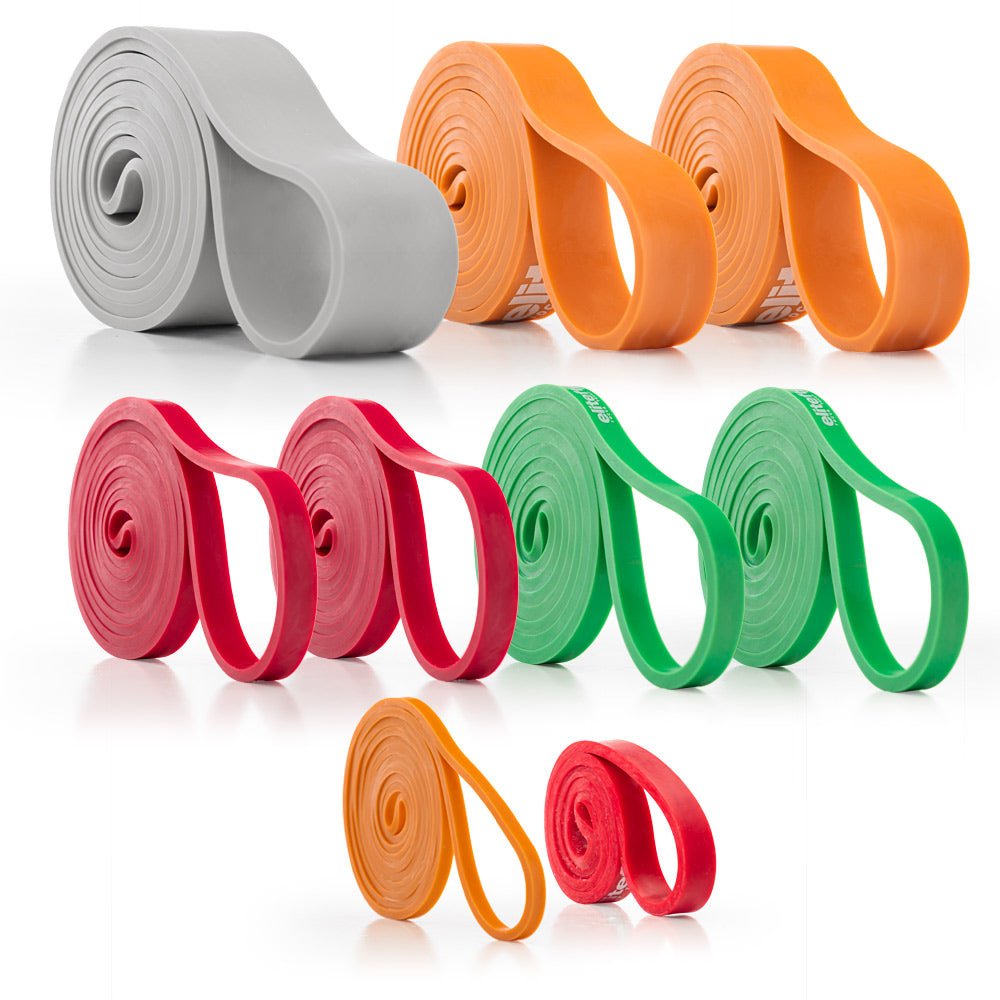
Banded Resistance:
- Shoulder/Back Bands increase the difficulty of push-up variations.
- Rack-Attached Bands, utilizing carabiners and bands attached to a rack, provide assistance or resistance. This can create an offset load that further taxes stabilization.
- Dynamic Loading (The Cross Crawl): A high-level pattern using a mixed grip, one hand supinating and one pronating. As the athlete rotates up, the supinated leg rises straight into the air. This creates a diagonal tension across the body that mimics the cross-crawl mechanics of high-speed locomotion.