
Concrete floor. Low ceiling. Maybe a water stain on the wall and a window unit that ran too loudly.
A handful of machines, each one built to do a single thing. No touchscreen. No QR code. No "intelligent resistance technology" or digital weight selection. Just steel, a place to put it on your body, and work.
You know the gym I'm talking about.
The leg extension in the corner is loaded up with old York plates. The dip station against the wall with the grip worn smooth from years of use. The lat pulldown bolted to the floor, bar hanging on a cable that had been replaced three times. The calf raise you loaded yourself because there was no weight stack. Just a bar, a block, and your legs.
That was the whole gym. Four or five pieces. Everything else was a barbell, a rack, and whatever you had the will to do with them.
The best training environments of the last 50 years were built around equipment like this. Simple. Plate-loaded. Built to last. And somewhere along the way, most of it got thrown out.
What Happened to That Gym
The shift didn't happen overnight.
It crept in gradually, one "upgrade" at a time. Selectorized weight stacks replaced plate-loaded machines because they were faster to adjust between sets. Cable towers with color-coded handles replaced simple pulley systems because they photographed better for marketing materials. Cardio equipment spread across more and more floor space. The machines that looked good in a brochure stayed. The ones that built the most muscle got phased out.
Commercial gyms are businesses first. They have to attract members who may never use most of the equipment on the floor. So the equipment that survived was the equipment that looked impressive to someone who had never trained seriously. Clean. Sleek. Approachable. Nothing too raw. Nothing that required loading a bar or adjusting a pin before you started your set.
The leg extension that had been building quads for decades got swapped out for a selectorized version that tops out at 200 pounds. The dip station that developed more tricep and chest mass than a hundred cable pushdowns got replaced by a functional trainer with handles at twelve different heights. The standing calf raise, where you loaded the weight yourself, got replaced by a seated version with an adjustment dial and a lumbar pad.
Some of those newer pieces have their place. Some of them work fine.
But a lot of what got removed was removed for the wrong reason. Not because it stopped producing results. Not because better options came along. Because it didn't fit the aesthetic that commercial gyms were trying to sell.
The equipment that built the strongest physiques and the most serious training environments over the last half century didn't get worse. It just got replaced by things that were easier to market. And the people who know the difference are noticing.
Why the Phone Keeps Ringing
Our reps have been fielding calls on the same set of pieces for the past month.
Not a broad range of questions. The same five machines, over and over, from people who know exactly what they're after.
Gym owners are building serious facilities. Coaches who have run training programs for 20 years and know what belongs on the floor. Individuals with home gyms who have been around long enough to stop chasing trends.
These aren't people who found something on an algorithm. They're people who have trained on enough equipment to understand what works and what doesn't. And they keep coming back to the same answer: plate-loaded, simple, heavy-duty, built to last.
When serious lifters all start asking about the same things, it means something.
Here's what they're asking about.
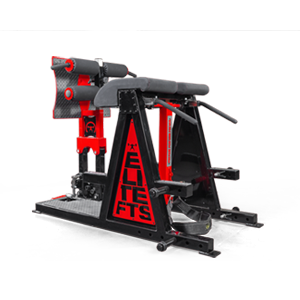
elitefts Leg Extension / Leg Curl Machine

One machine. Two movements. Quads and hamstrings covered in a single footprint.
Some people will tell you leg extensions are bad for your knees. Those are usually the same people who haven't built much quad size. Used correctly, with appropriate load and full range of motion, leg extensions are among the most direct and effective tools for quad development. They're an isolation movement. That's the point. You're targeting the quads directly, which matters for balanced lower body development and for building the kind of quad strength that carries over into compound movements.
Leg curls work the same principle on the back side. The hamstrings are a two-joint muscle that flex the knee and extend the hip. Leg curls address the knee flexion function specifically. That's not a replacement for Romanian deadlifts and glute-ham raises. It's a compliment to them. Isolation work for the hamstrings has real value for development, recovery, and maintaining muscle health under heavy load.
You need both movements. This machine gives you both out of one piece of equipment.
The frame is powder-coated 2" x 2" 11-gauge steel. Rolling foot pads are 4" x 8". Two sets of handles give you a solid grip in both the lying and seated positions. The footprint is 24" wide by 70" long. 11 color options available.
Same machine concept that has been in serious gyms for 50 years. Built tighter. Lasts just as long.
See the Leg Extension / Leg Curl Machineelitefts E-Series V-Dip Station

If you want bigger triceps, a thicker chest, and stronger shoulders, this is the machine.
If you don't, skip it.
The dip is one of the oldest upper-body strength movements in existence. It predates most of the equipment in any commercial gym you've ever trained in. It works because it targets the chest, triceps, and anterior deltoids through a full range of motion with your own bodyweight, and it scales as you get stronger by adding an external load via a belt. No stack limit. No adjustment required. You get stronger, you add weight, the machine handles it.
The problem with most dip stations is construction. Thin steel. Undersized frames. Handles that flex under load, making you work to stabilize the machine rather than your own body. That kind of equipment is worse than useless when you're working with serious weight.
The E-Series V-Dip Station is not that.
It's built from 2" x 2" 11-gauge steel. The sides are welded. Every attachment point has a backer plate to reinforce the joint and improve structural integrity. The step-up bar lets you get into position properly before you begin your set. The 2" grip handles are the right diameter for serious work. The whole unit weighs 100 pounds.
It doesn't wobble. It doesn't flex. It doesn't need periodic tightening. You load it, you use it, and 20 years from now it's still there.
See the E-Series V-Dip Stationelitefts Lat Pulldown + Low Row (with Foot Plate)

There's a reason the lat pulldown has been in serious training environments since the 1950s.
It builds the back.
Not aesthetic back. Not showing back. The wide, thick, functionally strong back that comes from years of pulling heavy weight across multiple planes. Wide lats that change the silhouette of your upper body. Upper back thickness that supports everything you do under a bar.
The elitefts Lat Pulldown + Low Row works both planes. Overhead pulldowns for lat width and vertical pull strength. Low cable rows for back thickness and horizontal pulling power. One station, two movements, and it accepts every bar attachment you already own. Pulldowns, rows, pushdowns, extensions, curls. The versatility is there for those who want it.
The build: 2x3 11-gauge steel frame. Aluminum pulleys for smooth, frictionless movement under any load. Rubber-coated steel cables built for long-term use. Naugahyde closed-foam gripper pad. Footprint of 5' 1-7/16" x 2' 4-1/2", stands 92 inches tall. Made in the USA.
Two versions are available. If you want it faster, the Quick Ship version ships in 2-3 weeks and comes in black or red. If you want custom colors or have specific requirements for your facility, the standard version ships in 3-4 weeks and opens up a full range of options.
Same build. Same quality. Different timeline.
See the Quick Ship Version See the Standard Versionelitefts Plate Loaded Calf Raise

Most people skip their calves. Most of those people walk around with stick legs their whole lifting career.
Calves respond to training the way every other muscle does: volume, intensity, and progressive overload. The problem is that most selectorized calf-raise machines cap out at a weight that serious lifters quickly outgrow. Once you hit the top of the stack, you've got nowhere to go. You're stuck doing high-rep pump work on a machine that wasn't built for the kind of loading that actually drives growth.
The elitefts Plate Loaded Calf Raise removes that ceiling.
No stack. You load it yourself. Ten pounds or three hundred. As heavy as the training demands, for as long as the training demands. That's the only way to guarantee progressive overload is always available.
The frame is 2x3 7-gauge steel, a heavier gauge than you'll find on most commercial calf-raise equipment. The foot brace is diamond-plated check plate for grip and stability. Powder-coated finish. Ships partially assembled for straightforward setup. Made in the USA.
The concept is as old as calf training itself. A solid platform, a load across your shoulders, and a block to stand on. This is the modern version of what worked in your grandfather's gym. Built tighter and to a higher standard.
See the Plate Loaded Calf RaiseThe Point Isn't Nostalgia
Nobody is arguing that older is always better. Nobody is saying the best gym is the one that looks the most run-down.
The argument is simpler than that.
The machines that developed the most muscle, produced the strongest athletes, and held up in the most demanding training environments over the last half century were not complicated. They were steel. They were plate-loaded. They did one thing well and did it for decades without breaking down or requiring a service contract.
Those machines didn't disappear because they stopped working. They disappeared because of how commercial fitness markets itself. And now the people who have been training long enough to separate what works from what sells are looking for them again.
You can't fake 30 years of results. Either the machines work, or they don't. Either they hold up under heavy use over a long period of time or they don't. These five pieces have been proving themselves in serious training environments for decades. That's not a marketing angle. That's the record.
If you're building a serious gym, these belong in it.
If you want to talk through what makes sense for your setup, our equipment specialists are the people to contact. They know this equipment, and they know training.
Talk to an Equipment SpecialistLive, Learn, Pass On.