
elitefts Strength Equipment Specialist Page
The overhaul of the Waverly athletics program began not with a sudden crisis, but with what School Board President Josh Hobbs describes as a "slow epiphany." As an administrator observing from the sidelines, Hobbs realized that while Waverly possessed significant raw talent, the district was falling into the trap of relying exclusively on "pure athleticism" to remain competitive. This lack of foundational physical preparation was manifesting in ways that were both visible and avoidable.
The "problem" was defined by three primary symptoms:
-
The Sideline Crisis: A high volume of premier student-athletes were frequently seen on the sidelines in slings or on crutches, recovering from concussions.
-
The Physical Deficit: On the football field, Waverly athletes were being "pushed around" and physically dominated, leading to a mounting number of injuries.
- The "Jacked Up" Baseline: Students were entering high school with pre-existing movement issues, including poor posture, weak glutes, and an inability to perform basic movements like push-ups or hip hinges.
Recognizing these systemic failures led to a critical administrative realization: athletic success and student safety cannot be left to chance; they must be codified through a formal, board-supported curriculum.
The Strategic Partnership and Vision
The transformation was driven by a unique multi-generational partnership between Josh Hobbs and Coach Crabtree. Their connection was deep-rooted; Crabtree had previously run track for Hobbs’ father, creating a foundation of trust that allowed them to align on a long-term vision. They aimed to move away from a "football-only" mindset toward a "whole product" philosophy that served the entire school system.
Drawing on established strength and conditioning standards, specifically the influence of Joe DeFranco’s CPPS program and the philosophies of Jim Wendler and Nate Harvey, they sought to implement a professional-grade culture.
"We've got the knowledge here to fix it. We have the right people who can carry out the mission; we just have to get it moving in the right direction."
A vision of this magnitude requires more than just high-level agreement; it necessitates a structural move into the school’s formal daily schedule to ensure every student has access to elite instruction.
From Concept to Curriculum: The Administrative Roadmap
To ensure the program's sustainability, Waverly transitioned the strength program from a voluntary after-school activity into a mandatory, eight-period daily academic schedule. This "morphing" of the schedule was the single most important administrative win, as it allowed two- and three-sport athletes to train without sacrificing their practice time or academic performance.
|
Feature |
Initial State |
Current State (Curriculum-Based) |
|
Availability |
A few periods a day |
Full-day (8 periods) |
|
Access |
Limited sports/groups |
All athletes (Male and Female) |
|
PE Credit |
None/Extracurricular |
Official PE Curriculum Credit |
|
Instruction |
Informal/Voluntary |
Structured, Tiered Programming |
This administrative shift to an 8-period schedule was the master key that unlocked the necessary funding to build a world-class facility.
Funding and Financial Sustainability
In school finance, the primary hurdle is always: where is the money coming from? Waverly utilized a two-phase strategic approach to bridge the gap between immediate equipment needs and long-term budgetary stability.
-
Phase 1: The Initial Wave: The district committed to a seed budget of 10,000–12,000, which was supplemented by local business donations and community fundraisers. This allowed for the first purchase of high-quality equipment.
- Phase 2: PE Curriculum Integration: Once the program was officially recognized as a PE credit class, the district could justify using "PE curriculum money." This transition enabled the administration to establish an annual recurring budget for equipment and maintenance.
This shift from "donation-led" to "curriculum-funded" allowed the district to invest in a specific type of environment designed to foster massive student buy-in.
Facility Design: The Psychology of "Look Good, Feel Good, Play Good."
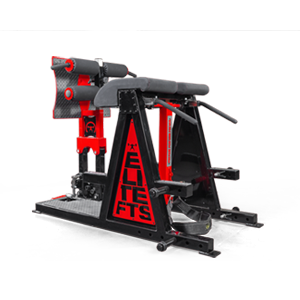
Waverly rejected the idea of "bland gray racks" in favor of customized EliteFTS equipment. The choice was rooted in a deep understanding of student psychology: if a facility looks professional, students will act like professionals. To achieve this, the district worked closely with Matt Goodwin of EliteFTS, who provided a "personal touch" of consultation and customization that went beyond a simple transaction.
Key Insight: The Aesthetics of Buy-In Modern student-athletes have high expectations for their environment. By customizing racks with school logos and orange-and-black colors, the facility becomes a source of pride. This "cool factor" is a primary driver of student registration and daily effort.
The psychological impact of a professional-grade facility creates an atmosphere of excellence, which is essential given the limited "time window" coaches have with students during the school day.
Technical Implementation and Injury Prevention
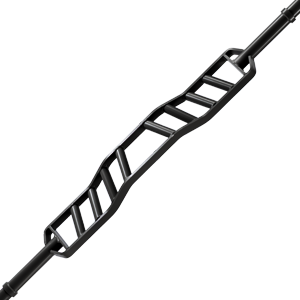
Rooted in the teachings of Jim Wendler and Joe DeFranco, the program acknowledges that modern students are "jacked up" from a movement perspective. The curriculum focuses on correcting postural deficits and building the posterior chain to prevent injury. Using specialty bars and equipment allows the program to accommodate students with existing injuries, such as a First-team All-Ohio running back who utilized a belt squat exclusively for a year to compete despite a labrum tear.
|
Physical Issue |
Program Solution |
|
Upper Back/Postural Weakness |
Specific auxiliary work and Specialty Bars (Safety Squat/Swiss Bars) |
|
Inability to Hinge/Squat |
Goblet squats and rack-based progression |
|
Lower Body Loading (with Upper Body Injury) |
Belt Squat (e.g., used for All-Ohio players with labrum tears) |
|
Time Constraints |
Efficient workstation layout (racks) to maximize the class period |
These technical accommodations ensure that no student is "turned down" or excluded, regardless of their starting physical condition or injury history.
Managing Growth and Scaling for the Future
The program’s success has led to a surge in participation, particularly within a massive incoming freshman class. To maintain quality while scaling, the district is entering a "jockeying" phase, in which the facility layout is continually optimized to handle higher volume without sacrificing "workstation" (rack) efficiency.
Priorities for the Next Phase of Development:
-
Facility Layout Optimization: Matt Goodwin is returning to perform detailed measurements and graphic work to maximize square footage.
-
Workstation Expansion: Prioritizing the addition of more racks to ensure every student has a dedicated space to work.
- Specialty Tooling: Expanding the inventory of specialty bars and belt squats to provide individualized alternatives for the growing student population.
The evolution of the Waverly High School Strength Program proves that athletic goals are best met through administrative structure. By transforming weight training from a hobby into a well-funded curriculum, we have created a sustainable culture of performance. We will not turn kids down; instead, we will continue to expand our facility to meet the moral and educational necessity of building stronger, healthier students.