


Table Talk #432 · Brian Bott and Dave Tate
The High Stakes of Collegiate Strength and Conditioning
Lessons on motor patterns, in-season power, conjugate programming, and building a culture that still holds up when championships are decided in November.
The Motor Pattern Imperative: Quality Over Raw Effort
In the high-pressure world of athletic performance, an enduring myth persists: relentless effort can compensate for faulty mechanics. Weight room folklore is filled with stories of heroic grunting under heavy iron, but experienced coaches know that raw power built on broken movement patterns is a liability.
When former University of Wisconsin assistant strength coach Brian Bott sat down with Dave Tate on elitefts Table Talk, he cut through the industry noise and established his foundational training philosophy. His stance on incoming talent is direct: he would rather take an untrained athlete with zero lifting experience for eight weeks than take an athlete who has spent years reinforcing bad motor patterns.
An untrained lifter represents a clean slate. Movement quality can be taught correctly from day one. An athlete with ingrained technical flaws requires a demanding process of unlearning, retraining, and ego suppression before real adaptation can begin.
Bott’s perspective is grounded in decades of experience spanning NCAA Division I weight rooms and private performance facilities. After a four-year college baseball career and graduate work in exercise science, his career trajectory shifted during an internship at the University of Wisconsin–La Crosse. Working under Hal Luther—now an assistant strength and conditioning coach with the Buffalo Bills—Bott experienced a fundamental change in perspective. He realized that elite strength and conditioning is not merely about moving weights up and down. It is about sports performance, biomechanical integrity, and long-term athlete mentorship.
The Graduate Assistant Economy: Behind the Scenes of D1 Strength
To understand collegiate athletic development, one must examine the economic reality that shapes young strength coaches. The entry point into Division I strength and conditioning has long been built on extreme personal sacrifice, low wages, and brutal working hours.
During his time as a graduate assistant at the University of North Dakota, Bott received a $3,000 annual stipend and had his tuition covered. He and his then-wife lived in student housing for $200 per month, relying on her full-time teaching salary to cover basic living expenses. Across the hallway, assistant coaches and unpaid interns faced the same financial strain while carrying heavy workloads.
The daily operational schedule for a collegiate graduate assistant or intern can be relentless:
- 5:00 a.m. arrival: Open the facility, set up equipment, and prepare workout logs before the first group arrives.
- 6:00–8:30 a.m. morning block: Run freshman football groups, followed immediately by Olympic sports such as swimming and diving.
- Mid-morning academic block: Attend graduate classes and complete exercise science coursework.
- 12:00–3:00 p.m. main football block: Coach varsity football groups through staggered positional lifts.
- 3:00–6:30 p.m. Olympic sports training: Direct assigned teams, including basketball, baseball, volleyball, and softball.
- Evening class and exit: Attend night classes, complete facility maintenance, and leave long after dark.
Young interns today navigate similar financial constraints, often working side jobs such as DoorDash or Uber Eats late at night while four or five coaches share a single apartment, all to put a Division I university name on their résumé. At the same time, the educational ecosystem has shifted. Some private facilities now charge $4,000 to $6,000 for eight-week mentorship programs because university classes often fail to teach the practical reality of coaching a crowded training floor.
That raises a difficult question for every aspiring coach: are you merely setting up cones and wiping down plates, or are you sitting down every week with experienced head coaches to learn biomechanics, cueing, program architecture, and decision-making?
The Twelve Résumés: Relentlessness and the Rose Bowl Call
Earning a full-time coaching position at a major university requires more than academic credentials. It demands relentless persistence. Having grown up in Wisconsin, Bott’s primary goal was to return home and join the University of Wisconsin football strength staff under head strength coach John Dettmann.
Over an 18-month period while working at North Dakota, Bott mailed Dettmann 12 physical résumés. In an era before instant digital job boards, Bott sent updated cover letters and résumés whenever his North Dakota teams won conference titles or when he assumed responsibility for new sports. Each letter updated his credentials while repeating his commitment to the Wisconsin program.
That persistence paid off following Wisconsin’s victory over Stanford in the 2000 Rose Bowl. Dettmann called Bott at noon on a Thursday with a direct message:
Typically, I look for people who have applied before. I’m going through my stack of résumés, and half of them are yours. I think you probably want to work here. John Dettmann, as recalled by Brian Bott
When Dettmann mentioned that formal interviews would begin the following week, Bott responded immediately: “No, I’ll be there tomorrow.” After getting approval from his boss in North Dakota, Bott drove overnight to Madison, pieced together a suit, and walked into the football building early Friday morning. After waiting while Dettmann finished his morning workout, Bott completed the interview and was hired the following week.
The Evolution of Player Development: Old-School Iron to Modern Recruits
Joining the Wisconsin weight room in 2000 meant stepping into an intense, high-expectation environment coming off back-to-back Rose Bowl victories under head coach Barry Alvarez. At the turn of the century, elite strength programs operated without most of today’s monitoring technology:
- No wearable GPS: No Catapult units or movement sensors to track field yardage, player velocity, or mechanical load.
- No force plates: No modern force platforms or isometric testing systems to measure rate of force development.
- Minimal velocity monitoring: Tendo units were used for specific dynamic checks, but programming relied primarily on iron, coaching judgment, and physical observation.
The most glaring contrast between that era and today is the baseline physical development of incoming high school recruits. Two decades ago, collegiate strength coaches often had to physically transform raw athletes over four to five years.
Former Wisconsin offensive tackle Ricky Wagner, for example, arrived on campus as a 265-pound tight end. Through systematic weight room development, he added roughly 35-50 pounds of functional mass and went on to play 8 NFL seasons at tackle. Pro Football Hall of Famer Joe Thomas was exceptionally athletic upon arrival, but he still required years of dedicated strength work to build an elite professional frame.
Modern high school strength programs have advanced significantly. Some Division I recruits now arrive on campus already squatting 500 pounds and bench pressing 350 with sound mechanics. That changes the college strength coach’s job. Instead of beginning with basic physical construction, the work shifts toward performance optimization, movement efficiency, readiness, and injury mitigation.
Flipping the In-Season Script: Maintaining Peak Power in November
Collegiate football operates on a fragmented calendar. A standard year includes an eight-week winter training block, spring ball, a three-week early-summer academic window, a seven- to eight-week summer development block, and the fall competitive season.
A major flaw in traditional strength coaching is evaluating athletes from January to March, celebrating peak testing numbers in the spring, and then allowing those strength qualities to erode during the season. In 2010, under head strength and conditioning coach Ben Herbert, the Wisconsin staff changed the way it evaluated physical development.
Herbert delegated specific position groups to his staff, placing Bott in charge of the offensive line, tight ends, fullbacks, quarterbacks, and specialists. At the time, assigning position groups and separate programming were still uncommon. Bott shifted the evaluation window entirely.
Rather than measuring progress only from January to March, the staff compared athletes from spring to summer, from summer to the competitive season, and from out of season to in season. Bott established a strict performance standard: if an offensive lineman squats 500 pounds in late July, maintaining strength means he should still be able to demonstrate that strength at the end of November.
Peak strength in March or May means very little if the athlete breaks down in November, when championships are decided. The in-season standard
Culture Under Pressure: The Friday Before the Scrimmage
Establishing an uncompromising in-season strength culture requires pushing athletes beyond their self-imposed limits while still understanding the cost of the work. During spring ball in 2010, Bott put that philosophy to the test on the Friday before Wisconsin’s primary spring scrimmage.
The week before the public spring game, coaches Bret Bielema, Paul Chryst, and Dave Doeren scheduled a three-hour, full-contact scrimmage. On Friday afternoon, less than 24 hours before that scrimmage, Bott prescribed a heavy front squat workout consisting of eight sets of two to three repetitions.
Tension peaked when veteran offensive lineman Bill Nagy slam-racked the bar after set five in protest of the workload. Bott immediately cut the music and confronted the group:
Here’s the deal. We play Ohio State October 16, the number one team in the country. We have to beat them, and the next week we have to come back and play at Kinnick Stadium at Iowa. If you want to go up and down whenever you want to train, that’s how our season is going to be. I’m trying to teach you how to be strong—and mentally strong—when we play those games. If you want to go upstairs and foam roll, go ahead. Otherwise, we have set six. Brian Bott to the Wisconsin offensive line
The offensive line responded immediately and attacked the remaining sets with focus. The next day, the group dominated the three-hour scrimmage. That fall, Wisconsin defeated No. 1 Ohio State and won at Iowa. The season became the first of three consecutive Big Ten championships and three straight Rose Bowl appearances.
Bott also identified an important psychological and physiological distinction. Offensive linemen tend to hate high-volume sets of six to eight repetitions during the season because that work can create debilitating soreness. Heavy doubles and singles, however, can preserve high-force output and neural readiness without the same lingering muscular damage.
Program Architecture: Conjugate Training and Honest Volume Accounting
To maintain year-round power, Bott implemented an adapted conjugate system. Rather than treating conjugate as a powerlifting-only template, he used it as an athletic development model that trained maximum strength, speed-strength, and muscular development concurrently.
The weekly structure used four primary training sessions around a position and recovery day:
- Monday — Max Effort Upper: Heavy upper-body work centered on maximum neuromuscular output, generally using loads at or above 90% when the athlete is ready for them.
- Tuesday — Dynamic Effort Lower: Submaximal lower-body loading moved with intent and speed, with Tendo units used when available to monitor velocity and autoregulate the work.
- Wednesday — Position and Recovery: Position-specific work, restoration, mobility, tissue work, and readiness management.
- Thursday — Dynamic Effort Upper: Fast pressing and medicine-ball contrast work, adjusted to the athlete’s readiness.
- Friday — Max Effort Lower: Heavy lower-body work using singles or doubles, exercise variation, and autoregulation. The layout created roughly 72 to 90 hours of exposure to the same qualities.
A key part of Bott’s programming was accounting for the volume accumulated in the field. Citing veteran strength coach Buddy Morris, Bott emphasized that strength training for football players is fundamentally a form of general physical preparation. Practice already exposes linemen to hundreds of high-velocity punches and physical collisions every week. That is a massive amount of anterior pressing volume, whether it appears on a weight room sheet or not.
To protect shoulder health and prevent overuse, Bott eliminated unnecessary dumbbell pressing and overhead pressing during the competitive season. In-season pressing was capped at one primary exercise per week, alternating between max-effort bench work and dynamic-effort bench work paired with medicine-ball throws. That pressing was counterbalanced by high-volume horizontal and vertical pulling exercises, including chest-supported rows, pulldowns, wide-grip cable rows, and seated rows.
Over a three-year span using this balanced model, Wisconsin’s offensive line experienced only one shoulder surgery despite the violent contact demands of daily football practice.
Relevant elitefts Equipment
Tools That Match the Method
These selections connect directly to the training principles Bott discusses: repeatable depth, accommodating resistance, high-volume pulling, and explosive contrast work.
Technique and Posterior Chain
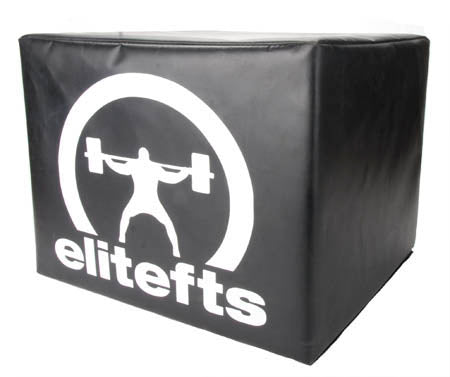
elitefts Squat Box
Three working heights give coaches a consistent depth target for teaching the box squat, building force from a dead stop, and progressing athletes without stacking plates or improvising.
View the Squat BoxDynamic Effort
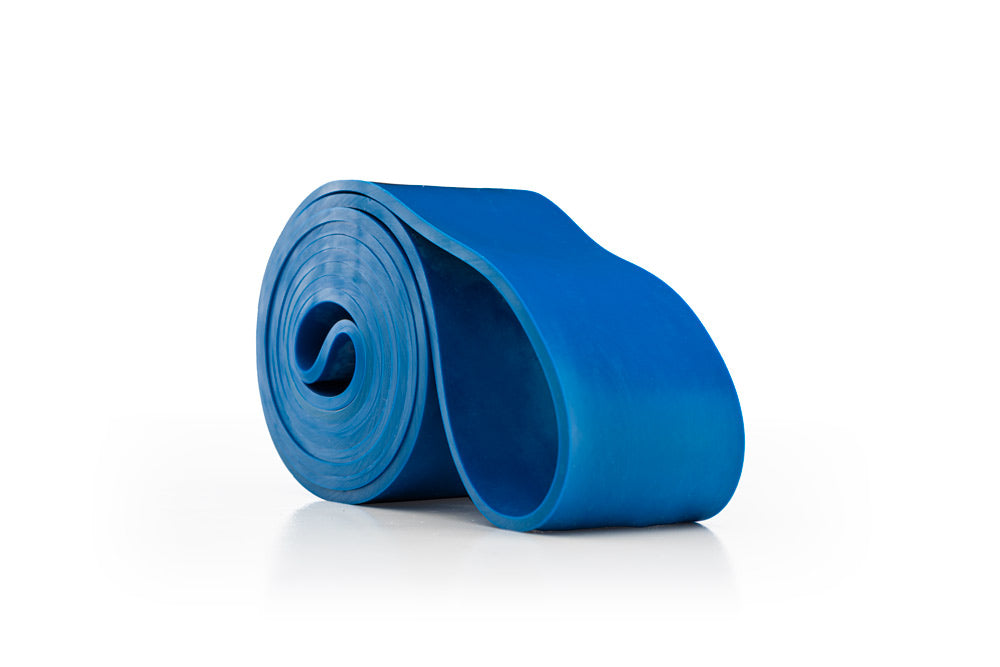
elitefts Pro Light Resistance Band
A practical option for accommodating resistance, speed-strength work, warm-ups, assistance, and mobility. Sold individually, so program and order the quantity your setup requires.
View the Pro Light BandPulling Volume
RAC Row Attachment
Add stable chest-supported rows, reverse flies, and other prone-supported pulling variations to a compatible rack while limiting unnecessary lower-back fatigue.
View the Row AttachmentExplosive Contrast Work
PowerMax Swing Ball
Built for dynamic swinging, slamming, and rotational drills, making it a useful option for explosive upper-body contrast work and athletic power development.
View the Swing BallReteaching Broken Technique and the Power of Progression
When coaching younger lifters or incoming collegiate athletes, strength coaches commonly encounter three profiles:
- The solid foundation: Lifters trained by competent high school strength coaches who already display reliable mechanics in squatting, benching, and hinging.
- The untrained elite: Highly talented athletes whose natural physical ability allowed them to excel without structured weight room experience.
- The broken lifter: Athletes taught poor technique who claim a 315-pound quarter-squat but buckle under 225 pounds at legitimate depth.
Correcting the third group requires deliberate intervention. Trying to repair a bad quarter-squat while keeping the athlete in the same stance, setup, and movement pattern often leads to frustration and repeated breakdowns. A better coaching solution can be to change the pattern completely.
By shifting the athlete to a wide-stance box squat, the coach removes the familiar reference point. The wider stance can help open restricted hips, reduce knee collapse, shift demand toward the posterior chain, and create an unambiguous depth target. The transition from sitting under control to driving off the box also reinforces static-to-dynamic force production that can carry over to the field.
Bott also highlighted the transformative power of incremental loading. Adding 2.5-pound plates or producing five- to 10-pound gains across an eight-week block can look modest, but those small improvements compound.
On paper, a five-pound monthly increase on the bench press equals 60 pounds in a year and 240 pounds across a four-year high school career. Real progress is rarely perfectly linear, but the principle holds: small, technically sound gains repeated over time can produce a radically different athlete. Bott’s son progressed from a 185-pound squat as a high school freshman to a 515-pound squat as a senior by consistently earning 10- to 15-pound improvements across training blocks.
The Private-Sector Transition: Sports AdvantEdge and High School Consulting
In June 2013, following coaching staff changes at Wisconsin, Bott stepped away from Division I athletics. Seeking to prioritize fatherhood and family life, he transitioned into the private sector and founded Sports AdvantEdge.
Today, Bott oversees a business expanded across seven locations while managing a blended family of six children. The private sector introduced a different set of operational realities:
- Customer dynamics: In Division I athletics, athletes report to training or face consequences. In the private sector, parents write the checks and may push 13-year-olds toward Division I expectations before the athlete has developed basic movement skills.
- Culture versus entertainment: Successful private training must engage young lifters without resorting to fake fun. Real engagement comes from visible progress, personal records, and genuine coaching attention.
- Staff empowerment: Managing multiple locations requires clear movement standards, repeatable systems, and ongoing communication with facility leaders.
Bott also expanded into school consulting through The Coaches Edge, partnering with roughly 13-14 high schools across Wisconsin. Rather than selling generic software templates, the system provides customized in-season and off-season programming, removes cell-phone distractions from the training floor, teaches sport coaches how to evaluate movement mechanics, and establishes structured rack flow for crowded school facilities.
In practice, that can mean three athletes per rack working through precise callouts so that a full room stays productive rather than becoming chaotic. The goal is not to force every school into the same template. It is to build a system that fits the school’s athletes, calendar, staff, equipment, and culture.
The Ultimate Standard: Character, Ownership, and Life Beyond the Weight Room
In an era dominated by social media algorithms, young online “life coaches,” and glitzy training reels, Bott and Tate emphasized a return to core coaching principles.
While viral videos promote flashy exercises with long titles, real performance coaching is built on executing fundamental movements correctly, holding athletes to uncompromising technical standards, and building honest relationships.
The true measure of a strength coach extends far beyond Division I scholarships or professional contracts. Helping an athlete reach the NFL or earn a college opportunity is rewarding, but Bott and Tate framed the reality bluntly: roughly 90% of high school athletes will finish their competitive sports careers around age 18.
The deeper legacy of strength and conditioning is character development. When an athlete spends three or four years in a structured strength program, they learn accountability, ownership, discipline, and the value of sustained effort. Athletes learn that skipping repetitions leads to poor results and that short-term discomfort can build long-term resilience.
Whether they enter a college lecture hall, a job interview, a trade, or a professional career, athletes who master those lessons in the weight room are better prepared to walk into the world as confident, accountable, hard-working adults.
The weight room is not the final destination. It is where athletes learn how to carry standards into the rest of their lives. The legacy of the coach
This feature is based on Brian Bott’s July 27, 2026, appearance on Dave Tate’s Table Talk. For additional background on Bott’s football programming, read the earlier Elitefts interview: Owner of Sports AdvantEdge Brian Bott.