

The Technical Secrets Behind an 800-Pound Bench
Nick "Benny" Benerakis on Handoffs, Bar Path, and Why Patience Beats Power
Every lifter eventually hits the wall. You've added sets, swapped movements, and upped the calories, yet the numbers on the bar refuse to budge. When the bench press stalls, most people assume they need more muscle. But according to Nick "Benny" Benerakis, the secret to a massive press isn't just about raw horsepower. It's about the technical nuances that most lifters are too impatient to master.
Benerakis didn't start in a state-of-the-art facility. His journey began in a cold basement gym with screw-on handles and rusted cement weights. He trained with a barbell that was noticeably off on one side and a flimsy rack that would literally tip over once the load crossed 400 pounds.
From those barebones beginnings, he transitioned into the world of elite equipped lifting. His core philosophy? The "secret" to a massive bench is hidden in the technical discipline you're currently ignoring. It's about navigating the path of most resistance.
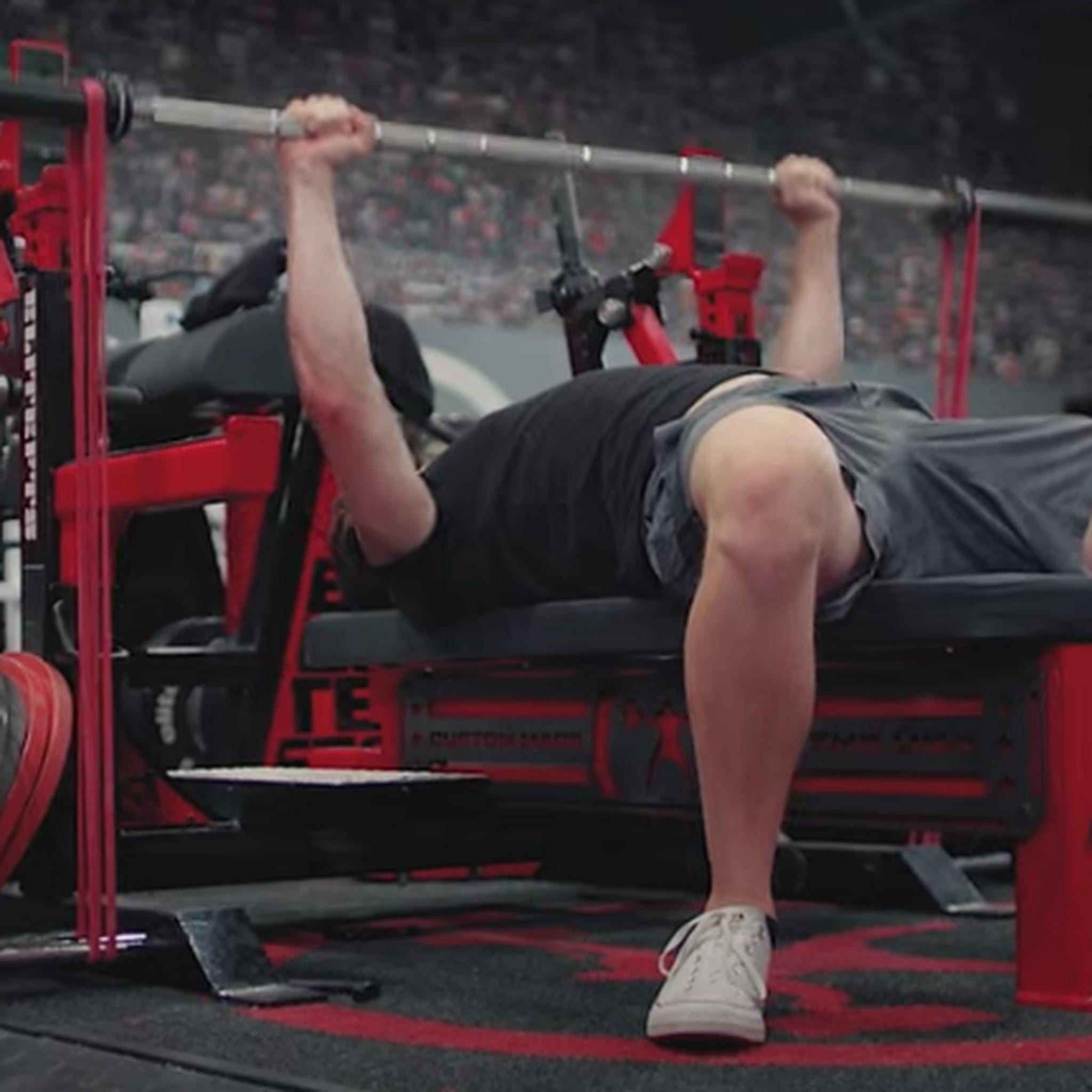
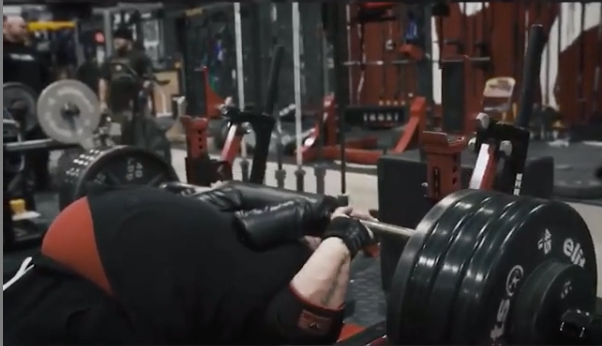
In the high-stakes world of 800-pound attempts, the handoff isn't a courtesy. It's a precision-guided delivery. Most lifters treat it as a formality, but Benerakis argues it is the most critical phase of the lift.
The biggest error is trying to do too much while the bar is in motion. If you try to feel the weight or settle your elbows too early, the bench shirt will rebel. The collar will ride up your neck, the material will cut into the back of your triceps, and you'll feel like the equipment is quite literally choking you out. Once you lose that position, you can't get it back.
"As much as I talk about the setup being so key for a raw bench, the handoff process is bar none the most important part for an equipped bench."
Effective lifting requires being passive until the bar is set. Let the spotter do 100% of the work until the weight is in the starting position. Only after your elbows are locked and your shoulder blades are retracted should you take ownership of the load.
In a world that prizes explosive speed, Benerakis advocates for extreme patience.
He coaches his athletes to hold the bar for a full five seconds at the top before beginning the descent.
Holding a massive load for five seconds sounds like an energy drain. It's actually a stability prerequisite. This pause allows the bench pad to compress and your joints to settle under the load. It takes the whip out of the bar.
If you rush the rep while the bar is still vibrating from the handoff, you're inviting a technical collapse. Steady the micro-vibrations first. Precision follows stability.
The bar path is where technical proficiency is truly tested. Benerakis uses a vivid analogy to explain the descent: the Airplane vs. the Helicopter.
A "helicopter" drop is a straight-down descent. In a shirt, this leads to an immediate collapse as the material fails to provide support.
An "airplane" landing involves a gradual tuck of the elbows toward the belly. This creates a horizontal bar path. You are wrapping the material around a pole to create snapback power.
But the lift doesn't end at the chest. Most lifters master the tuck but fail the press.
On the drive up, you must ride the weight back exactly the way you brought it down. This means a gradual elbow flare back toward the face. If you try to push straight up from a tucked position, you're fighting the shirt instead of using it. When you nail the flare, the weight cuts through the air like butter.
Common gym lore says equipped lifting has no carryover to raw performance. Benerakis views the bench shirt as a "magnifying glass" for technical form.
In a raw bench, you can muscle through slight errors. A shirt is not so forgiving. If your joint stacks are off, the shirt will dump the weight or fold your arch.
To master this, Benerakis moved away from traditional board work and prioritized "floating reps." By doing full-range reps with a looser shirt, he learned to maneuver the equipment without a crutch.
This builds the structural integrity and technical reverence needed to make a raw bench bulletproof.
Beyond the bar, Benerakis applied this same discipline to his career. His path to becoming a sought-after coach was built on putting in the reps through unpaid internships.
He famously worked at a golf course at 4:00 AM to fund his coaching education, spending the rest of his day gathering information from mentors like Mike Boyle and John Gaglione.
Benerakis views this "free labor" as a mentorship model where the education received is the real paycheck. In the modern era, when people want immediate returns, he argues that gathering information from everywhere is the only way to build a sustainable coaching business.
Benerakis applied an analytical lens to his digital presence, deciding to niche down almost exclusively to the bench press. His strategy is built on the "3-second hook." Whether it's a flashy comparison video or text on screen, you have moments to stop the scroll.
- Awareness Content: Short, flashy videos (good form vs. bad form) to bring in new eyes.
- Conversion Content: Value-heavy posts designed to solve a specific problem.
Crucially, he doesn't wait for emails. He uses a CRM system with automated touchpoints. Tags help him track conversations in the DMs. If a follower hasn't been engaged in 30 days, the system prompts them to drop a comment or a like.
He builds relationships in the DMs, turning simple questions into coaching solutions without forcing users to leave the app.
Nick Benerakis identifies as a "poly puritan," a lover of the technical challenge in single-ply and multi-ply lifting.
Currently, his focus is on single-ply lifting within the USAPL. He made the switch because single-ply is easier to train alone, without the three-man crew required for heavy multi-ply sessions.
Whether you lift raw or equipped, the takeaway is the same: success is found in the details others are too rushed to notice.
Master the path of most resistance.
If you treated your raw bench with the same technical reverence as an 800lb equipped lift, where would your PR be three months from now?